My Visit to the Skytree in Tokyo (With Useful Information for Your Own Trip)
*Disclaimer: This blog is reader-supported, and this page might therefore contain affiliate links. When you book or buy through them, I may earn a small commission at no extra cost to you. It helps me write these in-depth and original guides, so thank you for the support! Full Affiliate Disclosure
As soon as we booked flights to Japan, my brain immediately started thinking of places I wanted to visit. The Skytree was at the absolute top of my list for the Tokyo leg of our trip, and it was the first attraction I booked after we had confirmed our flights.
-ARTICLE CONTINUES BELOW-
Get My Japan Golden Route Guides Delivered to Your Inbox
Save time on researching and get all my Golden Route travel guides delivered straight to your email inbox, plus some extra tips and newsletter updates. Unsubscribe anytime.
We visited the Skytree on our first full day in Japan, which was an interesting experience, to say the least. Beyond the sensory overload (it’s hugely popular), we got some of the best views of Tokyo. While I enjoyed our visit, I have to say that I learned quite a lot. I wasn’t prepared for a number of things, which is why I decided to put together this full guide.
Today, I’ll give you all the information you need when you visit the Skytree in Tokyo. You’ll see first-hand photos of the views you’ll get, along with tips on getting there, what to expect when you arrive, and the type of ticket I recommend buying.
Good to Know: I’ve designed this guide so that you can refer to it whenever you need to. Feel free to bookmark it or save the link whenever you need to refer to it in the future.
Let’s Start With the Views From the Skytree…
Okay, sure—the Skytree is a cool tower in and of itself. And at 634 meters, it’s the tallest tower of its kind in the world. But while this is a true engineering marvel, the main reason I wanted to visit was for the views of Tokyo. I’m sure the same is true for you, too.
We had been to the top of the Tokyo Tower early in the day, which gave us a good idea of just how big this city is. But when I say that the scale of Tokyo’s size from the Skytree is incomprehensible, I’m not joking.


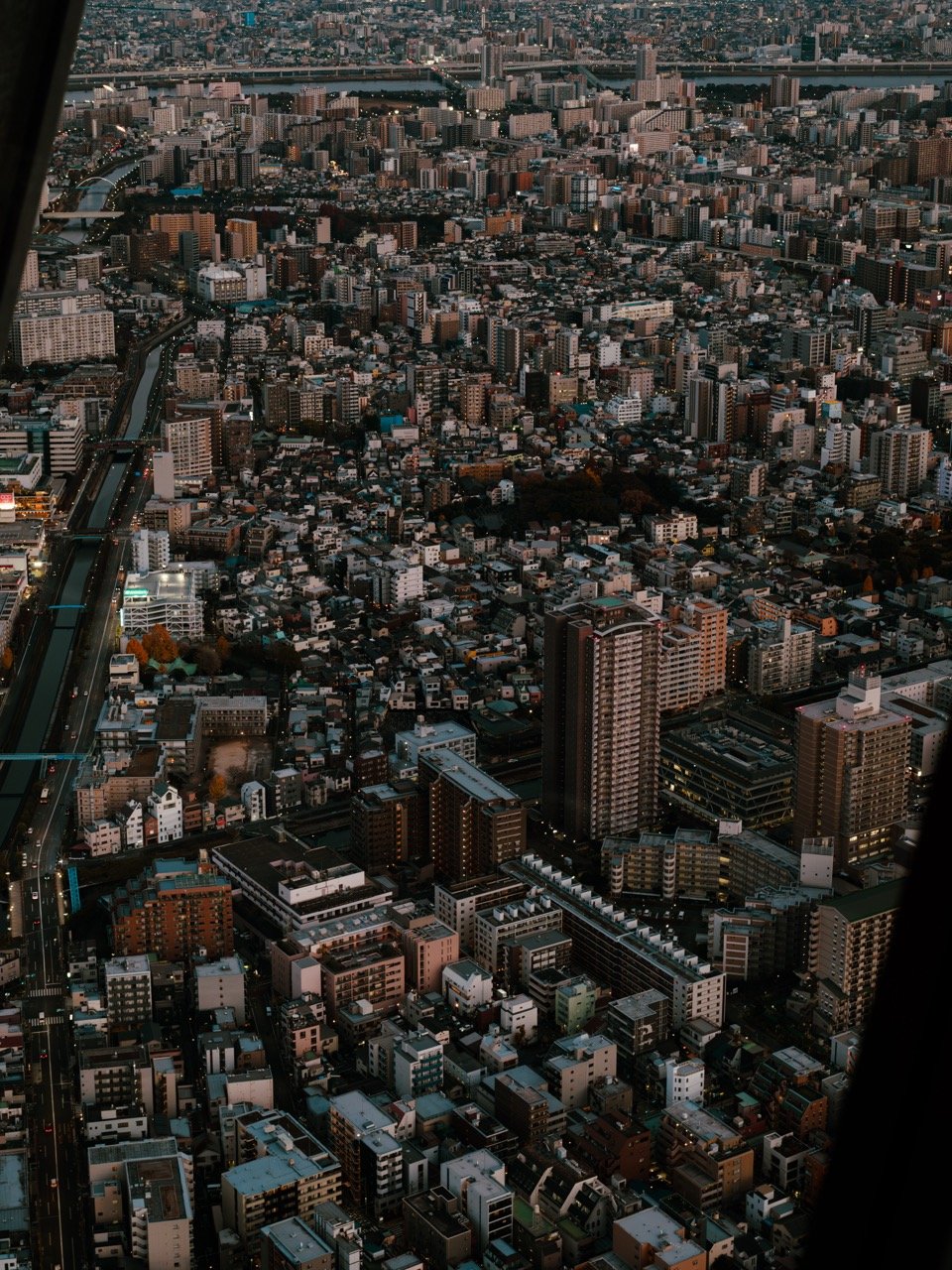
Even as someone who grew up in London and has a mother from New York City, the size of Tokyo took me back. I honestly felt like a little village boy when looking out at the city from the Skytree. You’ll basically just see buildings for miles, and miles, and miles.
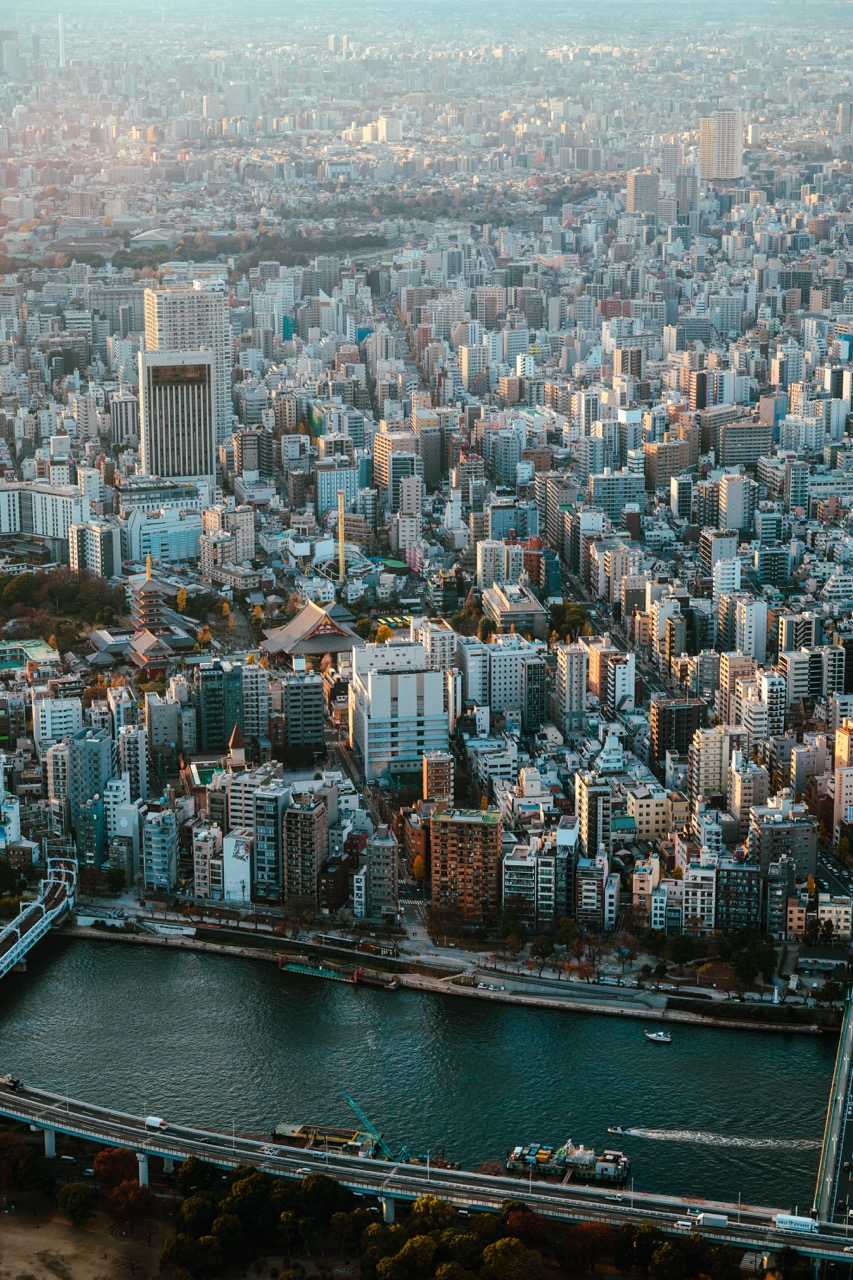
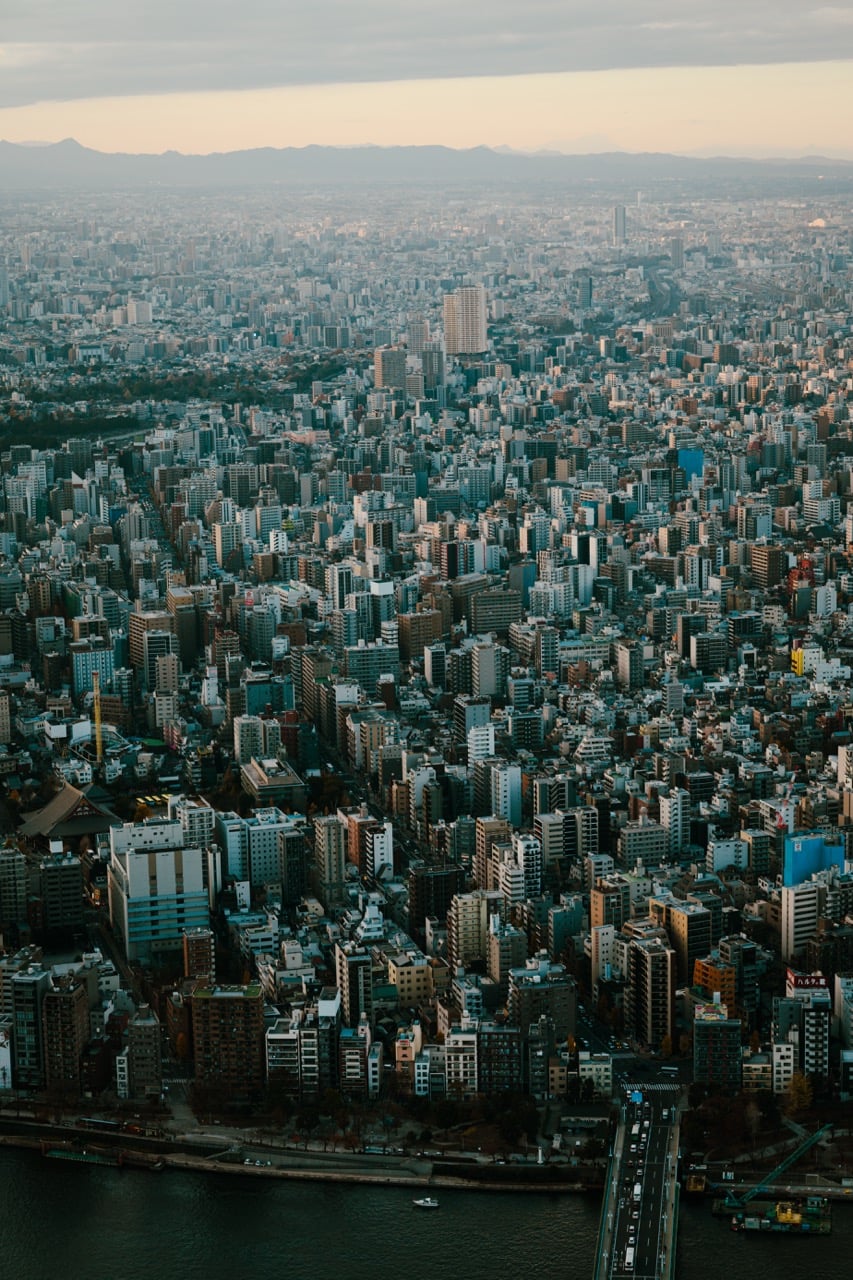
Many of Tokyo’s most famous landmarks are visible from the Skytree. It’s not too far from the Senso-ji Temple, for example, which you can see on the other side of the river. I really liked the contrast between the modern buildings around it and the traditional Japanese style of the temple itself.
The Tokyo Tower, which is further away, is also visible from the Skytree in the distance. It looks particularly cool just after sunset when it’s lit up. During the day, I can imagine that it would be more difficult to spot. If you want even better views of the Tokyo Tower, you should definitely also visit the Roppongi Hills Observation Deck while you’re in the city.
Good to Know: You’re Not Guaranteed to See Mount Fuji
While we saw Mount Fuji from Roppongi Hills, we did not when we visited the Skytree. Whether you’ll see Japan’s tallest and most iconic mountain will depend significantly on the weather.
The whole day that we visited the Skytree was sunny, and as such, even a sunny day does not guarantee seeing Mount Fuji. It’s largely luck of the draw, and of course, it’s a nice bonus if you can see Fuji. But at the same time, I do not recommend planning your visit with the hope of seeing the mountain. Otherwise, you’ll be disappointed.
Thankfully, the views of Tokyo are amazing from the tower—even if you don’t see Fuji. The only time I’d recommend reconsidering is if you plan to go there on a cloudy day. If the forecast says it’ll be cloudy, I’d recommend waiting before you book. The main reason is that the Skytree’s cancellation policy generally doesn’t permit full refunds.
The Biggest Challenges I Faced When Visiting the Skytree
I had two main challenges on my visit to the Skytree. The first was trying to navigate my way out of the station and to the tower itself. I didn’t expect the station to be so big, which was perhaps foolish of me; many stations in Tokyo are basically the size of cities in and of themselves.
We arrived late for our reservation (which wasn’t a problem, but was stressful), and this was partly because it took us longer than expected to actually reach the Skytree from the station. Well, that and we decided to wait an hour for a cup of coffee in another part of Tokyo beforehand, but I digress. 🙂
The crowds at the Skytree were also big. We got there for golden hour, which I assume is a large reason why. Since we visited in December, I can only imagine how busy the tower would’ve been if we had visited during a more peak season.
While the crowds at the observation deck(s) were generally manageable (with a bit of patience), going down to street level took quite a while. I’ll talk more about this in the “Here’s What to Expect When You Visit the Skytree” section.
Buying Tickets for the Skytree
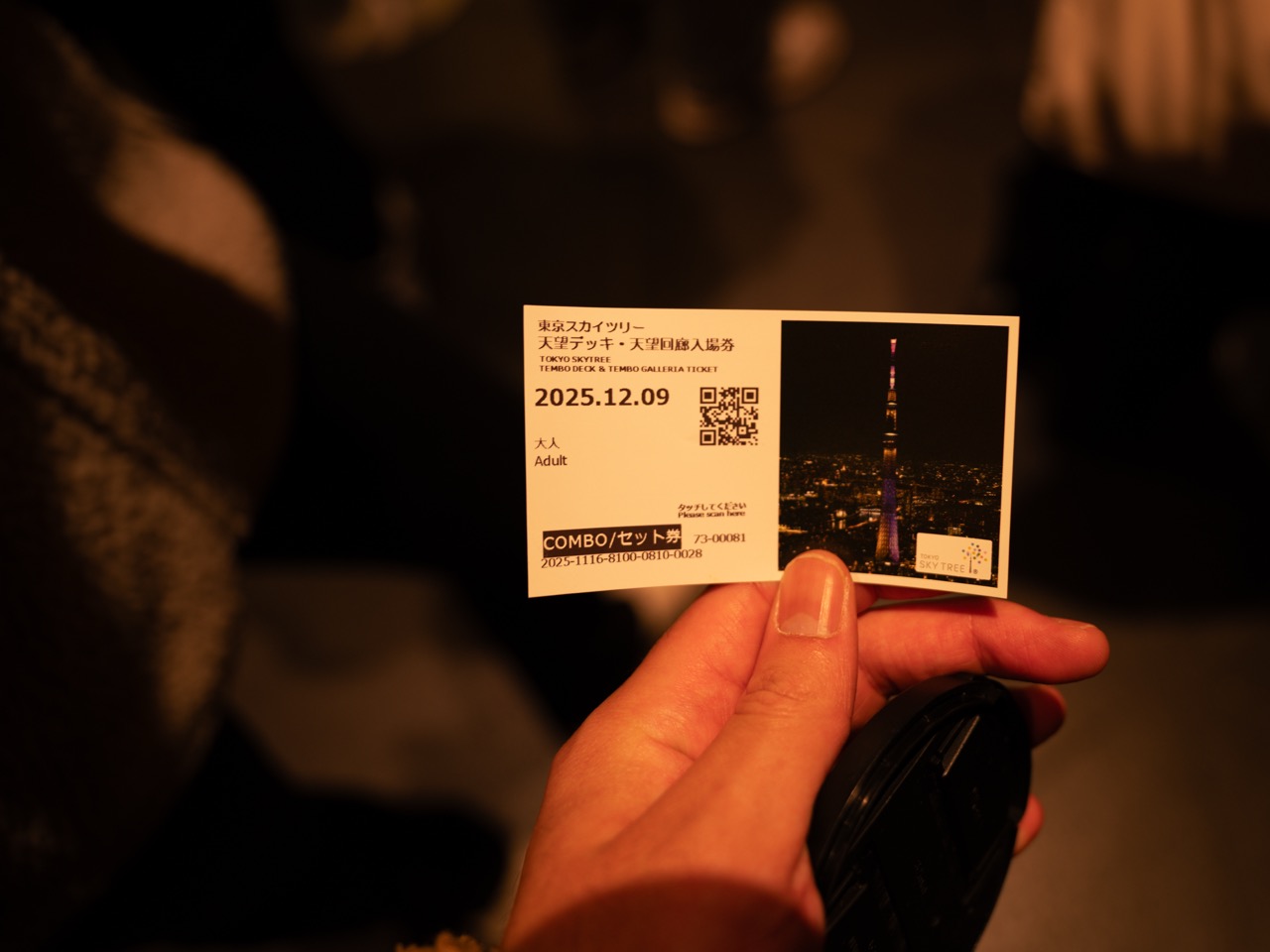
The Tokyo Skytree has two observation decks. You can visit the Tembo Deck, which is 350 meters high, and Tembo Galleria, which is at 450 meters. We bought a combined ticket package that included both of these and purchased them in advance via Klook. While non-refundable, we visited during a time of the year when the weather is clearer and therefore decided to take the risk.
To be honest, I don’t think you *need* to visit both the Tembo Deck and Tembo Galleria. I actually preferred the views from the Tembo Deck, as the sunlight glared quite harshly when we were at Tembo Galleria instead. So, if you’re on the fence, the Tembo Deck is more than good enough. And when I revisit the Skytree, I’ll probably just buy tickets for that and skip Galleria.

One thing that was a pleasant surprise, and I didn’t realize before visiting, is that the Skytree’s Tembo Deck actually covers multiple floors. You can move freely through these once you’ve accessed the building. Besides the views of Tokyo, you’ll also find a café and more. If the crowds become too unbearable on one floor, I suggest moving to another.
In addition to the observation deck tickets, you can also get combined entry to both the Skytree and the TeamLabs Planet TOKYO museum.
Here’s What to Expect When You Visit the Skytree
To ensure that you’re in a much better position to enjoy your Skytree visit, I’ve put together all my experiences on what to expect when you visit. I’ll break each area down into different subsections so it’s easier for you to read.
Arriving at the Skytree and Redeeming Your Tickets
If you book your tickets in advance (like we did 🤠), you can easily redeem these when you arrive at the Skytree. You’ll receive a voucher via the email address you provided (and depending on the service you used, you may also see this within the provider’s app).
After scanning the QR code, we received physical tickets that we could use to enter the Skytree. We needed to show these to the staff, who scanned them before we continued.

To be honest, redeeming our vouchers at the Skytree was significantly easier than many major attractions I’ve visited elsewhere in the world. There are plenty of staff who can help you if needed, so don’t worry about that.
We arrived in the lobby around 30 minutes later than the time slot we booked. However, we were told that this wasn’t an issue. I would still recommend visiting as close as you can to the designated time slot you booked, of course.
For what it’s worth, you should also book earlier than you want to because you most likely won’t get to the actual observation deck on time. You’ll have to wait for an elevator to become available, which can take a while.
Good to Know: After entering the Skytree, you can stay as long as you want (until closing time, anyway 😄). If it gets too crowded, the staff may ask you to leave—but this wasn’t an issue for us when we were there.
Waiting for Elevator Access to the Observation Deck
Getting to the observation deck at the Skytree reminded me a lot of when I’ve previously visited the Top of the Rock in New York City. After getting our tickets and showing them to the staff, we then needed to go through a quick security check. We were fine with a small backpack, but you aren’t allowed to bring large luggage. And for the photographers reading this, I’m afraid to say that you also can’t bring your tripod.
The security check was quite efficient. After that, we then had to wait in a queue for an available elevator. Since everyone else had the same idea as us to visit for Golden Hour, this took quite a while. We waited around 15 minutes for an elevator to become available, and the elevator itself was full.
Thankfully (since I was sweating by this point), the elevator journey wasn’t long at all. It took less than a minute to reach the observation deck.
At the Observation Deck: Crowds and Facilities
If you’ve been to popular observation decks before, you’ll know that the most popular views often require waiting before you can get close. This was the case at the Arc de Triomphe in Paris for the views toward the Eiffel Tower, and it’s the same at the Top of the Rock for the Empire State Building snapshot. Unsurprisingly, the Skytree is no different.
The view of Senso-ji is generally crowded, and the same was true for the views toward the Tokyo Tower. The latter, in fact, was worse—in my opinion.
By now, though, you know to expect crowds. Personally, I decided to just relax and wait for things to clear up. Complaining about it wouldn’t have done anything. And also, I would’ve shown a massive sense of entitlement since a) I’m not that special, and b) everyone else also paid to be there.


You can always find a spot with fewer crowds, so it’s not a big deal. I found that there were fewer people at the Tembo Galleria deck, but again, I also spent less time there because the views weren’t as good. I’d guess that if you visited during the middle of the day, the crowds would probably also be lower.
In terms of facilities, you’ll find gift shops and cafés. Most importantly, though, the Skytree has a number of toilets. These were well-maintained, though both my girlfriend and I had to wait in queues for them.
You’ll Probably Also Need to Wait in a Queue When Going Down
Since we had just arrived in Japan 24 hours earlier, we were both—after a day of exploring Tokyo with jet lag—very much ready to go back to the hotel after visiting the Skytree. But before that, we had to wait in a very long queue for the elevators going back down.
The waiting time for the elevator was around 20 minutes, and I must admit I was certainly feeling the jet lag by this point. How long you wait will depend on when you visit; the waiting time was lower when we first arrived.

Once we got down, though, it was quite easy to get out of the Skytree. We spent some time browsing the shops in the nearby mall before walking back to our hotel along the river.
How Long Did We Spend at the Skytree?
To be honest, we stayed at the Skytree much longer than I first expected us to. In total, we were at the observation deck for around two and a half hours.
Our original plan was to see Tokyo from above at Golden Hour, which—of course—was really cool. However, Japan’s capital city looks cool at all hours. So, we wanted to spend a bit of time admiring Tokyo at night.
After sunset, the crowds thinned significantly. As I mentioned earlier, you can generally stay as long as you want; I suggest taking as much time as you feel is necessary. On top of that, I’d also recommend not having any plans afterward. For what it’s worth, we just went to 7-Eleven for dinner that day 🙂.


Getting to the Tokyo Skytree
We took the subway to Oshiage (Skytree) Station, which was very straightforward. After arriving, we followed the signs to the tower itself. For what it’s worth, Google Maps is *really* good at showing you which exits you need to use when using the subway in Tokyo.
You can reach Oshiage (Skytree) via multiple lines, namely the Toei Asakusa Line (which we took), Keisei Oshiage Line, and the Tokyo Metro Hanzomon Line.
Depending on where you’re coming from in Tokyo, the Tokyo Skytree Station might actually be better. The Tobu Skytree Line will take you here. It doesn’t really matter which station you use to reach the Skytree, to be honest.
🗣️: We used the subway *a lot* in Tokyo; it was our main way of getting around the city. I strongly recommend buying a pass with unlimited subway rides; you can choose from 24, 48, and 72 hours. It’s also possible to buy tickets for the Skytree with one-day unlimited subway rides.
Do I Recommend Visiting the Skytree?
I absolutely recommend visiting the Skytree. I was already excited to do so before we even boarded our flights to Japan, and it very much met my expectations. Seeing just how big Tokyo is from here was an experience I’ll never forget, and despite the crowds, I had a lot of fun.
When I return to Tokyo, I will visit the Skytree again. However, I probably would wait a few days to do so. Going to the Skytree with jet lag was pretty overwhelming, and I’m sure I would have loved it even more if I had gone on our third or fourth day. If you don’t have a huge amount of time in the city, I still recommend visiting.
As I mentioned earlier, the only time I’d reconsider is if it’s cloudy when you visit. Otherwise, the Skytree is worth adding to your Tokyo itinerary.
Rather Than Choosing Between the Skytree and Tokyo Tower, I Recommend Visiting Both
We visited several viewpoints during our trip to Tokyo, and the first two we went to were the Skytree and Tokyo Tower. If you’re visiting for the first time, you might be wondering whether you should choose one or the other. At least, that’s what I did.
In the end, though, we went to both. Both offer different views of Tokyo, and the view of the Skytree from the Tokyo Tower is also quite cool. The Tokyo Tower is easy to reach, too, and tickets don’t cost too much, either. If you have enough time, I don’t think you’ll regret going to both of them.
My Photography Recommendations for the Skytree
As you’ve probably guessed by reading this far, I really love photography. Besides Japan being top of my bucket list (and my girlfriend’s, too), one of the reasons I was so excited to visit Tokyo—and the Skytree, in particular—was to take pictures.
I used the Nikon Z6 II for my camera when visiting the Skytree, and I coupled it with the NIKKOR Z 24-70mm (f/2.8 S) lens. This combination was great for taking low-light conditions, especially after the sun went down. On top of that, the detail was amazing.
However, you can take great pictures at the Skytree—regardless of the camera you have. Here are some of my top recommendations.
1. Point Your Camera Downward
Photographing the Tokyo skyline is super cool, even if you don’t see Mount Fuji. And I won’t lie to you… I spent a lot of my time at the Skytree doing precisely this. However, some of the best photos I took involved looking at the small details.
One advantage of this being my first trip to Japan is that *everything* felt novel. I honestly felt a bit like a child again. This was great because my eyes noticed all the random things I might otherwise have missed by default.
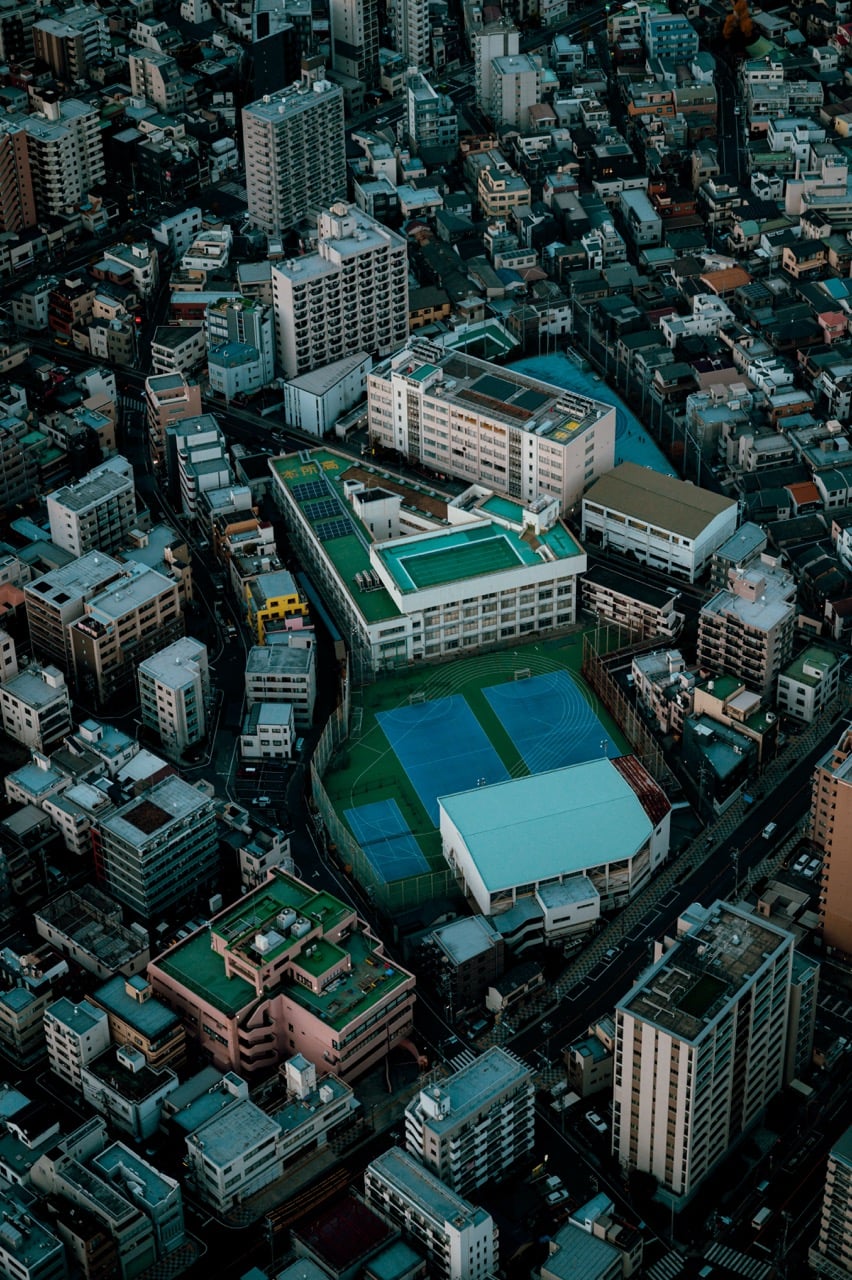
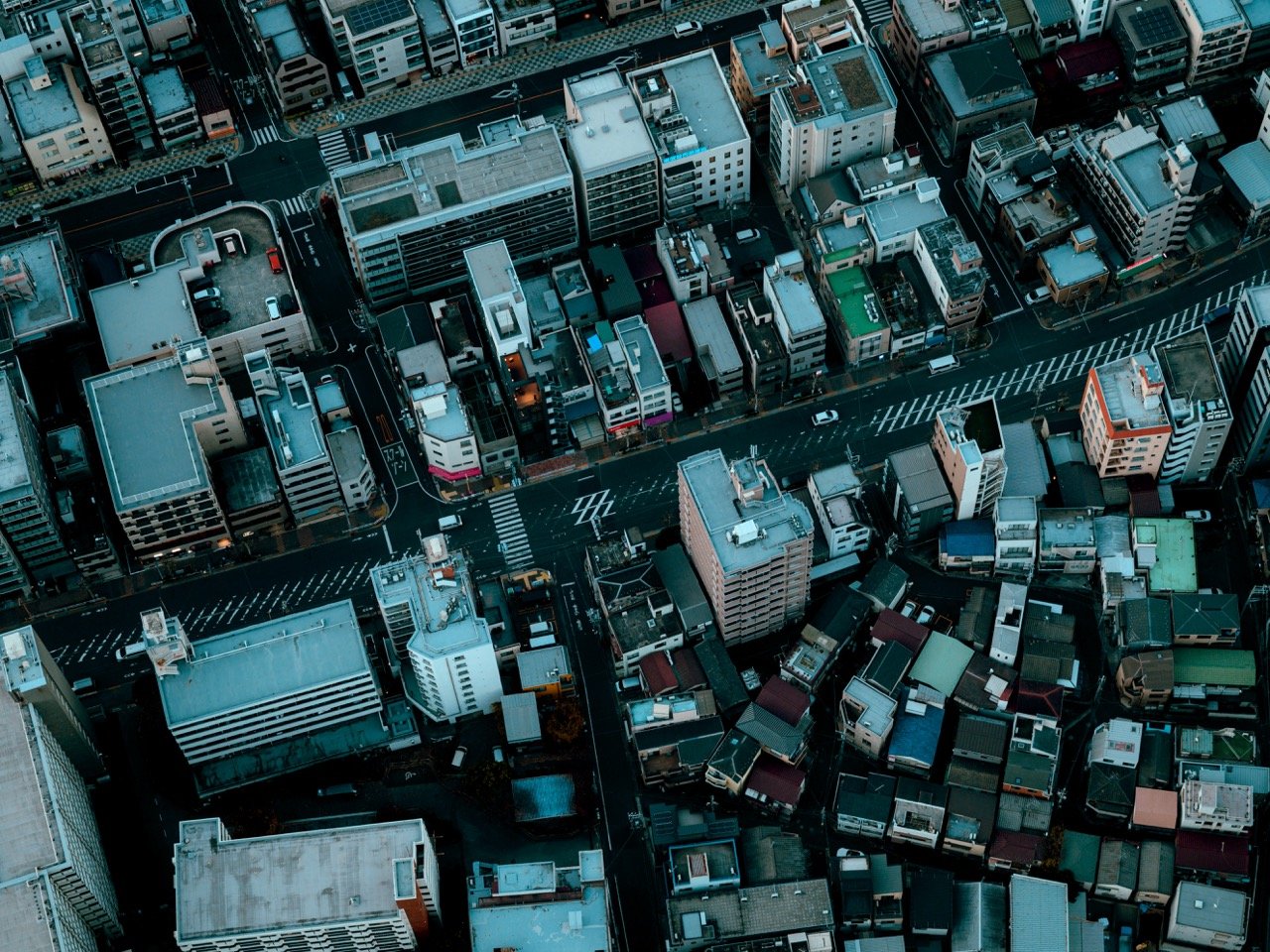
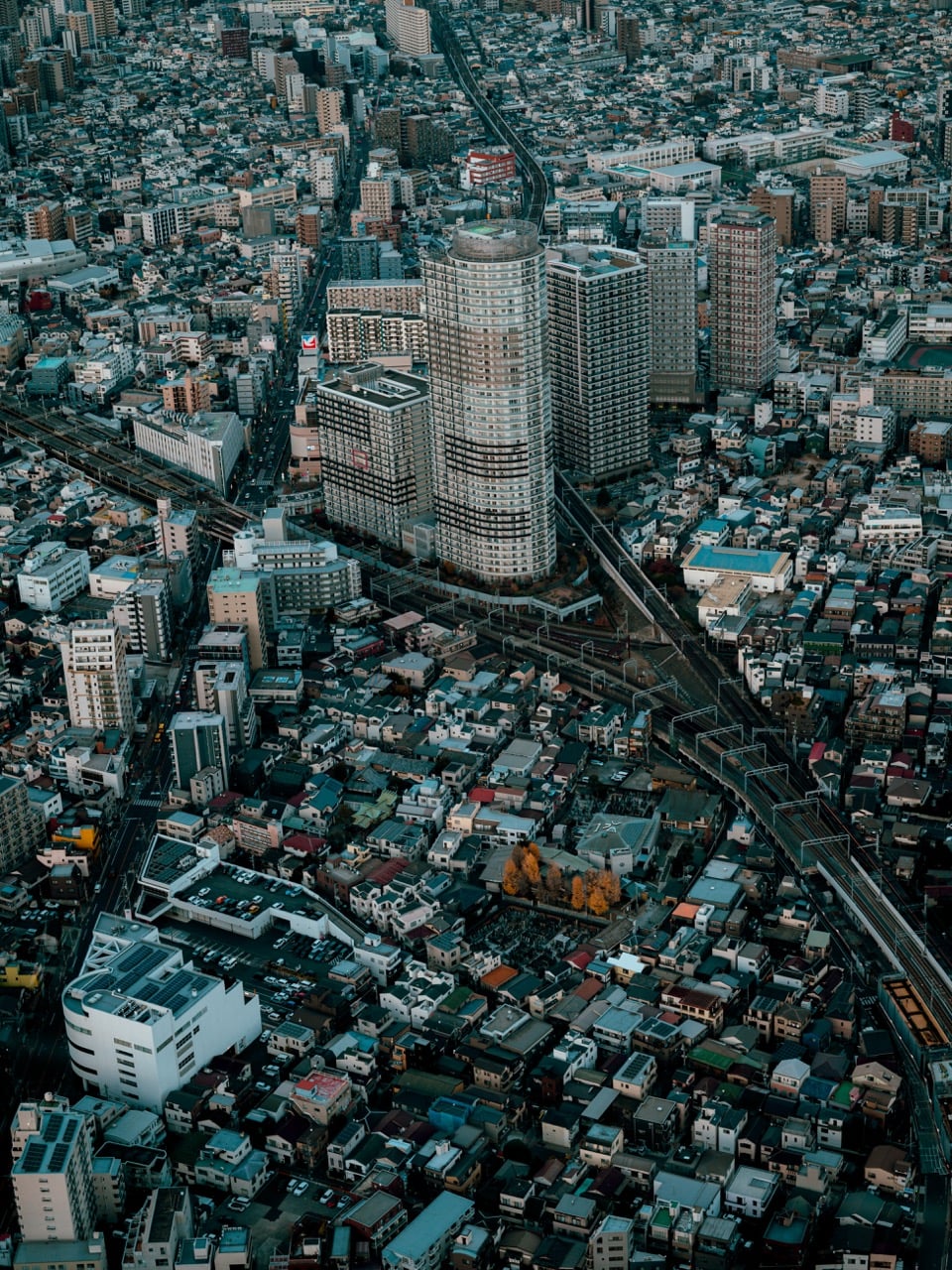
For example, some of my best photos from the Skytree involved using the roofs of the nearby buildings. Many of these are much lower, and it feels like you’re looking at a miniature version of the real Tokyo. I also noticed other random details that looked quite cool, such as car parks.


2. I Won’t Lie: Portrait Photography at the Skytree Is Quite Difficult
I wanted to take some portrait photos as a memory from our Japan trip; we decided to put together a little book with our own snapshots. But to be honest, taking pictures of other people at the Skytree is very difficult for several reasons.
It’s naturally harder to take these kinds of pictures when it’s crowded. However, that wasn’t the main problem. One of the biggest issues was that it was quite hard to get the skyline in the background with the person in the foreground. The way that the building goes round, rather than being flat, made this more challenging for me.
You’ll also notice several pillars getting into your pictures. If you want to take portrait pictures, I’d recommend trying to either include these in a creative way or cropping them out when possible. For general snapshots, your phone is fine (and honestly, probably better than a proper camera in some instances).
3. Use Other People in Your Pictures Where It Makes Sense
The view of the Tokyo Tower was very popular with other visitors, but since the tower was quite far away, I wanted to make my pictures look more unique. One way that I did this was by including other people in my images.
For example, I took the below pictures of people looking out toward Tokyo . When I got to the front, I actually just focused mainly on admiring the Tokyo Tower in the distance rather than trying to photograph it more.


4. Take Photos of Tokyo From All Angles
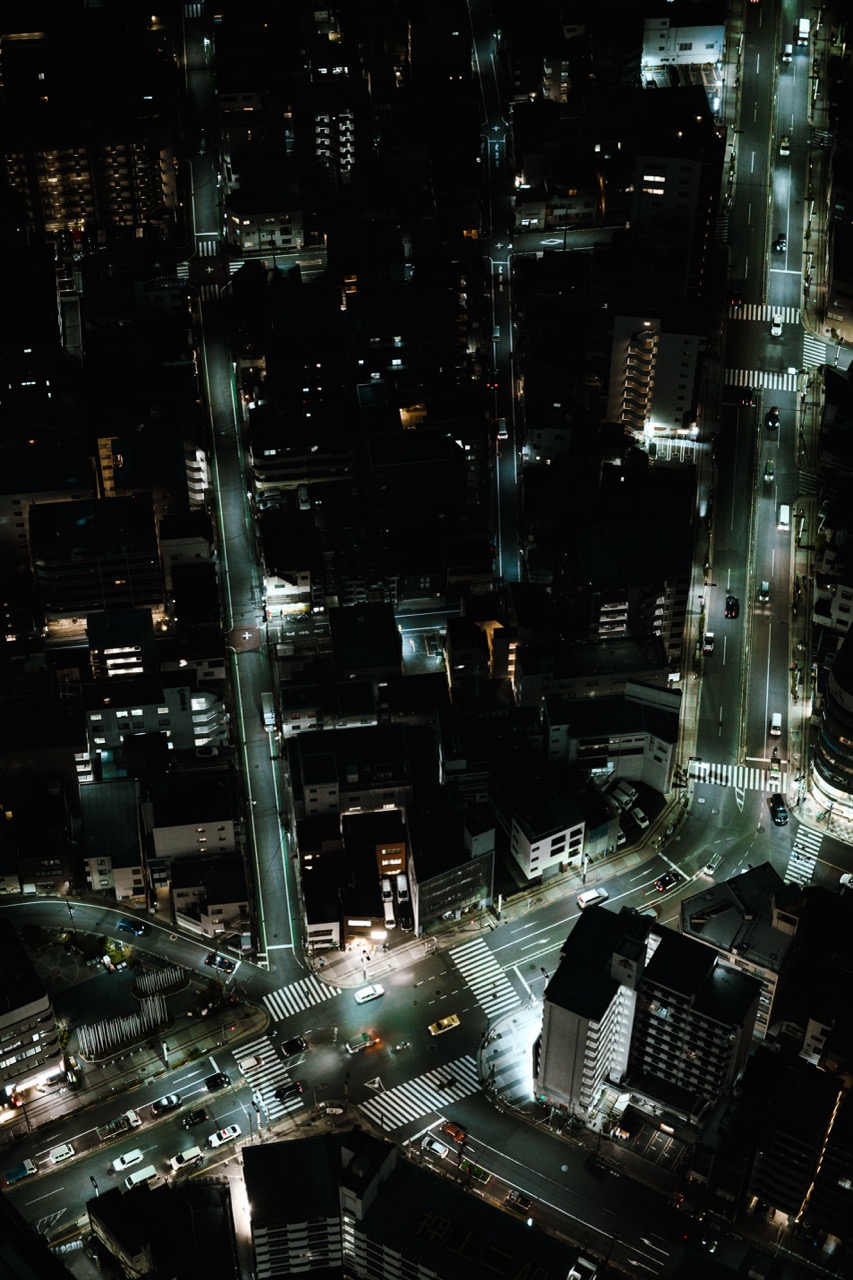
You’ll definitely want to see the main views from the Skytree, and you 100% should allocate some time to these. However, Tokyo looks cool from the sky in all directions. And actually, I found that some of my favorite images were those that I wasn’t expecting to take before.
I recommend going to the Skytree with an open mind and taking some time to just observe each part of the city. You’ll almost certainly find a unique angle that you may otherwise not have.


5. Visit the Skytree at Night for Cool Photos of the Tower Itself
In addition to the views from the Skytree itself, I personally think that the tower itself looks cool. It always amazes me how we can be capable of building these kinds of structures, and the Skytree looks especially interesting from the outside at night.
Even if you don’t go to the observation deck, I still think you should take photos of the building’s exterior. It’s lit up at night, which makes it look even more interesting. You can get some cool views when you walk along the river, too.


6. Increase Your Camera’s ISO
Since you’re not allowed to use tripods at the Skytree, you’ll need to find alternative ways to stabilize your camera. As the sun goes down, you won’t get a lot of light inside the building, either.
While there are some spots to put your camera on a flatter surface, it’s difficult due to the number of people at the Skytree. On top of that, I also feel like I’m in the way of others—which I do not like at all. The simple solution, in these cases, is to increase the ISO.
You will inevitably have grainier pictures if you bump up the ISO, though this will depend on your model as to how much you can get away with. However, it’s much better than shaky photos. Plus, you can use the grain either creatively or denoise in Lightroom later.
Some Photos to Inspire You for Your Visit to the Skytree 🇯🇵
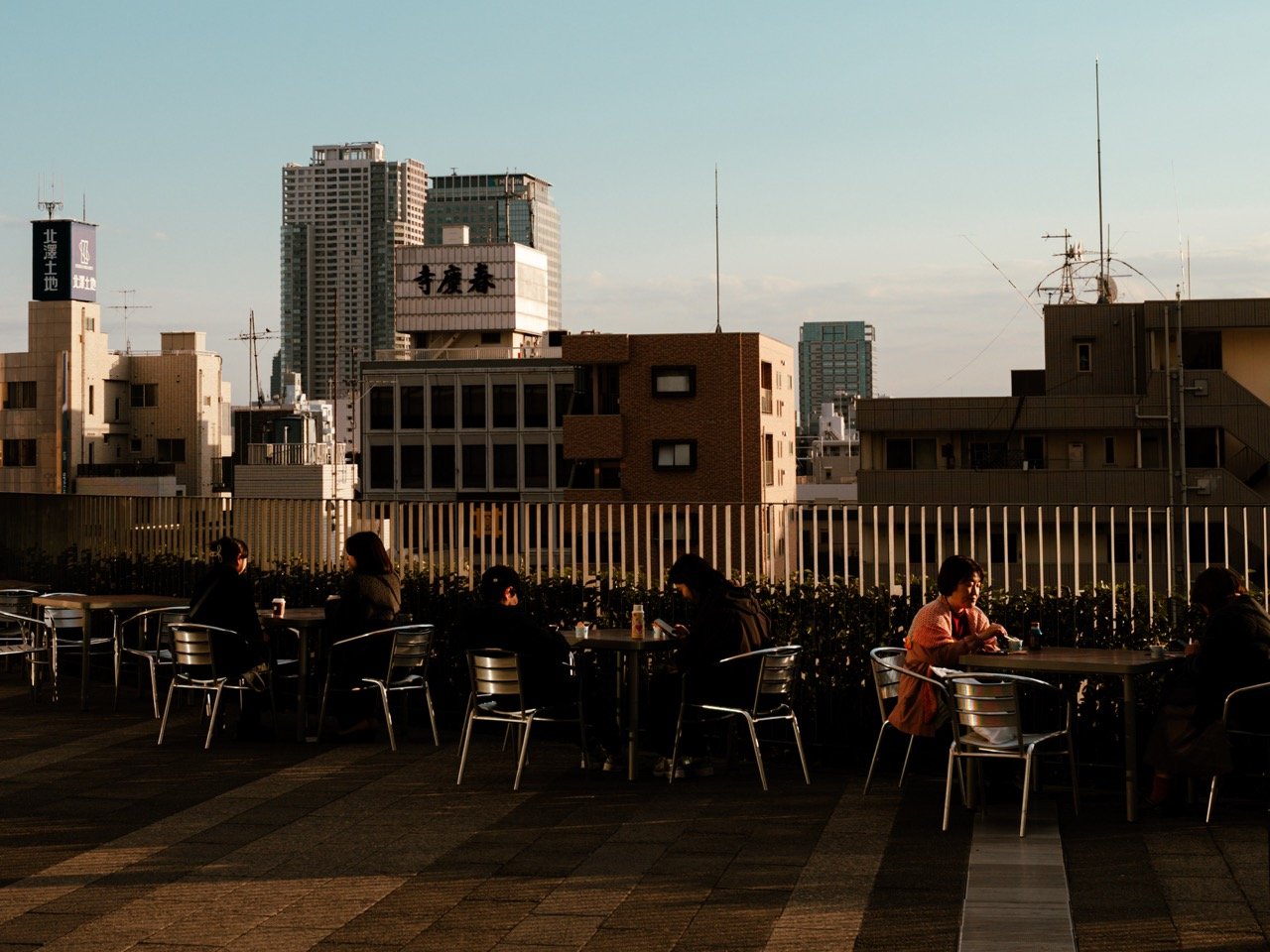
Besides giving you the practical information you need to visit the Skytree, I also wanted to inspire you with some more photos. Here’s a selection of some of my favorites. 🙂
Final Thoughts
The Skytree was one of the highlights from my first trip to Tokyo, and I would happily visit again. We had amazing views of the city in all directions, and I also liked how, even with a standard ticket, you have access to multiple floors.
However, I definitely noticed lots of things that would be overwhelming to a first-time visitor. The good news is that now you’ve read this guide, you should find your trip much easier. Above all, I recommend allocating significant time between traveling to the Skytree and leaving the station, and spending as long as you need to admire the views when you arrive.
While the Skytree is best visited a few days into your Tokyo trip, it’s worth going to regardless. And although I enjoyed visiting at Golden Hour, doing so during the day will be just as rewarding.
Pin for Later 📌


