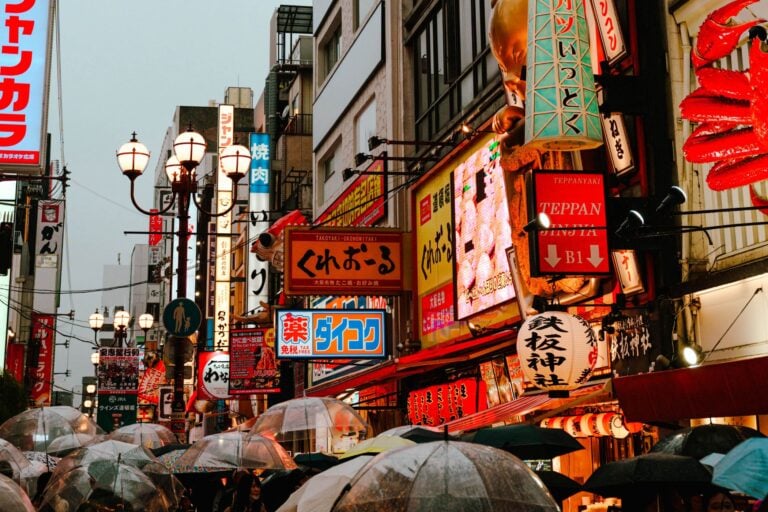
Navigating Tokyo With Jet Lag 🫠
*Disclaimer: This blog is reader-supported, and this page might therefore contain affiliate links. When you book or buy through them, I may earn a small commission at no extra cost to you. It helps me write these in-depth and original guides, so thank you for the support! Full Affiliate Disclosure
I’m not going to sit here and whine about flying in economy class for 12 hours because let’s be real. Visiting Japan is a privilege, and so is being able to fly to such a cool destination. But at the same time, let’s also be honest. Navigating one of the world’s largest cities, when your mind is in a completely different time zone, and after having someone kick your chair for half a day (and sitting next to someone else snoring), probably isn’t your definition of fun.
-ARTICLE CONTINUES BELOW-
Get My Japan Golden Route Guides Delivered to Your Inbox
Save time on researching and get all my Golden Route travel guides delivered straight to your email inbox, plus some extra tips and newsletter updates. Unsubscribe anytime.
Nonetheless, it’s a reality you *will* need to face when visiting Tokyo from basically anywhere that isn’t in Oceania or somewhere else in Asia. Yeah, sure—you’ve seen the cool photos of the Shibuya Crossing and the Sky Tree on your Instagram. But you probably haven’t seen the reality of weaving through over 30 million people on two hours of sleep, both of which were interrupted anyway, in the past 24 hours.
Navigating Tokyo with jet lag is a bit of a challenge, especially if you’ve never been so far from home. While I have visited the US from Europe several times, I learned on my first trip to Japan that Asia—and especially Tokyo—is a whole different ball game. I guess it’s good that my chances of being scammed by a taxi driver were minimal compared to the guy who did it to me in NYC, but anyway.
I did spend five days in Tokyo, and absolutely loved it; I got to experience a lot, and actually, I adapted to the time relatively fast. Maybe it’s because I was so hyperstimulated, who knows? 🤷🏾♂️
Either way, I wanted to put together this full guide to help you navigate Tokyo with jet lag. I’ve based it on my own experiences, and I spent a good deal of time thinking about what I did well (and the things I should’ve done differently). I can’t stop your jet lag—sorry about that—but you should find easing yourself into this monolith of a city easier after reading my tips.
Your Flight Arrival Time Will Make a Big Difference
I didn’t really start with much context, so let me do that here. We flew to Tokyo from Helsinki, having spent a day there after flying from our home in Copenhagen. Our flight left Helsinki in the evening, and since it was December, it had already been pitch black for a few hours before we flew to Tokyo.
This, in my opinion, made it easier to fall asleep. It would have certainly been interesting (read: painful) if we had flown in the summer instead, when it basically never gets dark.
Our flight landed in Tokyo around mid-afternoon, and it was dark for most of the route. I think that getting in around this time made adapting much easier than if we had arrived first thing in the morning.


My general stance on long-haul travel, especially when the time difference is 5+ hours, is that you want to arrive around mid-afternoon or early evening. I do this most of the time when I visit my family in New York City, and it makes it much easier to stay awake until it’s actually time for bed. Tokyo was no different in this respect.
Your first few hours after landing will involve completing the necessary border control paperwork, getting your suitcase, and then heading into the city. By the time you’re out and have checked into your hotel, it’ll be evening (if you fly at the times I mentioned). You then only need to stay awake for a few hours before going to bed, by which point you’ll be more than ready to.
Preparing in Advance Is a Good Starting Point
When I got on the plane from Helsinki to Tokyo, the first thing I did after sitting down was to change my phone and iPad time to Tokyo manually. I don’t know about you, but I find it kinda annoying when I wake up mid-flight and see that the time is random o’clock. At that point, getting back to sleep is a lost cause. The same thing happens when I’m at home, too.
By the way, as a side note: Japan doesn’t observe daylight savings time. So, the time difference will depend on when in the year you travel.
I do find that it’s easier to adapt to new time zones with more sleep, which sounds pretty obvious when I say it like that. But if you’ve ever flown on a long-haul flight before, you’ll know that “getting more sleep” often seems like an uphill battle. Music, for me, tends to help.
Generally, I listen to electronic music when I need to sleep on a plane. Sometimes, keeping the same song on loop helps; I have less of a want to wake up and constantly skip to the next song. Some of my favorite tracks to listen to that I listened to while flying to Tokyo were:
- Baume by il:lo
- Mimose by Parra for Cuva
- Japan [Satin Jackets Remix] by Tycho & Saint Sinner
- See (feat. Beacon) by Tycho
Having noise-canceling headphones also helps me, personally, because I am very sensitive to noise. If someone starts snoring, it’s pretty much confirmed that I’m not getting back to sleep for a few hours.
I know that some people will tell you to tire yourself out by staying up late the night before your flight. But for me, that advice would not have worked. I do think that some people naturally sleep better on planes, and I am not one of those. If I had stayed up later the night before as well, I would’ve been well and truly cooked by the time I landed in Tokyo.

When You Get to Tokyo, It Will Take You a Few Days to Realize You’re Even Here
… At least, this was the case for me. Since I was on my first trip to Tokyo, everything was new to the point of feeling surreal. The neon streets, massive buildings, and the fact that everything was in a language I couldn’t understand all made me feel like I was in a movie.
We actually met a Japanese guy on the first night we were in Tokyo who said that our bodies would take a few days to realize we were actually there. Besides being good to know for general advice, he was also right.
I know that some people reading this will have visited Tokyo before. But for the majority, I’ll assume it’s your first visit. What this means is that you’ll basically feel like you’re having an out-of-body experience for the first two nights or so. Knowing this will help you accept things for what they are.
Try to Stick to a Proper Bedtime
I actually slept pretty well on my first night in Tokyo, getting around nine hours of sleep and waking up just before 6 am the next day. I was still exhausted from traveling, but for sure, I felt better than if I had let vibes take over and not tried to stick to a normal bedtime.
When you arrive in Tokyo, it’s easy to stay up late or go to bed super early when you’re jet-lagged. Now, I know that you can’t always fight off the tiredness—and you shouldn’t feel bad if and when your sleeping schedule is out of whack for a few days. But at the same time, I recommend that you try to stick to a proper bedtime as much as possible.
What this looks like will depend on your normal sleeping habits and what you plan to do in Tokyo. Generally, I go to sleep quite early and like to wake up relatively early. As a result, I went to bed around 21:30. We set a back-up alarm for 08:00 so that we didn’t accidentally sleep in, since we wanted to actually see Tokyo. We were flying home from Osaka rather than returning, which meant we didn’t have as much time as we maybe would have liked (though Osaka is also cool, so no complaints).
As much as possible, try to go to bed around the same time as you usually do. Once your jet lag is close to passing, the good news is that you’ll probably be tired from walking all day anyway. So, it’s likely that you’ll get to sleep more quickly.


… At the Same Time, I Don’t Recommend Just Staying at Your Hotel
I’ll be so honest with you. When we first arrived at our hotel, I wanted to do nothing but just sit on my iPad for the whole evening. However, my girlfriend thankfully convinced us to go out and actually get some steps. The fact that we were hungry also helped, admittedly.
After showering and getting changed, I certainly felt more alive and ready to go for a walk. Once we started walking, it was easier to stay awake until bedtime.
You don’t need to go on some crazy long walk, but if you arrive in the late afternoon or evening, I do recommend at least going out and doing something. Even if you get to Tokyo early in the morning, you’ll feel much better if you go out for a few hours and then take things easy at your hotel.
You Probably Should Take Some Cash Out as Well
Being jet-lagged and hungry is not a good combination. While you can pay by card in many places throughout Tokyo, many of the smaller establishments are still cash-only. To avoid the annoyance of seeing the dreaded “Cash Only” sign somewhere you find appealing, I recommend taking some JPY out from an ATM.
Convenience stores have ATMs for you to use; we went to multiple of these without issues. The alternative is to just have convenience store food for the first few nights; it’s cheap and tastes good. Seriously, Japanese convenience stores are an adventure in and of themselves.
And just in case you’re wondering, Lawson is the GOAT convenience store. But honestly, 7-Eleven is fine. So is Family Mart, though I admittedly don’t like it as much as the other two.
How I Recommend Experiencing Tokyo While You’re Still Jet-Lagged
As cool as Tokyo is, you will feel like you’re repeatedly slamming your hand in a car door if you try and be rigid with your plans while you’re jet lagged. Trying to get across the entire city will also quickly infuriate you.
One thing we did pretty well during our first few days in Tokyo was to be flexible. We understood that we only had five days, and since there’s so much to see and do, we wanted to still do stuff. However, we picked one or two main sights and then just let ourselves go with the flow. As it goes, we actually saw quite a lot by doing this… but anyway 🤣.
Since Tokyo is huge, I recommend breaking it down into manageable chunks. This is useful for everyone, but even more when you’ve just been on a 12-hour flight a few days before. The Subway is amazing, but if possible, I’d recommend choosing adjacent neighborhoods rather than trying to visit places on the total opposite side from one another.
I’d Also Rather Do a Million Things Than Try and Navigate Shibuya or Shinjuku When Jet-Lagged
To be totally honest, I found Tokyo very peaceful considering its size. While sometimes overwhelming, it wasn’t chaotic. Shinjuku and Shibuya, however, were exceptions.
Shinjuku Station at rush hour is an… experience, to say the least. I have never seen so many people in one place, and that’s despite growing up in London and visiting NYC multiple times. We went there after fully adapting to Japanese time, but trying to do that while jet-lagged? No thank you.
The same goes for the Shibuya Crossing. I do think it’s worth seeing on your first trip to Tokyo, but I would never want to navigate it while jet-lagged (or any of its surrounding streets, for that matter). Then again, I’m also an introvert. If you aren’t, maybe you want to throw this advice out the window and dive in. I dunno.
Okay, Cool. So Can You Give Me Some Jet Lag-Friendly Activities?
Certainly 🙂. To help you ease into Tokyo, I’d recommend doing each of the below while you’re still recovering from jet lag. I’ll soon write a full guide on my overall top things to do in Tokyo, but these are some good starting points for your first few days.
1. Senso-ji Temple at Night
I actually think you should visit Senso-ji both during the day and at night, but it’s significantly more crowded during the day. If you’re looking to experience the temple without having sensory overload, walking around in the evening is a really nice experience.
We actually did this on our first night in Tokyo. While there were other people around, it was by and large very calm. The temple also looks stunning when it’s lit up, too; it’s illuminated after the sun goes down until 23:00.


Some of the streets close to Senso-ji are quite busy, even during the evening. But once you get to the temple, the crowds should thin out significantly. While you can’t enter the main hall at night, the grounds outside are open 24/7.
2. The Tokyo Tower During the Day
We visited the Tokyo Tower on our first morning in the city, and I was surprised by how quiet it was. While there were still other people, and it got busier by the time we left, it was by no means as crowded as the Sky Tree.
The Tokyo Tower is one of many great viewpoints in the city, and you’ll start to get a sense of just how big Tokyo is when you’re here. The building itself is also one of the coolest in the Japanese capital, in my opinion.


Tickets for the Tokyo Tower are very affordable, and you can book them in advance. When you arrive, you’ll reach the observation deck by elevator.
3. Nezu and Yanaka Are Also Nice 🙂
One of the biggest things that surprised me about Tokyo is how many peaceful neighborhoods it has. Many of these feel like towns in and of themselves, and I loved getting to know the many faces of what makes this city so cool.
We had already recovered from jet lag by the time we went to Nezu and Yanaka, but I would’ve happily explored them on our first few days. While Yanaka Ginza is busy (the Nezu Shrine was too, but not insufferable), everything else felt pretty manageable.
You’ll find a number of pretty side streets in both neighbourhoods that are worth wandering around. The houses here are an interesting mix of architecture, too.


4. Basically Any Ramen Joint You Don’t Need to Wait in Line For Is Worthwhile, Too
You really don’t have to worry about having bad ramen in Tokyo. Regardless of where you are in the city, you’re never too far away from somewhere serving the stuff. You will, however, notice that many of them have queues outside at lunchtime.
A lot of ramen joints are also quite small. If you’re too tired to wait, I recommend finding anything where you don’t need to wait in line. You will find something worthwhile if you walk enough.
I also recommend having cash for these; some will accept card payments, but having cash handy is always the safer option.
Final Thoughts
Landing in Tokyo will activate all of your senses, and it’ll take you at least a few days to adapt. Besides feeling tired after a long flight, adapting to the time zone and the huge culture shock will both play a part. But after visiting the city myself, I can confirm that jet lag doesn’t need to hinder your fun.
Preparing in advance can help you limit the impact of jet lag, and if you can, it’s always good to get some extra sleep on the plane. That, however, is not always possible; if not, doing the basics like sticking to a proper bedtime can help massively.
Hopefully, you now feel much more comfortable with navigating Tokyo during your first few days. I designed this guide to be re-read whenever needed, so be sure to bookmark it for easy referral later.