Copenhagen, Denmark: A Local’s Guide to Planning Your Trip
*Disclaimer: This blog is reader-supported, and this page might therefore contain affiliate links. When you book or buy through them, I may earn a small commission at no extra cost to you. It helps me write these in-depth and original guides, so thank you for the support! Full Affiliate Disclosure
It’s hard to put how I feel about Copenhagen into words. The Danish capital was my first solo trip destination on a crisp autumn morning in 2016, and I instantly fell in love with the lifestyle, architecture, and people. Seven visits later, I finally made this city my home in 2020. To this day, it’s still the best decision I’ve ever made—and I’m so excited to share this in-depth Copenhagen travel guide with you.

-ARTICLE CONTINUES BELOW-
All My Copenhagen Guides. Delivered.
Save time on researching and get all my Copenhagen travel guides delivered straight to your inbox, along with monthly newsletter updates. Unsubscribe anytime.
I have wanted to publish this article for over three years but deliberately waited until I was certain it could be the best guide to Copenhagen online. All the information here comes from first-hand experience; expect to find the best local gems and ONLY the tourist attractions that I think are worth seeing.
I’m already excited for you to hop on the plane and experience all Copenhagen has to offer. Denmark’s city has everything: style, culture, and innovation packed into a compact urban area. But before you go, read this guide to gather all the information you need. If you’re looking for specific information, use the table of contents to navigate.
Getting to Copenhagen
Copenhagen is one of Scandinavia’s biggest transport hubs and is well-connected to the rest of Europe. You can also fly directly from the US and a handful of other intercontinental destinations.
Below, you’ll find out how to get to Copenhagen using multiple transport methods.
Getting to Copenhagen by Plane
Flying to Copenhagen couldn’t be easier. The city only has one airport—Kastrup Airport (CPH)—and it’s one of the best airports you’ll use. Copenhagen Airport is less than 15 minutes from the city center, and Sweden is less than an hour away by train in the opposite direction.
Several airlines fly to and from Copenhagen Airport, including SAS, Norwegian, FinnAir, EasyJet, and SWISS Airlines. Below are some rough travel times from various international destinations:
| Destination | Flight Duration |
|---|---|
| New York City 🗽 | 7 hours and 25 minutes |
| London 🇬🇧 | 2 hours |
| Stockholm 🇸🇪 | 1 hour |
| Zürich 🇨🇭 | 1 hour and 40 minutes |
| Berlin 🇩🇪 | 1 hour and 5 minutes |
| Boston 🇺🇸 | 7 hours and 25 minutes |
| Miami 🌴 | 9 hours and 25 minutes |
| Oslo 🇳🇴 | 1 hour |
| Lisbon 🇵🇹 | 3 hours and 45 minutes |
| Amsterdam 🇳🇱 | 1 hour and 30 minutes |
If traveling from outside Europe, you might need to change somewhere to get a connecting flight to Copenhagen. I recommend Stockholm, Oslo, Amsterdam, London, or Helsinki if you do that. You’ll find plenty of fun things to do in Oslo and Stockholm, so if you want a bigger Scandinavian adventure, consider staying in one of those cities for a few days before coming to Copenhagen.
Iceland is also an ideal choice if you’re coming from North America, and you can also stay for a couple of days if you do the Icelandair Stopover.
How to Get From Copenhagen Airport to the City Center
The S-Train from Copenhagen Airport to the city center takes 12 minutes, and it’s a good option if you’re staying in Indre By, Østerbro (get off at Østerport), Ørestad (get off at Ørestad), or Vesterbro.
You can also take the Metro, which is equally efficient. The Metro is a better choice if you’re staying in Frederiksberg, Nørrebro, Christianshavn, or most of Amager.
Tickets from Copenhagen Airport to the city center cost 30 DKK. If you stay within the city’s main perimeters, get the ticket from the airport with three zones. You can also enter your specific destination if you want to be 100% sure.
You can buy tickets in the Rejsebillet app (iOS and Android).
Note: Make sure that you’re on the right platform at Copenhagen Airport! Platform 2 goes to Copenhagen and other parts of Denmark, whereas Platform 3 is for trains to Sweden.
Reaching Copenhagen by Train
You can also reach Copenhagen via direct trains from Sweden and Germany. The journey to Hamburg is around four-and-a-half hours; having been to Germany’s second-biggest city multiple times, I would strongly recommend visiting both cities on the same trip if you can.
Regular trains run round-the-clock from Sweden, too. Malmö is less than an hour away, making it very possible to visit Copenhagen and Malmö on the same weekend. You can also catch direct trains from Gothenburg (3.5 hours) and Stockholm (4.5 hours).
Coming to Copenhagen by Sea
One unique way to reach Copenhagen is by sea, and you can get a direct ferry from Oslo. The journey takes around 18 hours; I went from Denmark to Norway in 2023 and can thoroughly recommend it.
The buffet on board is good, and you’ll find various rooms. We stayed in a standard room, which was fine, but you can find something else if needed. The fjord views as you approach Norway are lovely and the perfect sight to wake up to. On board, various bars and other amenities are available.

You can book ferry tickets from Copenhagen to Oslo on the DFDS website.
Driving to Copenhagen
If you’re coming from Sweden or Germany, you can easily drive to Copenhagen. Note that you’ll need to pay a fare if you travel across the Øresund Bridge connecting Denmark and Sweden. You can find a breakdown of those prices here.
While Germany, Denmark, and Sweden are all in the Schengen Area, passport checks often occur when traveling via land crossings. So, make sure you have your passport. If you’re an EU/EEA/Swiss citizen, you can bring your ID card (but I would still recommend bringing your passport).
Getting Around Copenhagen
Copenhagen is one of the easiest cities in Europe to get around. The city has over 300 kilometers of cycling lanes, and its public transport system also works like a dream. Walking around is also a joy, and it’s easy to lose track of time as you wander the Danish capital’s streets. Here are all your options for getting around Copenhagen (we’ll also cover how to buy public transport tickets).
Metro
The Metro is the best public transportation option in Copenhagen. The Cityringen route connects the main parts of the city center, including Copenhagen Central Station. Kongens Nytorv is the most important station to remember; here, you can easily change to a different line (including to the airport).
Copenhagen recently extended the Metro in 2019 and 2020, and new lines extending to Sydhavn and Valby opened in the summer of 2024.
S-Train
The S-Train connects Copenhagen with the rest of Sjælland—the island on which most of the city is situated—and vice versa. It’s a good way to get around the rest of the island, including day trips to places like Helsingør and Frederiksborg Castle.
Within the city, the S-Train is also a simple way to travel quickly between the main stations: Nørreport, Østerport, Vesterport, and Copenhagen Central Station.


Boat
The yellow Harbor Bus runs up and down Copenhagen’s inner harbor and is ideal for getting to Refshaleøen—which is one of the best things to do in Copenhagen during the summer. The Harbour bus also goes to Nordhavn and Sydhavn, stopping at Nyhavn and a handful of other stops along the way.
While this is a slower way to travel, it’s also a more satisfying public transport method. So, if you’ve got a bit of time, take this relaxed route. The ticket price is the same as for the Metro and whatnot.

Bus
Copenhagen has an extensive bus network that’ll get you around where the Metro and S-Train can’t. You probably won’t need to use the bus in the city center, and it’s not the most efficient way to get around unless you’re going to Refshaløen. But if you’re staying in one of the outer areas, the bus is ideal.
You can also take the bus directly and enjoy a fun day trip from Copenhagen to Dragør.
How to Buy Tickets for Public Transport in Copenhagen
The easiest way to buy public transport tickets in Copenhagen is via the Rejsebillet app (iOS and Android). You can get a two-zone ticket in the main part of Copenhagen, which costs 24 DKK for a single journey. For longer-distance journeys, you may need to pay more; the price depends on which zone you’re traveling to.
Before using the Rejsebillet app, you need to enter your mobile number and verify it via a code. You’ll then have access to ticket purchases.
If you don’t want to use your phone, you’ll find ticket machines at train and Metro stations throughout Copenhagen.
For the Metro, you can also check in and out on the DSB app.
Side note: If you’re planning to visit multiple museums and attractions, get free public transport and admission to many attractions by purchasing the Copenhagen Card.
Bicycle
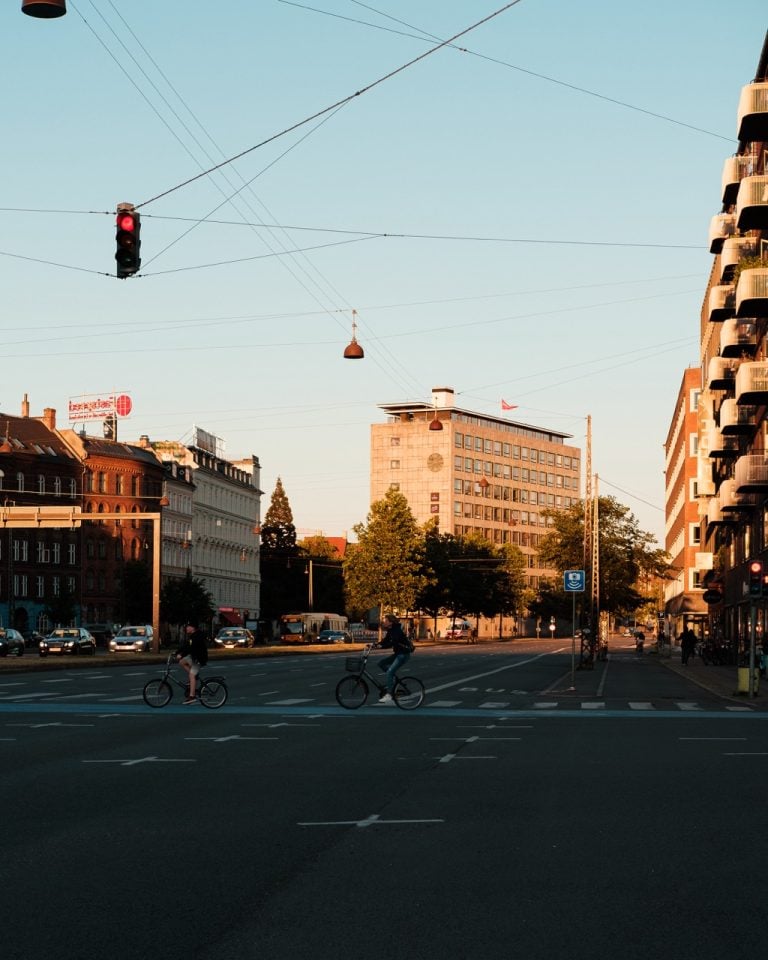
While Copenhagen’s public transport network is quite efficient, I’m just going to be honest—I barely use it. The simple reason is that cycling is the most effective way to get around the Danish capital.
Many Copenhageners, including myself, cycle year-round. Whether you’re visiting Copenhagen for the first time or the 20th, biking is an excellent way to truly experience the city like a local. Many hotels in Copenhagen offer bicycle rental services, and you can also pick up a bike from a whole host of shops in the Danish capital. Donkey Republic is another option.


I’ve already written a full guide to cycling in Copenhagen and the rules you should follow, and you should read that once you’ve finished reading this article. But below are the three most important ones:
- Always cycle in the same direction as the traffic.
- Put your left hand up like you’re going to high-five someone when stopping to get off your bike.
- Always signal when you’re turning left or right.
Getting Around Copenhagen on Foot
Copenhagen was built for exploring, and one of the best things you can do here is to simply stroll around. Getting around Copenhagen by foot is incredibly simple, with many of the main districts close to one another. You’ll also have the added advantage of discovering unique streets and architecture that you might otherwise have missed.
The only thing to remember when navigating Copenhagen on foot is not to cross the street when the pedestrian lights are red. Expect to feel the scorn of everyone else if you do. My inner Londoner doesn’t mind a good jaywalk, but this isn’t the best place to do that.

Food and Drink in Copenhagen
Copenhagen’s culinary scene rivals cities eight times its size. You’re unlikely to find many better places for baked goods, and experimenting with food is a given in the Danish capital. We’re talking porridge that you’d happily pay $11 for and all kinds of excellent pizza places.
The Danish capital also has a varied nightlife scene, and you’ll find plenty of spots for a low-key night out alongside the standard clubs. Here are my top recommendations for food and drink in Copenhagen.
Food
Café Dyrehaven (Brunch)
Café Dyrehaven is one of my favorite places for brunch in Copenhagen. The Eggs Benedict is very good, and you should also try the potatoes in Béarnaise sauce. Outdoor seating is available, making it a great place to chill out during summer. It’s also in a prime spot for people-watching along Sønder Boulevard.


Address: Sønder Boulevard 72, 1720 København V
Website: https://www.dyrehavenkbh.dk/
Warpigs (Lunch/Dinner)
Warpigs is in trendy Kødbyen (also known as the Meatpacking District). Here, you’ll find a selection of pork dishes and an ever-changing menu of beers produced by Danish craft beer giant Mikkeller. It can get quite hot inside during the summer, but there’s also plenty of outdoor seating.

Address: Flæsketorvet 25-37, 1711 København V
Website: https://warpigs.dk/
Gasoline Grill (Burgers)
Copenhagen has several burger joints worth checking out, but Gasoline Grill stands head and shoulders above the rest. There are several establishments throughout the city, including one in Tivoli and another at the airport. The burgers are available in limited quantities each day, and the beef used is 100% organic.
Address: Citywide
Website: https://www.gasolinegrill.com/
Krøgers Familiehave (Danish)
In addition to the many international cuisines you’ll find in Copenhagen, you can also enjoy traditional Danish comfort food in various spots throughout the city. Krøgers Familiehave is one of the best, and it’s an ideal place to spend a summer’s evening outside.
At Krøgers Familiehave, you can enjoy all-you-can-eat flæskesteg (fried pork) and potatoes, along with a handful of other dishes. It’s a good idea to book a table in advance.
Address: Pile Allé 18, 2000 Frederiksberg
Website (in Danish): https://www.kroegershave.dk/
Forno a Legna (Pizza)
I’ve been to Forno a Legna more times than I can count, and it’s my favorite place to get pizza in Copenhagen. This cozy Frederiksberg restaurant offers an extensive pizza menu at affordable prices, in addition to an outside bar during the summer. Waiting times are often quite long, and there isn’t much seating available—so keep both of these in mind.
Address: Falkoner Allé 42, 1952 Frederiksberg
Website: https://www.dagensmenu.dk/forno-a-legna
Honourable mentions go to…
- GRØD: Get the best porridge you’ve ever had at this incredibly popular restaurant chain. My personal recommendation is the “ALL IN!, but you can choose from several other dishes—in addition to açai bowls, risotto, and more. Make sure that you get the carrot juice as well.
- Mahalle: Mahalle serves Lebanese food and has a few spots throughout the city. Enjoy halloumi salad and much more. In addition to Copenhagen, Mahalle also has a restaurant in Malmö.
- SURT: SURT is another of my favorite pizza places in Copenhagen, and it’s in the trendy new Carlsberg Byen district. Pick from an extensive selection of pizzas and wine; lunch and dinner options are available.
- BEAT Café: BEAT Café is on Enghave Plads, which itself has a whole host of great food options. Getting a table here can sometimes be difficult, but the sandwiches make for a great lunch. If you visit with others, you can also enjoy various tapas-style dishes.
Cafés and Bakeries in Copenhagen
When you’re in Copenhagen, you’ll have no problems finding a good pastry or coffee. Below are my favorite ones, and I’ll be honest: it was hard to narrow these down 🥲.
Bageriet Brød
Brød literally means “bread” in Danish, and this bakery on Enghave Plads excels in that and more. You’ll often see a queue outside on weekends, so I recommend getting there early to ensure you don’t miss the best stuff. The ciabatta bread is good, and so are the croissants.
Address: Enghave Plads 7, 1670 København
Map:
Apotek 57
Apotek 57 is another wildly popular Copenhagen bakery, and it’s an ideal spot for brunch as well. Seating spaces are limited, and you’ll probably wait a long time outside—but it’s so worthwhile. The eatery is attached to a cool design concept store, so you can get some inspiration for that Copenhagen-style apartment you’ll be dreaming of moving into.
Address: Fredericiagade 57, 1310 København K
Map:
Andersen Bakery
I’d known about Andersen Bakery for over three years before I finally decided to visit for the first time in the autumn of 2023. Let’s just say my girlfriend and I are so happy we went here.


Andersen Bakery is particularly known for its version of the fastelavnsbolle, a traditional Danish pastry sold in January and early February. But even if you come here at another point during the year, you’ll have a great selection of baked goods. My recommendation: Get one of the croissants.
Addresses:
Islands Brygge: Thorshavnsgade 26, 2300 København S
Ørestad: Ørestads Boulevard 49a, 2300 København S
Website (in Danish): https://andersen-bakery-eu.dk/
Meyers Bageri
If you’re looking for Copenhagen’s best cinnamon buns, go to Meyers. I will not allow any dissenting opinions on this one.
The bakery has a small store close to The Lakes in Østerbro, alongside a bigger one in Frederiksberg and a few other bakeries in the city. Besides cinnamon buns, you can choose from a selection of other pastries. I also recommend the “madbrød” sandwiches if they’re in stock when you’re there.
Addresses:
Østerbro: Classensgade 33, 2100 København Ø
Amagerbro: Amagerbrogade 48, 2300 København S
Frederiksberg: Gammel Kongevej 107, 1850 Frederiksberg
Nørrebro: Jægersborggade 9, 2200 København N
Website (in Danish): https://meyers.dk/bageri/meyers-bagerier/
Juno the Bakery
Juno the Bakery is one of Copenhagen’s best-known bakeries, and you’ll almost always see a long line outside. The bakery is in upscale Østerbro and is home to some of the city’s most expensive pastries. But don’t let that put you off; they’re well worth it. Make sure you try the cardamom buns.
Address: Århusgade 48, 2100 København Ø
Map:
Café Kaf
Café Kaf is in Nørrebro and specializes in sourdough pastries and has a broad selection of cakes, along with coffee and other drinks. All the pastries and cakes are vegan-friendly if you have those dietary requirements.
Address: Birkegade 21, 2200 København N
Website: https://cafekaf.com/
Map:
ARD Bakery
ARD Bakery is a bit out of the way in Frederiksberg, but it’s worth journeying for. This sourdough bakery has a good selection of breads and pastries; you can eat outside or take your food elsewhere with you.

Address: Peter Bangs Vej 95, 2000 Frederiksberg
Website: https://ardbakery.dk/
Map:
Copenhagen Nightlife
If I’m honest with you, I think clubbing is the most boring thing in the world. But if you’re more of a lowkey person like me, Copenhagen has a few cool places for a quiet few. Below are my top selections.
Kødbyen
Kødbyen can get rowdy and does have some clubs, so maybe including the area is a bit of a contradiction. But alongside the clubs, you’ll also find a handful of bars. I’m once again going to recommend Warpigs, but it’s worth exploring to see what your options are. You can either get the S-Train to Copenhagen Central Station or Dybbølsbro and walk from there.
Liedkoeb
Liedkoeb in Vesterbro is a bit tricky to find, but this is your standard upscale cocktail bar. Expect to find well-crafted cocktails and a small selection of beers. You can reserve a table in advance if you’d prefer to do that.
Address: Vesterbrogade 72B, 1620 København
Website: https://lidkoeb.dk/
Map:
BRUS
BRUS is my personal favorite bar in Copenhagen. It’s spacious but communal, and you’ll find a good selection of IPAs and beers on the menu. You should also try the burgers while you’re there; plenty of other dishes are also available.


Address: Guldbergsgade 29F, 2200 København N
Website: https://tapperietbrus.dk/
Map:
Sightseeing in Copenhagen
For a relatively small city, Copenhagen has an impressive number of fun things to do. And to be truthful with you, you’re unlikely to do everything within just one trip.
I’ve divided this section into three subsections: Non-touristy, kind-of-touristy, and the tourist classics. I have also hand-picked each of these based on my own experiences.
The Non-Touristy Stuff
Kulturnatten (October Only)
Kulturnatten, known as The Culture Night in Danish, is a must if you visit Copenhagen in the autumn. For one Friday night each October, you can go behind the scenes into many of Copenhagen’s palaces, office buildings, and more. The schedule changes yearly, and you can buy tickets at 7-Eleven or via the website.
Assistens Kirkegaard
Assistens Kirkegaard is a cemetery in Nørrebro. It is the resting place of Hans Christian Andersen. Several other famous Danish names, including Søren Kierkegaard, were also buried here. It’s a pleasant place to walk through on a sunny day. Nørrebros Runddel is the closest metro station.
Address: Kapelvej 2, 2200 København N
Grundtvigs Kirke
Grundtvigs Kirke is arguably Copenhagen’s coolest church and might remind you of Hallgrímskirkja in Reykjavík if you’ve ever been to Iceland. The church is in the Bispebjerg district and very far from the tourist trail. Cycling here is a very enjoyable activity in the spring or summer.
Address: På Bjerget 14B, 2400 København NV
Website (in Danish): https://www.grundtvigskirke.dk/
Creative Space
Creative Space is a great place to spend the evening if you’re interested in drawing or painting. You can paint all kinds of ceramics, such as plates, pots, and cups. It’s a great place to come if you’ve got a longer trip or live in Copenhagen, as you’ll need to come back another day to pick up your creations.
Creative Space has several citywide spots. The “Bestil Bord” section on the website allows you to book a table in advance.
Website: https://creative-space.dk/
Frederiksberg Have
Frederiksberg Have, also known in English as Frederiksberg Gardens, is arguably the most beautiful park in the Copenhagen region. The impressive Frederiksberg Slot stands atop a hill overlooking the park, and from here, you can also see much of Copenhagen.
Frederiksberg Have has several picnic spots worth visiting for June’s Sankt Hans Aften celebrations.
The Kind-of-Touristy Stuff
The Lakes
The Lakes (known as Søerne in Danish) consist of three artificial lakes close to Copenhagen’s city center, and they’re another popular spot for the locals to hang out year-round. Going for a walk around all of them is a must, and it’s also an ideal running route if you want to keep up your exercise routine on holiday.

The Lakes border Indre By, Østerbro, Frederiksberg, Nørrebro, and Vesterbro. It’s easy to branch off into any of those districts from various points, and you’ll also find various places for coffee and food along the left bank.
Boat Tours
When I visited Copenhagen for the first time in 2016, taking a boat tour was one of the first things I did. Besides understanding the city’s geography better, taking a boat tour was a superb way to get another perspective of this beautiful city. The Danish capital has a close relationship with the water, and you’ll understand why once you take to it.
Several operators run boat tours in Copenhagen; if you want to take a boat tour, I recommend Stromma.
Alternatively, you can rent your own boat and explore the city.
Kongens Have and Rosenborg Castle
Kongens Have is the park surrounding Rosenborg Castle, and it’s another great place for a picnic or walk. Rosenborg Castle, meanwhile, is one of Copenhagen’s most impressive pieces of architecture. You can book tickets to see the castle’s interior, but it’s also cool to look at from the outside.


It’s also possible to visit Rosenborg Castle’s interiors.
Christiansborg Palace
You’ll almost certainly recognize Christiansborg Slot if you’ve watched Borgen (and if you haven’t watched Borgen, you need to rectify that right now). The Prime Minister’s office is arguably Copenhagen’s most imposing building, and you can get a fantastic view of the city from the tower. Entry to the tower is free, but you should allow time for security checks and queues.

In addition to admiring the Danish capital from above, you can also buy tickets to see the Royal Kitchen, Royal Reception Rooms, and more. Get those here.
Near Christiansborg Slot, you should also leave some time for photos along Marmorbroen.
Address: Prins Jørgens Gård 1, 1218 København K


Kastellet
The star-shaped Kastellet fortress is my favorite place to go for a walk in Copenhagen, and it’s pleasant enough to visit year-round. You’ll also find an English-style church next to Kastellet, in addition to the waterfront area near the Little Mermaid. Kastellet is free to visit.
Address: Gl. Hovedvagt, Kastellet 1, 2100 København Ø


Christianshavns Kanal
Many people say that Christianshavns Kanal is an alternative to Nyhavn, but I think you should visit both of them. The canal was based on the network you see in Amsterdam, and the area has a distinct Dutch feel. The whole of Christianshavn is worth visiting, and you’ll find a handful of bars and restaurants.


The Copenhagen Classics
Let’s be honest—some touristy things are popular for a reason. When visiting the Danish capital, you should allocate some time to each of the following.
The Round Tower
The Round Tower has one of the best views over Copenhagen, and it’s right in the city center. You can buy your tickets at the tower, and it’s open year-round. Besides its excellent view, the tower also has a cool staircase transporting you to the top.
You can buy tickets at the reception when you arrive at the tower. Expect queues during busy periods.
Address: Købmagergade 52A, 1100 København K

Tivoli
Locals and tourists alike love visiting the iconic Tivoli Gardens, and you absolutely should come here if you’re in Copenhagen during the times of the year when the park is open. Tivoli is right next to Copenhagen Central Station, and it’s a great place to simply walk around and have food if the rides aren’t your thing.
If you want to go on the rides, you’ll need to get a ticket that includes those. The general admission only covers entry to the amusement park. It gets quite busy in the evenings and on weekends, so try—if possible—and visit outside of those times.
Address: Vesterbrogade 3, 1630 København V
Nyhavn
I’m certain that I have taken at least 10,000 photos of Nyhavn in my life. Even after living in Copenhagen for over three years and visiting seven times before that, this row of colorful houses is still one of my favorite places in the city. It’s the hub of life in the Danish capital during the summer, with tourist boats plodding along the river and locals enjoying a beer and chattering along the banks of the canal.


It only happens once every three years or so, but Nyhavn sometimes freezes over and becomes a true winter wonderland. But even if you visit on a typically grey and windy winter’s day, the area is delightful.


I won’t lie to you; the crowds of tourists can get quite annoying. For that reason, I’d recommend visiting as early in the morning as possible. It’s also not too crowded if you come in midweek instead.
You can reach Nyhavn via the Metro at Kongens Nytorv or take the Harbor Bus directly here. From Kongens Nytorv, it’s a five-minute walk.
Vor Frelsers Kirke
Vor Frelsers Kirke, also known as the Church of Our Savior, also offers a superb view over the Danish capital. In my opinion, it’s Copenhagen’s most beautiful church from the outside. The spiraling stairs can feel a bit awkward if you’re afraid of heights, and it gets quite narrow at the top. You need to book your tickets in advance, and the tower closes on wet and windy days. I’ve written a full practical guide to the Church of the Savior if you want more information (and to see some nice pictures as well 🙂).


Address: Sankt Annæ Gade 29, 1416 København
Website: https://www.vorfrelserskirke.dk/
Amalienborg Palace
Amalienborg Palace is Denmark’s equivalent of Buckingham Palace, and it’s also right next to the beautiful Marmorkirken church. It’s also possible to book a guided tour of the interior.
To get here, take the Metro to Marmorkirken. The palace is a short walk from there. At midday each day, you can watch the changing of the guard in the main square.
Address: Amalienborg Slotsplads 5, 1257 København K
Bonus: Affordable Things to Do in Copenhagen
Copenhagen is quite an expensive city, but you can also enjoy several free activities. Some museums are free on certain days of the week; for example, Glyptoteket is free on the last Wednesday of each month.
You can also do each of the following if you’re visiting Copenhagen on a budget:
- Free walking tours (kind of free): This free walking tour departs from Rådhuspladsen every day at 11 am. I’ve done it twice and thought it was really enjoyable, along with being a great way to get your bearings of the city. These tours are tips-based, so it’s a good idea to give your guide a bit of cash if you feel like they did a good job.
- Havneringen: Havneringen is a 13-kilometer walk/bike ride around the entirety of Copenhagen’s inner harbor. You’ll see all the classic sights like Nyhavn while experiencing authentic life in the Danish capital at Sydhavn, Nokken, and various other areas. A map is available here (article in Danish).
- ILLUM Rooftop: You can find another free view of Copenhagen on the rooftop of the ILLUM department store. The balcony is outside Original Coffee, and you can glance at the people wandering below on Strøget—alongside admiring Christiansborg Palace.
Museums in Copenhagen
Copenhagen has a fantastic range of museums, but you should note that many are closed each Monday. Below, you’ll find my top recommendations.
Nationalmuseet
Nationalmuseet is the national museum of Denmark and a very good insight into the country’s history. Learn about the country throughout several periods in history, including the Viking era. You can buy your tickets online, but you do get free admission with the Copenhagen Card. Don’t forget to enjoy some Danish food at the restaurant once you’ve finished exploring.
To get here, take the Metro to Gammel Strand.
Address: Ny Vestergade 10, 1471 København K
Website: https://en.natmus.dk/
Designmuseum Danmark
Danish design is unmatched, and you can learn all about it at Designmuseum Danmark. The museum recently reopened after renovations and has several exhibitions worth checking out. If you want to make your home fancier, you can stop by the museum store after seeing all the exhibitions.
Like Nationamuseet, you can either buy an individual ticket or gain free admission via the Copenhagen Card. Marmorkirken is the closest Metro station to the museum.
Address: Bredgade 68, 1260 København K
Website: https://designmuseum.dk/en/
Glyptoteket
I visited Glyptoteket for the first time at Kulturnatten in 2022, and it quickly became one of my favorite museums in Copenhagen. The official museum name is Ny Carlsberg Glyptotek, and it features over 10,000 pieces. It was founded by Carl Jacobsen, who himself was the son of Carlsberg’s founder.
Besides viewing the art, the museum is worth walking around for its interior alone. It’s close to Copenhagen Central Station and included in the Copenhagen Card, though you can also book tickets online.
Glyptoteket has a really nice café that you should also visit.
Address: Dantes Plads 7, 1556 København V

Shopping in Copenhagen
If you’ve been dreaming about buying all those Danish clothing and design brands with Ø in their name, Copenhagen more than has you covered. And if you’re a non-EU resident, you can receive a tax refund via Global Blue.
Below is a brief rundown of the best places for shopping in Copenhagen:
- Strøget: I try to avoid this street as much as possible because it’s SO crowded. Nonetheless, you will find numerous big brands here—including the Copenhagen LEGO Store. Strøget is also home to ILLUM, and Magasin Du Nord—another excellent department store—is close to Strøget on Kongens Nytorv.
- Gammel Kongevej: This street between Vesterbro and Frederiksberg features several second-hand shops, bookstores, and more. Many of the second-hand stores have short weekend opening hours.
- Elmegade: This street is a pleasant corner of Nørrebro home to several eateries and a handful of independent shops.
- Falkoner Allé: This busy street in Frederiksberg is home to the large FRB.C Shopping Center, and you’ll also find design stores, bicycle shops, and dining options.
When to Visit Copenhagen
The best time to visit Copenhagen is whenever you can; you can have plenty of fun here year-round. Nonetheless, each season brings a different vibe and varying activity opportunities.
Winter
I’d love to tell you that winter in Copenhagen is beautiful and covered in snow, but that’s often not the case. Winter in Copenhagen is usually grey, dark, and windy. It’s the perfect time to visit and experience hygge indoors, while the tourist crowds are also much thinner on the ground than in the summer.


The lead-up to Christmas is the best time to experience winter in Copenhagen, with Christmas markets popping up across the city and festive lights illuminating the streets. Temperatures for winter in Copenhagen usually range between 6ºC and -3ºC, but the wind can make it feel colder. If you’re visiting in February, make sure you visit the Light Festival.
Spring
We’ll have occasional sleet showers during the spring in Copenhagen, and it’ll also probably rain quite a lot. But spring does have its fair share of sunny days, especially as we approach the summer—and the city really comes to life after a long winter slumber.
April is a good time to experience the sakura trees blossoming in Bispebjerg Kirkegård and along Langelinie, which is close to Kastellet. If you want more reliable sunshine and longer daylight hours, visit towards the end of May.


Note that Denmark has several bank holidays in the spring, and the Thursday before Easter is also taken off. Spring temperatures in Copenhagen range between 9ºC and 20ºC, with warmer temperatures towards the end of the month.
Summer
Summer in Copenhagen brings long daylight hours; the official sunset is just before 10 pm in June, but it never gets fully dark. It’s also the peak tourist season; temperatures normally range between 17ºC and 27ºC, and it can be quite humid.


Visiting Copenhagen in the summer is ideal if you want to spend more time outside and experience what life in the Danish capital is all about. However, you should keep in mind that many Copenhageners leave town for almost all of July—meaning that many restaurants also shut up shop for the month. I’d recommend visiting in August or early September.
Autumn
As the hectic summer slows down and the temperatures cool, autumn in Copenhagen arrives and the city dresses itself in various shades of orange and yellow. Autumn is the most beautiful season in the Danish capital, and it’s also the best for fashion (I’m looking at you, wool turtlenecks).


Temperatures are normally still comfortable at the beginning of autumn, ranging from 11-15ºC. However, things are much chillier (and windier) by the end of October. This month is best for mixing the hygge you can enjoy in the winter with spending time outdoors.
What to Pack for a Trip to Copenhagen
You should always bring a rain jacket with you to Copenhagen, as the weather can be quite unpredictable. My personal recommendation would be this one by RAINS, and you may also want to consider this RAINS rolltop backpack (which, if you look closely, you’ll notice I also own 🙂).
Aside from that, bring clothes that are comfortable for cycling in if you plan to do so. I can confirm from personal experience that denim tends not to be. Shorts are usually fine in the summer, and you should dress in layers during the winter. For the fringe seasons, a light jacket and trousers should do.
Accommodation in Copenhagen
Copenhagen offers many types of accommodation. Before moving here, I stayed in hostels, hotels, and Airbnb rentals, so I’m pretty well-versed in how everything works.
I would recommend these from personal experience:
- NH Collection Copenhagen: This hotel is located close to Christianshavn and has comfortable beds, along with spacious rooms. Despite being next to a busy street, the soundproofing is fantastic. Find Rooms on Booking.com | Hotels.com | Agoda | Expedia
- Copenhagen Downtown Hostel: Excellent if you’re traveling solo and want to meet new people. The beds are comfortable, there’s a downstairs bar/restaurant, and it’s right next to the city hall. Find Rooms on Booking.com | Hostelworld | Hotels.com | Agoda | Expedia
- Radisson Collection Royal Hotel Copenhagen: Stay centrally in rooms designed by the celebrated Danish architect Arne Jacobsen. The views are great from many of the rooms, too, and you’re close to both Vesterport Station and Copenhagen Central Station. Tivoli is within a short distance. Find Rooms on Booking.com | Hotels.com | Agoda | Expedia
- Scandic Kødbyen: You’ll find a number of Scandic hotels throughout Copenhagen, but the one near Kødbyen—the Meatpacking District—is my top choice. You’re very close to the city’s best nightlife, along with numerous cafés and restaurants. Find Rooms on Booking.com | Hotels.com | Agoda | Expedia
If you’re not interested in these, you can also browse and book other hotels in Copenhagen below.
Which Neighbourhood Should I Stay in When Visiting Copenhagen?
If you don’t want to be right in the center but want to be within touching distance of the inner city, I recommend staying in Vesterbro. This district has a wide range of hotels, but it can get quite noisy, as it’s home to many nightlife spots in Copenhagen. If you’re sensitive to noise, I recommend avoiding Istedgade, Vesterbrogade, and Kødbyen.
For a quieter location, you may want to look at Ørestad—which is connected to the city center by S-Train and Metro (along with being close to the airport).
Another spot with lots of hotels is the stretch close to Fisketorvet and IKEA. Here, you’ll find the Tivoli Congress Hotel, Hotel Copenhagen Island, and various other hotels.
Below is a breakdown of the main Copenhagen neighborhoods, plus their pros and cons.
| District 📍 | Pros ✅ | Cons ❌ |
| Indre By | – Close to everything – Lots of hotels available | – Often more expensive – Can be quite noisy |
| Østerbro | – Peaceful | – Not many hotel options |
| Vesterbro | – Lots of hotels – Close to nightlife – Close to many attractions (e.g., Tivoli) | – Can be quite noisy, especially along Istedgade and Vesterbrogade |
| Sydhavn | – Some decent hotels are available – Next to the water; lively in the summer – You can now reach the city center via new Metro Lines | – Largely residential (this can be a pro for some) |
| Ørestad | – A surprising number of hotel options – Quiet – Often less expensive | – Not much to do – Can feel bland – Feels disconnected from the city center |
| Amager (Amagerbro + Amager Strand) | – More affordable – You’re often closer to nature | – Can be quite far from the city center |
| Nørrebro | – Close to nightlife and the city center – Lots of excellent restaurants | – Often noisy – Not many accommodation options |
| Frederiksberg | – Lots of restaurants and shops | – Not many accommodation choices |
Tips for Booking Accommodation in Copenhagen
Below are my top tips for booking accommodation in Copenhagen:
- Book in advance for the summer months. Ideally, you should have your accommodation sorted at least three months before traveling.
- Look for bike rentals. Many hotels in Copenhagen offer bicycle rentals, whether that’s for an additional fee or as part of your stay. Check for these when booking.
- Reconsider staying outside the city limits. Unless you’re close to an S-Train station, it can take a long time to “commute” from just outside Copenhagen into the city center. So, try to stay within Copenhagen proper or Frederiksberg if possible.
Entry Requirements
Denmark is in the EU and Schengen Area. Nordic citizens and those from the EU, EEA, and Switzerland can enter the country with a passport or national ID card. You can stay for up to 90 days without registering as a resident and pick up work during that time.
Some non-EU nationals, including citizens of the UK, the US, Australia, and Canada, can visit Denmark visa-free for up to 90 days. However, you are not allowed to work during this time without a residence and work permit.
Depending on your nationality, you might need a visa to enter Denmark. You can view the full list here and get more information via this page.


More Practical Tips for Visiting Copenhagen
- Tipping: Tipping is not required in Copenhagen, but you can tip if you want.
- Spending Money: I’d recommend budgeting at least $130 per night for hotels and $120 per day in spending money. When paying for things, you can use VISA or Mastercard in most places. Sign up for a free Wise account to limit foreign exchange fees.
- Speaking English: While Danish is the official language in Copenhagen, most people speak excellent English. Many signs and announcements on public transport are bilingual, too, so you should have no problems getting around.
- Booking Restaurants: It’s a good idea to reserve restaurant tables a few weeks in advance, especially during the summer.
- Useful Numbers: Call 112 if you need emergency help.
Is There Anything to Do Near Copenhagen?
While you can have plenty of fun within Copenhagen’s city limits, I would also recommend making the time for at least one day trip outside the city. You’ve got plenty of choices on the island of Sjælland, but Sweden is also easy to reach and less than an hour away by train. I’ve outlined some suggestions below, and you can check out my full guide to day trips from Copenhagen for more.
1. Malmö
Malmö is one of my favorite day trips from Copenhagen, and it’s also a great place to spend the weekend. Sweden’s third-biggest city has an impressive range of restaurants and bakeries, in addition to striking modern architecture and cute old squares. Ribersborg Strand is a great beach to hang out during the summer, and the walking and cycling route behind it is ideal for adventures by the water.


Malmö takes 45-60 minutes to reach from Copenhagen Central Station. Bring your passport, as border checks may occur. You can buy your tickets at the ticket booths at Copenhagen Central Station or through the Skånetrafiken app (iOS and Android).
2. Dragør
Pretty Dragør is close to Copenhagen Airport and a fantastic summer day trip from the Danish capital. The fishing town features several yellow houses and cobblestone streets primed for wandering. You can also get fresh seafood in addition to ice cream.
Take the 250S bus to get to Dragør. Alternatively, you can cycle from the center of Copenhagen in around 45 minutes; most of the pathway is paved with bike lanes. Another option is the Amarminoen walk, which takes you through the huge nature park on Amager and is roughly seven hours long one-way.
I’ve written a guide to Dragør as a day trip from Copenhagen if you want to plan your trip more effectively.

3. Lund
Picturesque Lund is just 10 minutes from Malmö. The city is popular with students and is filled with cute bakeries, shopping opportunities, and dining options. You can take a direct train from Copenhagen or change in Malmö.


Again, bring your passport when crossing the Øresund Bridge. Buying a 24-hour ticket in the Skånetrafiken app for your journey is best.
4. Helsingør
My favorite Danish day trip from Copenhagen is Helsingør, a beautiful town near the top of Sjælland. Helsingør is famous for Kronborg Castle (which you should definitely visit), which famously featured in Shakespeare’s Hamlet play.
Beyond the castle, Helsingør has a beach, cycling routes, a maritime museum, and a pretty Old Town. It’s worth visiting year-round.
You can easily reach Helsingborg in Sweden from Helsingør. Daily ferries operate, and the journey takes around 20 minutes. You can buy your tickets at the ferry port in Helsingør; bring your passport in case checks occur.


5. Tisvildeleje Strand
If you’re visiting Copenhagen in the summer, Tisvildeleje Strand and Tisvilde Hegn are worth checking out. This popular resort is around an hour’s drive from Copenhagen; the forest is extensive, and you might even spot wild deer.
Considering the beach’s popularity in the summer, it’s a good idea to get here early. Driving here is your best option. You can rent a car to get here; you don’t need it while you’re in Copenhagen, so only rent it for the days you plan to be out of town.


Final Thoughts
So, there you have it—your complete guide to visiting Copenhagen and planning a trip. Denmark’s capital city is a joy to explore, and you’ll probably need more than one trip to experience everything you desire. This city instantly stole my heart when I first visited it, and I’m sure it’ll do the same for you. Whether you’re into food, culture, architecture, or nature, the Danish capital has you covered.
Feel free to refer to this guide whenever you need practical information. After reading it, you should now feel more confident about planning your visit.
Pin for Later 📌



Hi Danny
I have really enjoyed and found your guide very very helpful.
I am flying into Copenhagen from Manchester UK in two days time to celebrate my 70th birthday and staying at The Phoenix Hotel, Bredgade 37, 1260 Copenhagen.
Can you advise direction from the airport please. We are both very fit and carrying very little hand luggage. Thank you.
Hi Gillian, thanks for the kind words, and Happy Birthday! to get to your hotel from the station, the best option is to take the M2 Metro line from the airport (you need to go up the escalator/lift when you get through the arrivals hall). Take the Metro to Kongens Nytorv, and from here, you can walk to the hotel. Hope this is helpful 🙂