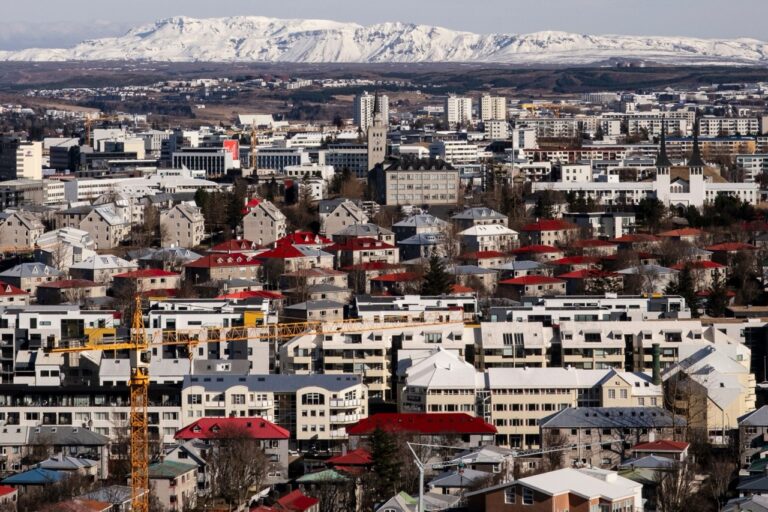
How I Spent 10 Days Camping in Iceland: My Full Itinerary
*Disclaimer: This blog is reader-supported, and this page might therefore contain affiliate links. When you book or buy through them, I may earn a small commission at no extra cost to you. It helps me write these in-depth and original guides, so thank you for the support! Full Affiliate Disclosure
Before I finally had the opportunity to do so, camping in Iceland had been at the top of my bucket list for a while. Even though I’d already visited the country 5+ times, I was interested in more of a unique adventure. Don’t get me wrong: I enjoy staying in hotels, but I wanted to fully experience Iceland’s stunning nature and also go out of my comfort zone.
-ARTICLE CONTINUES BELOW-
All My Iceland Travel Guides. Delivered to Your Inbox.
Save time on researching and get all my Iceland travel guides delivered straight to your inbox, along with monthly newsletter updates. Unsubscribe anytime.
When Iceland Nomads—a Travelbase concept—reached out to me and asked if I wanted to try their Iceland camping trip, I was never going to say no. The company had just launched a 10-day extended version, which to me was an absolute “hell yes”. And without giving too much away, this was one of my favorite adventures in the country.
While I was given a guideline and had the campsites already confirmed, we could choose what we wanted to do each day. Planning any trip to Iceland—let alone a camping trip—can be overwhelming. To give you a realistic idea of what to expect, I’m writing the actual 10-day Iceland camping itinerary that I did. That way, you can get a good idea of driving times and what you can actually see in a day.
Since this was my seventh trip to Iceland, I naturally skipped some things that I had already seen before. So, to ensure that you see all the highlights, I will add notes with my recommendations for what you should see as a first-time visitor.
In addition to sharing my itinerary, I’ll also give you a handful of other useful tips to help you plan a memorable camping trip in Iceland.
Just as a quick side note: This article is *very* long. If you’re short on time now, I recommend bookmarking it so you can refer to it whenever you need to.
I did this camping trip in Iceland as part of a collaboration with Iceland Nomads and Travelbase. However, all views are my own.
The Perfect 10-Day Iceland Camping Itinerary: Useful Stuff to Know Before We Start
Before jumping into the itinerary, I wanted to add some extra context around my trip. First and foremost, I did this particular camping trip in early June. As a result, we pretty much had round-the-clock daylight. If you’re going to camp in Iceland and follow this itinerary, I strongly recommend doing it in the summer for three key reasons:
- All campsites will be open during this time.
- Roads will be less treacherous than if you drive during the winter.
- You’ll have the daylight to see things and also enjoy the scenery while you drive.
What Was the Weather Like?
Despite visiting in June, it was still largely cold and rainy. Yes, it’s true that we had one day that was almost 20ºC. This, however, was not how it was much of the time. Temperatures in the middle of the day were usually between 6ºC and 10ºC, and it rained quite a lot. Evenings were generally colder; it was usually between 3ºC and 5ºC.
We also had a fair few days where it was incredibly foggy. This was particularly true when we drove along mountain roads. For example, we could see no further than around 100 meters in front of us as we were driving to Seyðisfjörður. Similarly, the visibility decided to go offline as we were driving over the mountain to reach Borgarfjörður Eystri. You will probably get warmer temperatures if you visit in July or August, but the weather can still be quite volatile.
The Route
Our route covered the Ring Road, which we used as our main way of getting around Iceland. Several places we went to required us to detour from Route 1; many of these were paved, but some were not.
In addition to the Ring Road, our itinerary took us around the Snæfellsnes Peninsula. We actually went around the full peninsula, though the suggestion was to cut back via a different route. This was because we went to Stykkishólmur, which I had wanted to visit for a while—even though it wasn’t on the actual itinerary route.
A Quick Note on Parking Fees and Gas…
Many of Iceland’s main attractions now implement parking fees. We paid between 700 ISK and 1,000 ISK most of the time, which is between roughly 5.50 and 8 USD. Some places, such as Vestrahorn, cost more—but this was the general range that we paid.
I recommend budgeting at least an extra 100 to 150 USD for parking fees around the country. Some places are still free, but I can imagine that more fees will be introduced in the future. Parka and Check-it are the two main apps to pay at attractions; EasyPark is useful for parking in Reykjavík.
As for gas, I spent around 420 USD for the 10-day trip. This was without using a discount card.
How I Planned My Iceland Camping Trip
As mentioned earlier, I traveled with Iceland Nomads for this trip. Travelbase, which is behind this concept, runs a 7-day trip and a 10-day trip to Iceland. I was given the choice of either and picked the 10-day trip because my girlfriend and I wanted to travel at a more leisurely pace. Iceland is bigger than it looks on a map, and while you can do the Ring Road in 7 days, it’s quite a lot of work and I would much rather take my time.
I’m privileged in the sense that I don’t have to deal with annual leave, but if you do have more time, I also recommend taking things slowly. If not, I mean… Iceland is an amazing place, so I’d still recommend visiting even if you can only allocate 7 days.
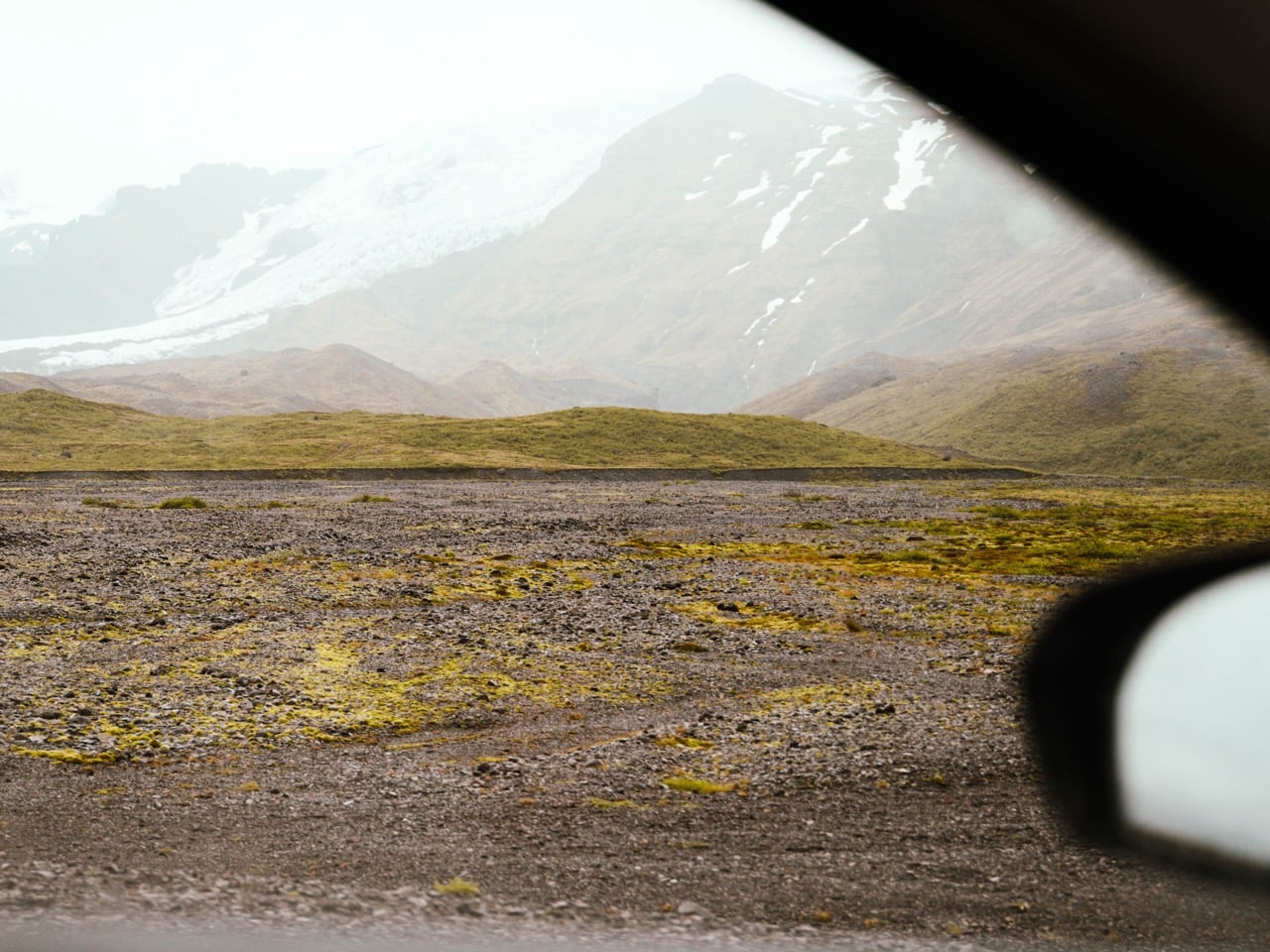
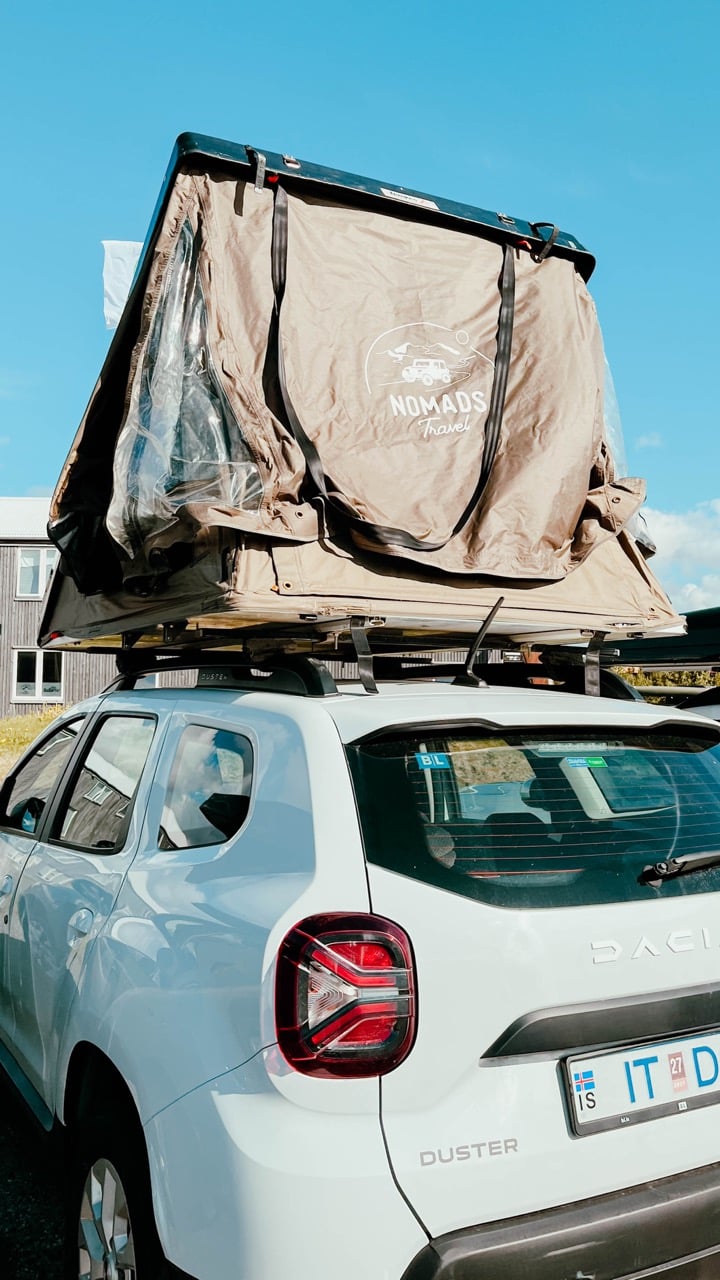
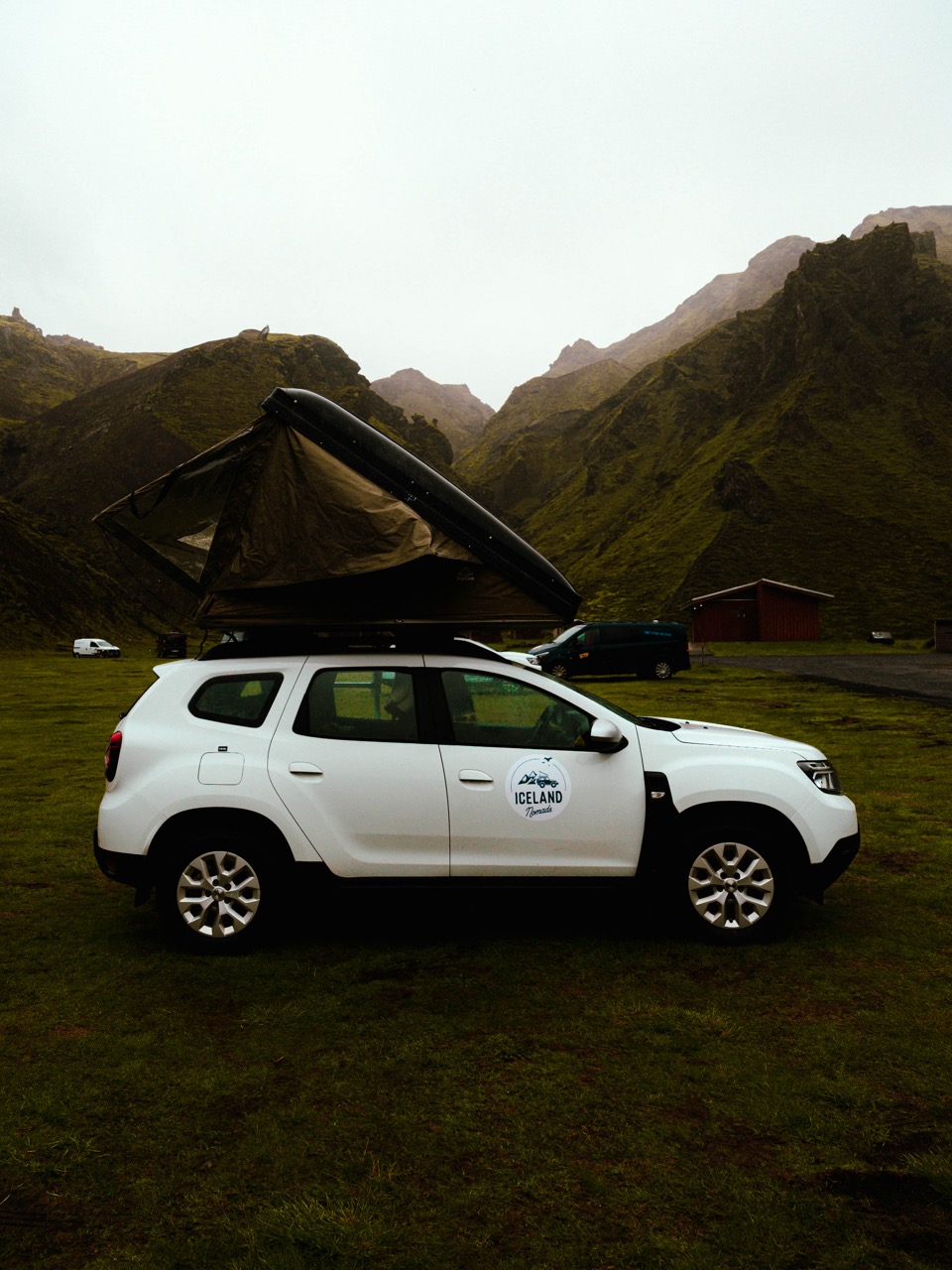
We drove a 4×4 campervan, which had a rooftop tent. It also allowed us to drive on F-roads, which you legally cannot do with a 2WD in Iceland. As a result, we had full flexibility.
Why I Traveled With Iceland Nomads
Besides the obvious “they sent me an email, and I said yes”, traveling with Iceland Nomads had numerous benefits. It’s actually what I would recommend doing to anyone who’s visiting Iceland for 10 days and wants to camp. The biggest advantage was that they handled the big logistical things, such as our car, the campsites we stayed at, and—because we booked it—the shuttle bus to and from Keflavík Airport.
We also had access to support throughout the trip, along with an incredibly handy app. The food packs, which we got as an add-on, were good value for money, too. While not everything was perfect (as I wrote in my full Iceland Nomads review), I thought that Travelbase did an excellent job of organizing the trip. As a result, we could focus more on actually enjoying our stay in Iceland.
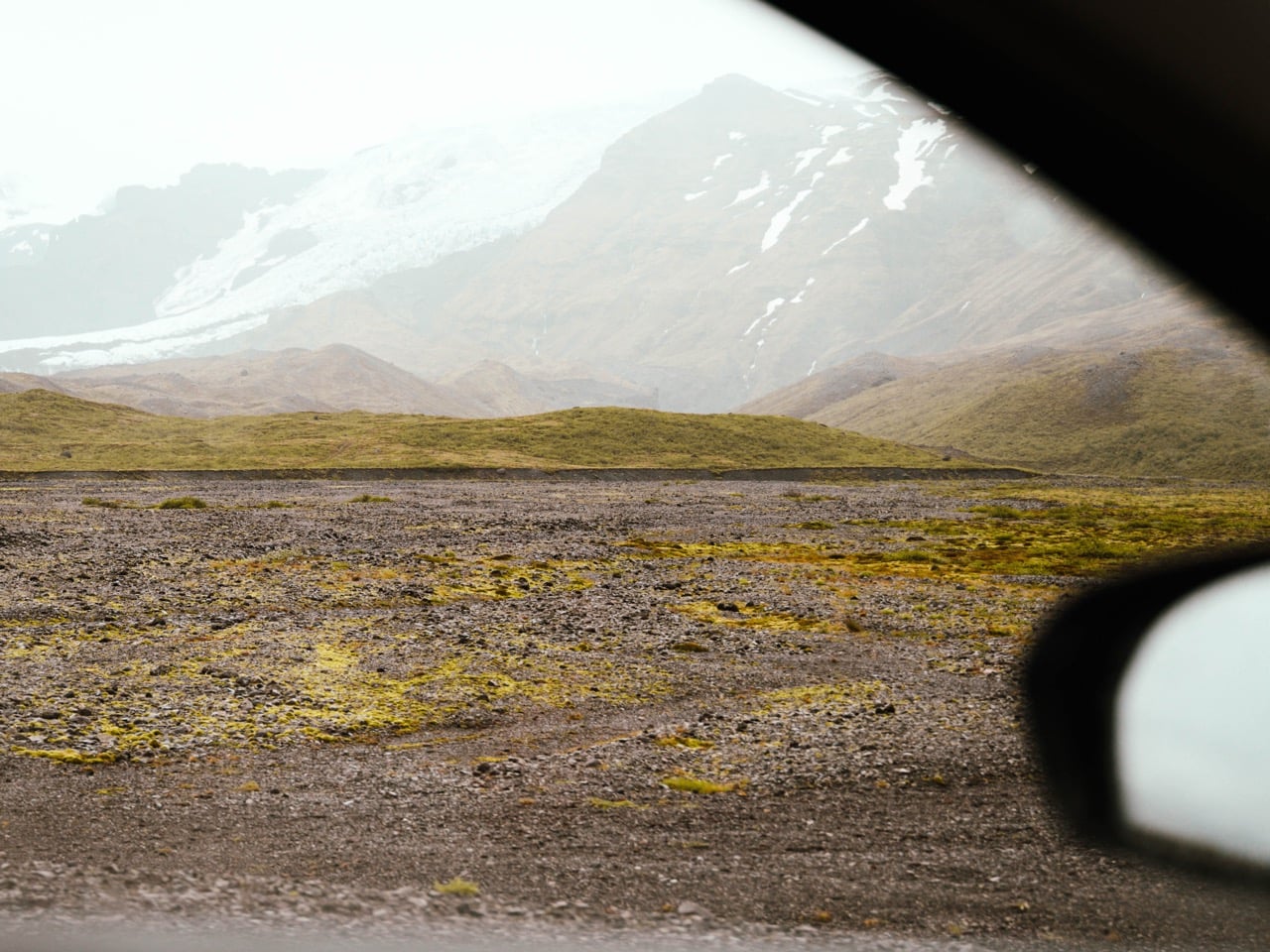
How I Spent 10 Days Camping in Iceland
Now that you’ve got the full context behind my 10-day camping trip in Iceland, we can move on and go through my complete itinerary. I’ve broken each day down into a separate subsection for you.
Day 1: Arriving in Iceland & Heading Toward the South Coast
Total Driving Time: c. 3 hours
We flew from Copenhagen, where we live, to Keflavík International Airport. Our flight arrived later in the afternoon, and since we were traveling from one Schengen country to another, we didn’t need to go through passport control. If you’re visiting from the UK, the US, or another Schengen country, you will need to do so; the queue usually goes quite fast, though.
Our bags arrived before too long, and after spending over $20 on two sandwiches, we went to get our shuttle bus. We were picked up around an hour after landing, and the drive to the basecamp in Hafnarfjörður—just outside of Reykjavík—took around 30 minutes.
Once we arrived at the Lava Hostel, we met the Travelbase team. Here, we received a briefing and learned how to set up our tents. We also received our food packs and everything else we needed for our camping adventure before heading toward our first night’s campsite.
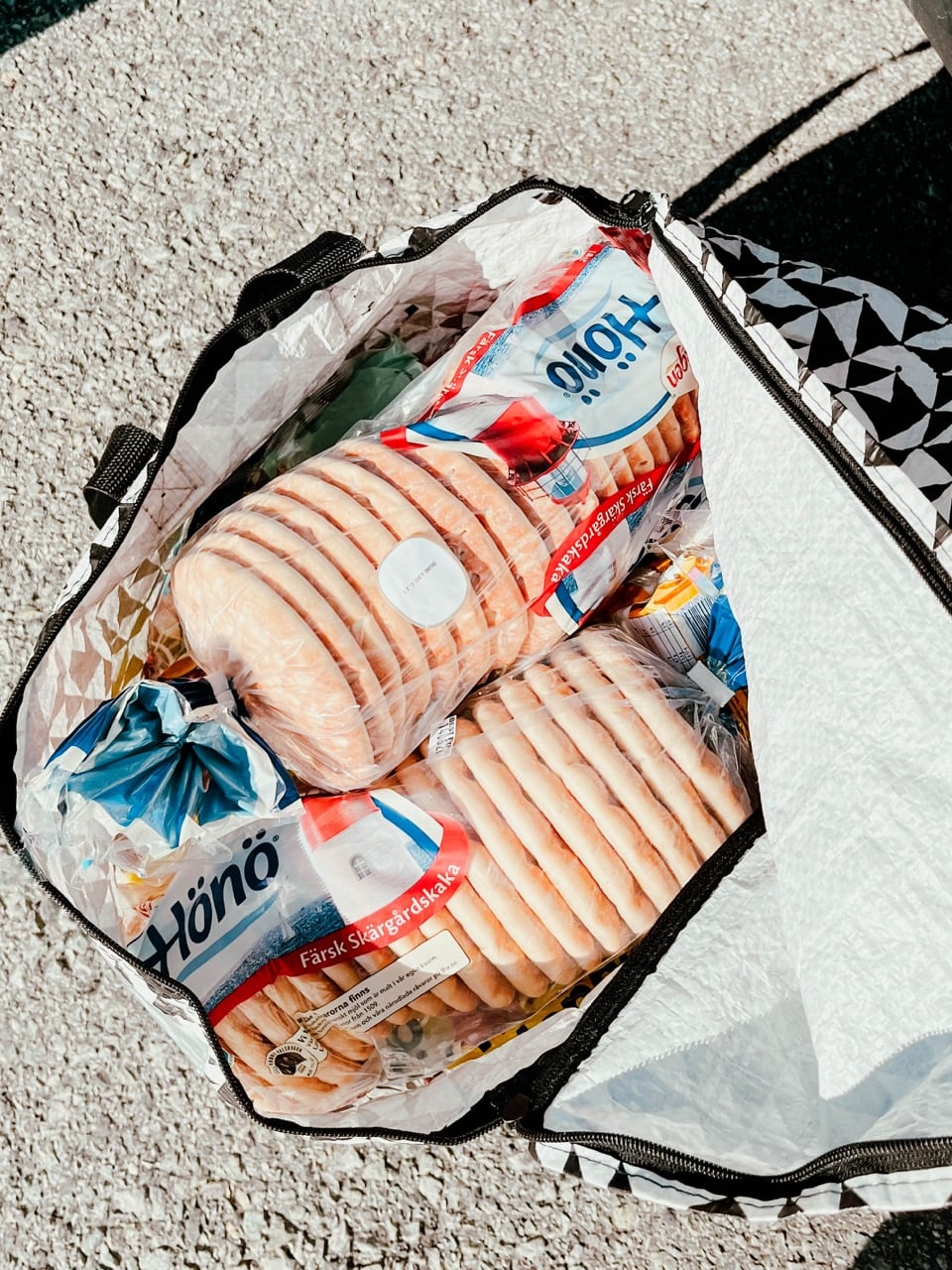
We actually decided to start our trip by doing parts of what would have been Day 10 of the itinerary. After picking up our car, we drove toward the Reykjanes Peninsula. This is where the airport is, and besides going to the Blue Lagoon, I had explored a grand total of nothing in this part of the country before. I quickly learned how big of a mistake that was.
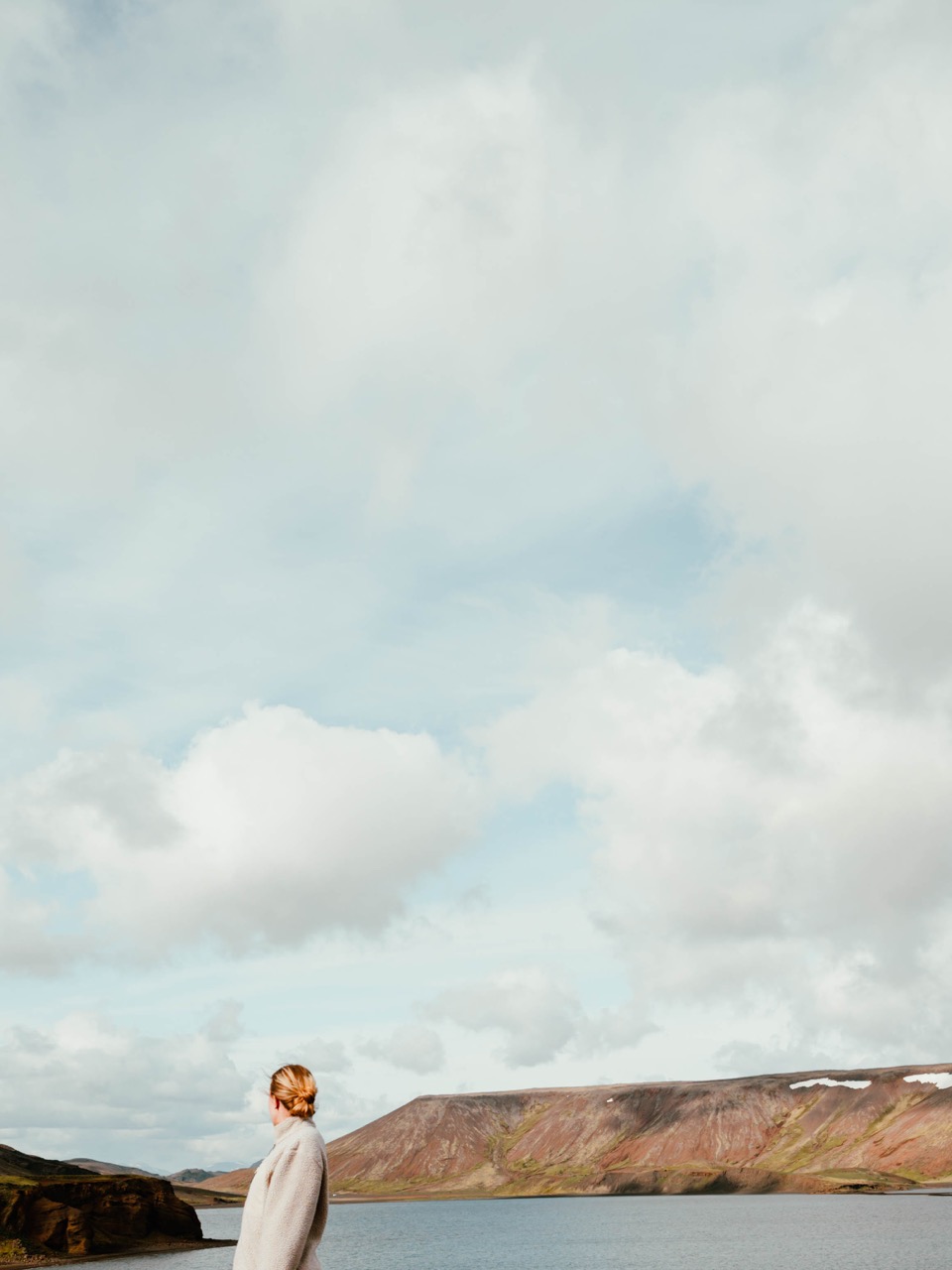
Reykjanes is, in my opinion, one of the most underrated regions in Iceland. We briefly stopped at the Kleifarvatn lake before going to the Seltún Geothermal Area. This was just as impressive as other geothermal areas I’ve been to in Iceland, if not more so.
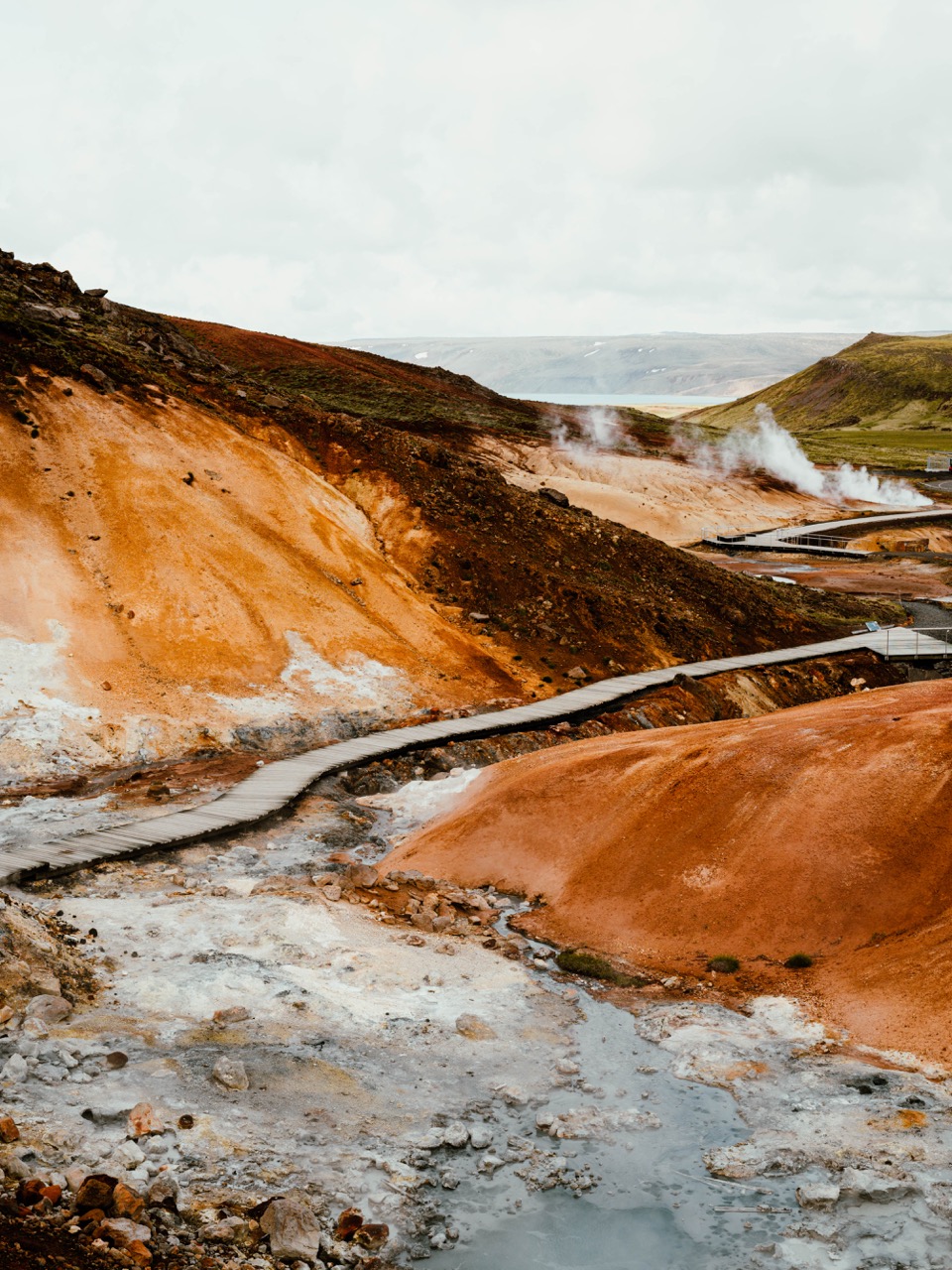
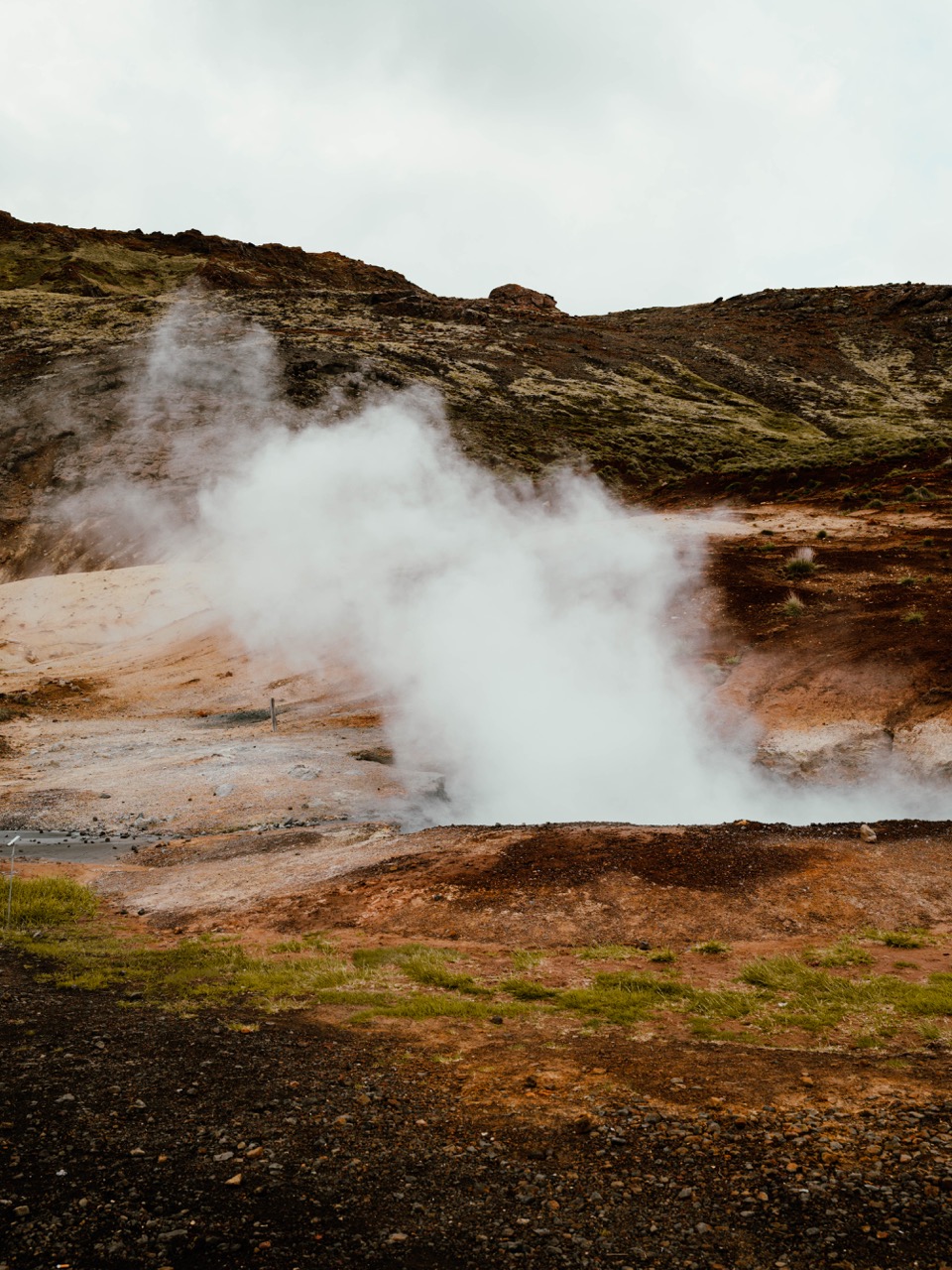
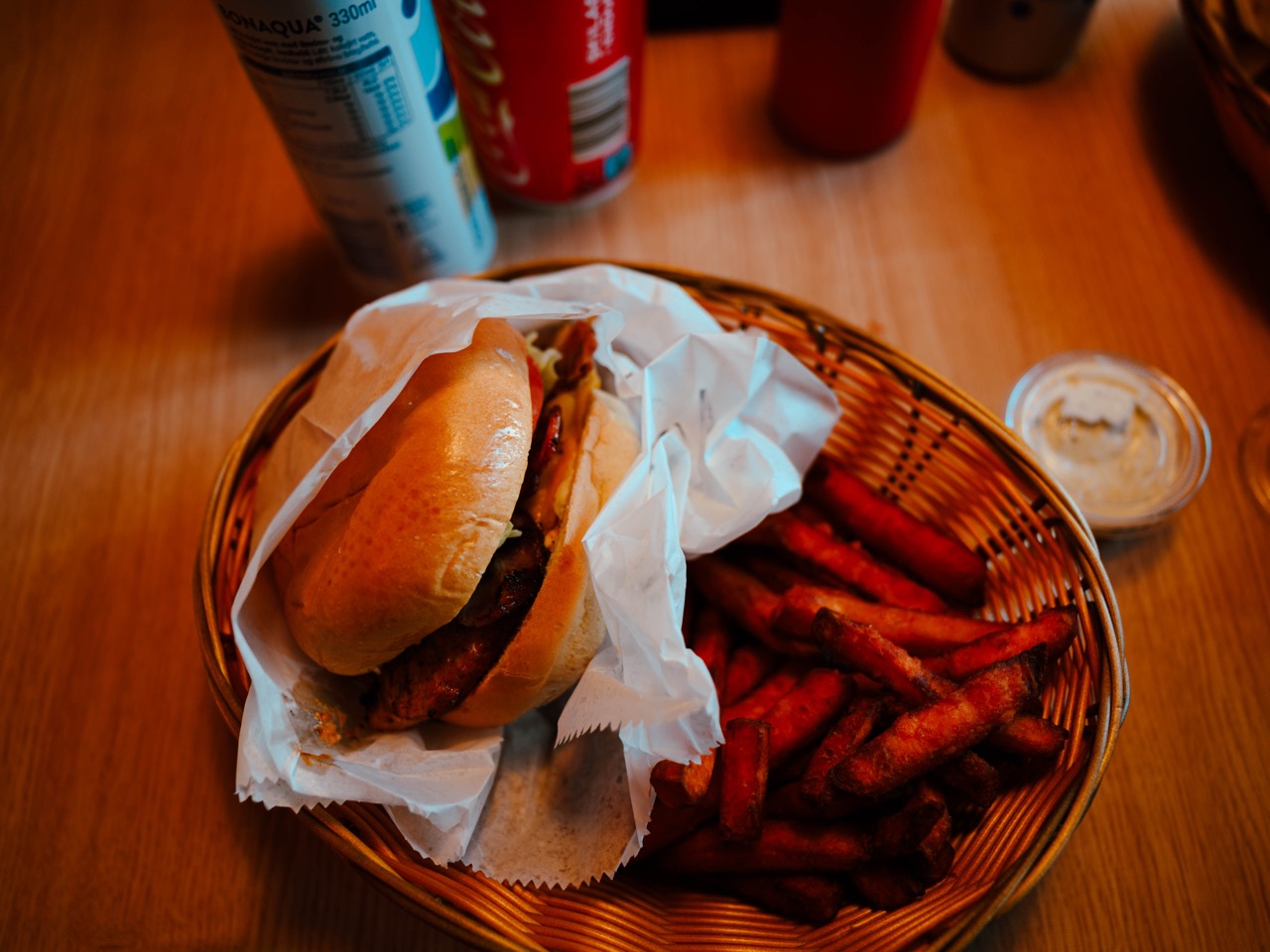
We then started to head toward our campsite for the night, which was Árhus Cottage – Camping & Restaurant on the South Coast. Since we were a bit tired from the flight, we didn’t really stop anywhere on the way. Instead, we went to eat dinner at Tommi’s Burger Joint in Selfoss—which I strongly recommend—and got some toiletries from the Bónus grocery store just outside the town. The rest of our trip included a lot more driving, so we didn’t want to burn through our energy on day one.
Tip for First-Time Visitors: I skipped the Kerið Crater because I had been here before. However, I recommend adding it to your itinerary if you’re a first-time visitor. Rather than visiting it on your first day, however, I’d group it together with the other sights on the Golden Circle later in the trip.
Day 2: Gjáin, Seljalandsfoss, and Vík
Total Driving Time: c. 3.5 Hours
I wasn’t sure how I would sleep on the first night, but “pretty well” turned out to be the answer. We had a chilled morning and some breakfast at our first campsite before packing the tent and heading toward the South Coast. I had already been to the South Coast numerous times and have even written a full guide to this part of Iceland, but I was still nonetheless excited.
Gjáin
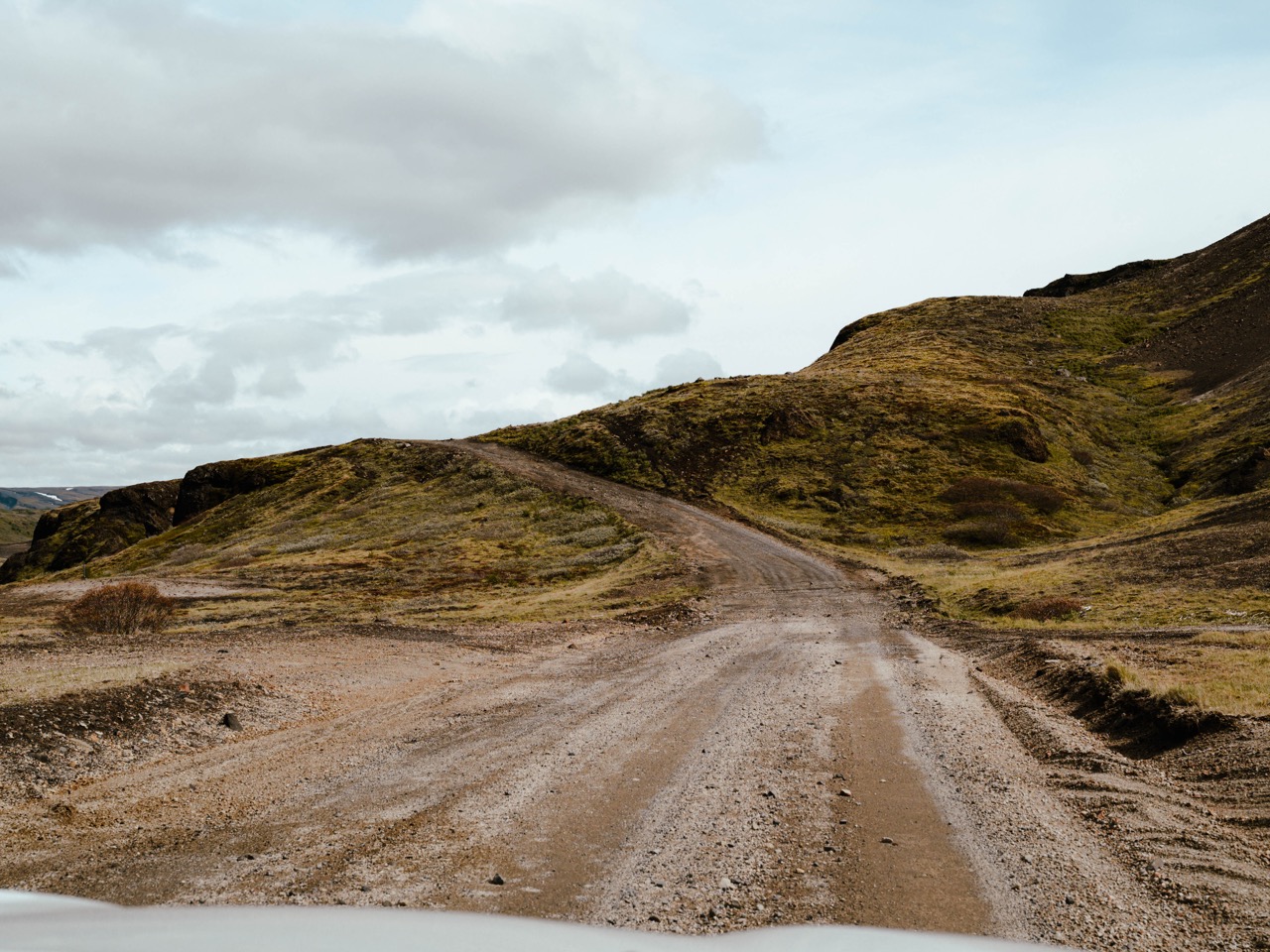
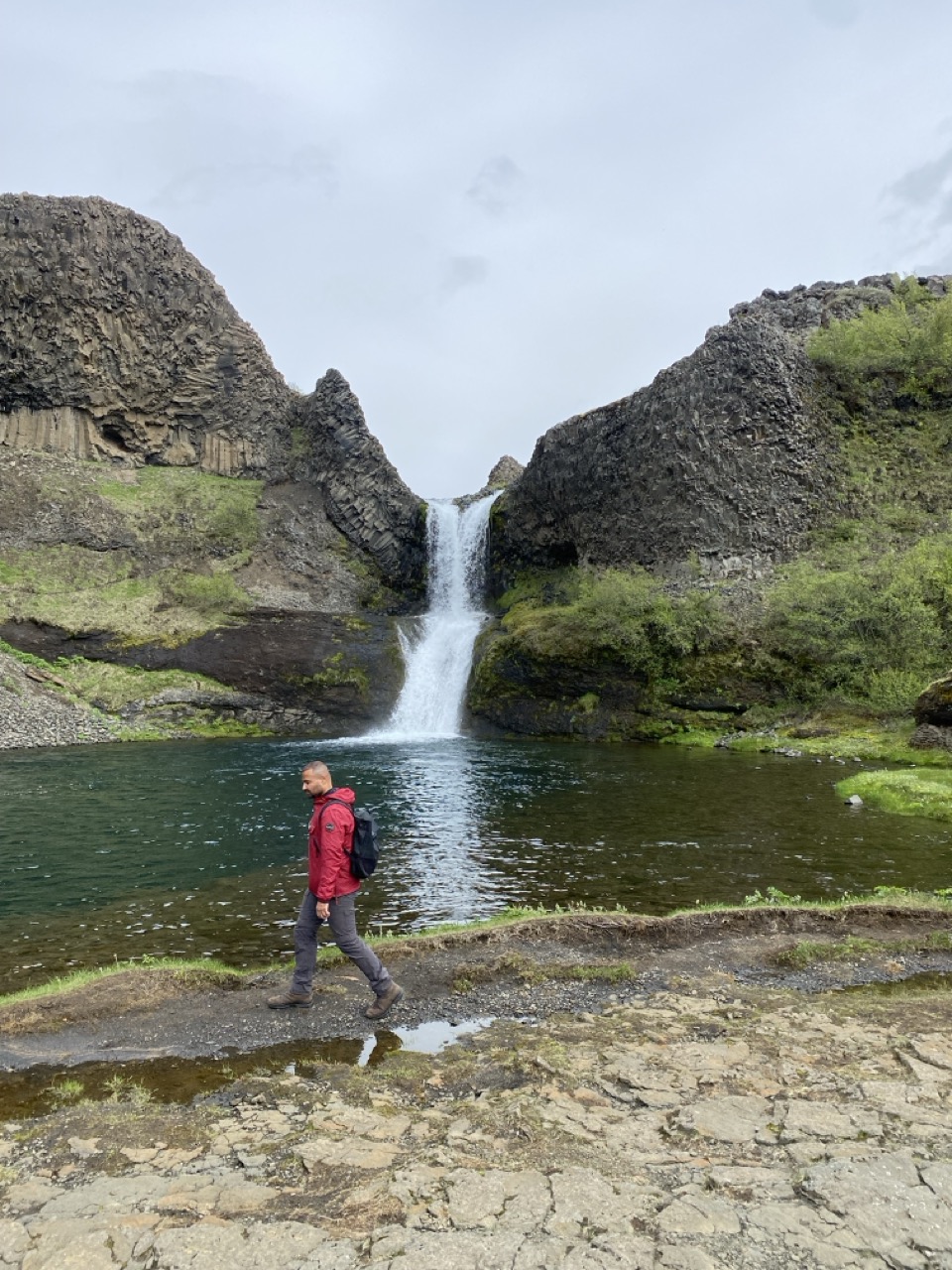
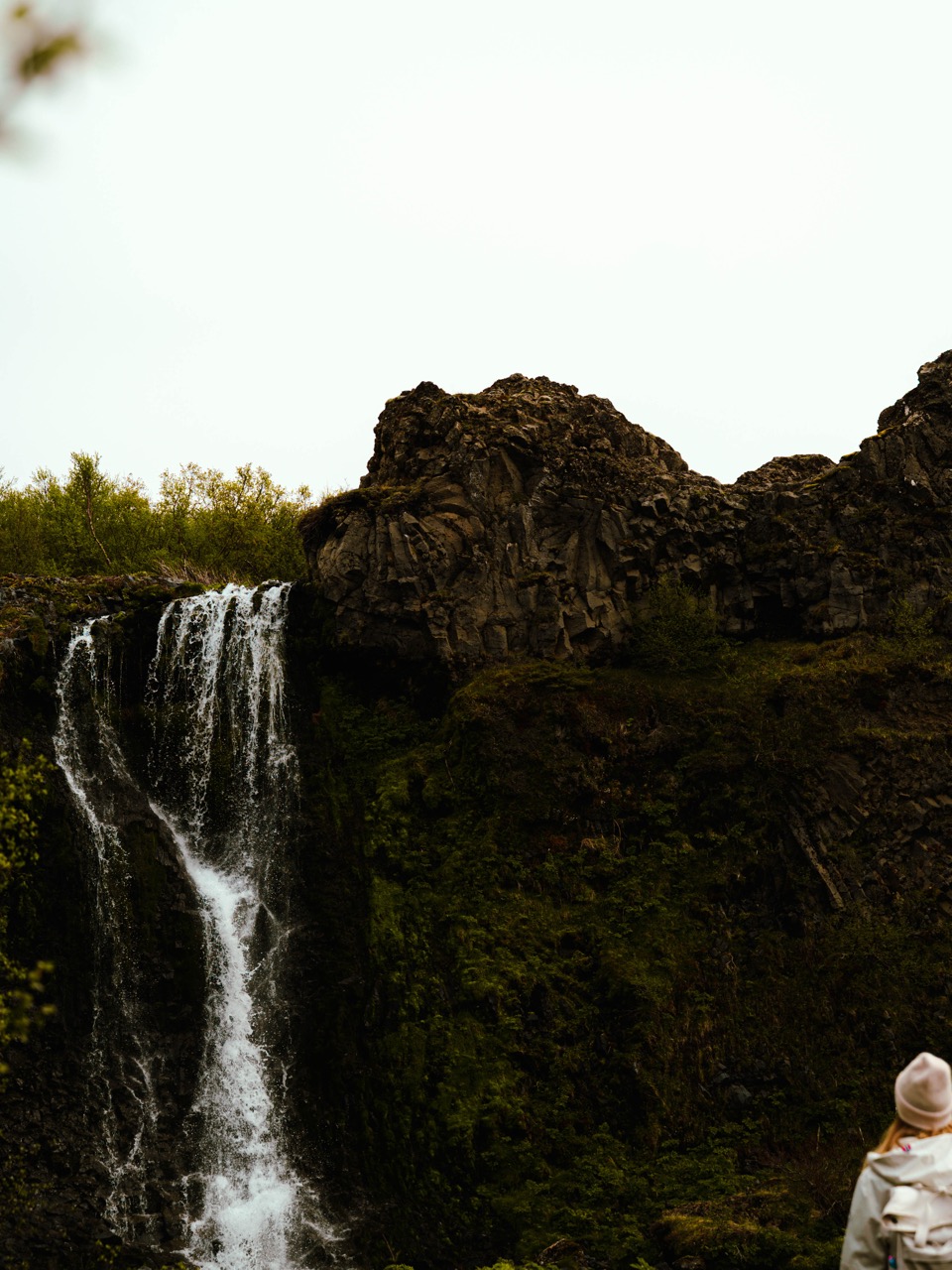
On our second day (well, first full day) in Iceland, we had the opportunity to visit Gjáin and Háifoss. We skipped Háifoss, but chose to go to Gjáin. This area is a pretty valley with some pleasant hikes and waterfalls; it’s only accessible during the summer, and you need to drive along an unpaved road to get there.
The first part of our drive from the campsite was along the Ring Road, before we then went on to some other paved roads. I have to say that I was amazed at how we had pretty much the entirety of these roads to ourselves. While the South Coast is quite touristy, it’s really not that hard to find space for yourself, in my opinion.
I was thinking that the whole drive would be quite smooth. I was, however, wrong. As we approached Gjáin, we needed to drive along that unpaved road I talked about. To say that it was bumpy would be an understatement. We also had to cross a small stream, and if you want an idea of just how remote it is, my mobile signal then went offline. If you’re going to drive here, I strongly suggest using a 4WD vehicle.
When we reached Gjáin, we parked our car and then went for a small hike around the area. We spent around two hours here, which was partly because I like to point my camera in every direction and also because we saw quite a lot while we were there. There were a handful of other tourists, but it wasn’t overly crowded.
Visiting the South Coast’s Many Waterfalls
We had the chance to also visit Háifoss, but I think we were still a bit uneasy from our first experience driving on an unpaved road in Iceland. So, we chose not to go there. Instead, we headed further down the South Coast in the afternoon.
As I mentioned earlier, I’ve been to the South Coast lots of times and seen most of the main tourist attractions. I had very little interest in seeing the Reynisfjara black sand beach again, which I personally think is one of the most overrated sights in Iceland. Similarly, we had the choice to visit the Sólheimasandur plane wreck—but neither of us were interested in doing that, either.
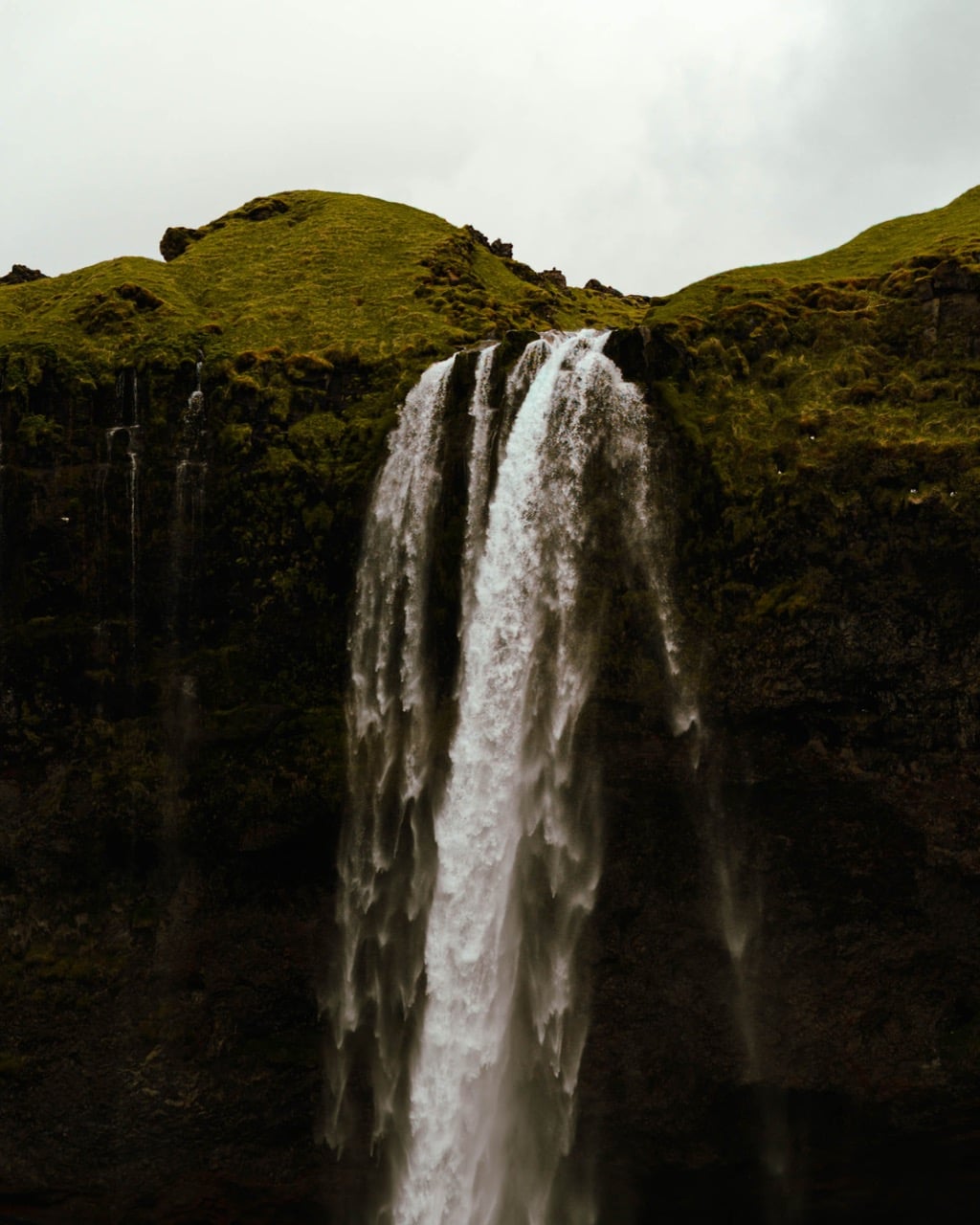
We did, however, go to Seljalandsfoss. I had already been here twice: Firstly on a tour of the South Coast back in 2019, and then on a 9-day trip along the South Coast and Westman Islands a few years later. It’s one of my favorite waterfalls in Iceland, and I was therefore excited to go there again.
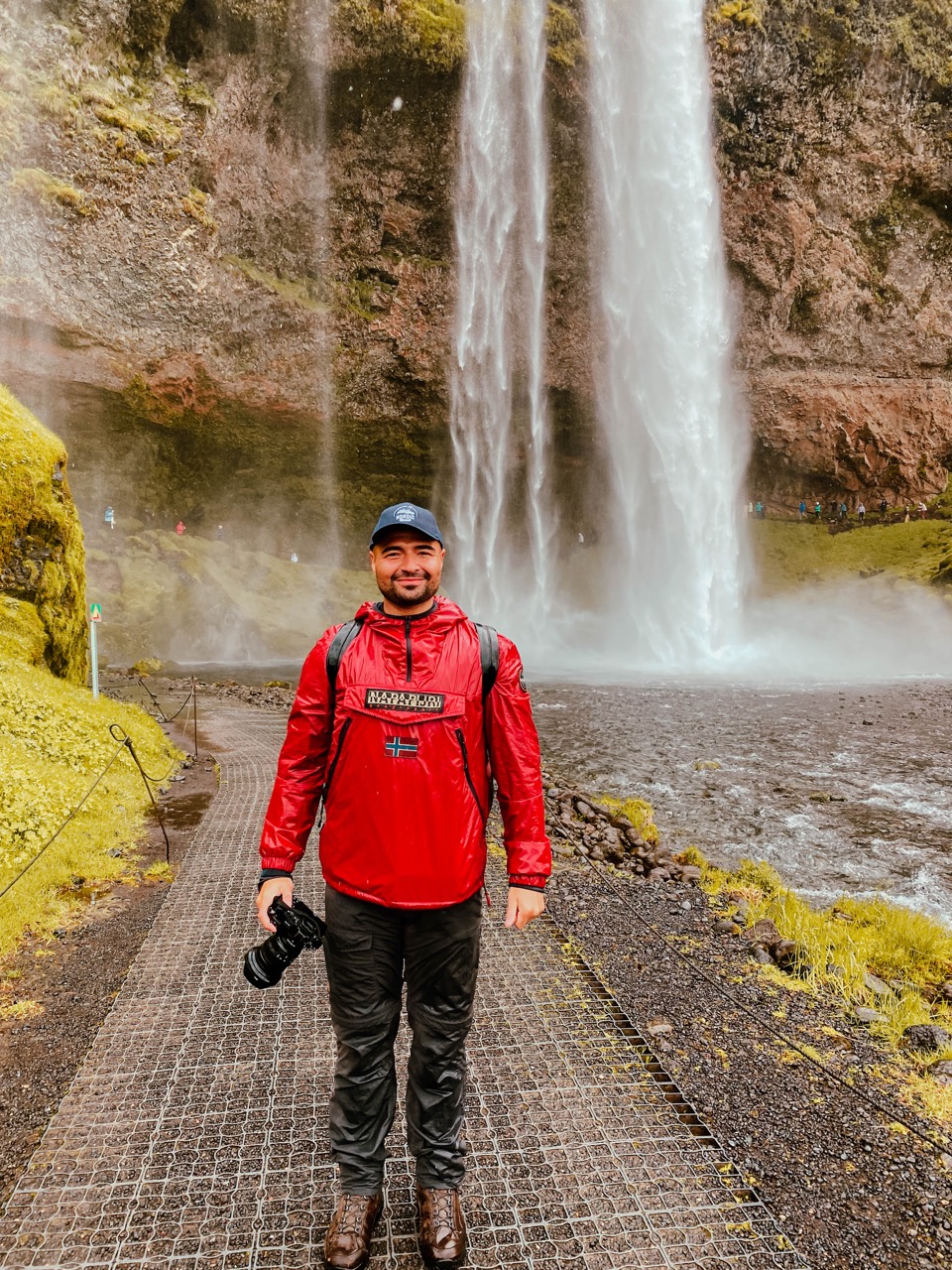
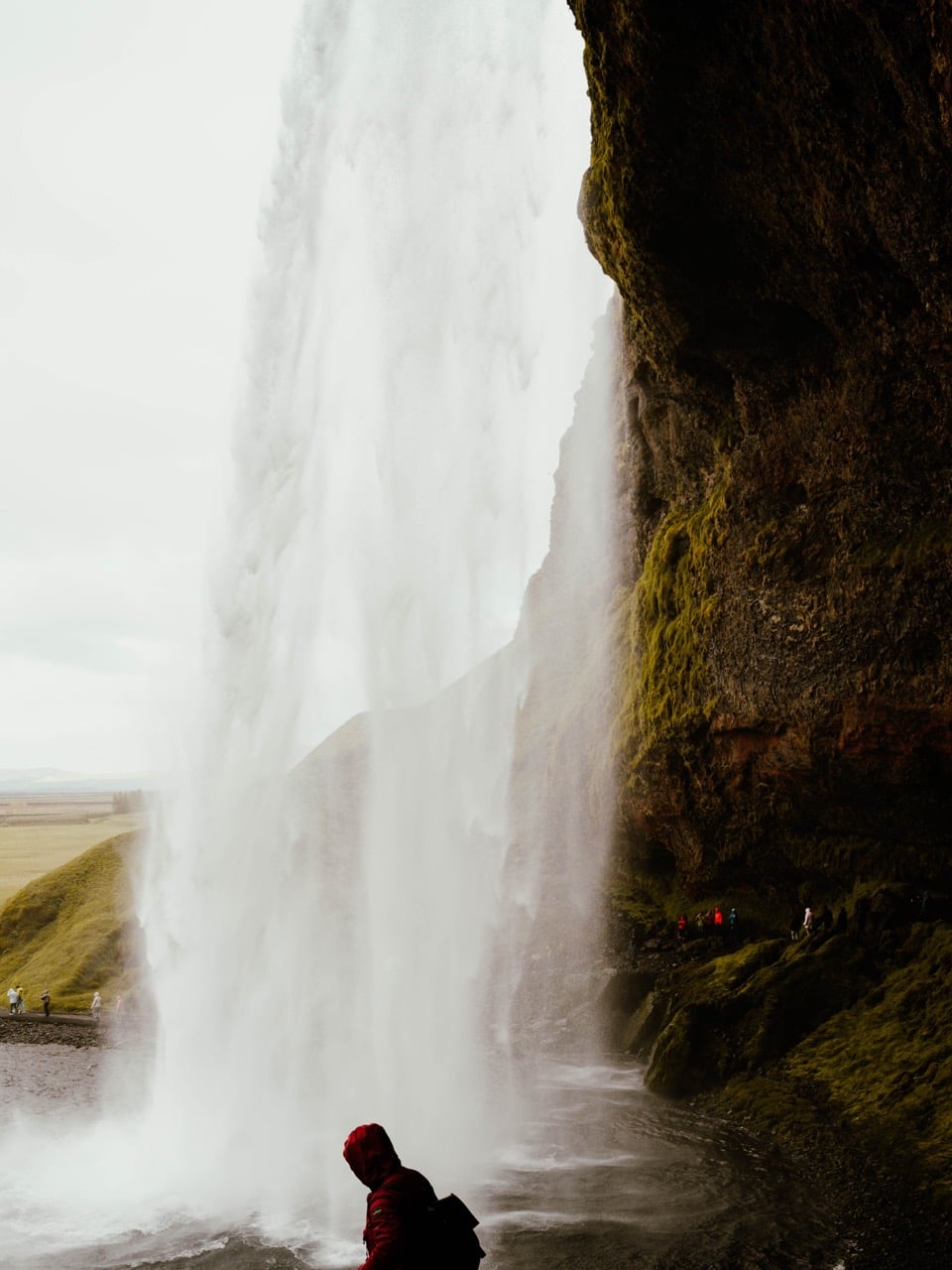
While my girlfriend had seen Seljalandsfoss before, the previous trip we did together was during the off-season. During the winter, you aren’t allowed to go behind the waterfall. But since we were now visiting in June, we could do that. After parking our car and paying the parking fee, we headed to the waterfall.
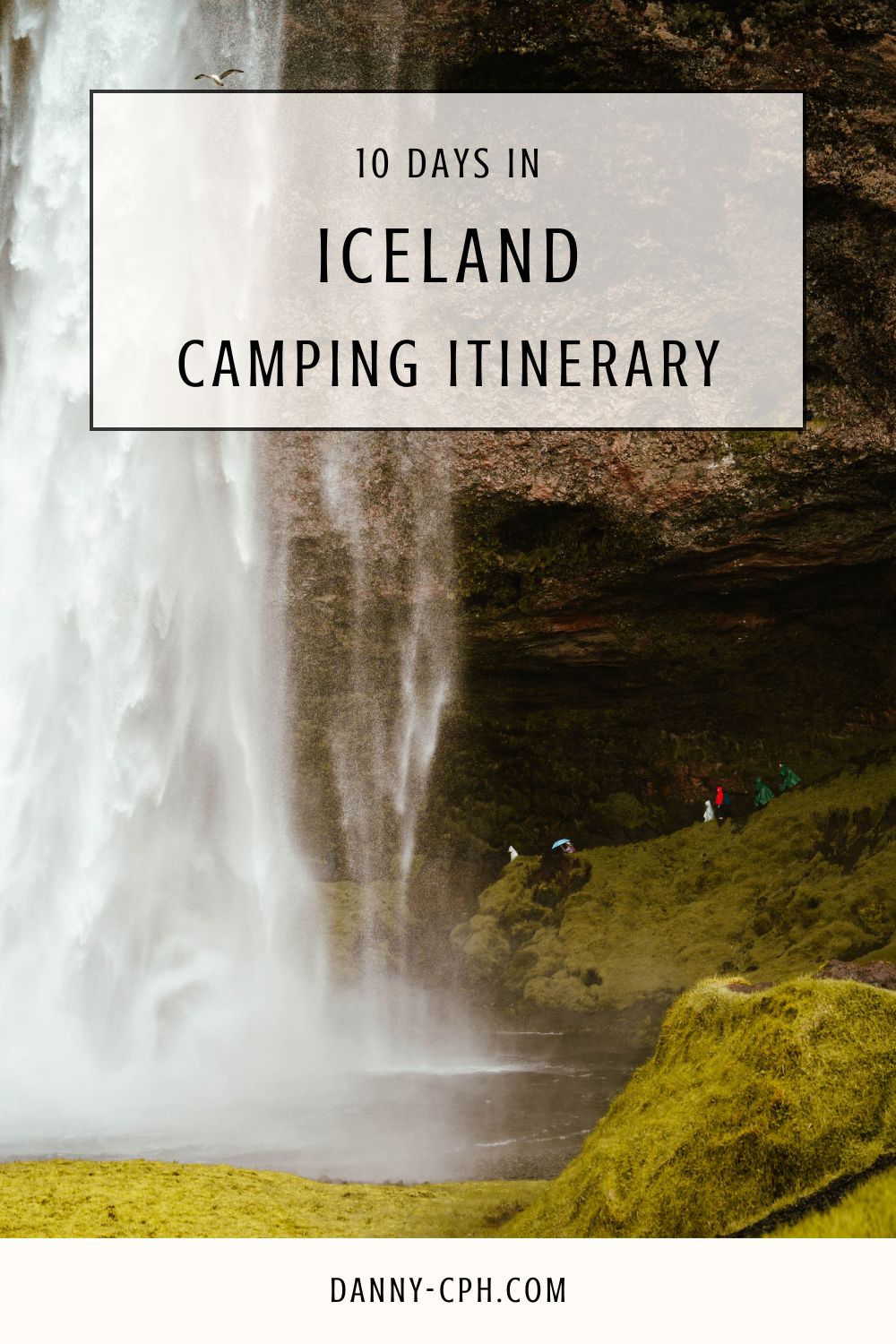
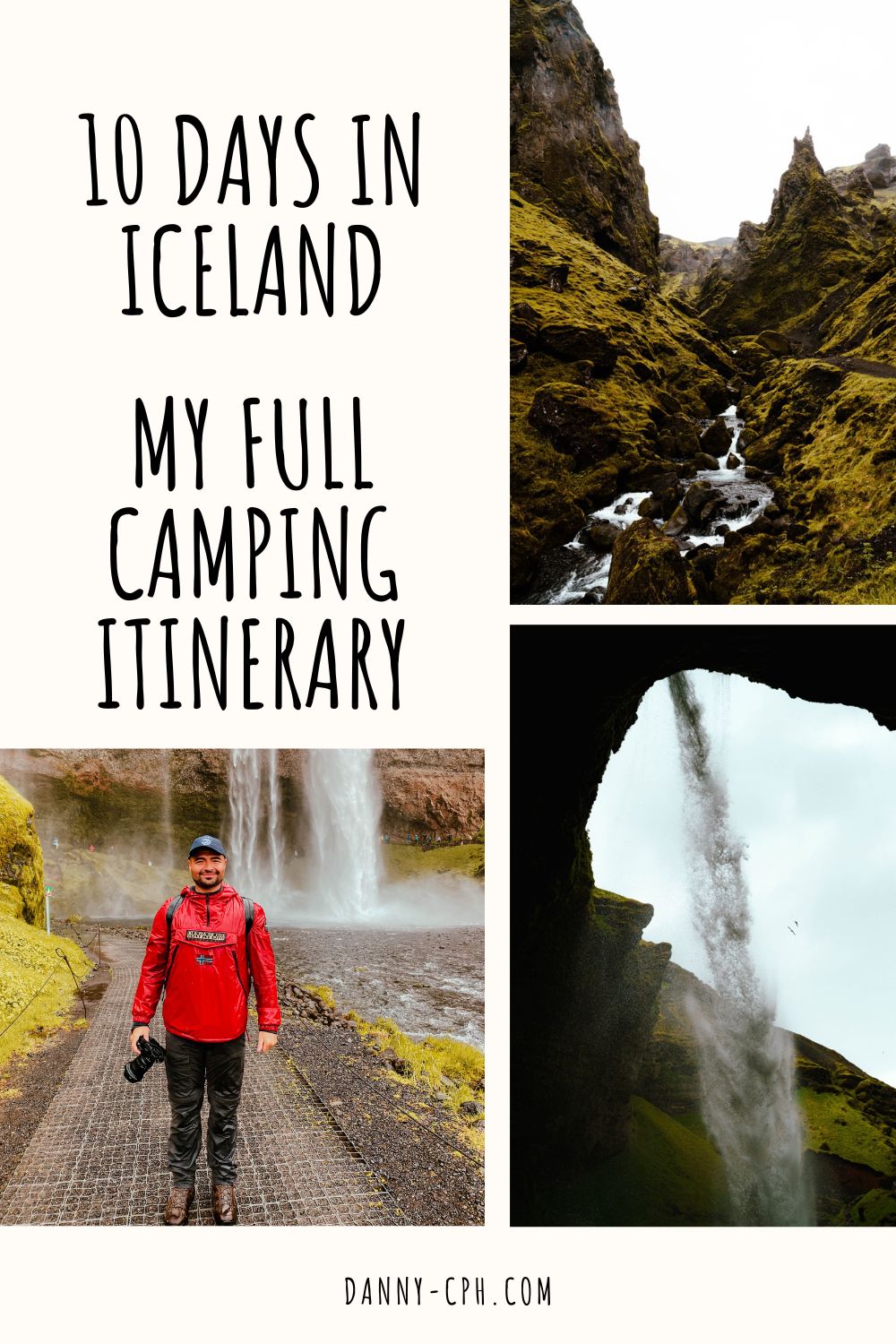
Unsurprisingly, Seljalandsfoss was quite busy when we arrived. However, I wouldn’t say that the crowds were unmanageable. It also started raining, which I was absolutely delighted about. Getting soaked behind Seljalandsfoss was one of my favorite memories from this trip, as you can see from my face below. 😄
You’ll find another waterfall close to Seljalandsfoss called Gljúfrabúi, which you can walk to. Here, you can walk close up to it and get even wetter. We had already been there before, and we didn’t really want to go again. If you’re visiting Iceland for the first time, however, I also recommend going there.
We also skipped Skógafoss as we had been there before and weren’t feeling like going there again. However, it is absolutely amazing up close; if you’re a first-time visitor, you should also stop there. And while you’re at the waterfall, be sure to do at least part of the hike up the stairs behind it. Speaking of “be sure to”, be sure to read my guide to visiting Skógafoss before you go, too. 🙂
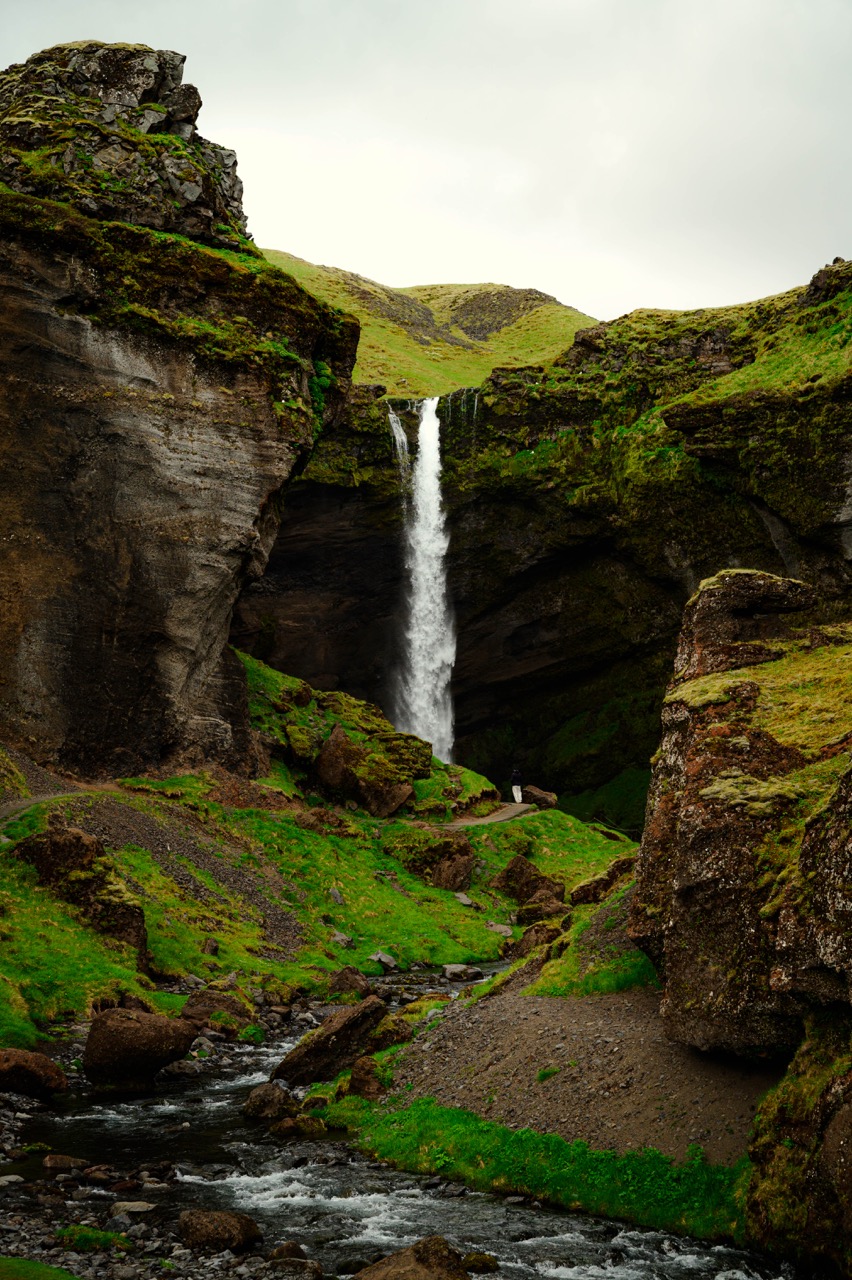
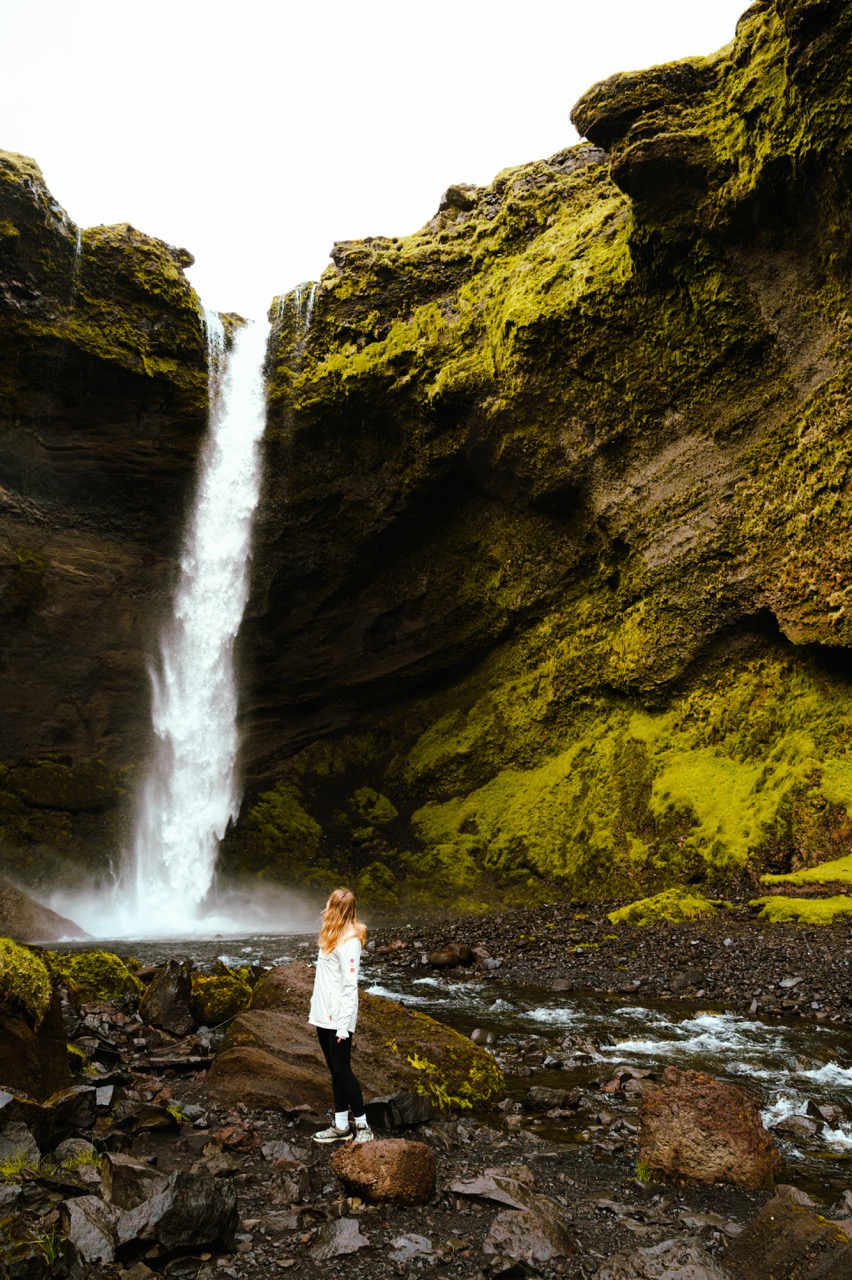
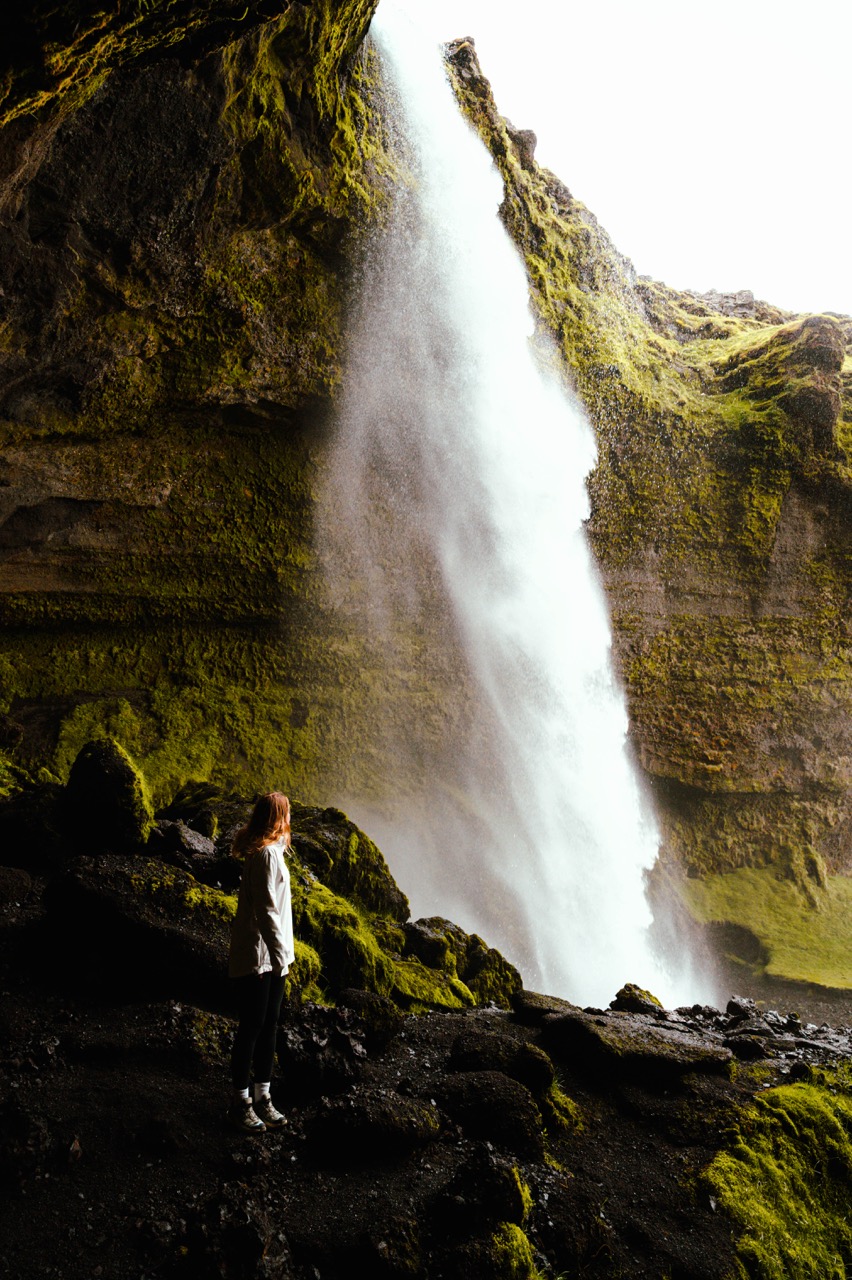
One place we hadn’t previously been to, however, was Kvernufoss. It was originally on our list for a previous trip to Iceland, but we chose not to. As I learned when we did go this time, that was a mistake; Kvernufoss was one of my favorite places that we visited on this trip altogether.
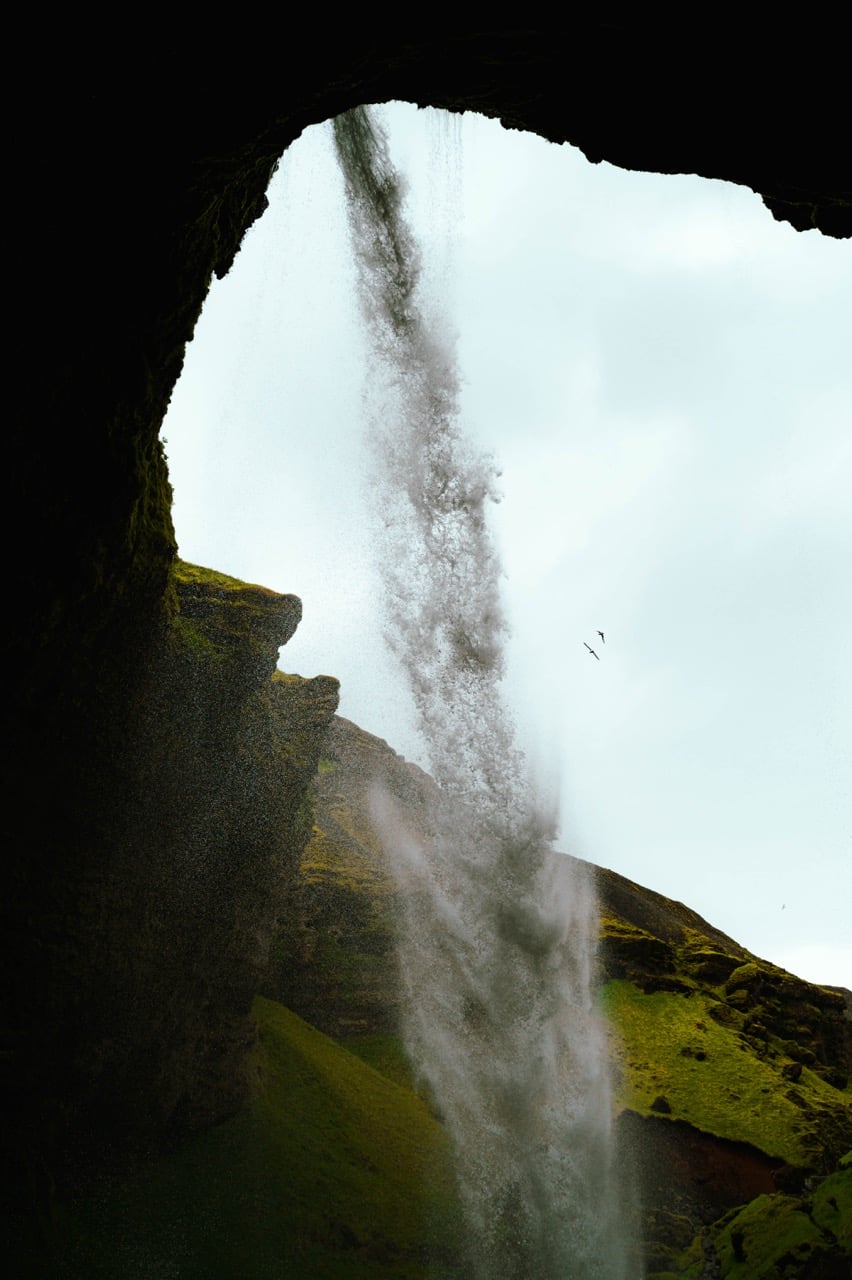
Like Seljalandsfoss, you can go behind Kvernufoss. Unlike Seljalandsfoss, you won’t get as wet. The walk from the parking lot to the waterfall took us around 30 minutes, and it was well-marked. We also saw some sheep, which was a nice bonus. We spent around an hour and a half here in total, which again was mainly because I took so many photos of the waterfall. Despite being somewhat well-known, the crowds at Kvernufoss were significantly smaller than at Seljalandsfoss.
A Brief Stop in Vík
Vík í Mýrdal is basically the only real town on Iceland’s South Coast; once you leave it, you’re basically out in nature for hundreds of miles. It’s the main tourist hub in this part of the country, and you’ll find plenty of interesting things to do in and close to the town.
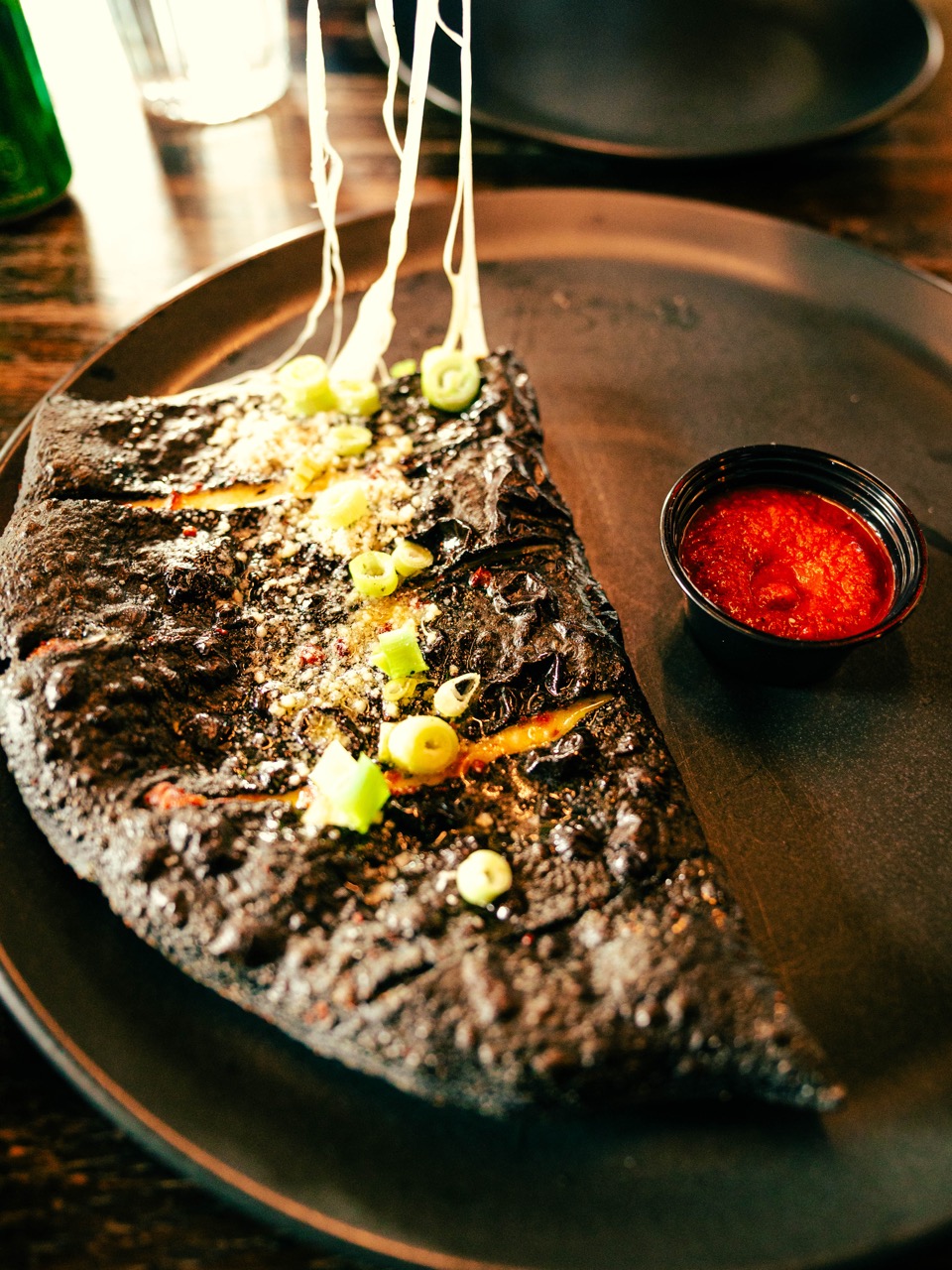
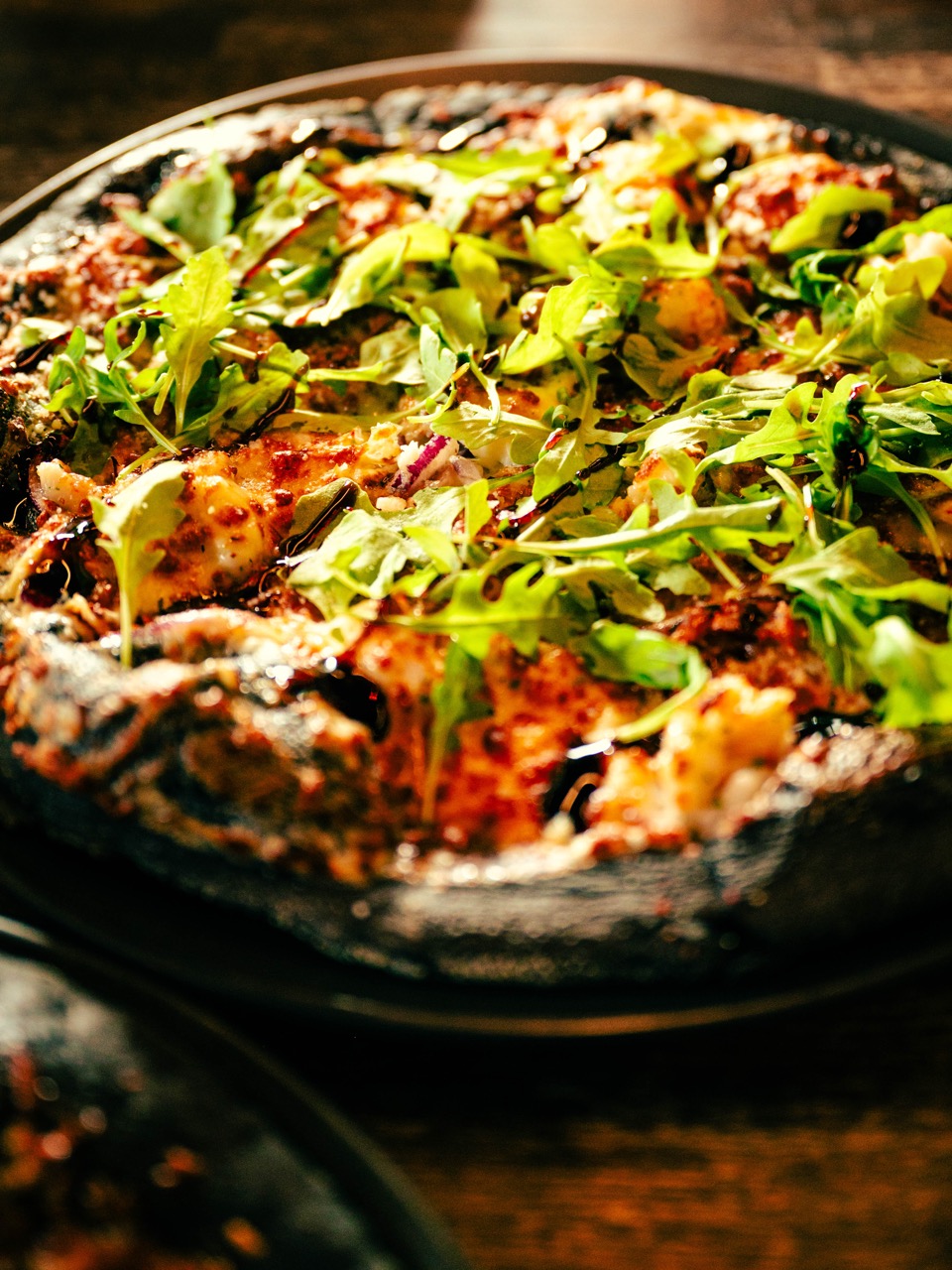
We had already been to Vík and actually based ourselves for a few nights here, so we didn’t spend a huge amount of time in the town. Our main reason for visiting was to go to the Black Crust Pizzeria, which is still one of our favorite restaurants in Iceland. The queue outside was very long—we arrived for dinnertime—but it moved at a decent enough pace. Plus, the food is worth waiting for.
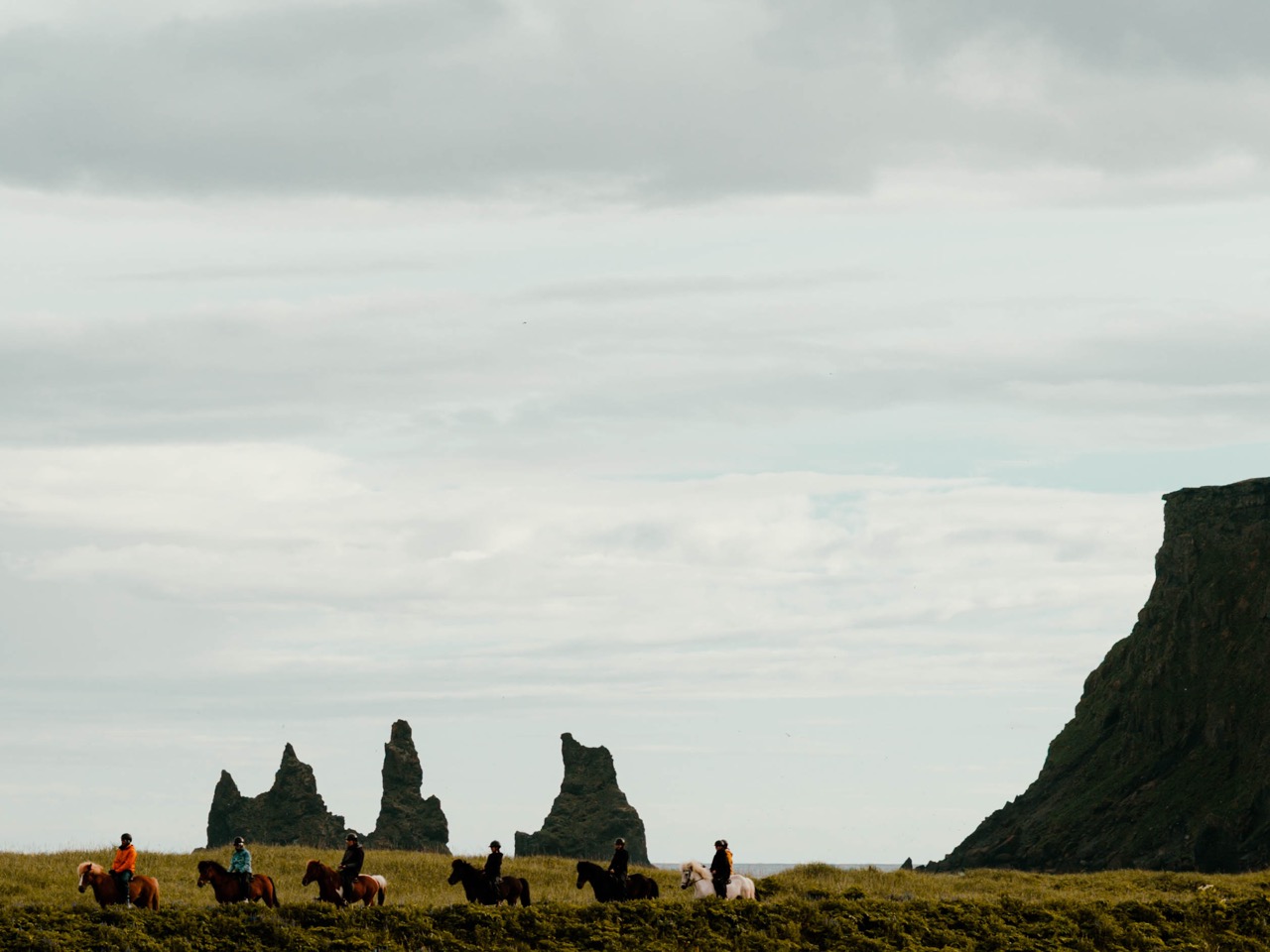
After getting some food, we spent a few minutes wandering around close to the beach. My hot take is that the beach in Vík is better than Reynisfjara, and if you’re lucky, you may even see some people riding horses here. We also went to the church overlooking the town, which is a great photography spot.
Useful Tip for First-Timers 🗣️: We had already been to the Dyrhólaey nature reserve on a previous trip, and we didn’t have the time to go there on this occasion. If you’ve never been before, I strongly recommend it. Besides the great views, it’s also a good place for birdwatching. Dyrhólaey is around 15 minutes from Vík by car.
Driving to Our Campsite
… I won’t lie, this was an adventure in and of itself. We stayed overnight at Þakgil Camping, which was one of the most unique campsites on the entire trip. The drive there is an adventure in and of itself, and frankly, it was also a bit nerve-wracking.
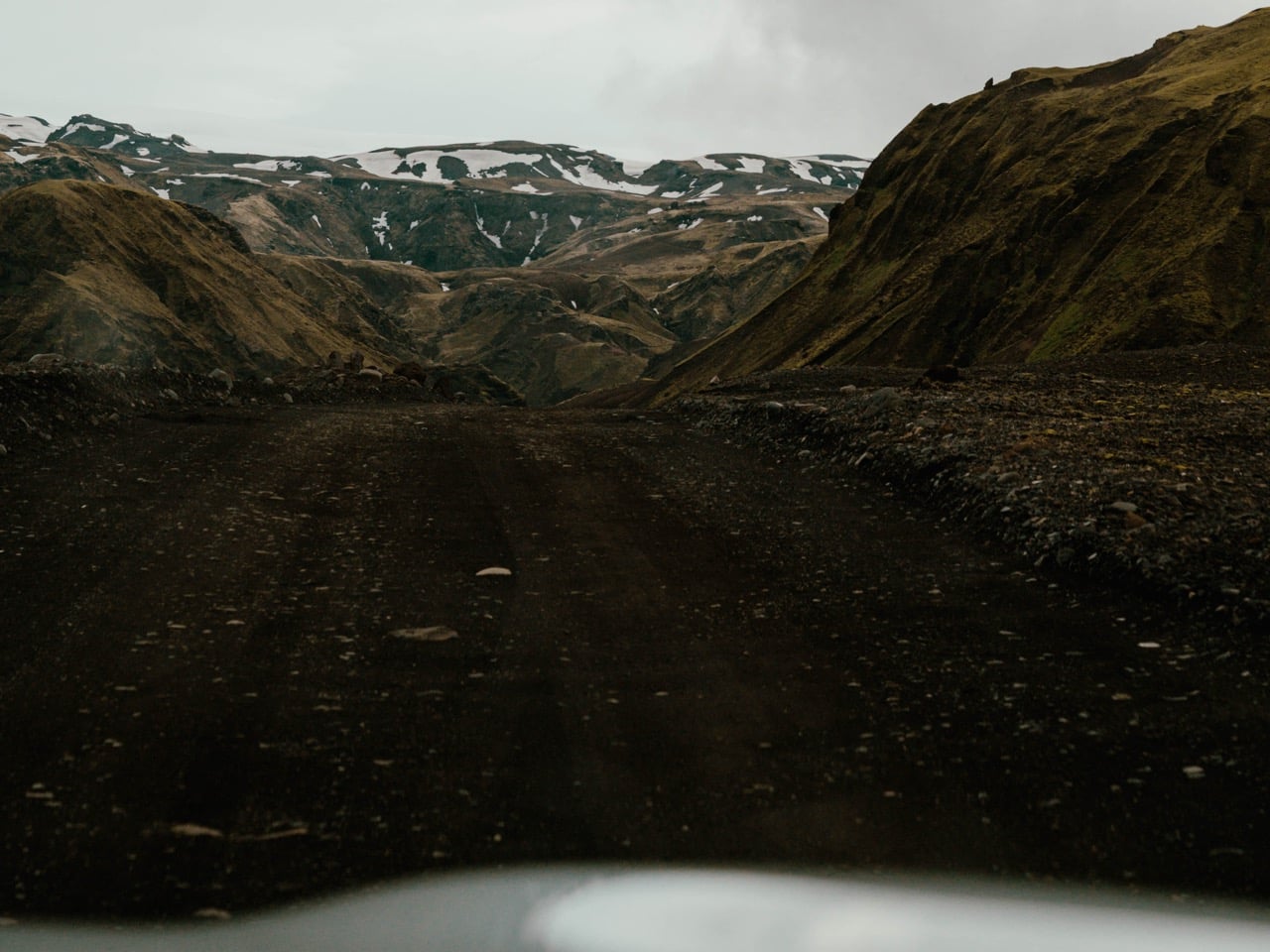
Google Maps told us that the campsite was around 40 minutes away, but the journey itself was around 10 miles. That in and of itself should have been a sign of what to expect; if you see that the expected journey time is longer than the distance in Iceland, you’re almost always in for a challenging drive.
I still thought very little when I saw the signage that said the road was about to be unpaved. The first part was absolutely fine, too. Then, we started to drive uphill.
While the road to Þakgil isn’t technically an F-road, it might as well be. It’s only really accessible during the summer (trying in the winter is incredibly dangerous, so don’t bother), and there is a 0% chance I would try driving on it with a 2WD.
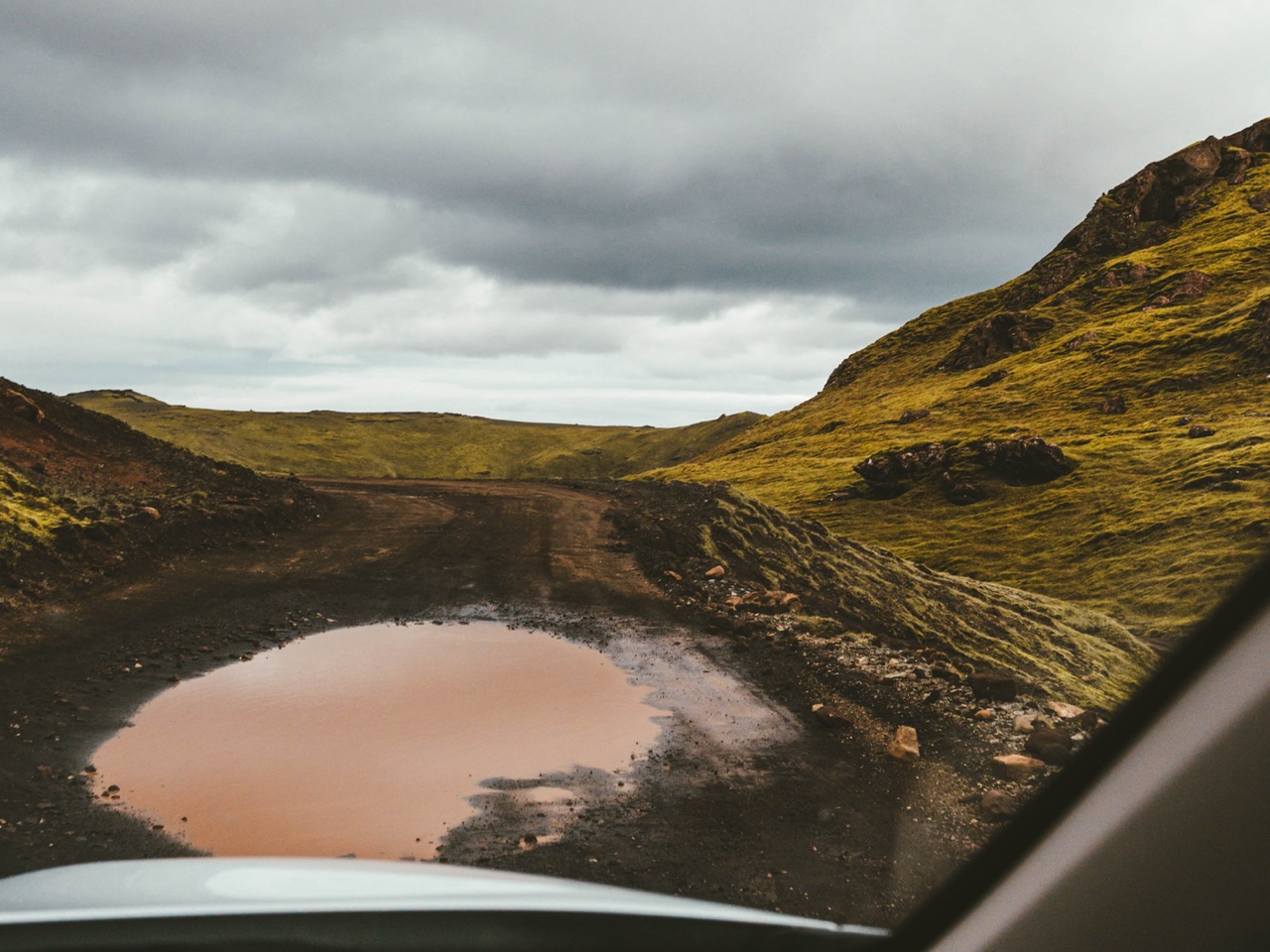
Besides being unpaved, there were *a lot* of potholes on the way. You also have no guardrails as you drive up the mountains, along with numerous blind spots. When I say that I was white-knuckling the whole time, I’m not joking. Thankfully, the weather was clear; it actually started raining soon after we arrived.
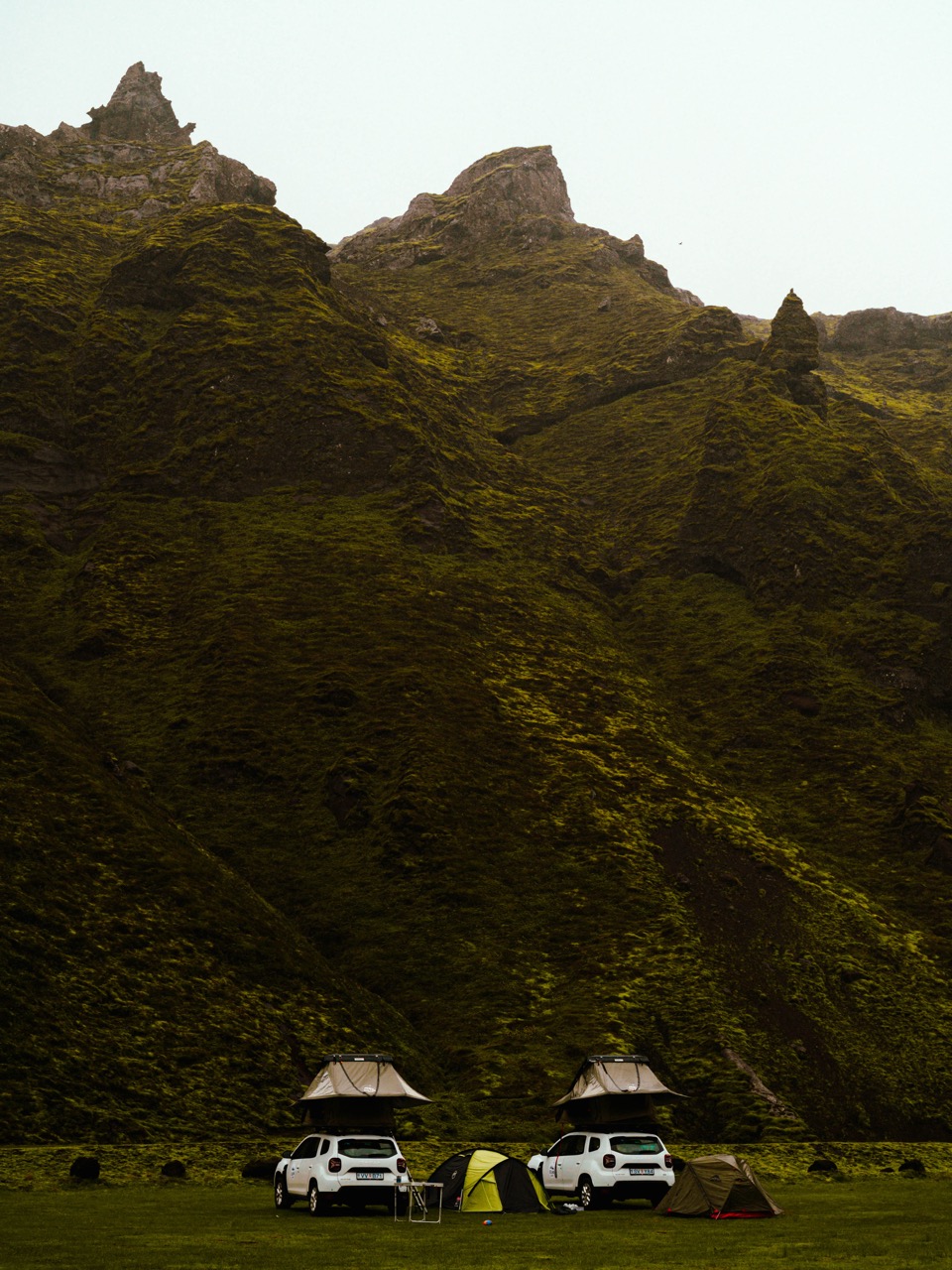
After questioning what we had gotten ourselves into, we eventually arrived at the campsite. It was relatively small and surrounded by mountains, and incredibly beautiful. I was honestly wishing that we had more than one night there. I guess we got what we wanted, as we said that we wanted an adventure. 😅
Day 3: A Hugely Underrated Hike and a Beautiful National Park
Total Drive Time: 2 Hours and 40 Minutes
We woke up on our third morning to pretty heavy rain, and we didn’t really know what we wanted to do for the day. This was one of our shorter driving days, and I’m happy we freestyled it as it was quite fun.
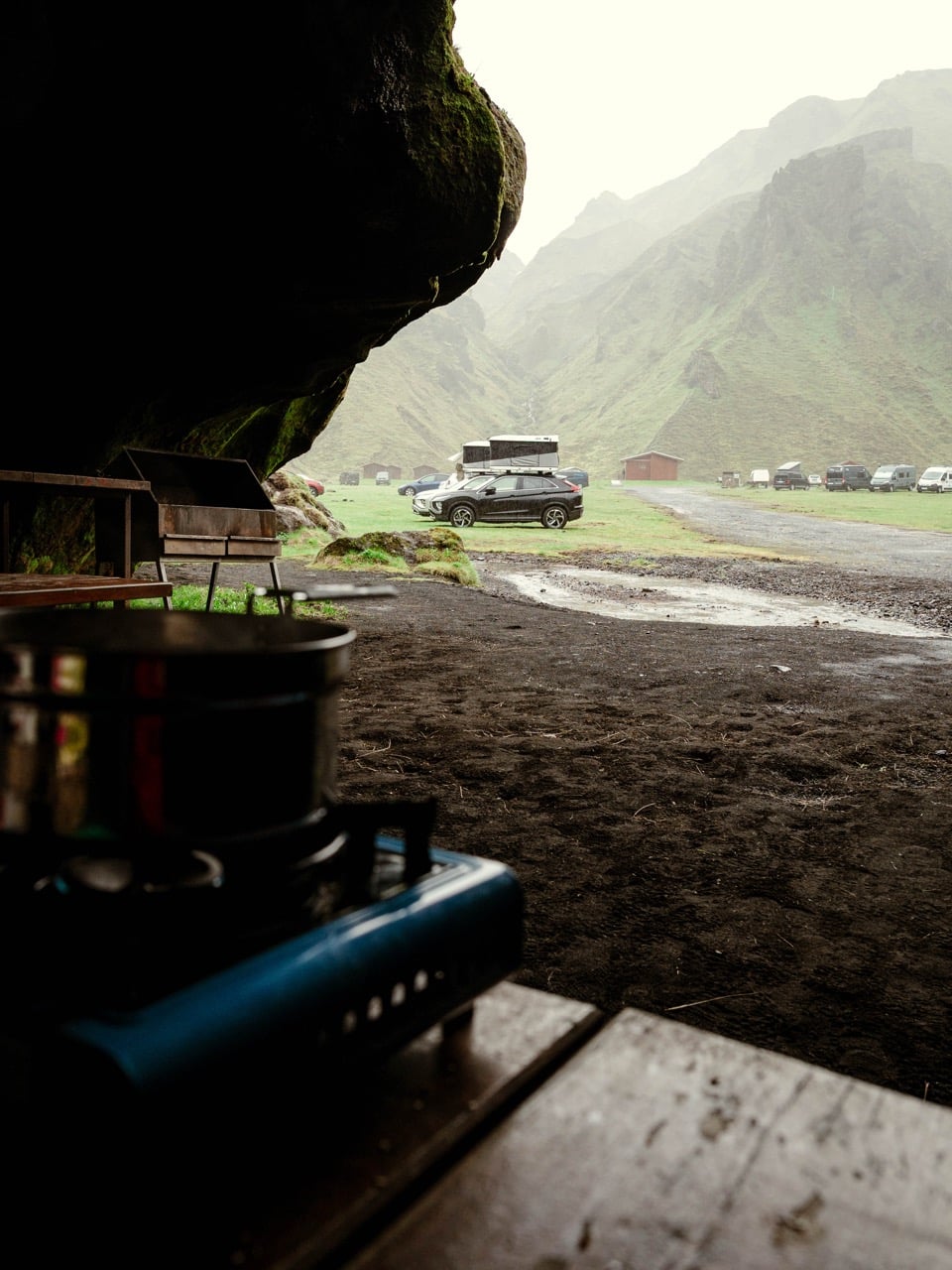
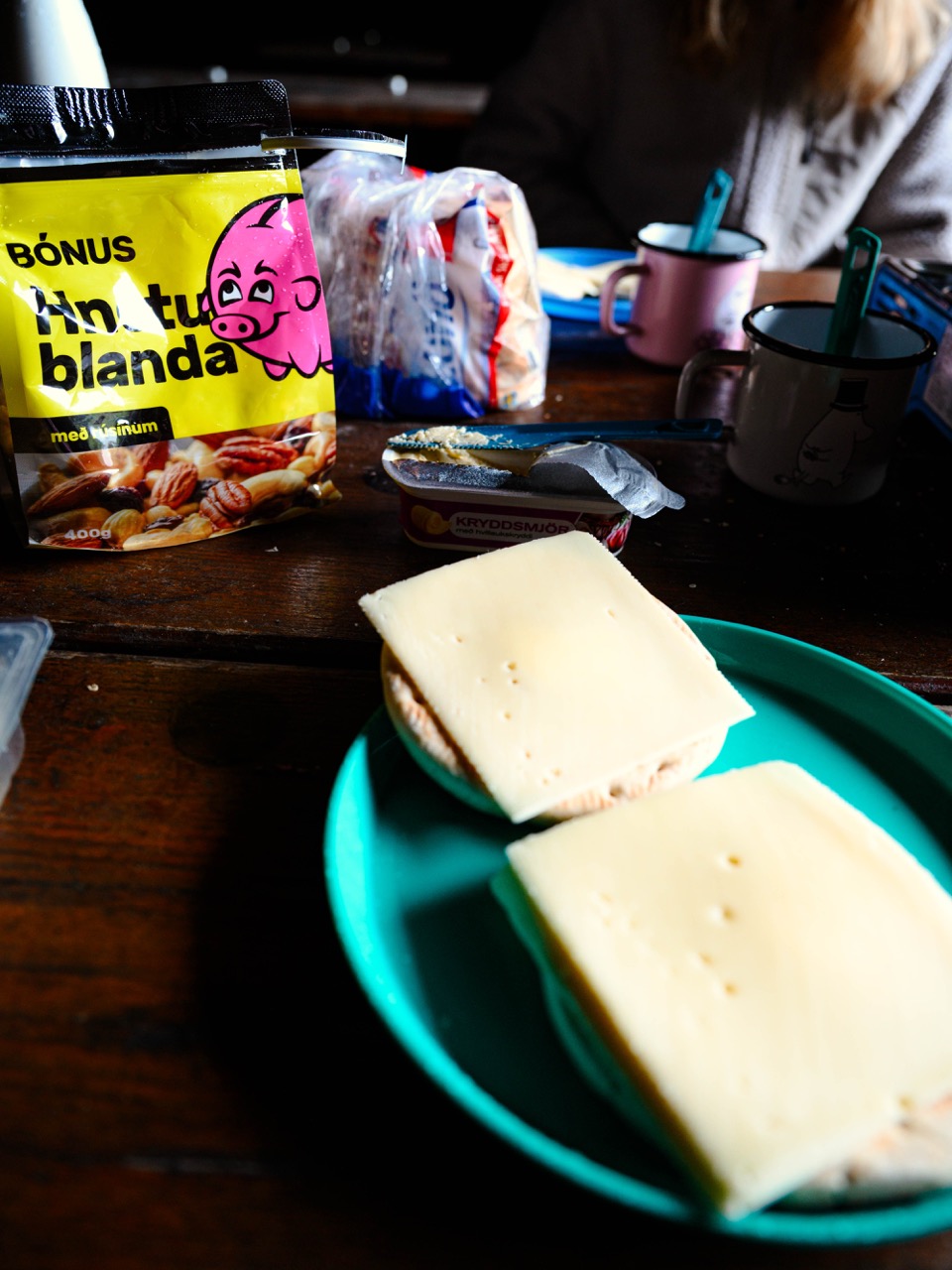
We did quite a lot of hiking on this day. First, though, we had a nice breakfast in the cave area at Þakgil. This was our most unique breakfast spot on the whole trip; while the campsite doesn’t have a kitchen, this was the perfect place to dine. Just as a quick side note: Instant coffee tastes like garbage usually, but when you’re out in nature and miles away from everything, it tastes like a trendy Copenhagen café.
A Spontaneous Hike
While we were packing away our tent, we saw some people hiking on a mountain close to the campsite. We went to have a look at the hiking routes map and decided “sure, why not?”. By this point, the rain and fog were clearing up. Since we’re both big on hiking and being outdoors, this seemed like the perfect opportunity to try a new trail.
First, though, we quickly walked through the valley close to the campsite. It’s quite a short trail that goes to a small waterfall, and it was a nice little detour.
Soon after, we started our hike. We took the blue trail, which was around two hours long. The landscape changed multiple times throughout the hike, and it was nice to see those same views from yesterday without needing to drive a car over multiple potholes. I’d go as far as saying that this has been my favorite hike that I’ve done in Iceland so far.
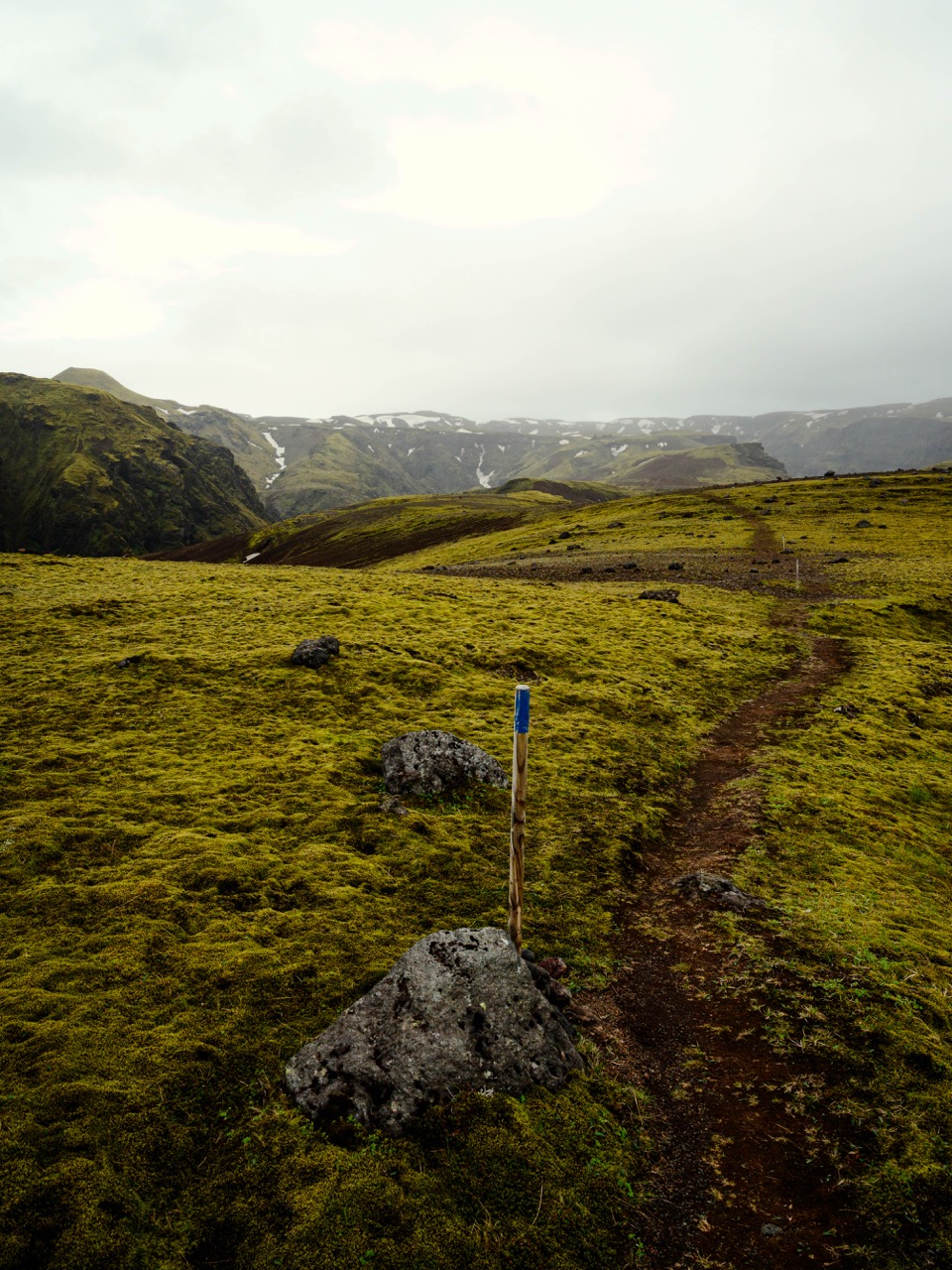
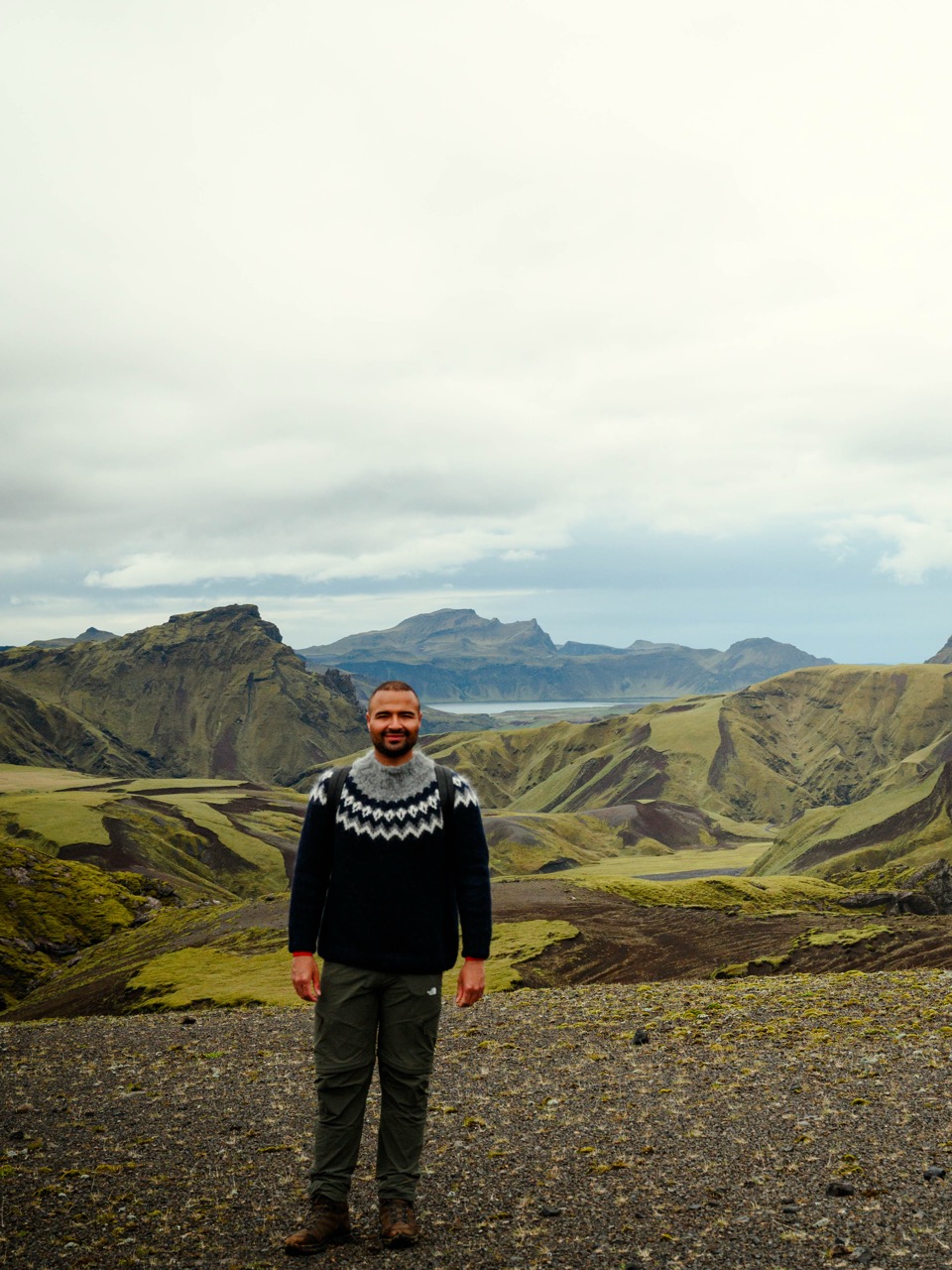
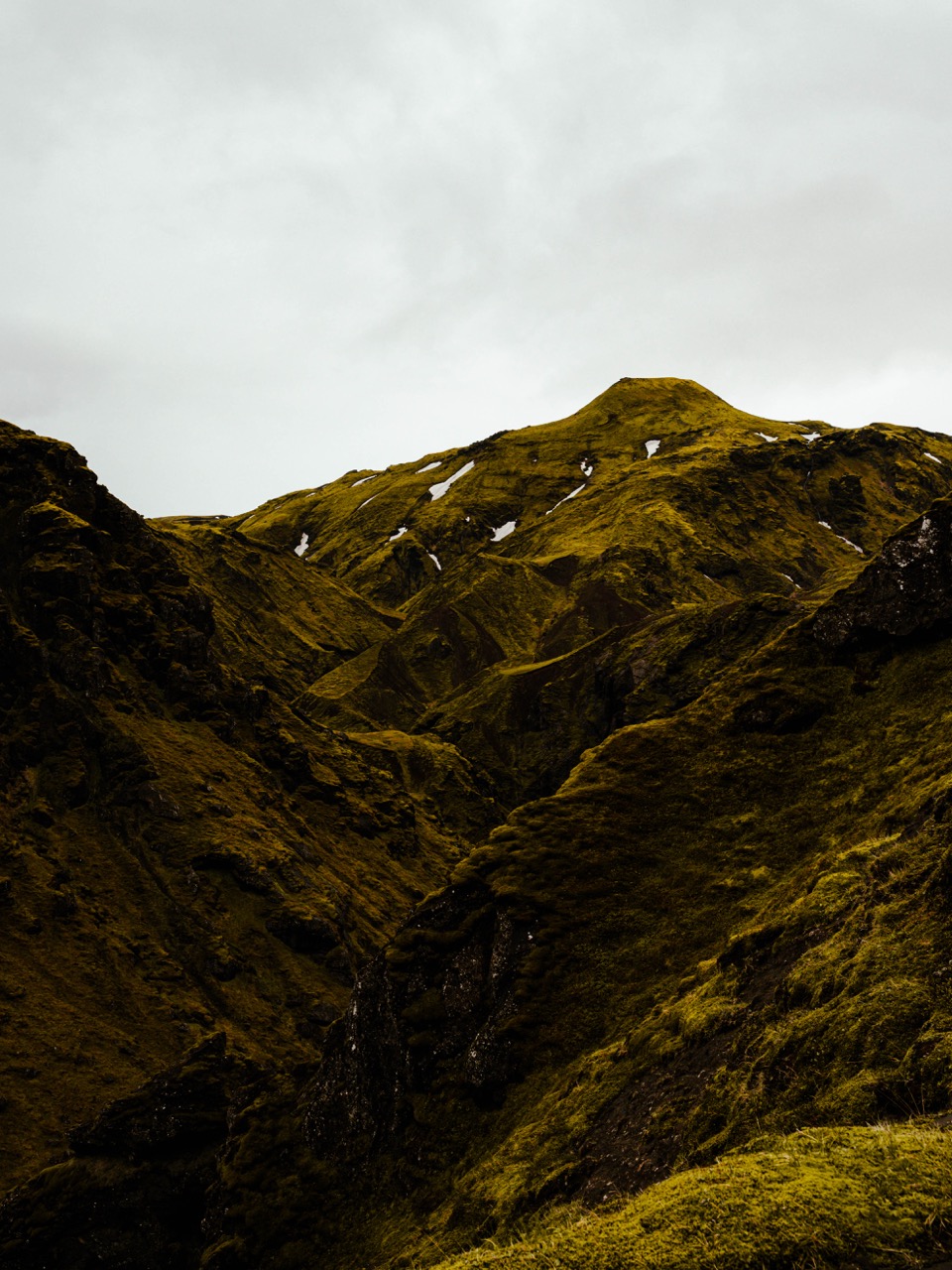
As we followed the trail down into the valley, the landscape switched from Lord of the Rings to “I’m pretty sure some elf in pointy shoes is going to tell us that the king is expecting us at 7pm”. After finishing the hike, we got in the car and continued our adventure in Iceland. The drive down was much more enjoyable than going up, I have to say. 😄
Just as a useful side note: Be careful at the bottom of the mountain road when you drive as there are quite a lot of sheep, and they definitely weren’t looking for oncoming vehicles. Drive slowly, be patient, and give them space where possible.
Continuing on to Skaftafell National Park
Most of our afternoon was spent driving, and the weather turned pretty foul. It was chucking it down with rain most of the time as we drove toward Skaftafell National Park, which was where we would spend our next night. The drive there is pretty much all along the Ring Road, and much of it is flat black sand for your scenery. Not that we could see, anyway, since the fog was pretty thick.
Our roadbook said that we could stop at the Fjaðrárgljúfur canyon, which became famous after Justin Bieber filmed a video there. We had been there on a previous trip, and personally, I thought it was quite overrated—so we decided to skip. If you’re visiting for the first time, I’d recommend just going to the valley behind Þakgil instead. It’s more scenic, less crowded, and right next to the campsite. Below are some pictures from there. 🙂
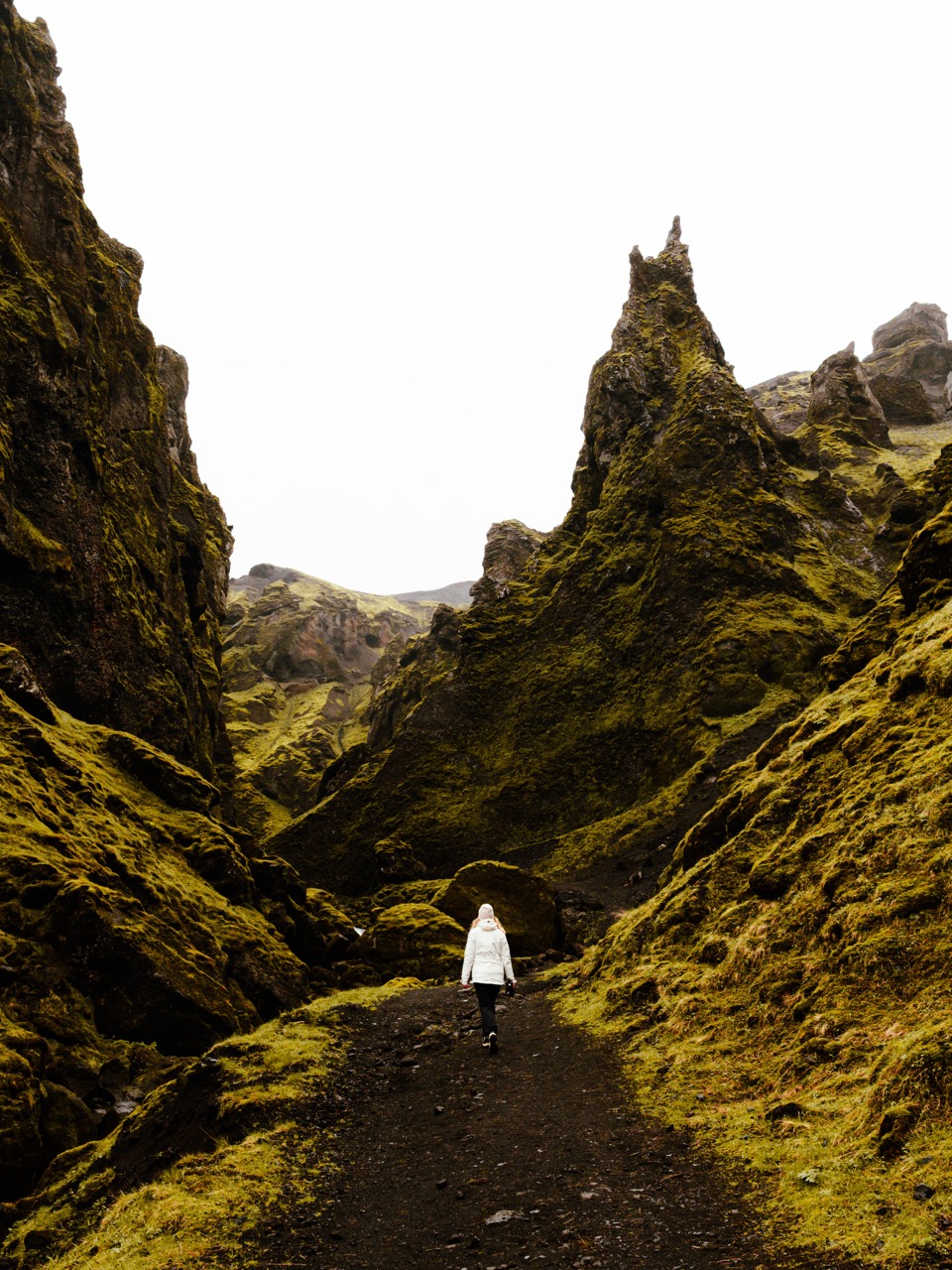
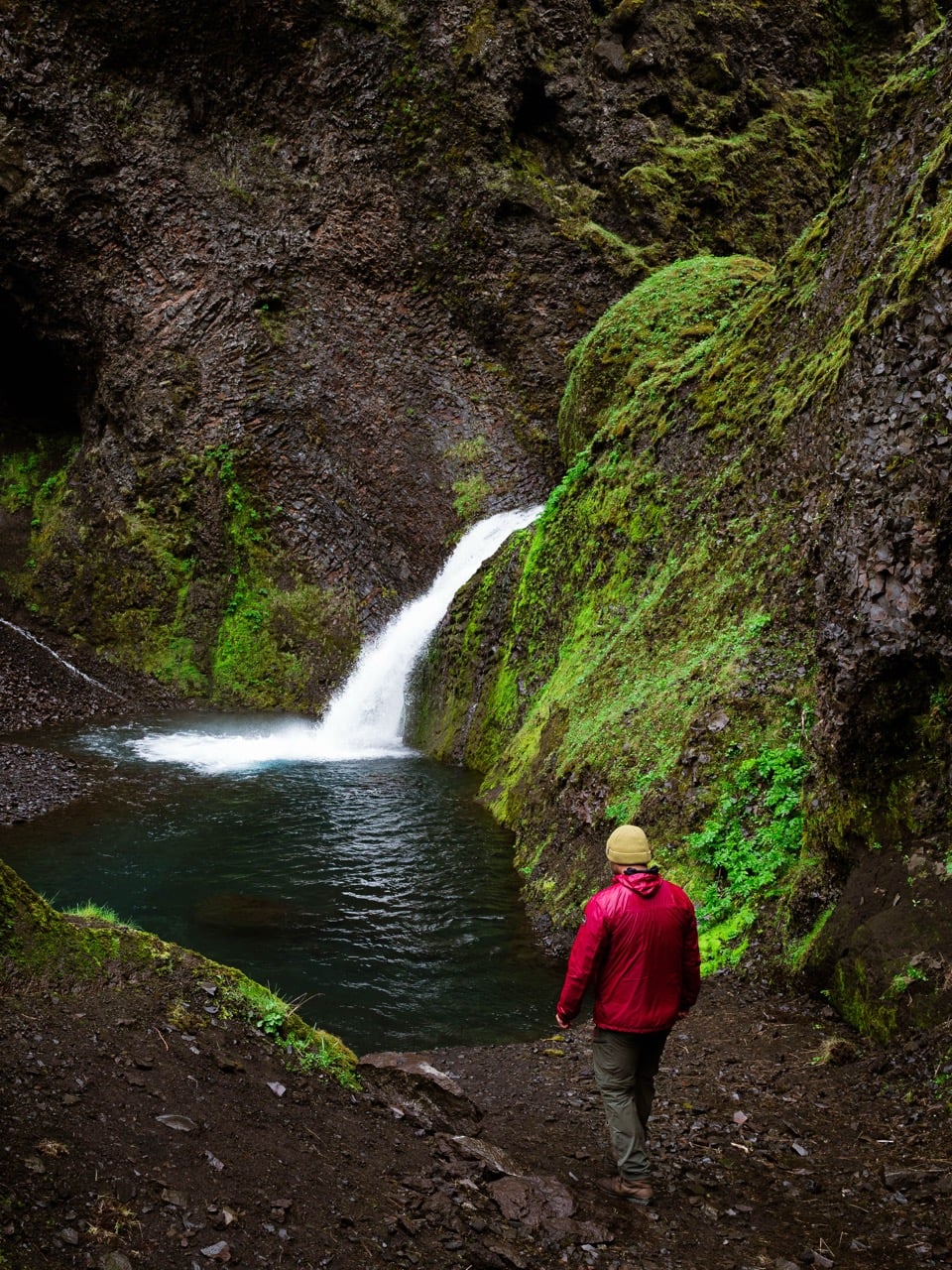
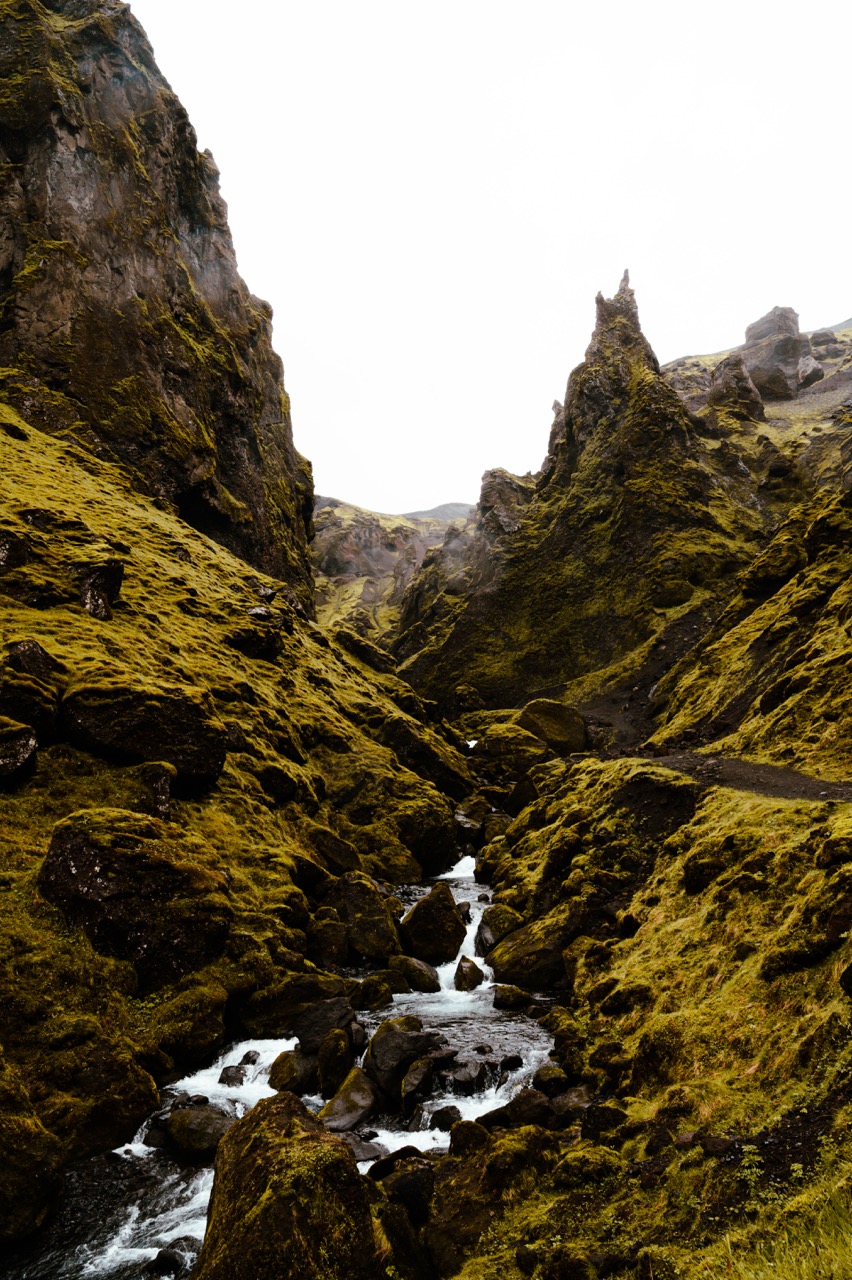
We had already been to Skaftafell National Park on a previous trip to Iceland, and I was excited to come back. When we were here before, I said that I would have liked to stay overnight—so it was nice to have that wish granted.
Our gas tank was almost empty at this point, so we filled up and also quickly stopped at a viewpoint of Skaftafellsjökull to take some photos. We then went to the campsite. For this night, we needed to pay the camping fee at the visitor center as it wasn’t booked in advance; it cost us 5,600 ISK, which is around $45.
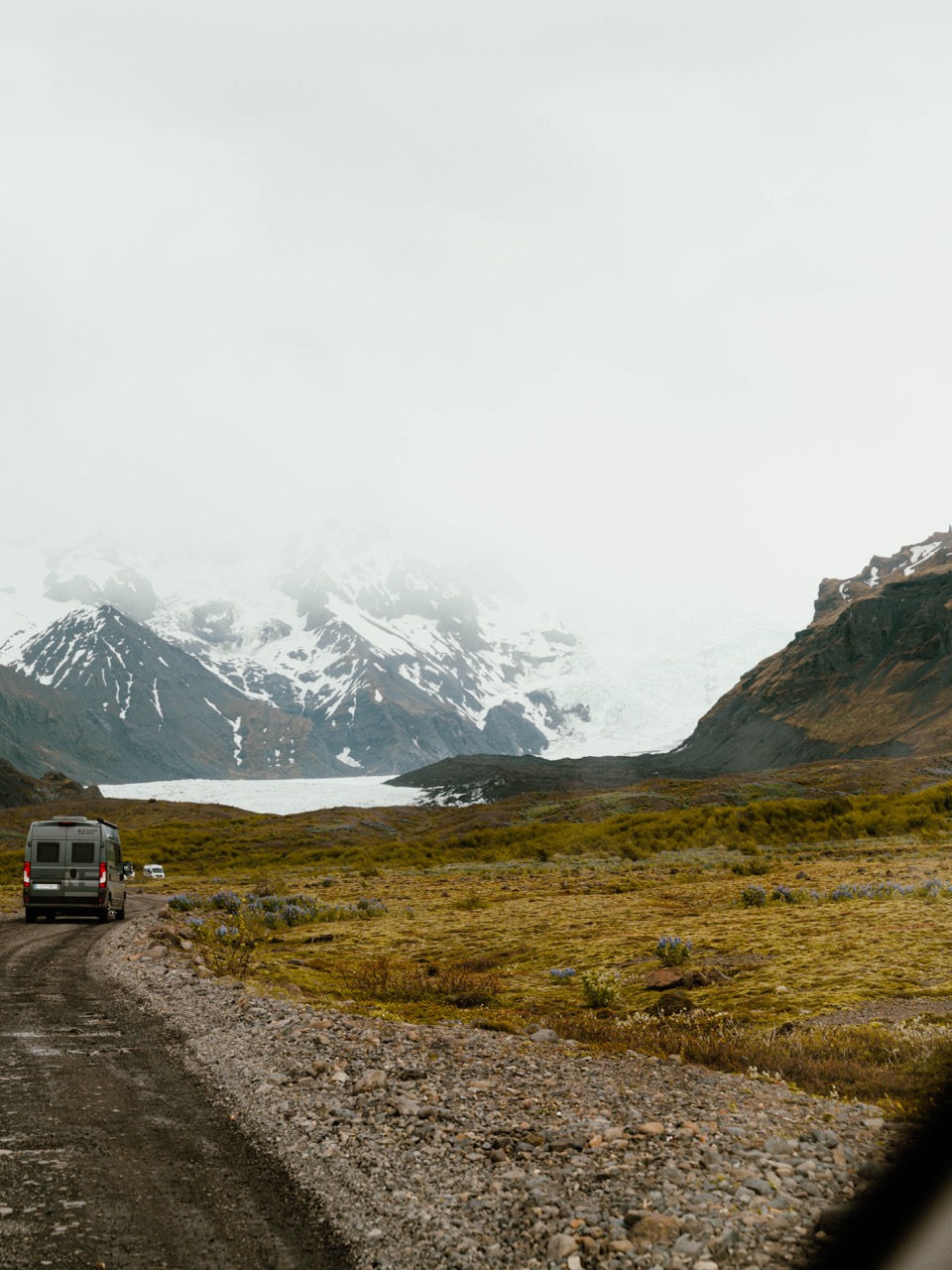
Spending the Afternoon and Evening at Skaftafell National Park
We took it quite easy after arriving at the campground and walked to a view of Skaftafellsjökull via the trail. This walk is quite easy; it takes around 30 minutes along mostly flat ground. It gets quite hilly closer to the end of the trail, but it’s doable for most people.
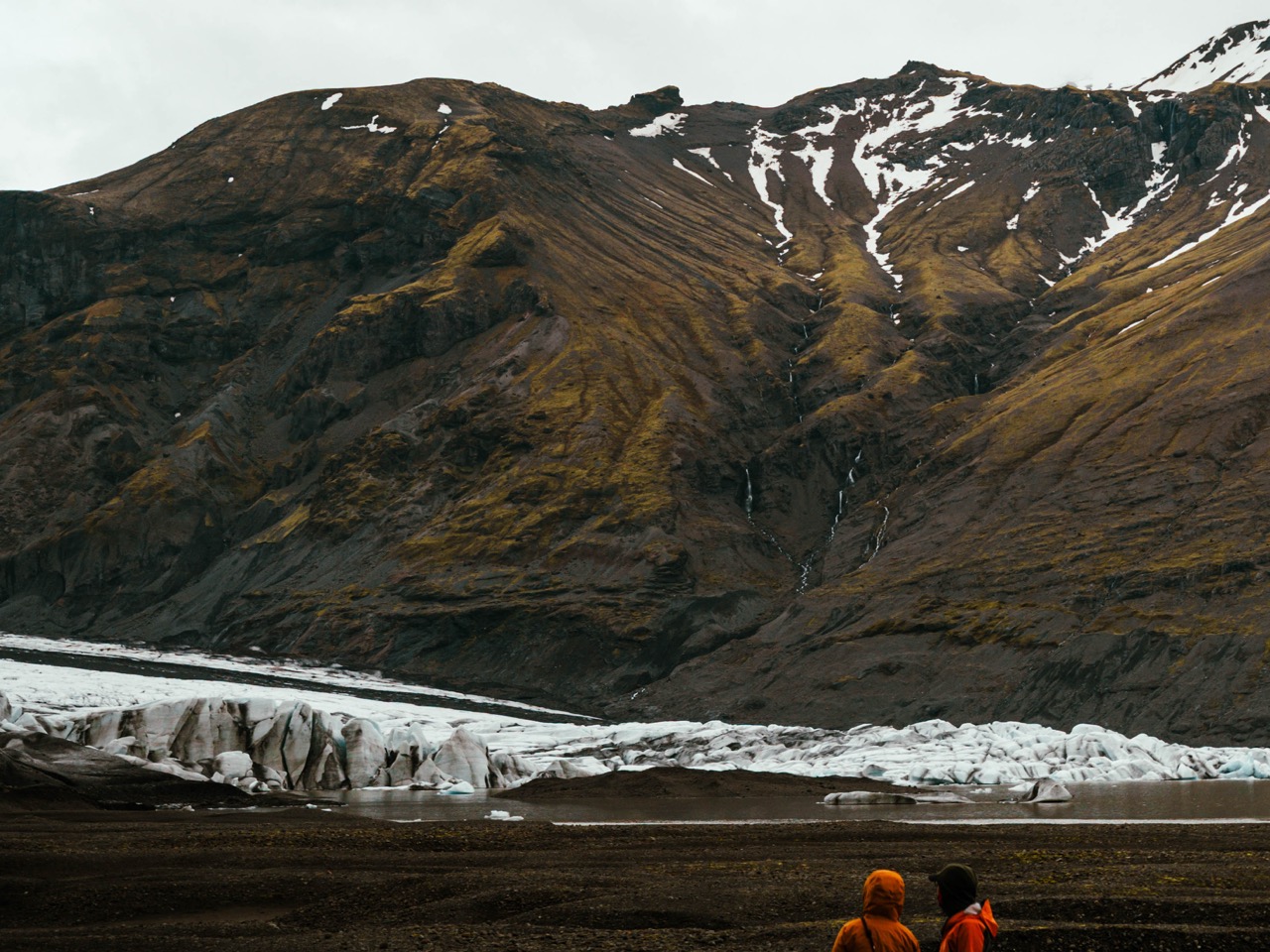
In the evening, we were feeling quite hungry and had some dinner from our food pack. The campsite at Skaftafell National Park doesn’t have a kitchen, so you’ll need to prepare your own food. The campsite was nice, but there were definitely more people than at Þakgil. This is unsurprising, though, since Skaftafell National Park is on the tourist trail and right next to the Ring Road. It was still nice, either way.
There are basically no grocery stores anywhere near the campsite, so I recommend doing your grocery shopping in Vík if you don’t get a food pack.
Tip for First-Time Visitors: I recommend also hiking to the Svartifoss, which we did on a previous trip but not this one. A round trip is 1.5 to 2 hours, and the hike is well-signposted. The trail begins right next to the campsite and is relatively easy. I wrote a full guide to visiting Svartifoss, which I recommend reading before you travel.
Day 4: An Easy Morning Hike and Heading to the Eastfjords
Total Driving Time: 4 Hours
Even though we saw lots of new places and some of my favorite sights again in the first three days, I was excited to see more of Iceland. This would be precisely what would happen on our fourth day of this camping trip.
Before Leaving Skaftafell National Park, We Did Another Quick Hike
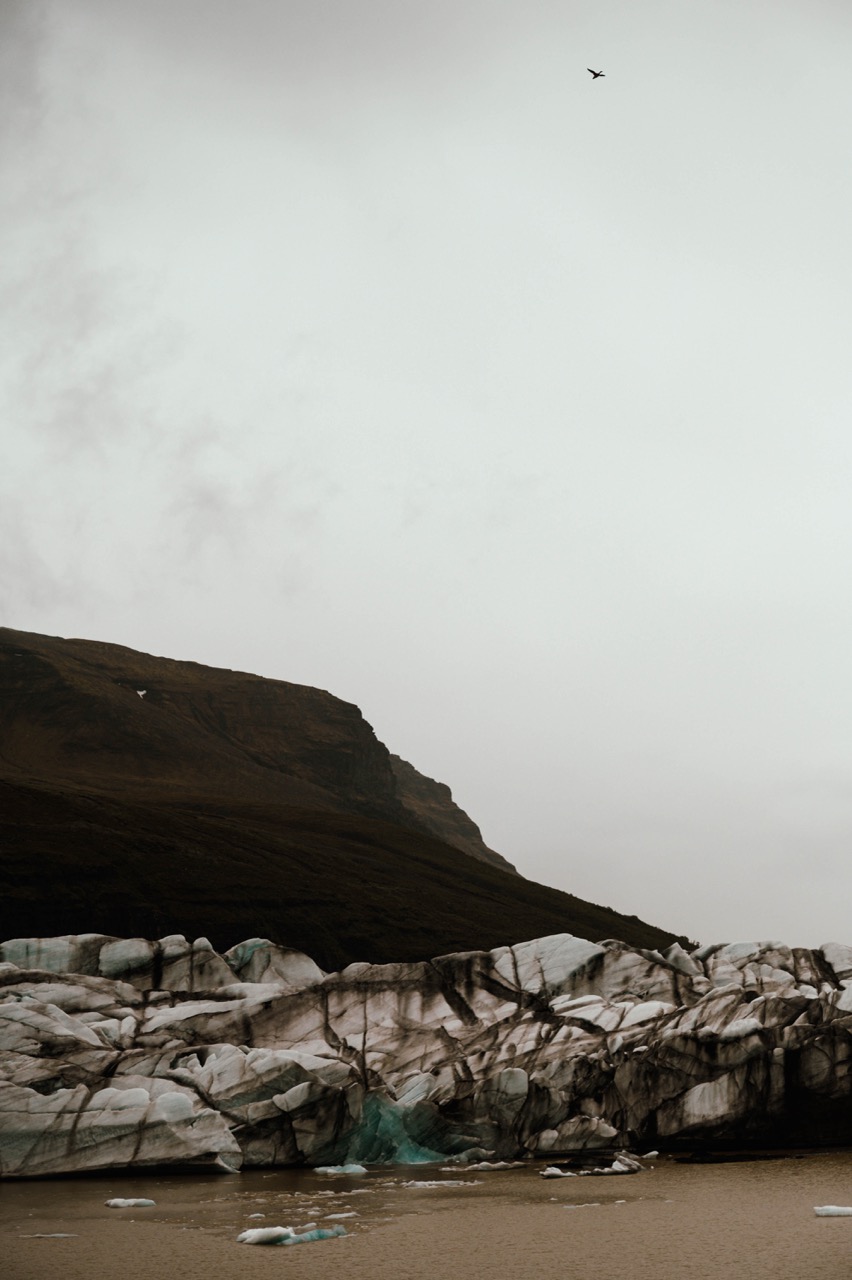
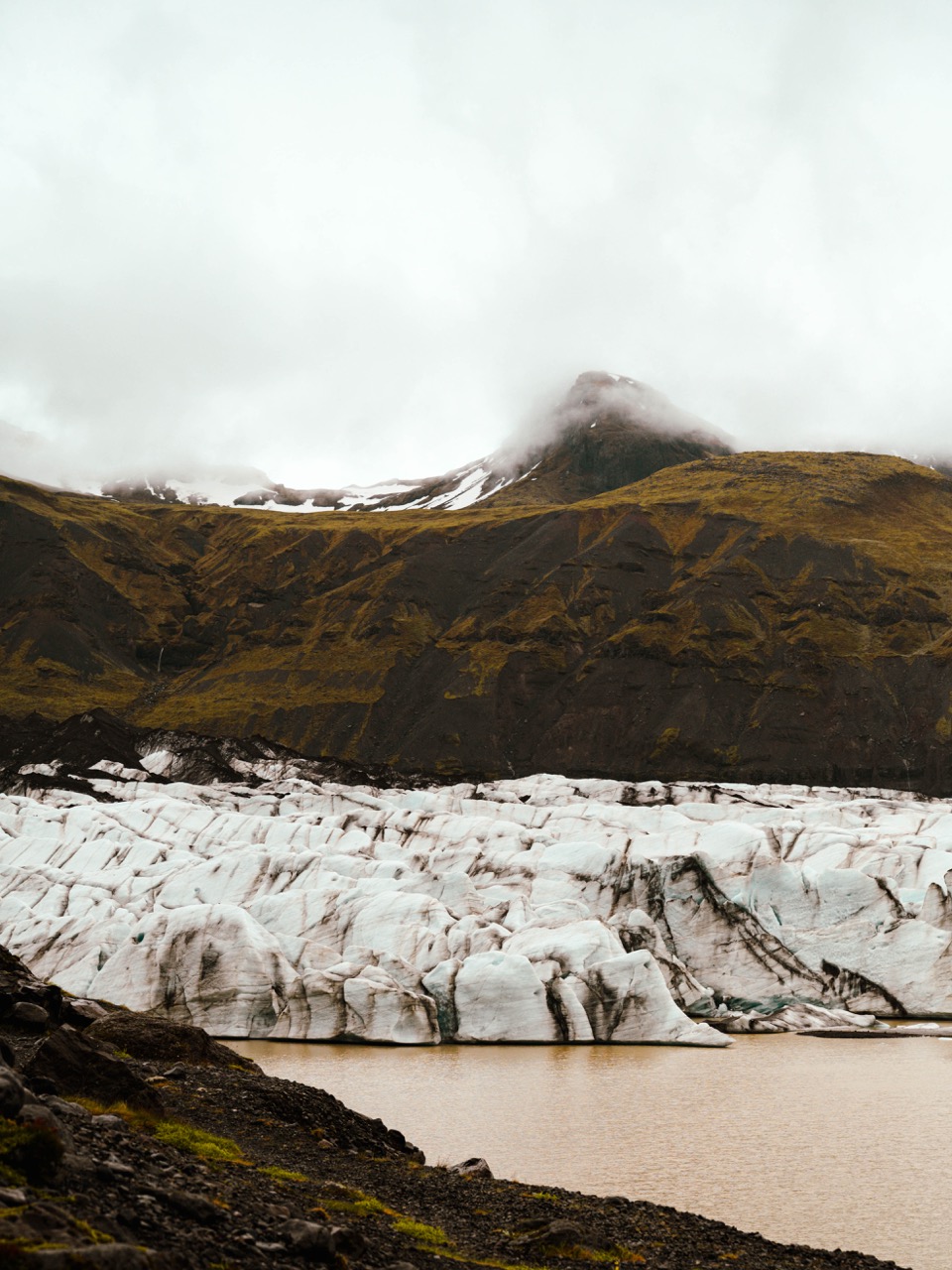
Our morning involved some more hiking; this time, it was an easy walk to the Svínafellsjökull viewpoint. We originally planned to do this the evening before, but we chose to save it for the day after instead. If you’re there in the summer, you will pass the nesting grounds for European golden plovers; these birds will follow you as you walk past. We kept it moving and tried not to disturb them as much as possible.
We also saw some skuas and Arctic terns, but thankfully, their nesting grounds were further away. These birds are very aggressive if you get too close to their nesting areas, but we didn’t have issues with them here. We did get swooped on by terns later in the trip, and you pretty much will at least once if you’re in Iceland during the summer, but anyway.
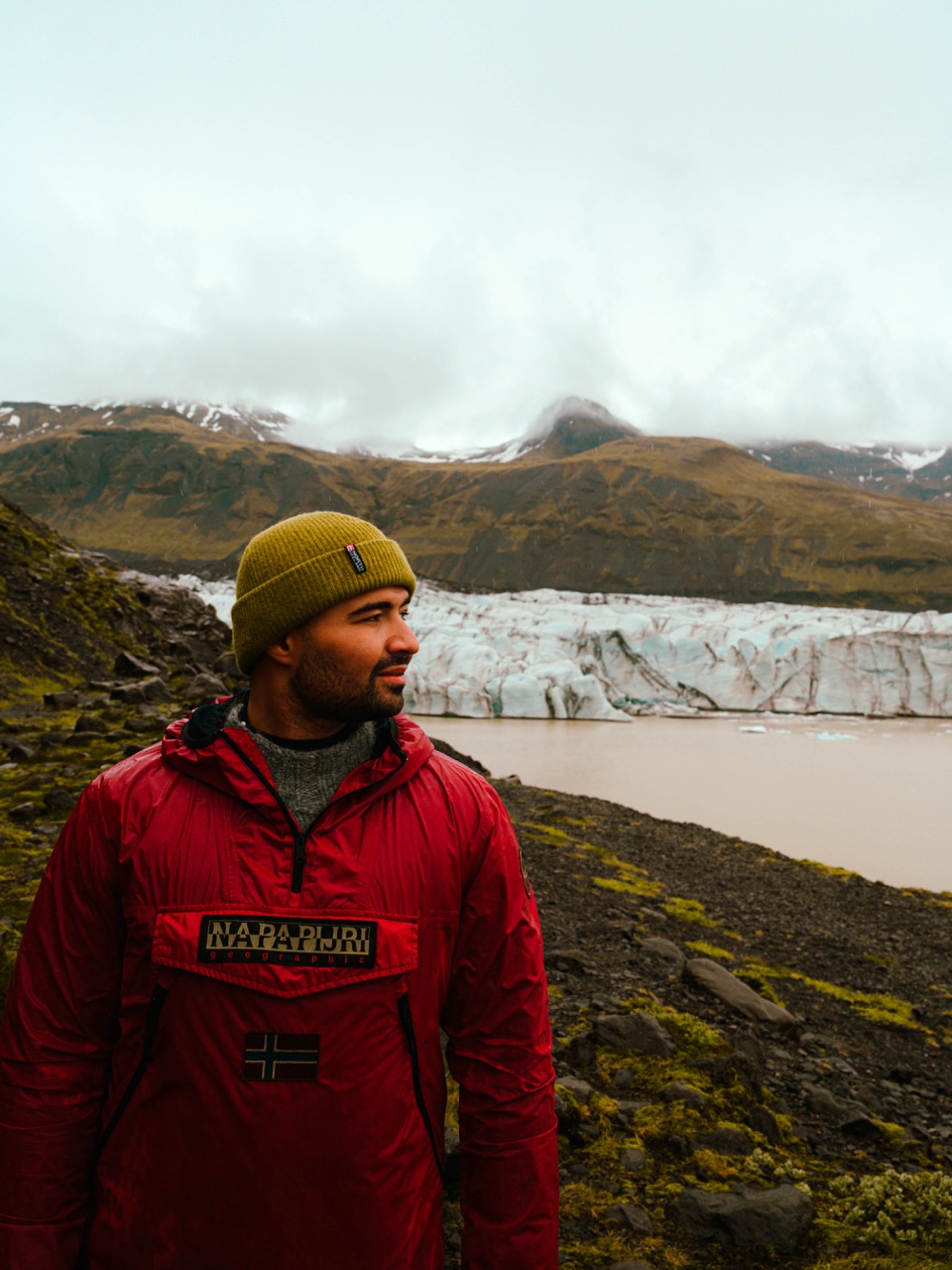
The viewpoint of Svínafellsjökull was beautiful, and I was so happy that the weather got quite moody here as it was perfect for photos. We were actually the only people here, so it was nice to have the place to ourselves. I actually preferred it to Skaftafellsjökull, and it’s worth the extra effort.
Continuing to Stunning Fjallsárlón
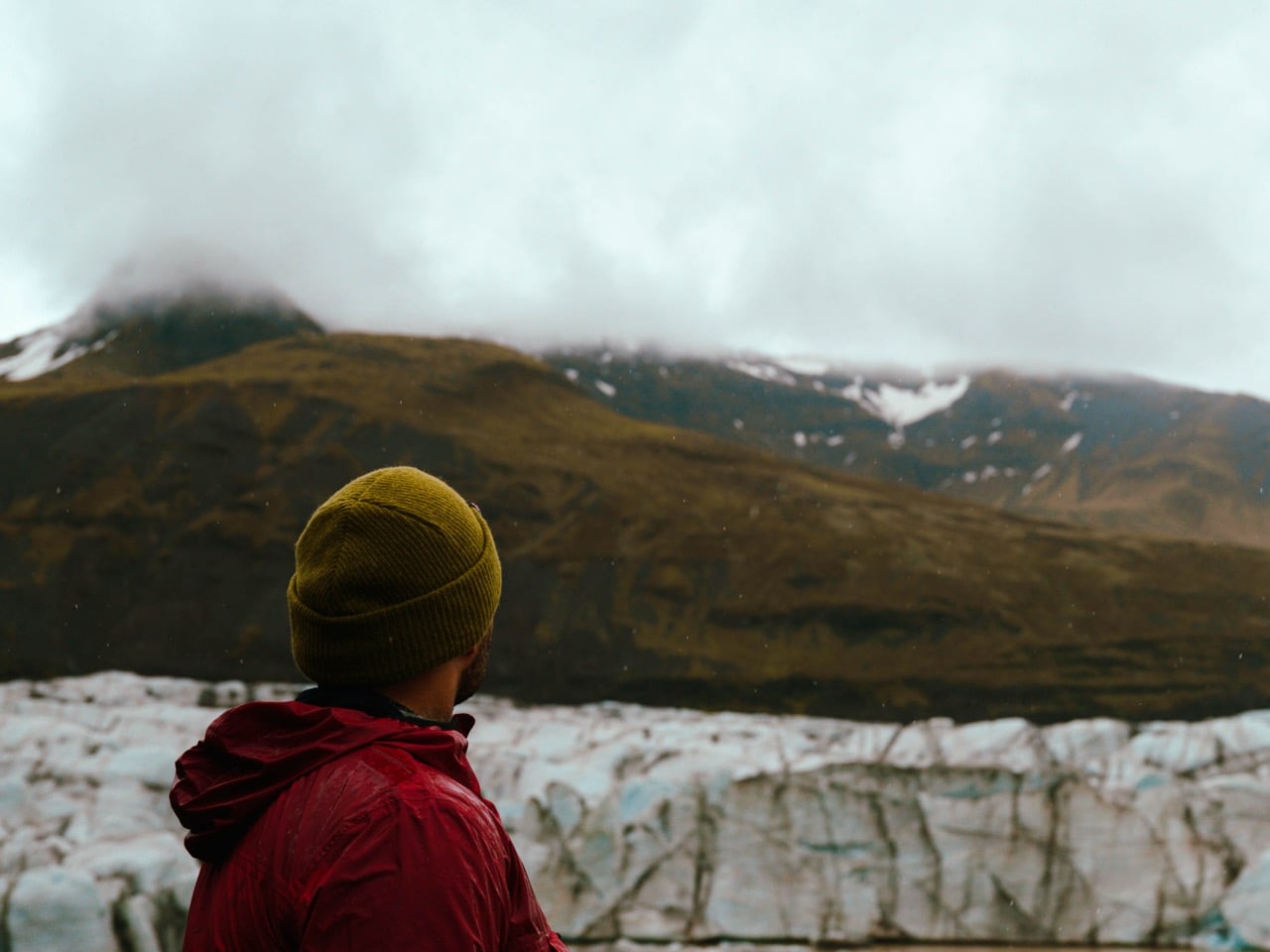
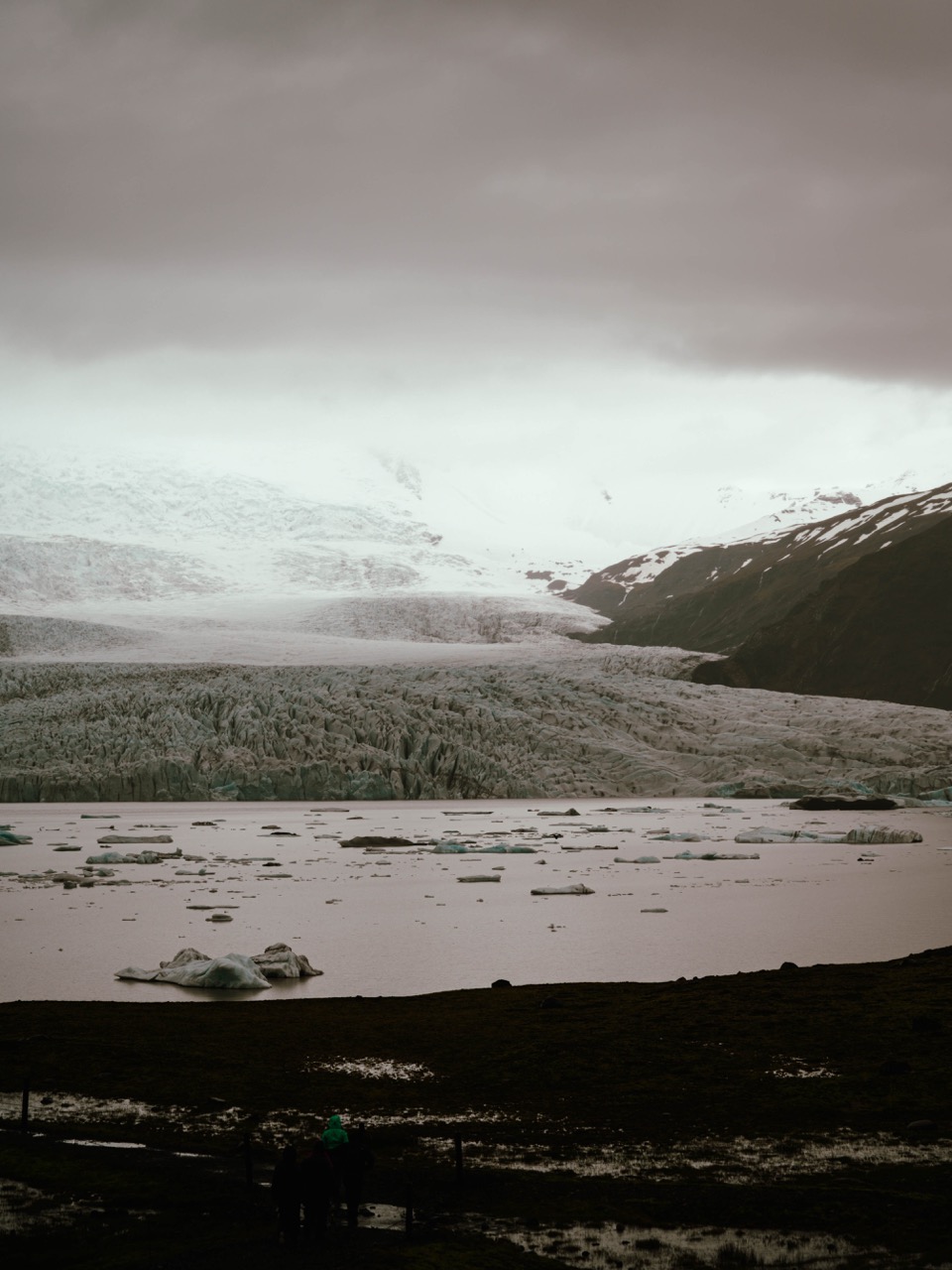
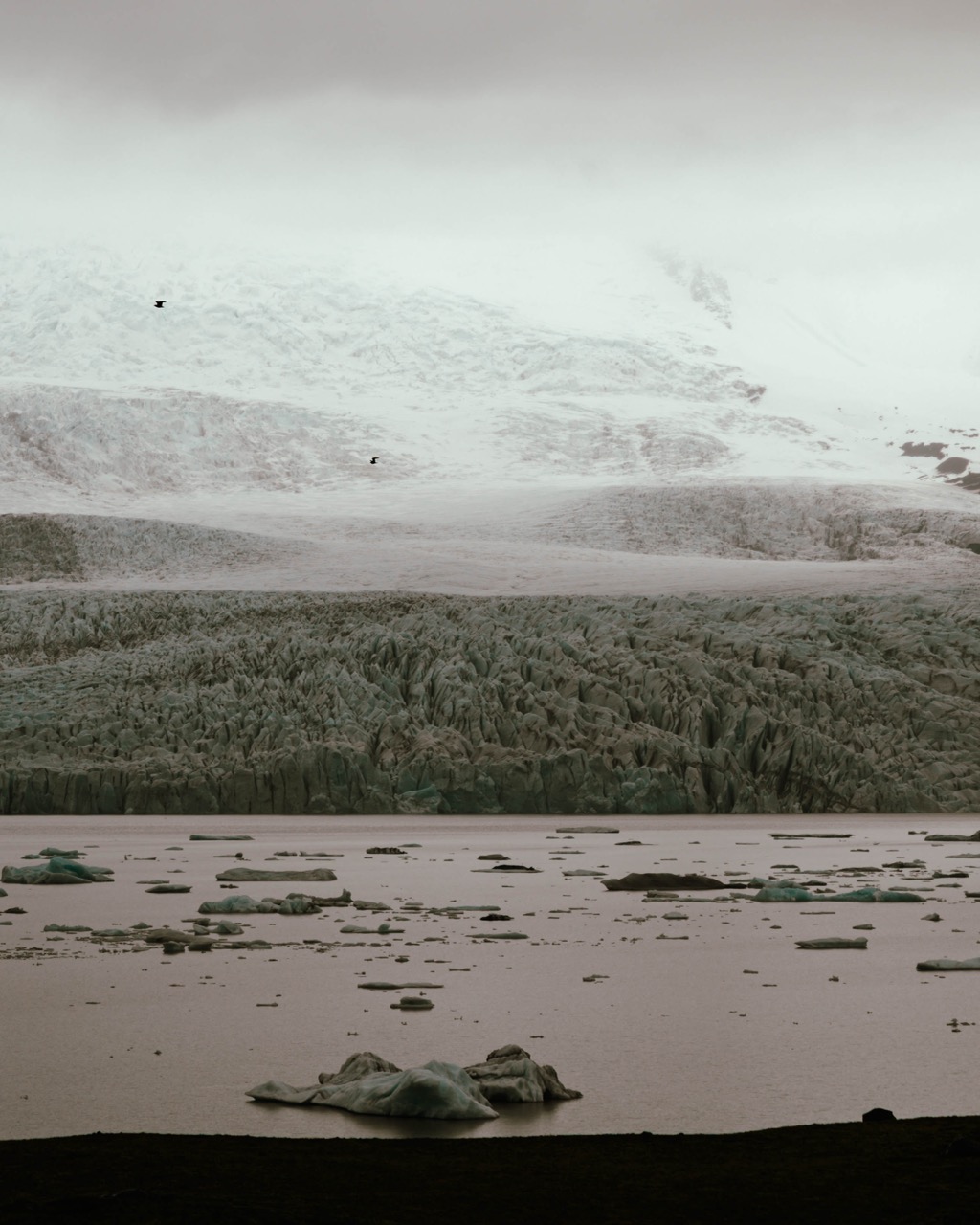
Glaciers were very much the theme of this day. After returning to our car and having some breakfast, we drove down to Fjallsárlón. I’m now going to be a little bit controversial: I actually think that this glacier lake is more picturesque than nearby Jökulsárlón.
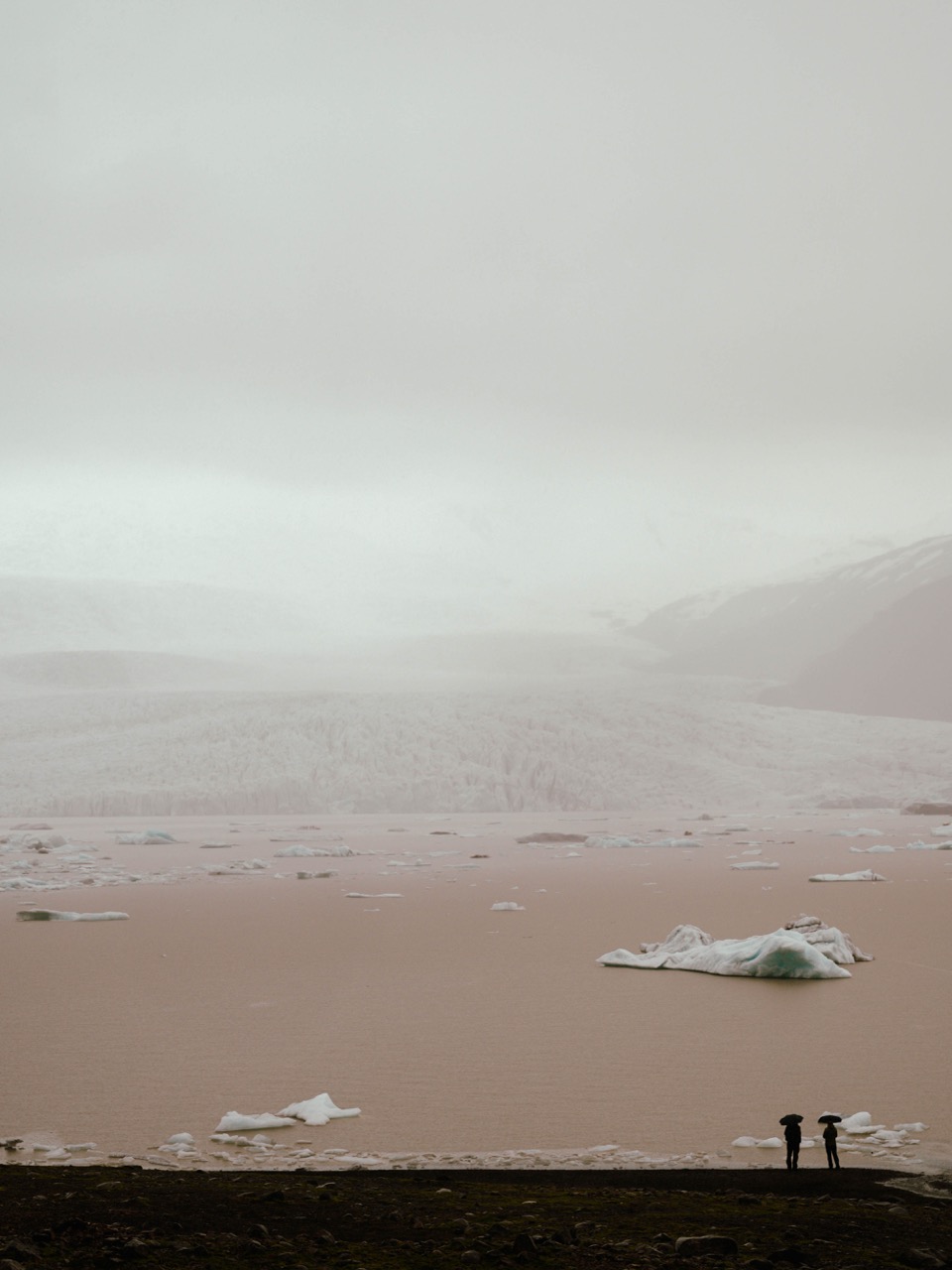
The weather again was moody as we were driving, and the rain was heaving. When we arrived, it was cold enough that my hands would be freezing without gloves. My hat was soaked by the time we arrived at the car, too. Naturally, we saw someone else wandering around in shorts… and I have to say that I respect it.
Anyway, yeah. Fjallsárlón isn’t particularly big, and we spent around 20 minutes here. The view of the glacier and lake is amazing, though. Even though clouds were covering much of the glacier, I got some of my best photos from this trip here. And my camera would pay the price, as I soon found out.
Jökulsárlón and the Diamond Beach
Jökulsárlón wasn’t too far away, and I must say that I wasn’t overly excited about revisiting. I had been here on a previous trip, and if I were traveling on my own, I probably would have skipped it. I’m glad, however, that my girlfriend said that we should stop there.
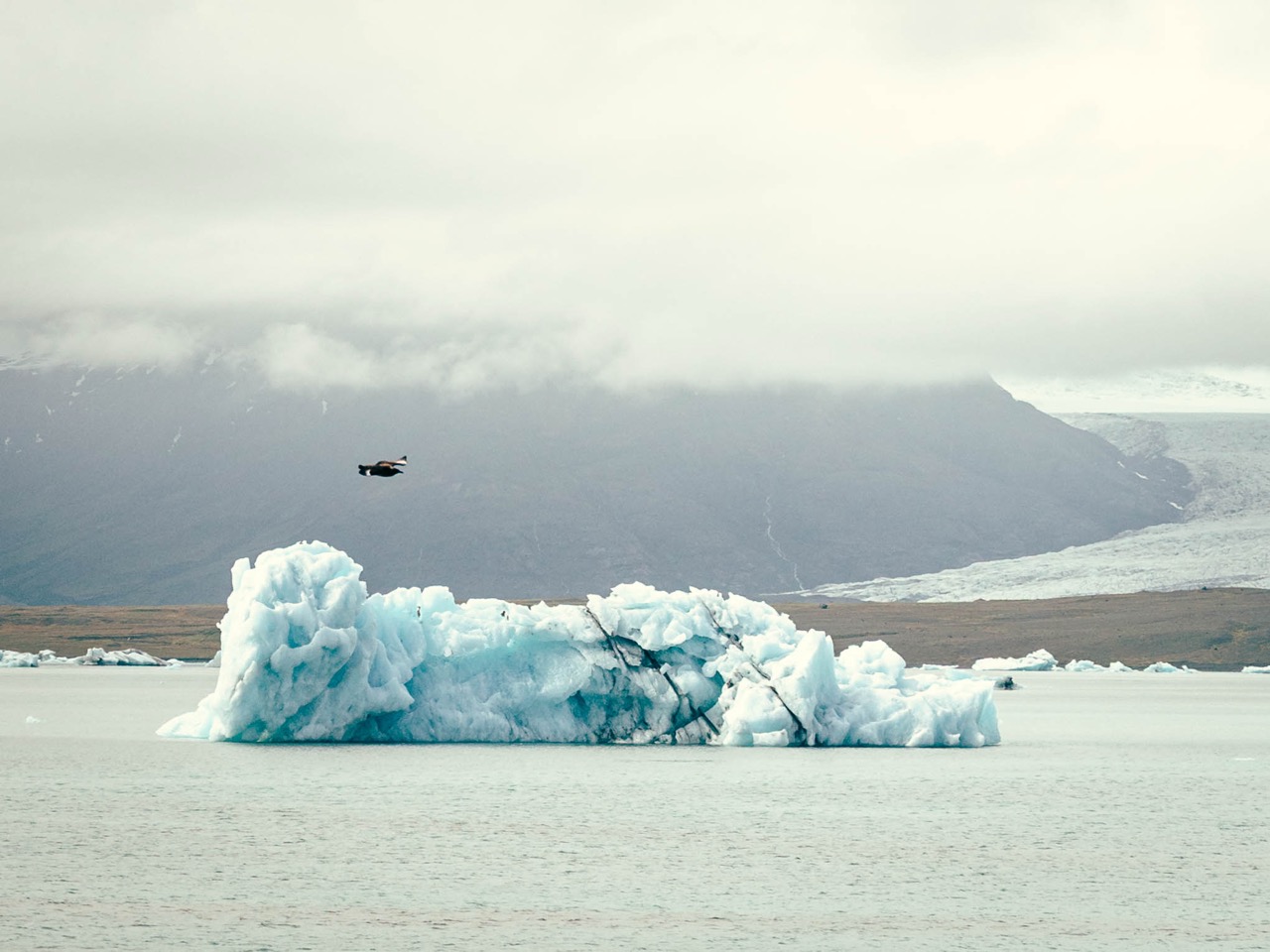
While Jökulsárlón was very busy, it’s also more picturesque than what I remembered. It was also a great place to see skuas flying around, and we even saw some seals in the lagoon (!!!). The weather did a complete 180; it was much warmer and sunny, and my camera clearly couldn’t handle it because my lens got very foggy.
Since we were already in the area, we decided to also go to the nearby Diamond Beach. While I was happy that we went to Jökulsárlón, I thought the Diamond Beach was a bit overrated. Still, the parking fee we paid at Jökulsárlón was also valid here—so we chose to stop here anyway.
Some ice washed up on the beach, but not too much. This was different from when I was here before; much more ice was on the beach at that point. It’s really luck of the draw, to be honest. Oh, and as a side note: Do not climb on the ice, as falling into the water is very dangerous.
Visiting Vestrahorn and the Stokksnes Peninsula
Our campsite for the night was in the Eastfjords, and we were still quite far away, so we continued our journey in that direction. First, though, we stopped in Höfn to quickly buy some food from the supermarket there.
Having been in nature for a few nights, Höfn—a town of just over 2,000 people—felt like a metropolis. My first thought was “what are these buildings?”, and I was looking forward to heading back out into the middle of nowhere. It seemed nice enough, though, and it’s a good place to refuel and stock up on groceries.
I was quite annoyed at this point because my camera was still fogged up. Was that my fault? It’s not for me to say 🙂. Still in a mood, I suggested skipping Vestrahorn. My girlfriend said that we should go, though, so we decided to.
Again, she made the right decision here. I thought that the Vestrahorn mountain would be overrated, but it was the complete opposite. Many people had complained about the parking fee on Google Reviews, but a) it is private property, and b) it’s not much more expensive than other places we went to.
Beyond that, it was just really nice. We paid for our ticket in the café before continuing. Vestrahorn was beautiful, even though the top of the mountain was covered in clouds. I also loved the Stokksnes Peninsula in general, which was a nice and unexpected surprise. The road here is bumpy, but it’s worth the detour.
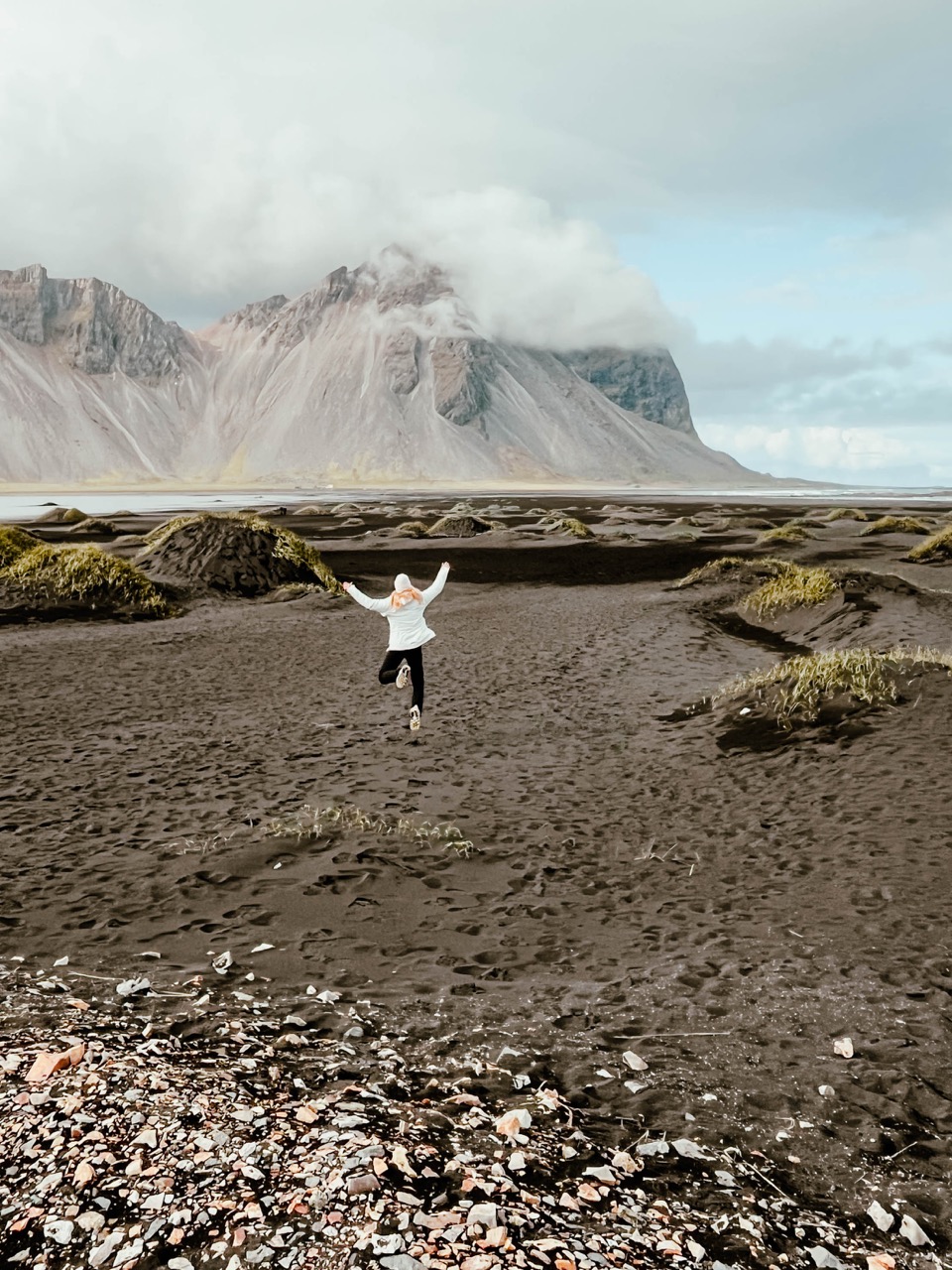
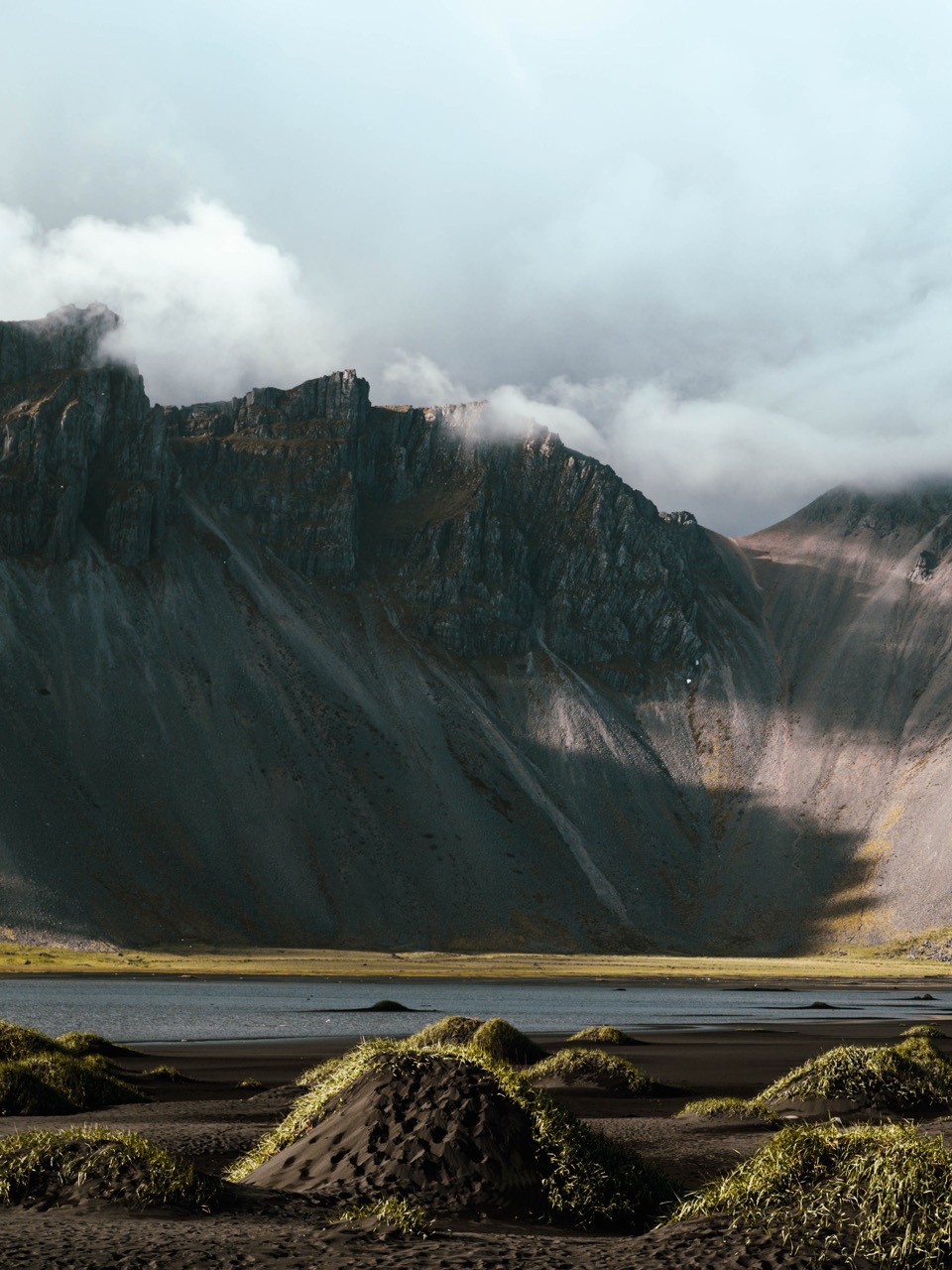
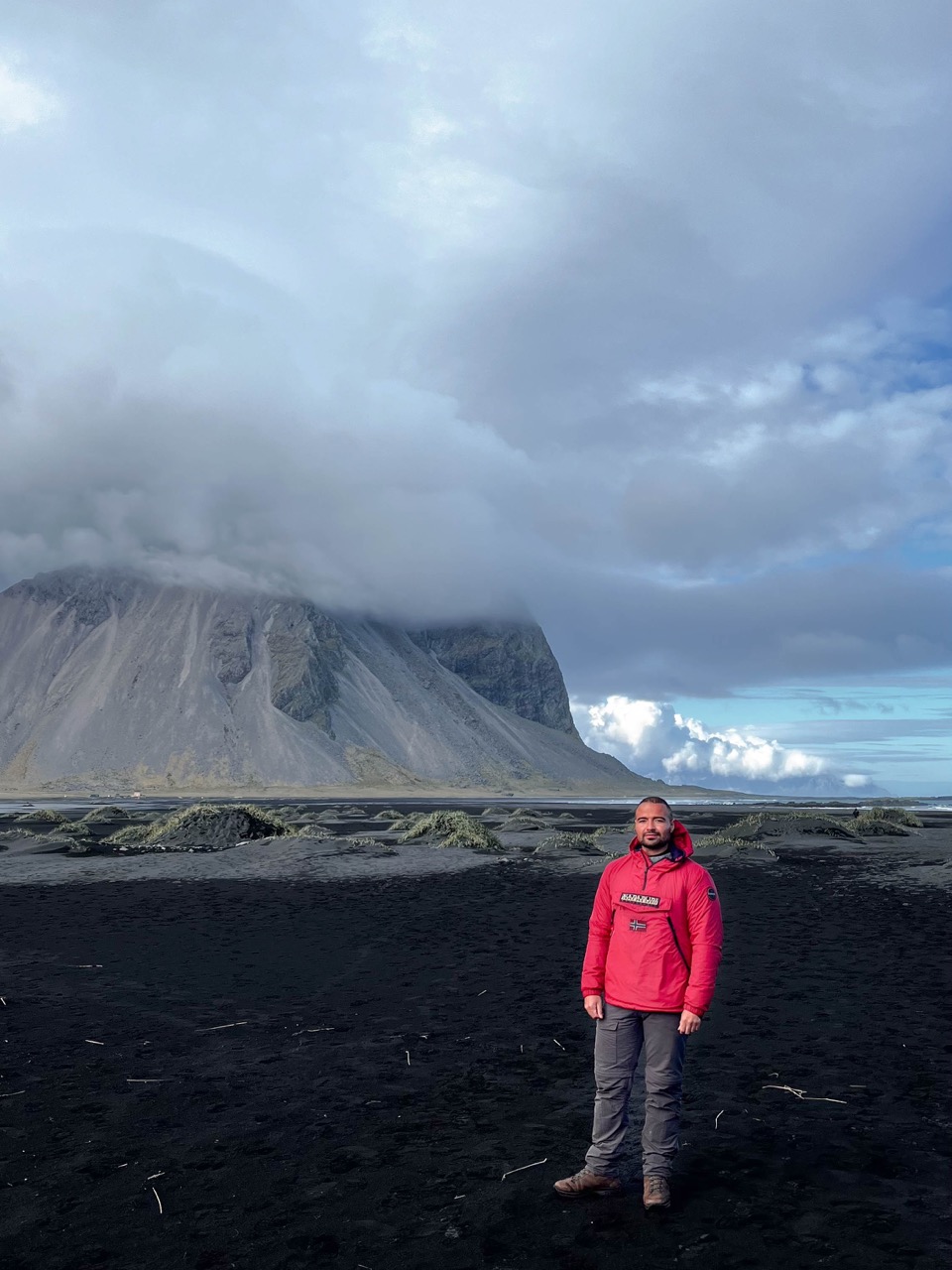
The only place we didn’t go was the Viking Village. This was included in our ticket, but it’s a reconstructed village for a film set rather than an actual one. Everything else was great, though. Oh, and my camera lens fog briefly cleared, too. 🙂
Heading Into the Eastfjords and Visiting Our Campsite
We were quite tired by this point, so we headed on to the Eastfjords. Ever since my first trip to Iceland in 2018, I had wanted to visit this part of the country, and I was so excited to finally make that dream come true.
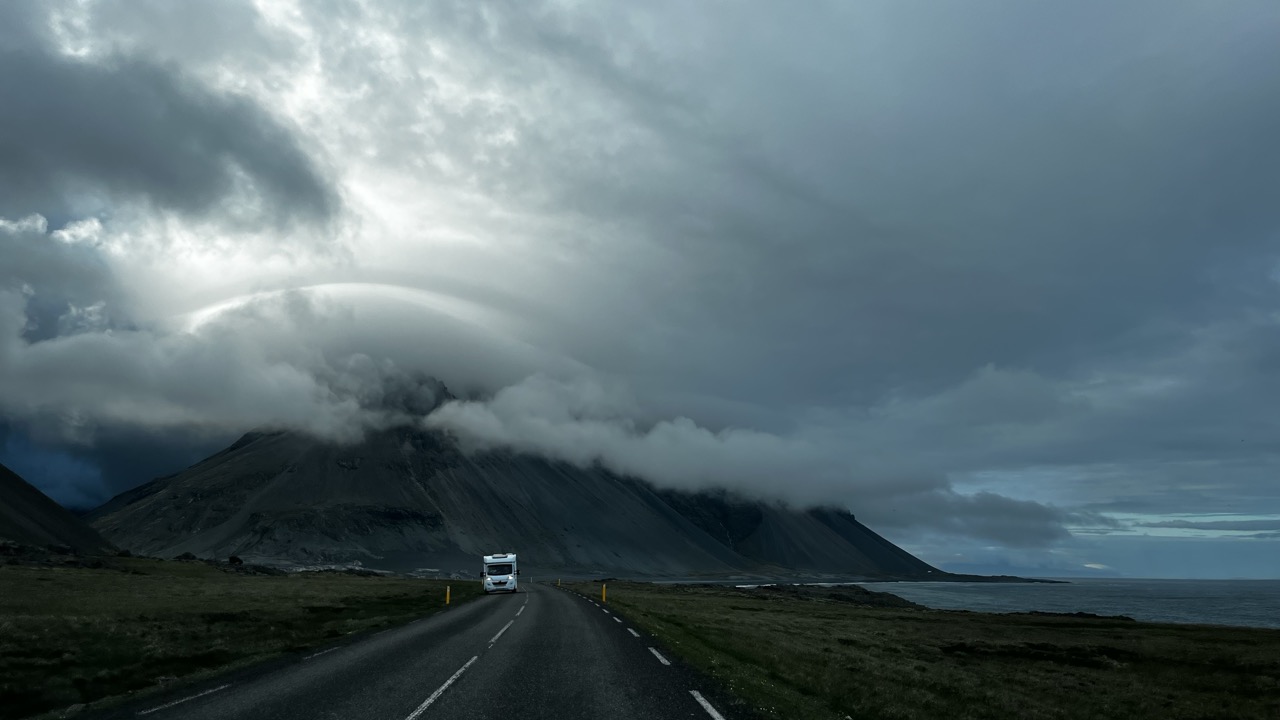
The views along the drive were amazing, and we even saw some wild reindeer next to the road. Reindeer aren’t as common in Iceland as they are in Sweden and Norway, and you can only see them in the Eastfjords. Sadly, as we were driving with no pullover spots, I didn’t take a photo of them 🥲. I did get some pictures on my phone of our drive, though, so I guess that’s nice.
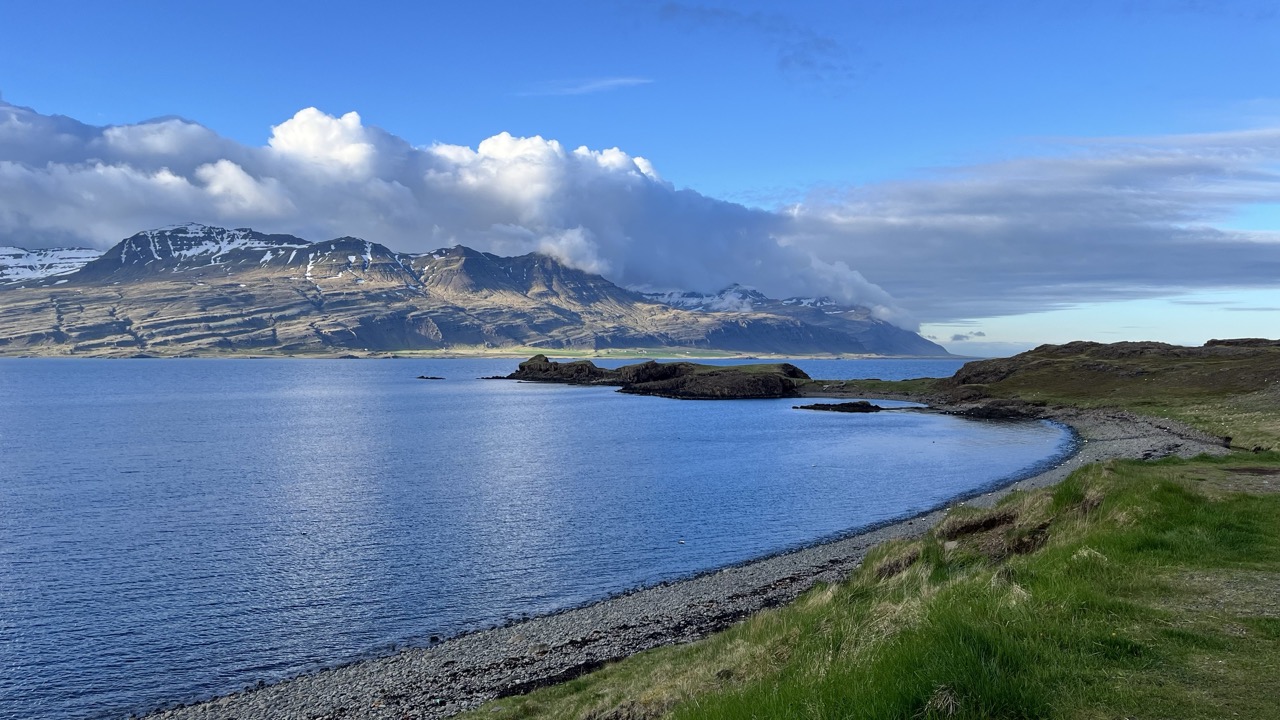
After a few hours, we arrived at the Fossárdalur campsite. The road there was quite bumpy, but nothing like the one to Þakgil a few nights before. We had a luxury there, too: A kitchen (and a really nice one, at that).
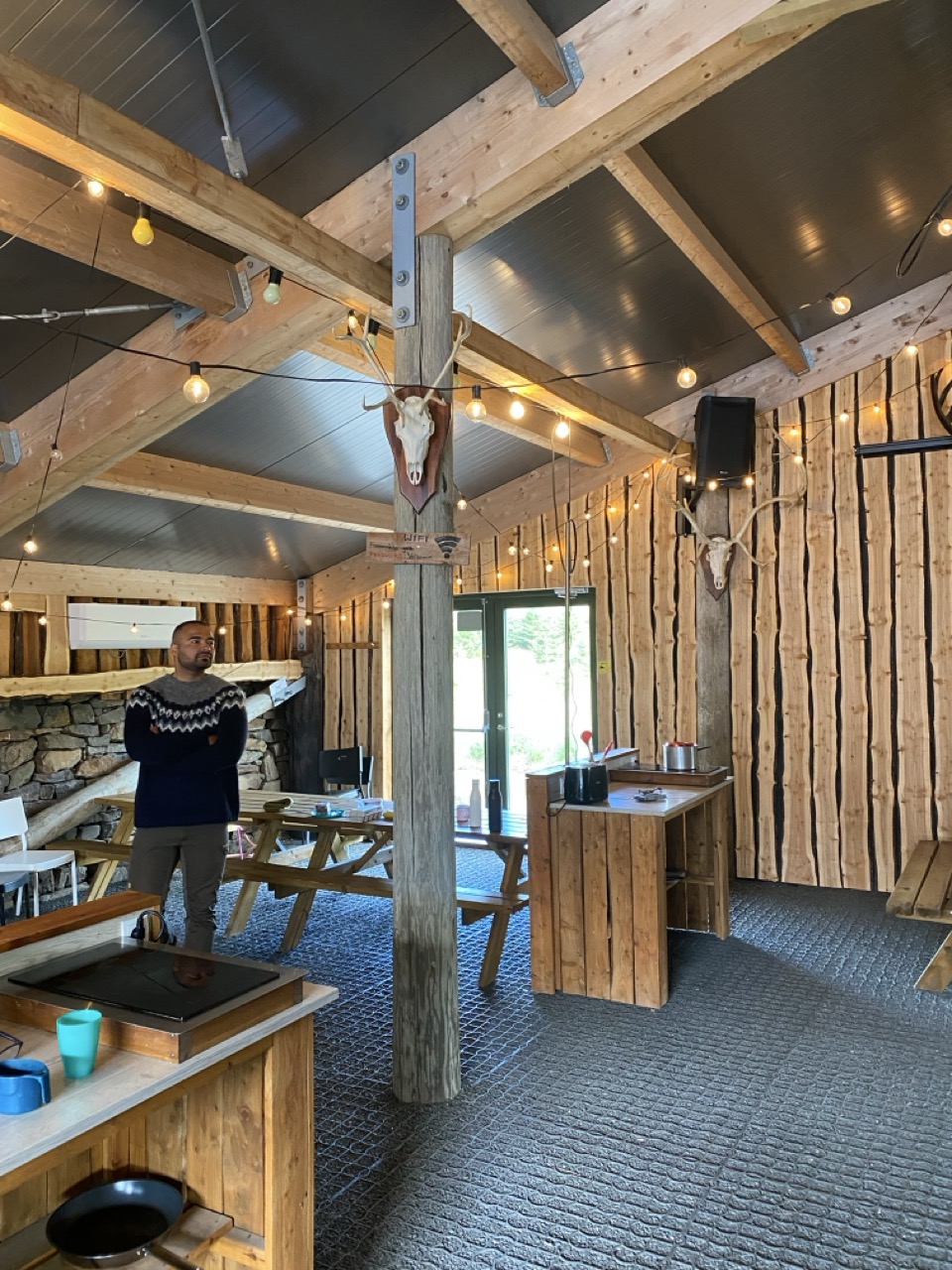
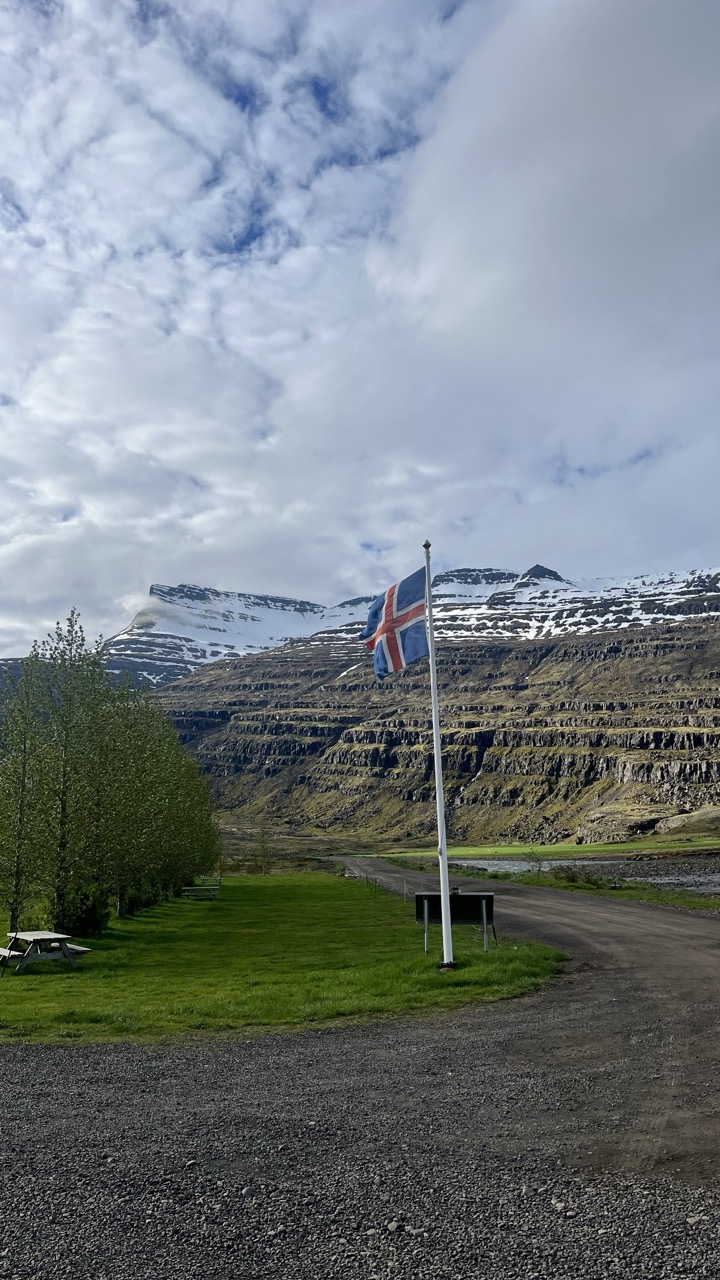
The campsite was quite crowded when we arrived, and there weren’t too many showers, but it was still a nice stay. The surroundings were stunning, too.
Day 5: Hengifoss (Sort Of), Seyðisfjörður, and Seeing Puffins
Total Driving Time: c. 6.5 Hours
I was already feeling at home in the Eastfjords and excited to see more of this part of Iceland. Our fifth day in the country involved *a lot* of driving and some very interesting weather, to say the least.
A Foggy and Somewhat Failed Hike
The first stop of our day was Hengifoss, which had been one of the places I was looking forward to visiting the most. Our initial part of the journey, which went along Road 939, felt like an F-road; it was unpaved, with lots of potholes. Thankfully, the visibility was relatively good.
It wasn’t as nerve-wracking as other roads we drove on, but you will need a bit of confidence, and I also suggest using a 4WD. The potholes here were some of the worst we encountered during our Iceland trip, too.
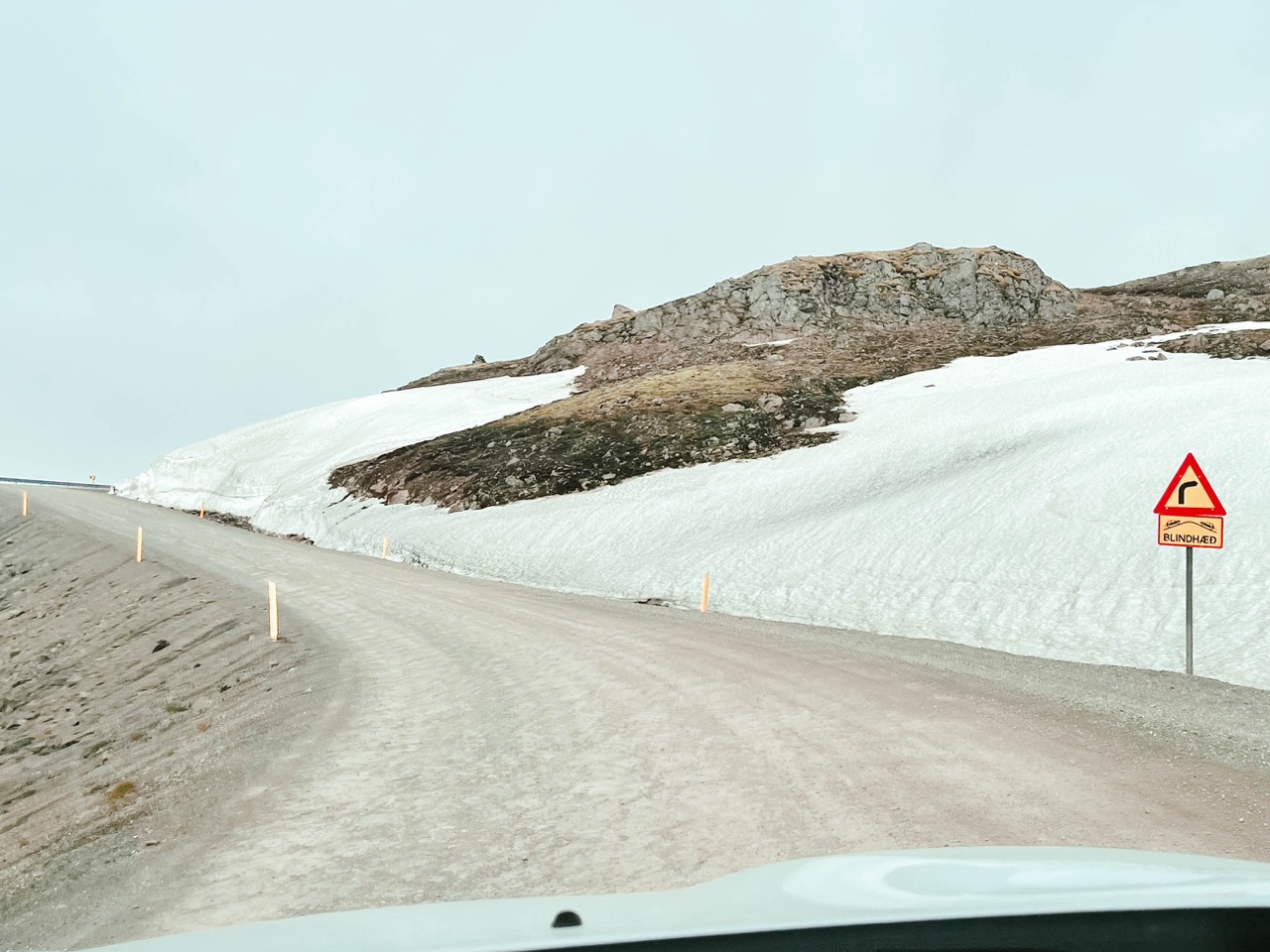
The scenery was stunning, though; if you’re visiting Iceland in the summer, I would recommend taking this route for the views alone. Further along, the other roads we took were paved and very comfortable. The scenery also reminded me more of Finland or Sweden than Iceland.
When we arrived at the car park for Hengifoss, we took to the trail that goes to this waterfall. It was incredibly foggy, and the visibility dropped quite fast. That didn’t bode well, but we continued nonetheless. For what it’s worth, the trail is at least well-marked, and there are bits showing when you’re too close to the edge. It’s more of a walking path than a hiking trail.
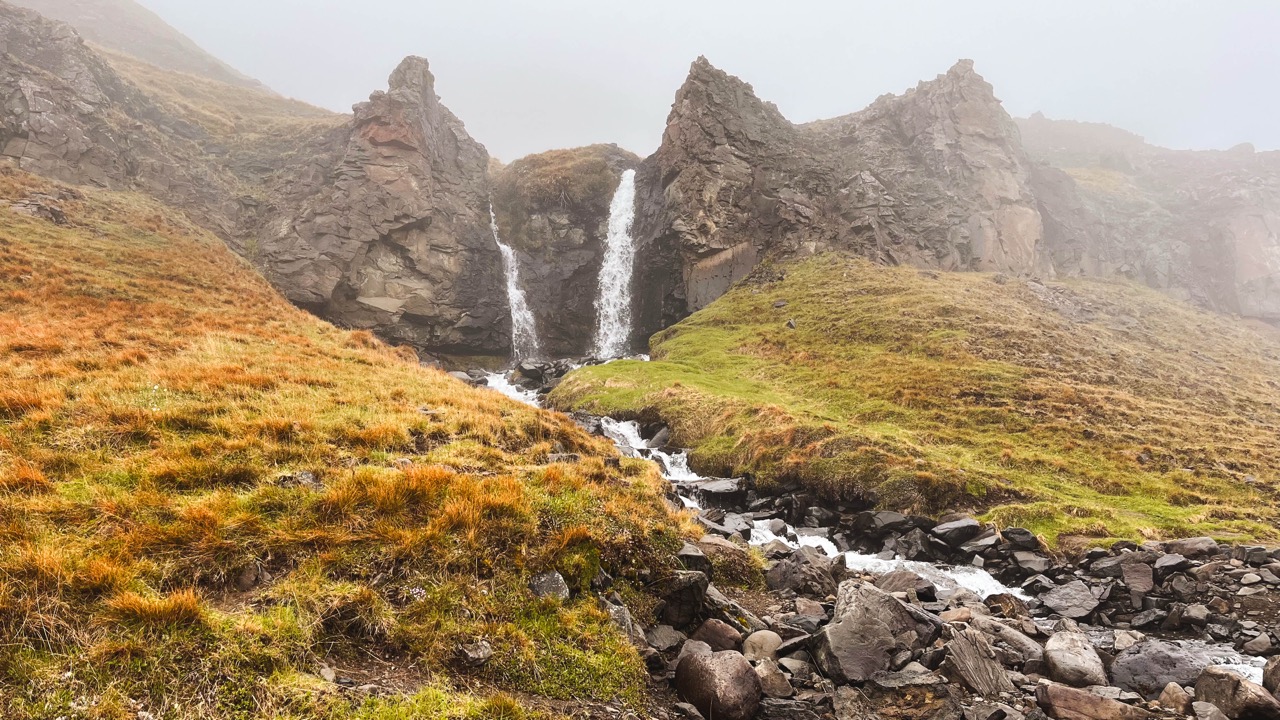
We somewhat saw Litlanesfoss, and I was hopeful of seeing Hengifoss—even though it was very foggy and getting worse. And… yeah. We didn’t see a thing when we got to the end of the trail. Still, I really enjoyed it and have zero regrets.
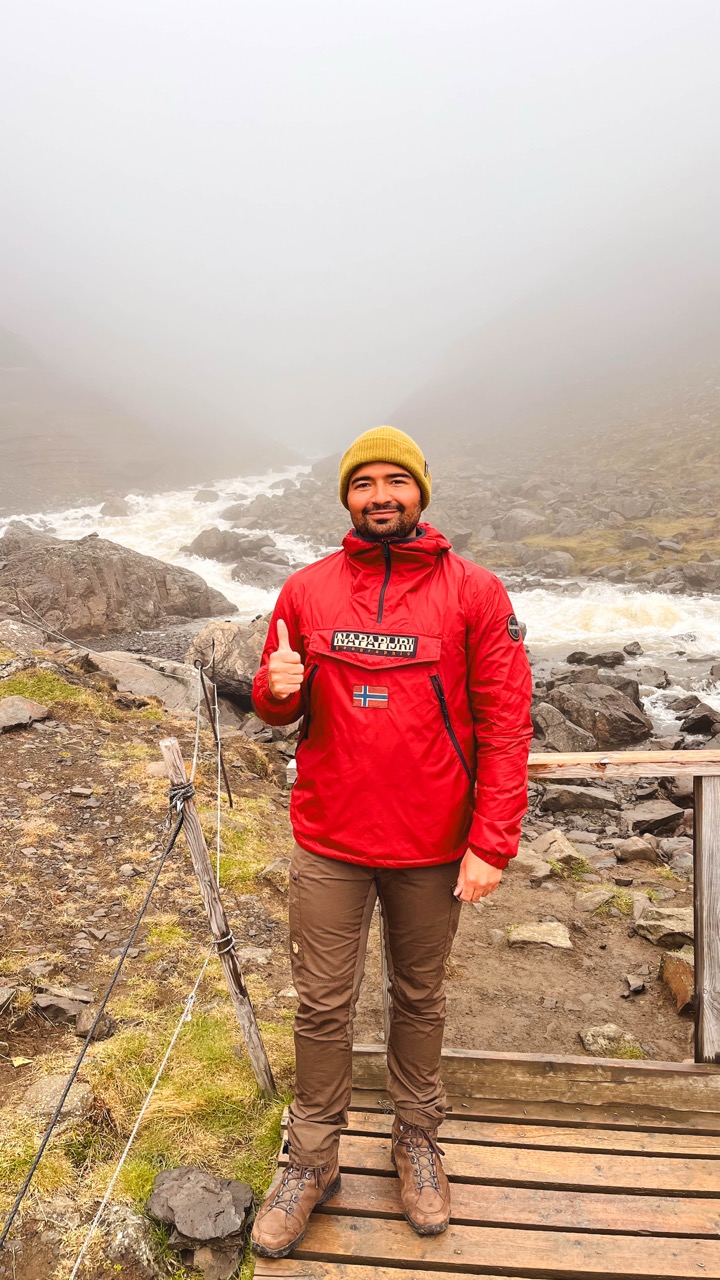
Once we got back down to the trail start, we made some quick lunch and also had some ice cream. Then we continued on to our next stop.
Quickly Stopping at a Reindeer Park
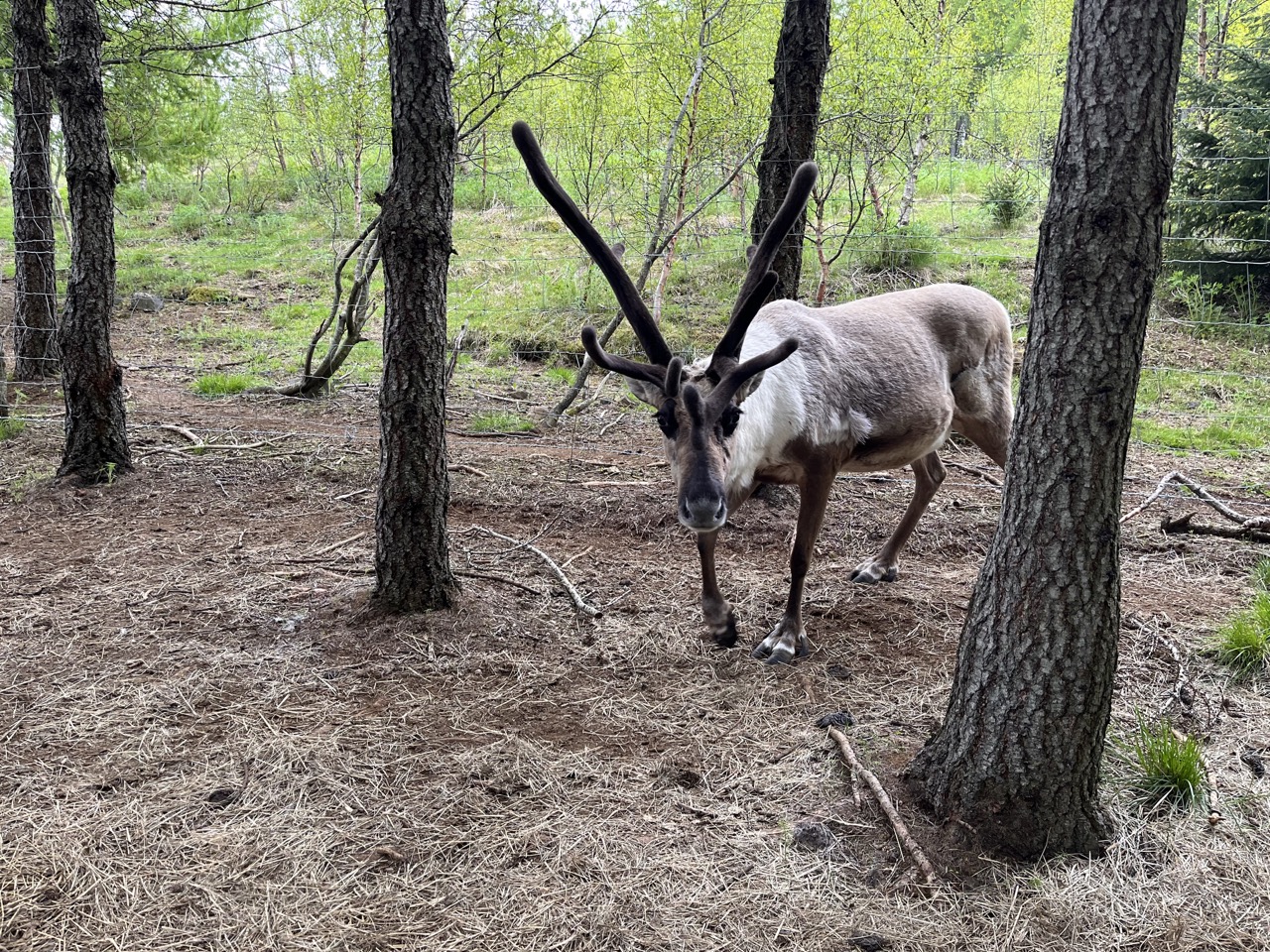
I had read about the reindeer rescue park founded in 2021 before the trip. As someone who thinks that reindeer are second only to puffins as the best animals on the planet, this was naturally on my list.
We were already heading in the direction of Egilsstaðir, which is the biggest town in the Eastfjords, so stopping here made total sense. The park had five reindeer when we were there, and learning about them—along with how the park looks after them—was nice. We spent around 30 minutes here; it was a nice short detour that I recommend.
A Detour to Seyðisfjörður
I had wanted to visit Seyðisfjörður for a long time, mainly because I had seen thousands of pictures of its most famous street and wanted to see it in real life. Seyðisfjörður is also known for being a creative town, and its setting at the mouth of a fjord seemed like a good opportunity to get some photos.
After quickly stopping at the reindeer park, we then headed on to Seyðisfjörður. To get here, you have to go over a mountain road. While it is fully paved and there are guardrails, you’re also quite high up, and the visibility was awful. Still, though, I was happy that the road was paved… simple joys and all that.
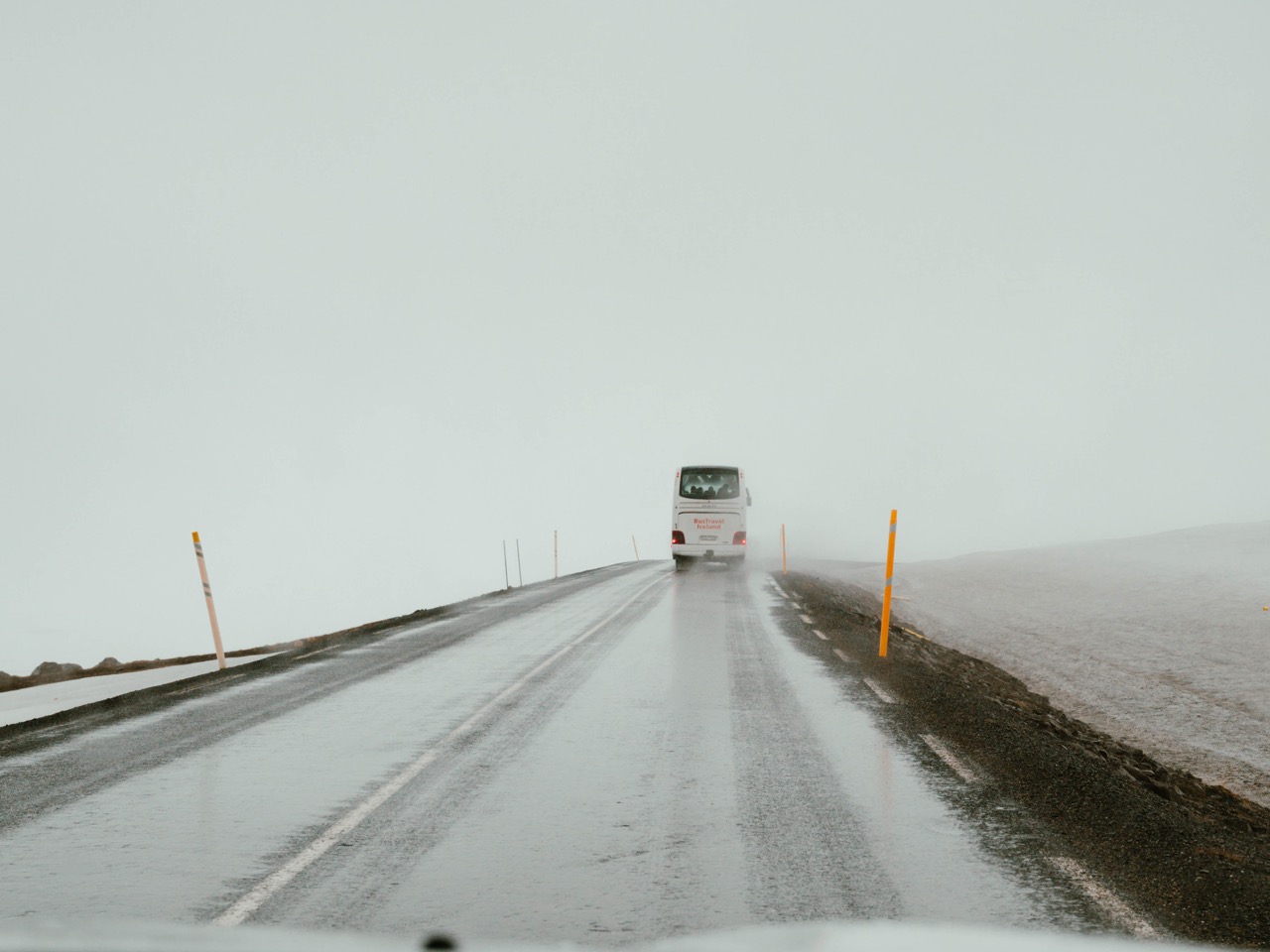
We admittedly did not time our visit particularly well. Seyðisfjörður is where the ferry from Denmark arrives each week, and… we arrived soon after the ferry had docked. The town was busier than it otherwise would have been, as a result.
Still, I really liked Seyðisfjörður. We didn’t spend a lot of time there, but I would happily have stayed overnight. The main street and church were both cool, and the town is full of photo opportunities. I can see why so many artists live there.
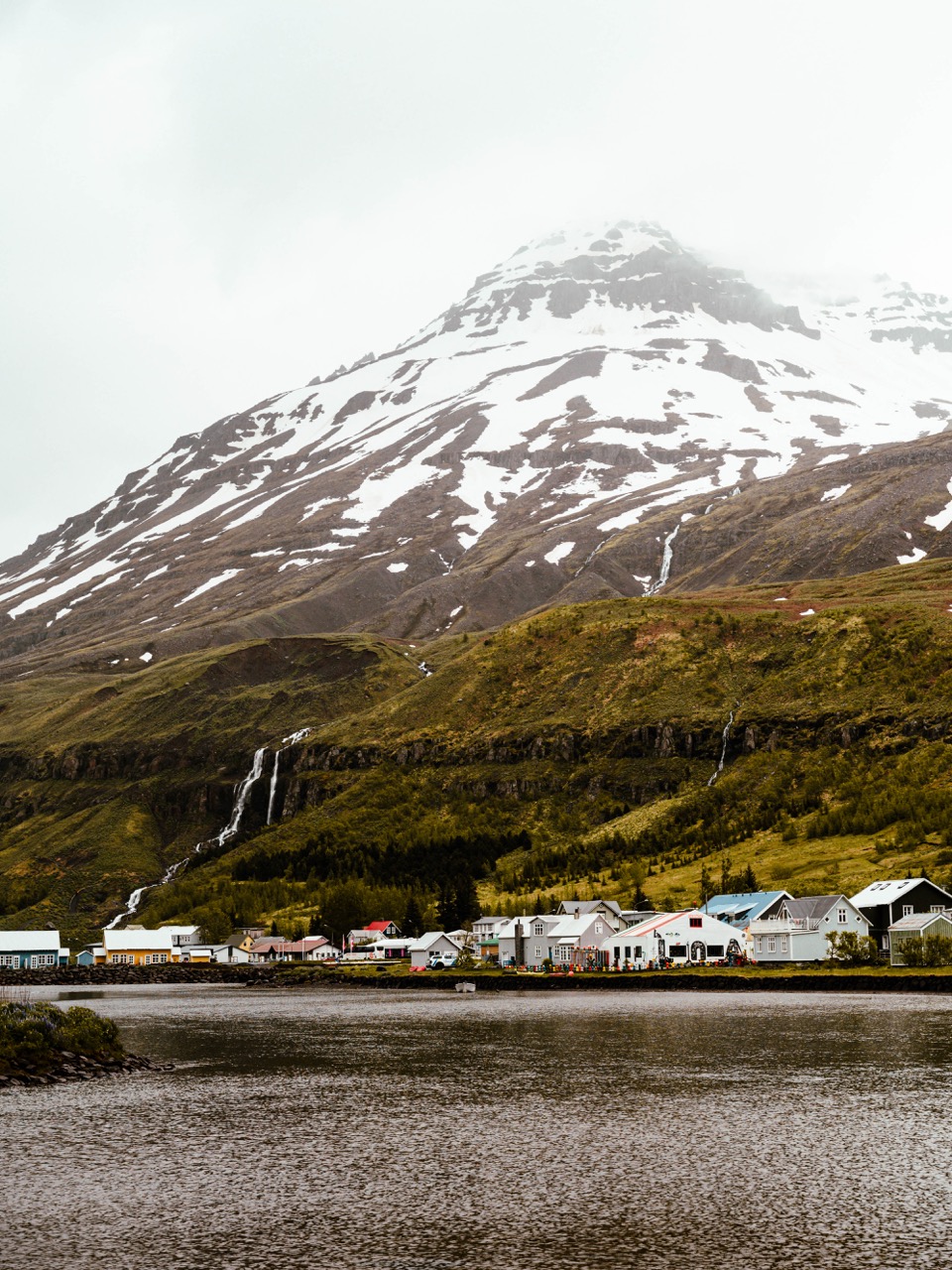
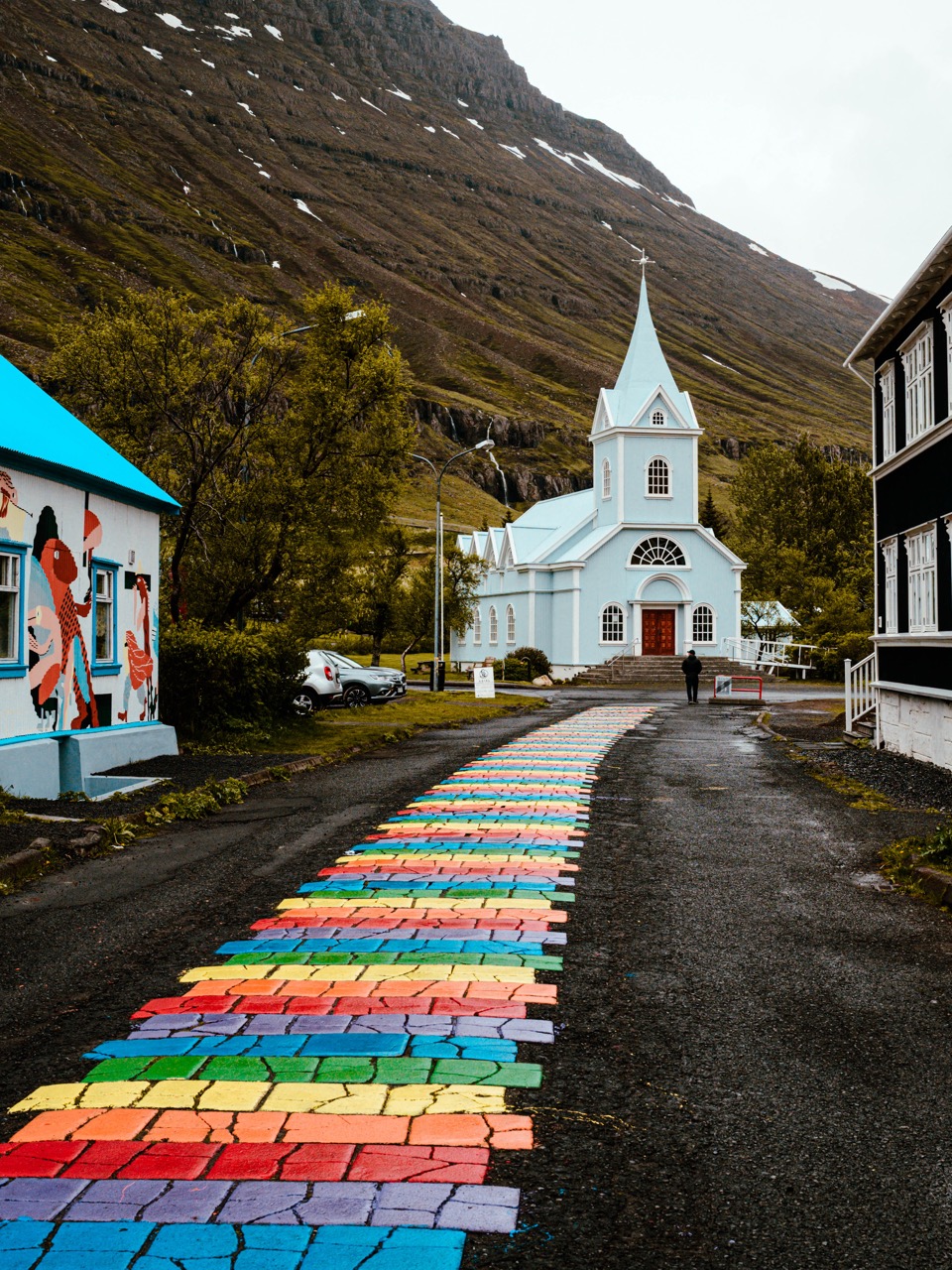
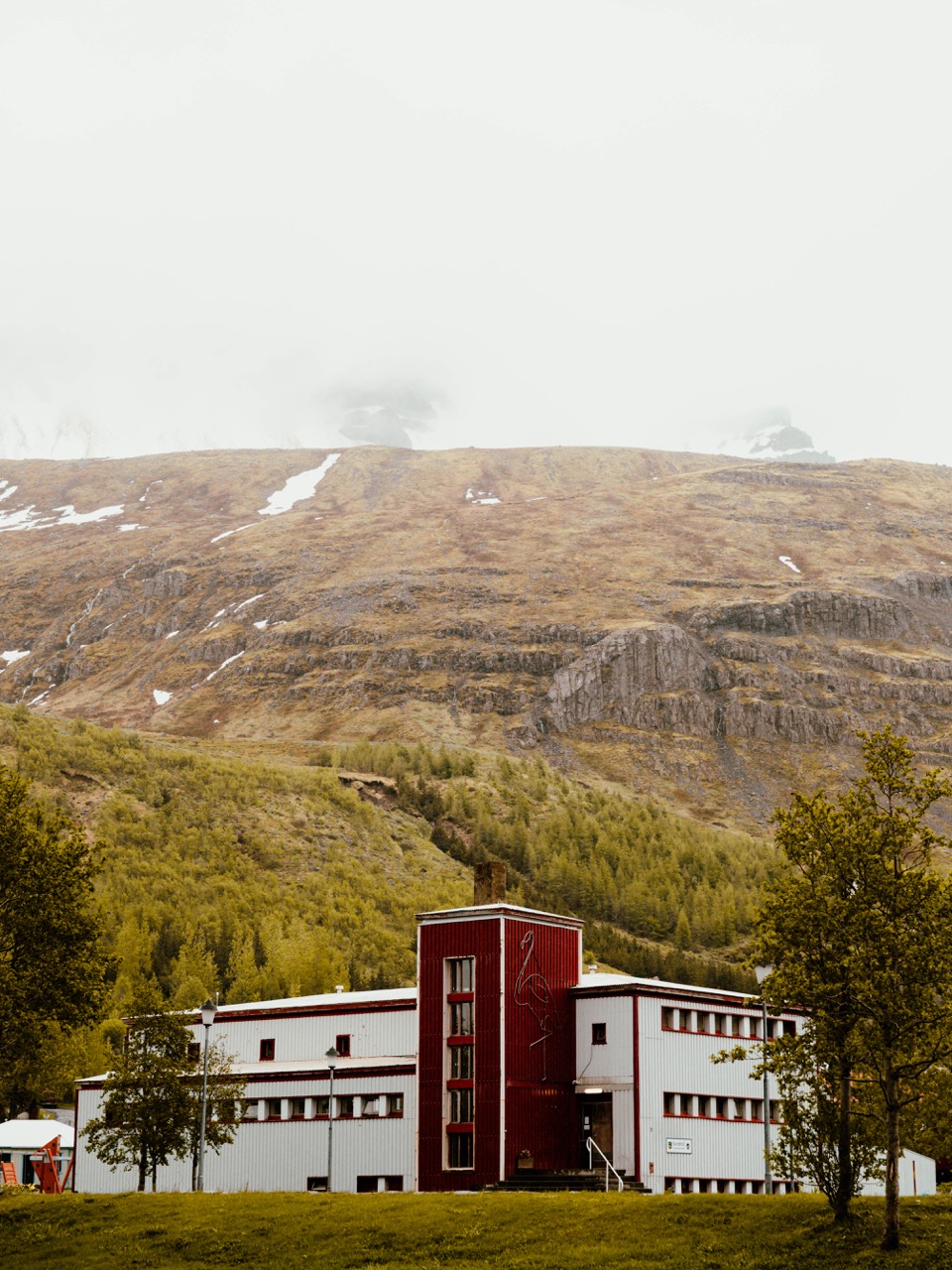
On the way out of Seyðisfjörður, we quickly stopped at a waterfall before going to what would be *the* highlight of our camping trip in Iceland…
Watching Puffins and One of My Least Favorite Roads in Iceland
Despite the worsening weather, we both agreed that if we didn’t go to see puffins, we would regret it. So, we decided to do precisely that. Borgarfjarðarhöfn is one of the best places to see these adorable birds in Iceland, and while I had heard that the road there isn’t particularly fun, we made the choice to go anyway.
I’ll be so real with you: the mountain road to Borgarfjörður Eystri is not an enjoyable drive. At all.
It’s quite steep and winds quite a lot, and the visibility was literally—at most—30 meters when we were there. I was so grateful that the road had been fully paved, though; I can’t even imagine what it would have been like before paving was completed in 2022.
When we got to the other side of the mountain, the weather was not letting up. The rain was some of the heaviest on our trip, and it was also very windy. This continued when we got to the puffin lookout spot at Borgarfjarðarhöfn. It felt more like Denmark in January than anywhere in June. The temperature was 4ºC and the wind was 13 m/s, and again—I remind you—this was in June.
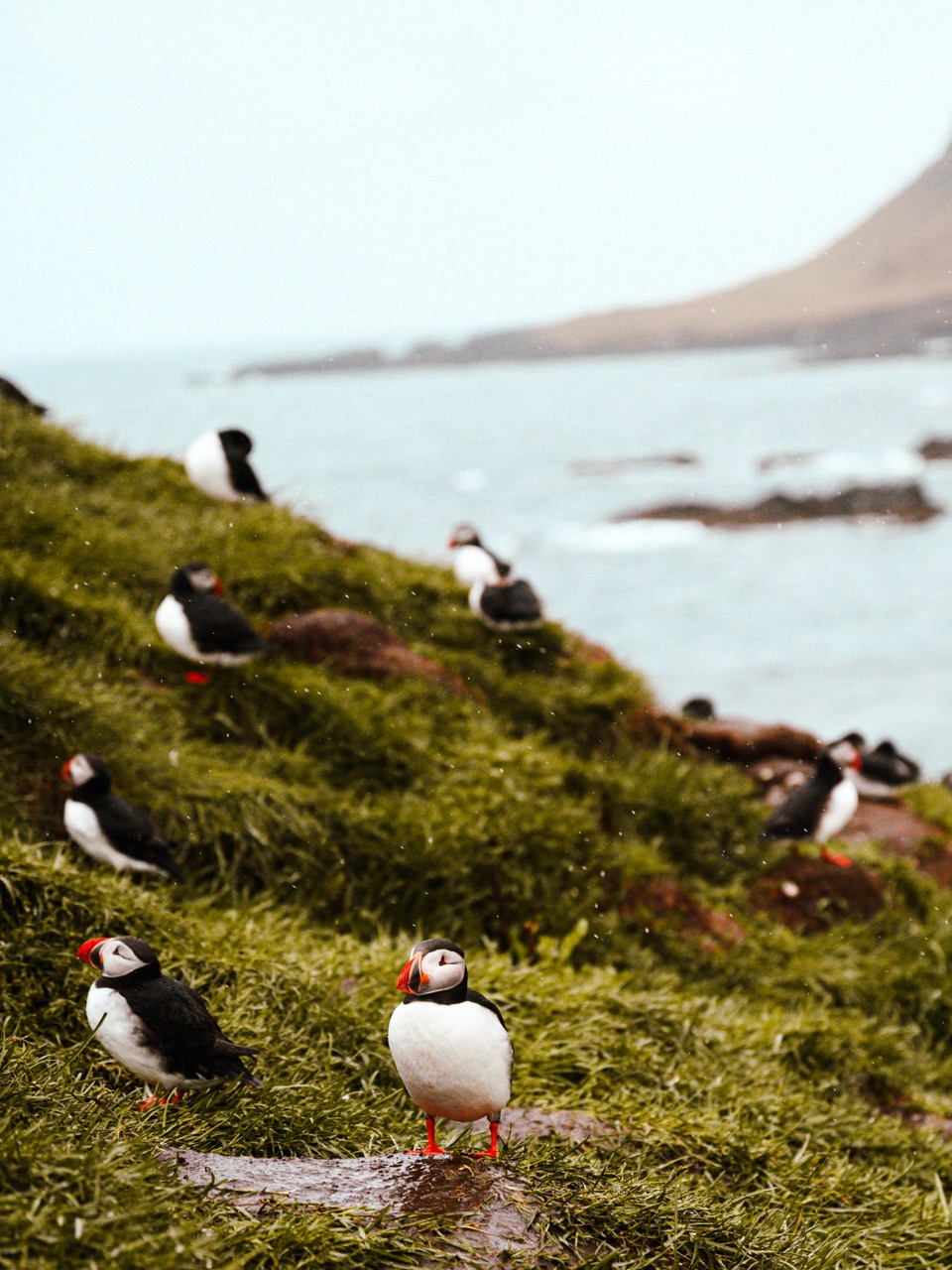
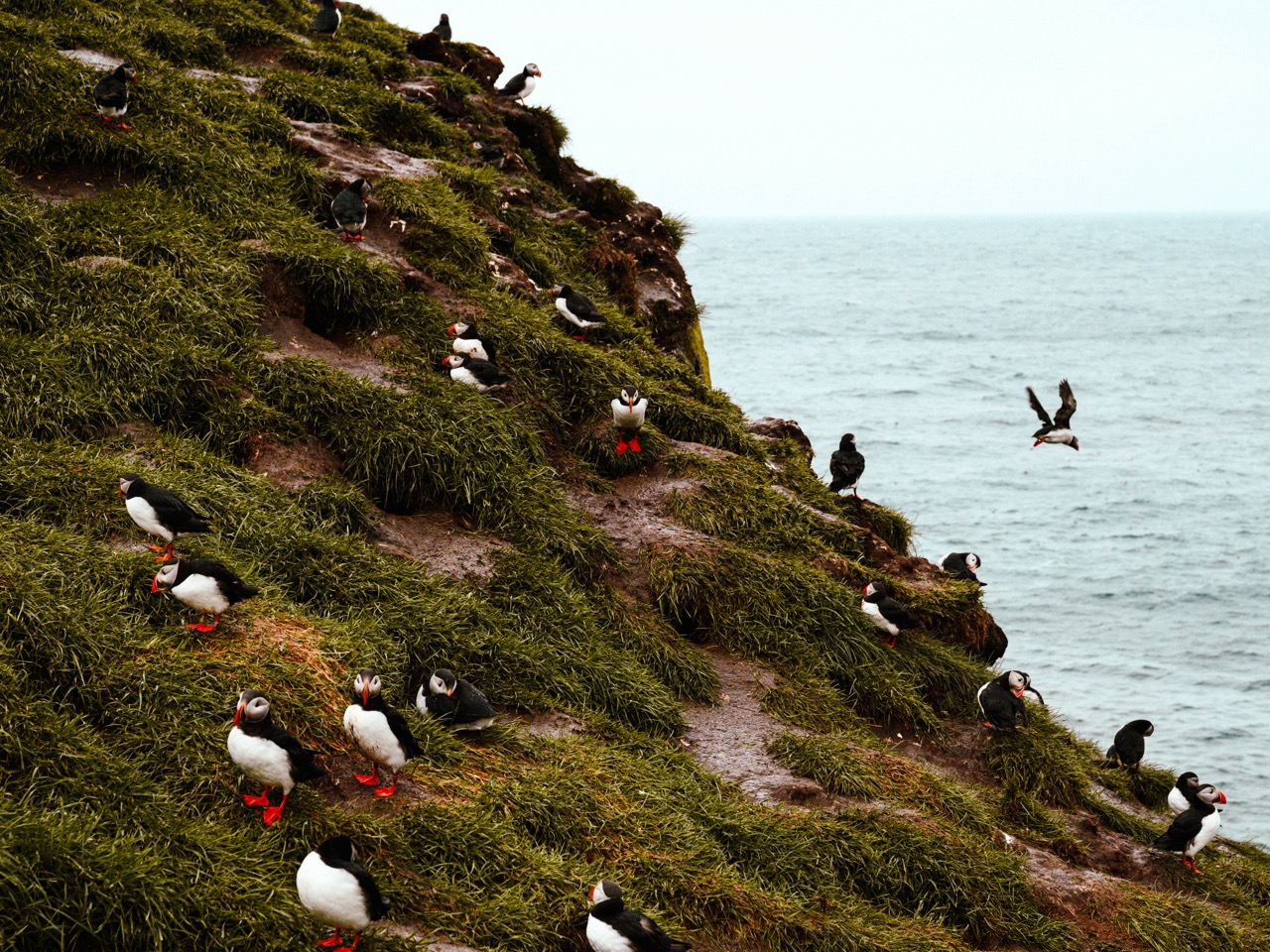
At the same time, we were here to see puffins. So I can’t say that I particularly cared. And when I say we saw puffins, I mean that we *saw* them. So. Many. Puffins.
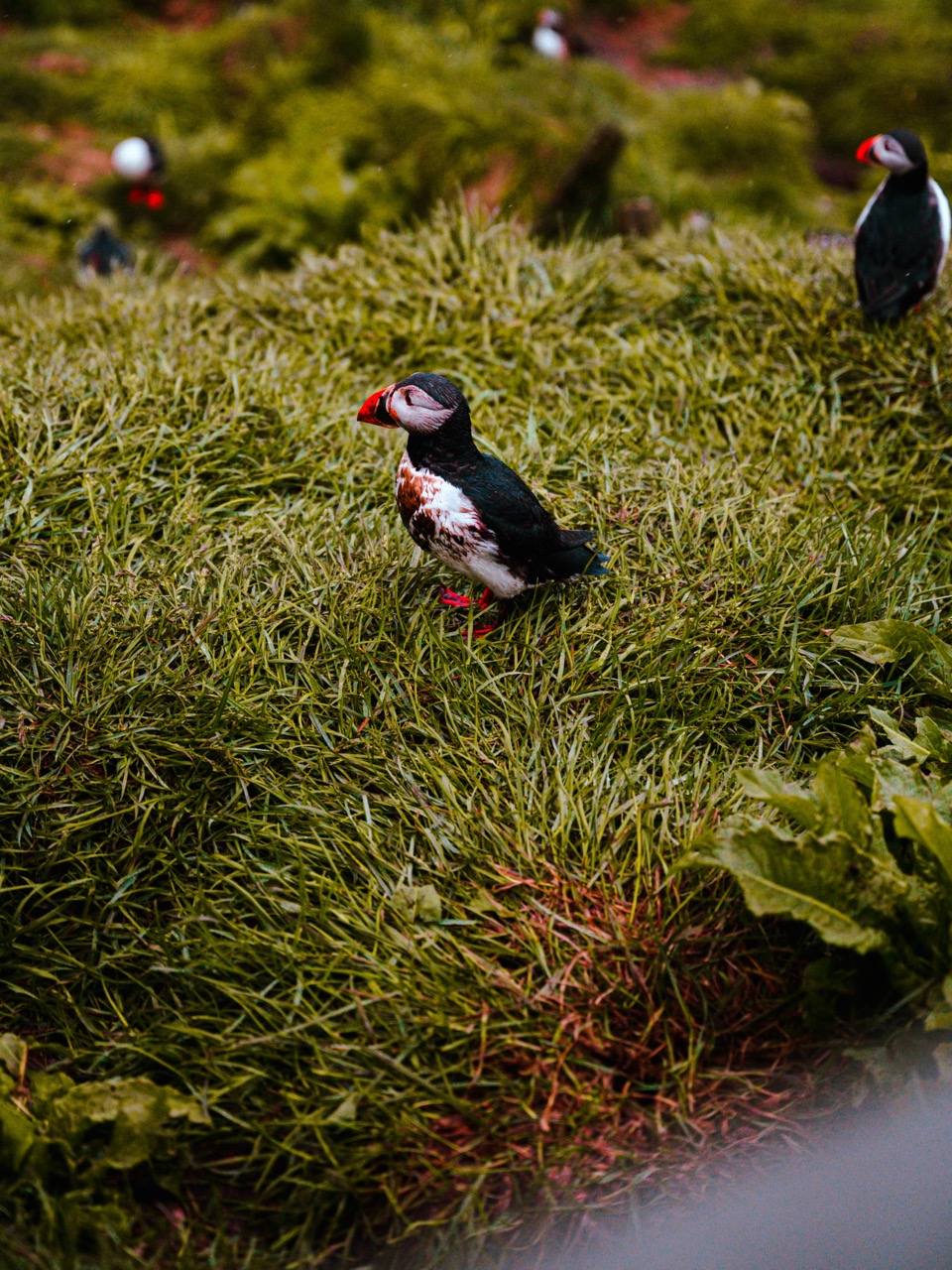
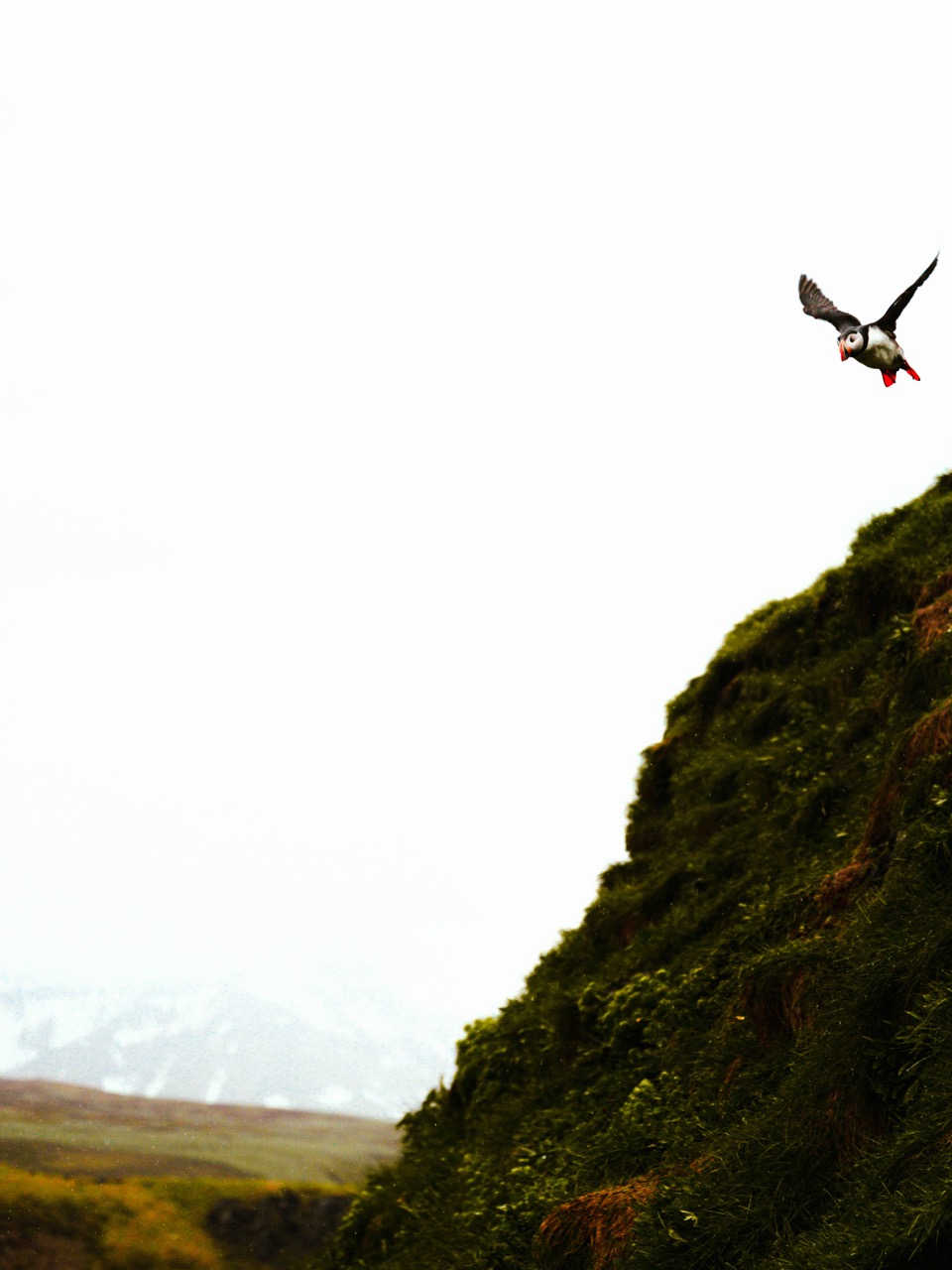
I was expecting that we’d maybe see them from afar, but they were right there and literally everywhere. I had seen puffins on the Faroe Islands before, but only at sea. Never before had I seen a full puffin colony, and to do so was a dream come true.
We did not want to go back in the car, even though our hands were red as it was [word that I won’t say to stay in my ad network’s good books] cold. I already knew that my camera lens would fog up again, but I did not care in the slightest.
There are some moments in life where you have to pinch yourself and ask if what you’re seeing is real. This was one of those. I still am amazed at how lucky we got to see puffins in Iceland like this, I won’t lie.
Getting to Our Campsite: A Valuable Lesson Learned
At some point, we sadly had to say goodbye to the puffins. We were now quite far from our campsite, too, so it was time to start heading back. Our campsite for tonight was in Reydarfjörður; it was right next to the Ring Road, and staying there for a night was okay.
All of our stuff was soaked, but camping isn’t about convenience. Still, you can make some things easier for yourself. Like, you know, parking in the direction of the wind.
We, however, did not do that. That night of sleep was by far the worst on the trip, and it felt like we were in a full-blown storm. The wind kept blowing against the side of the tent, and I questioned if any of our stuff would actually be there when we woke up. It was, though, and we very much did not make that same mistake.
Day 6: Heading to Northern Iceland and Whale-Watching
Total Driving Time: 5 Hours
After a couple of great days in the Eastfjords, I was partly sad to leave but also excited to see the north of Iceland. My mom and I had planned to go here on a trip back in 2021, but our flight to Akureyri was canceled due to a blizzard. For me, visiting the north of Iceland was long overdue—and I would finally have the chance to do so on this trip.
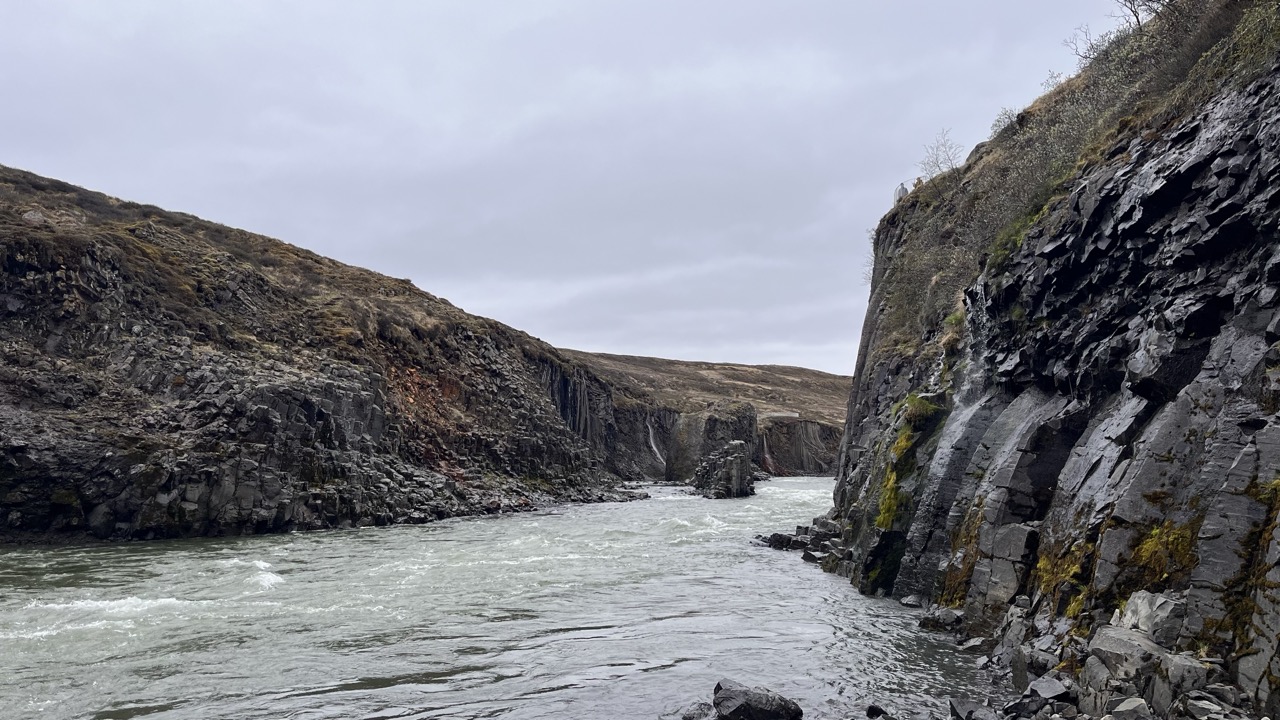
Our first stop was the Stuðlagil Canyon. The basalt columns were interesting, but given how everyone raves about this place, I found it quite overrated and underwhelming. We did a bit of hiking in the region before continuing to the north.
The next place we went to was certainly not overrated. I was worried that Dettifoss would disappoint, but it did not. My camera was still foggy from the day before, but I didn’t care so much, as the waterfall itself was stunning anyway.
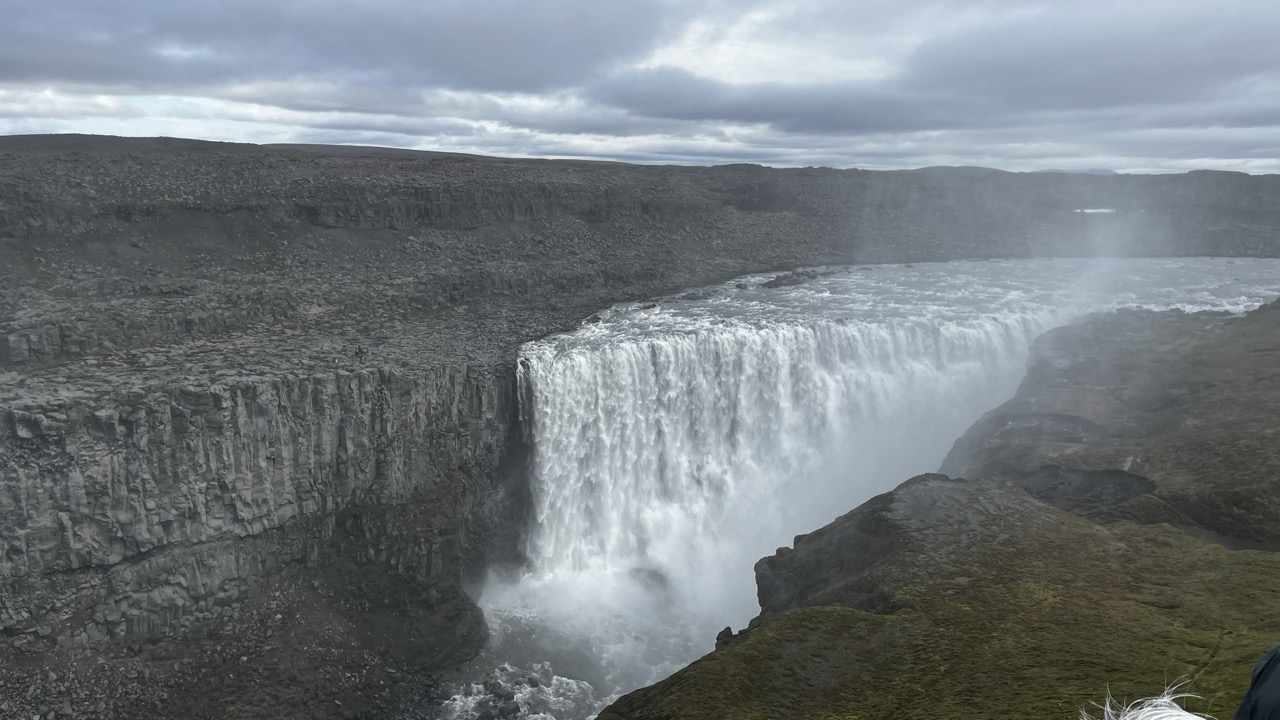
Side Note: We visited on a sunny day, but you won’t see anything if it’s foggy. Still, if it’s sunny, you definitely should go.
After visiting Dettifoss, we then took the short walk to Selfoss. This was much smaller and less crowded, but still worth seeing. The bugs here were particularly annoying, but the views made up for it.
Oh, and by the way: The public toilets here were pretty gross. So, I’d go out of my way to avoid using them unless you *really* need to.
Whale-Watching in Húsavík
We didn’t stop at too many places on this day because the driving distances were long and we also had a whale-watching RIB boat tour booked for the evening. Travelbase offered this to us as part of our experience, and we had to be in Húsavík for the evening.
I had been on one whale-watching tour in Iceland before. That was in 2018, and since my 23-year-old self decided to get really drunk the night before, I felt awful for the whole time. Still, fun experiences wait for no one—and in fairness, I still enjoyed it.
I was, however, looking forward to doing this whale-watching tour sober. We were on a speedboat, so it’s probably a good idea that I was 🤣.
Our boat first took us to Lundey, which translates to “puffin island”. I can very much confirm that this island has puffins.
We then went out into the North Atlantic to spot some whales. It was *freezing* when we were out there, but we were lucky enough to see whales pretty much the whole time. Things got off to a bright start when we saw a blue whale, and we then also saw quite a few humpback whales. There were also lots of Arctic terns, since they follow the whales to fish for food.
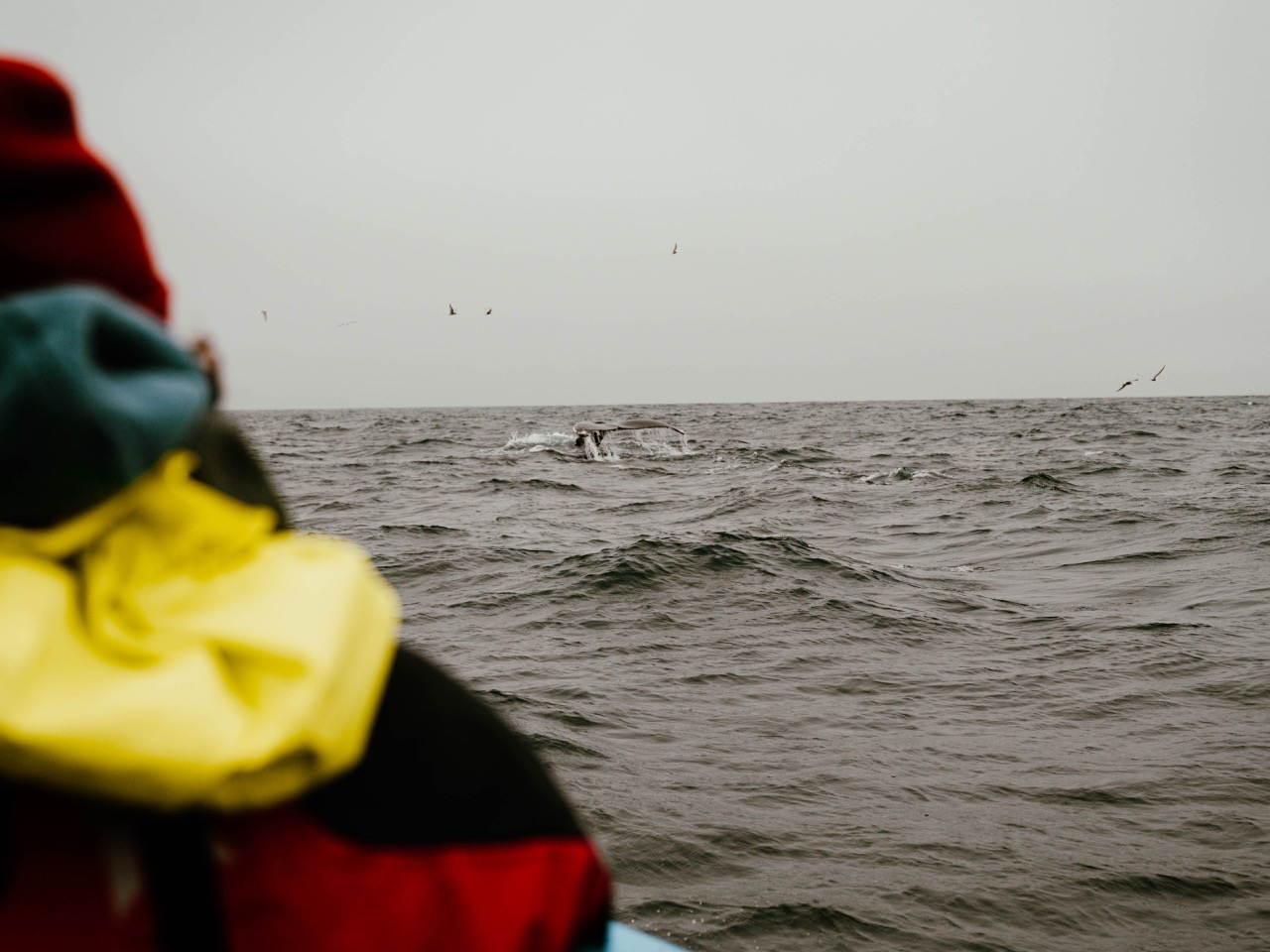
As fun as this was, I have to say that I got very dizzy. This, by the way, is something I say as someone who tends not to get seasick. If you easily get nauseous, you should keep this in mind. For me, though, feeling dizzy and almost sick was a small trade-off for the memories.
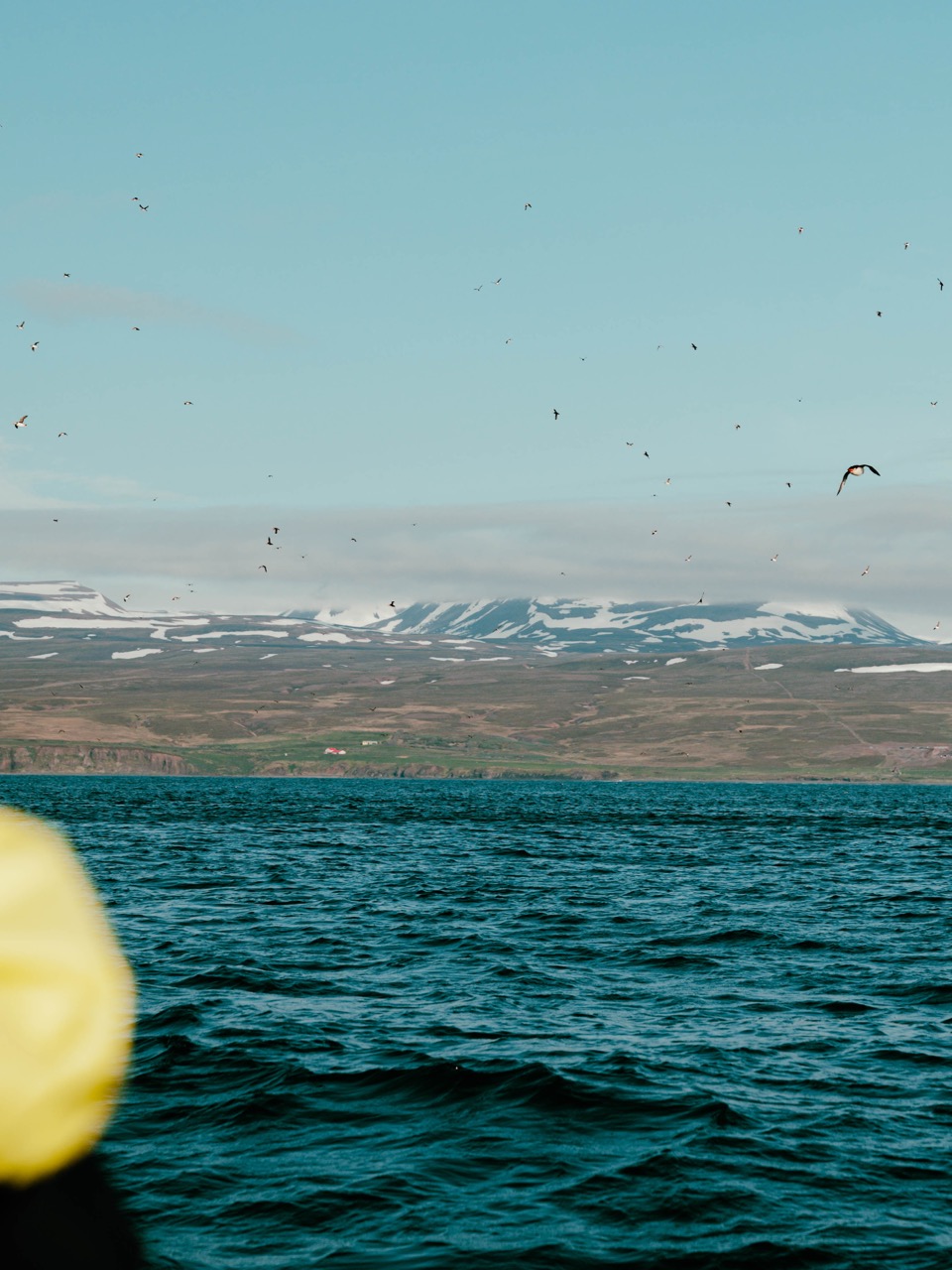
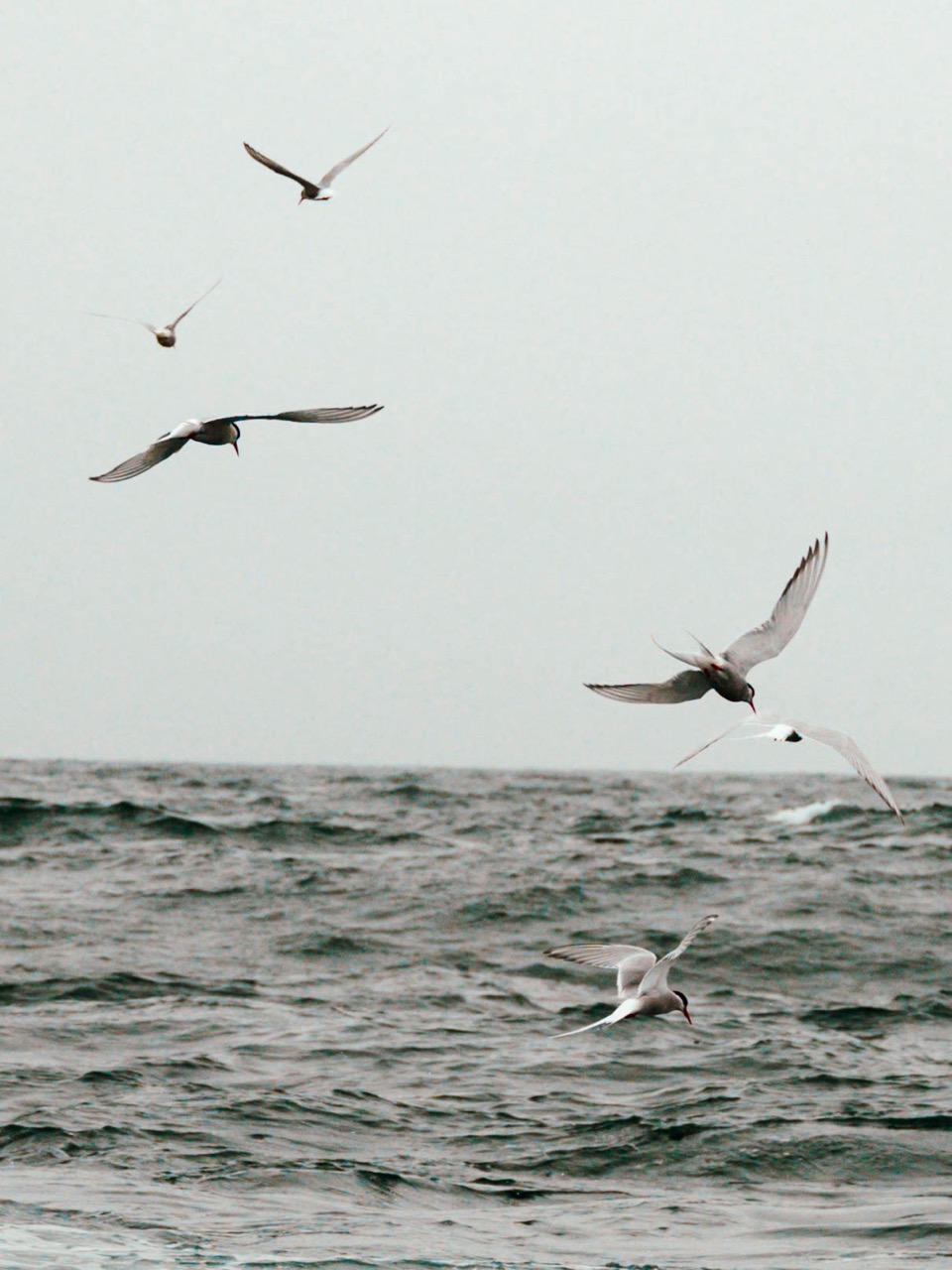
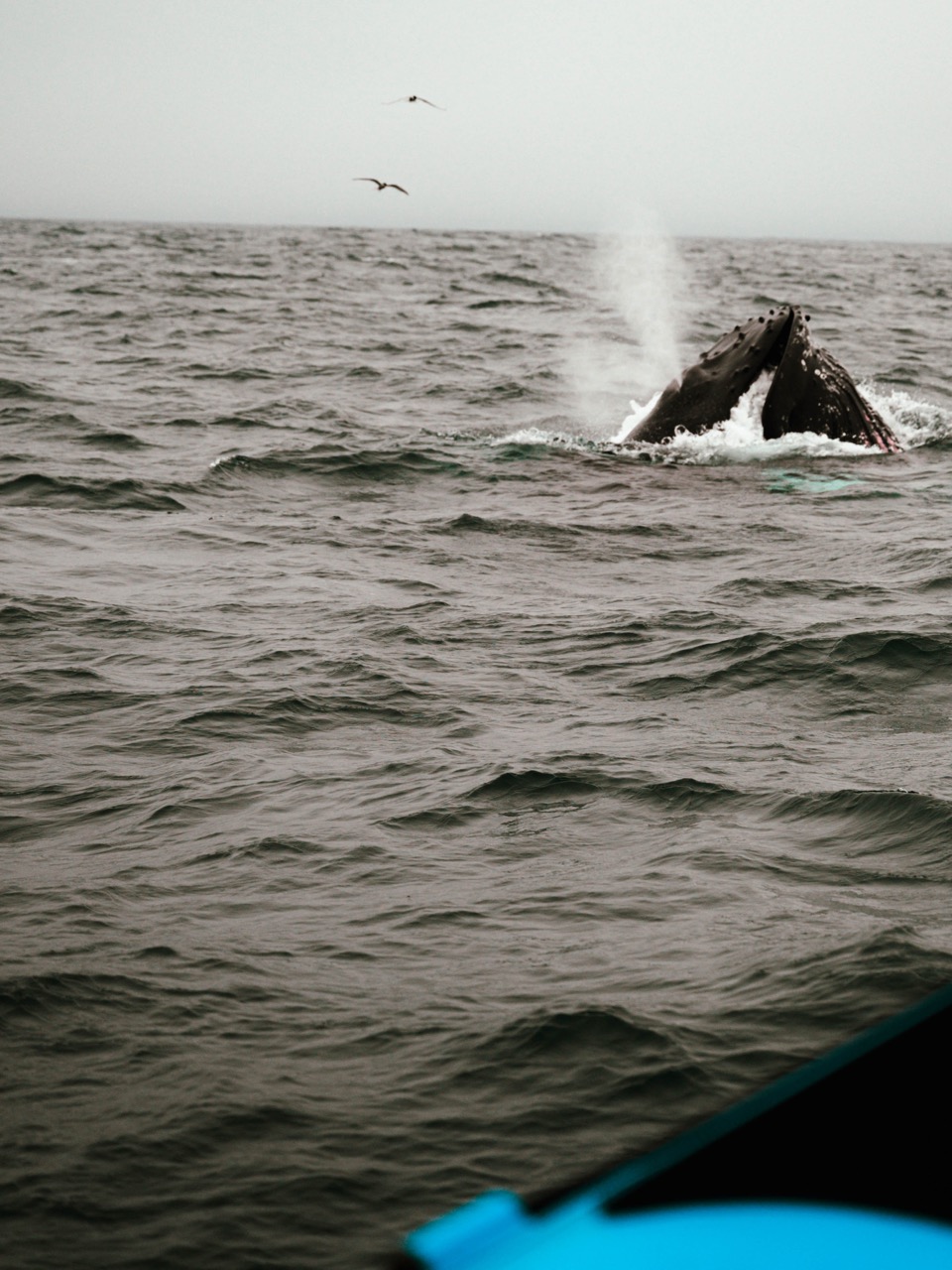
Besides the whale-watching tour, Húsavík is a lovely town with a very nice harbor.
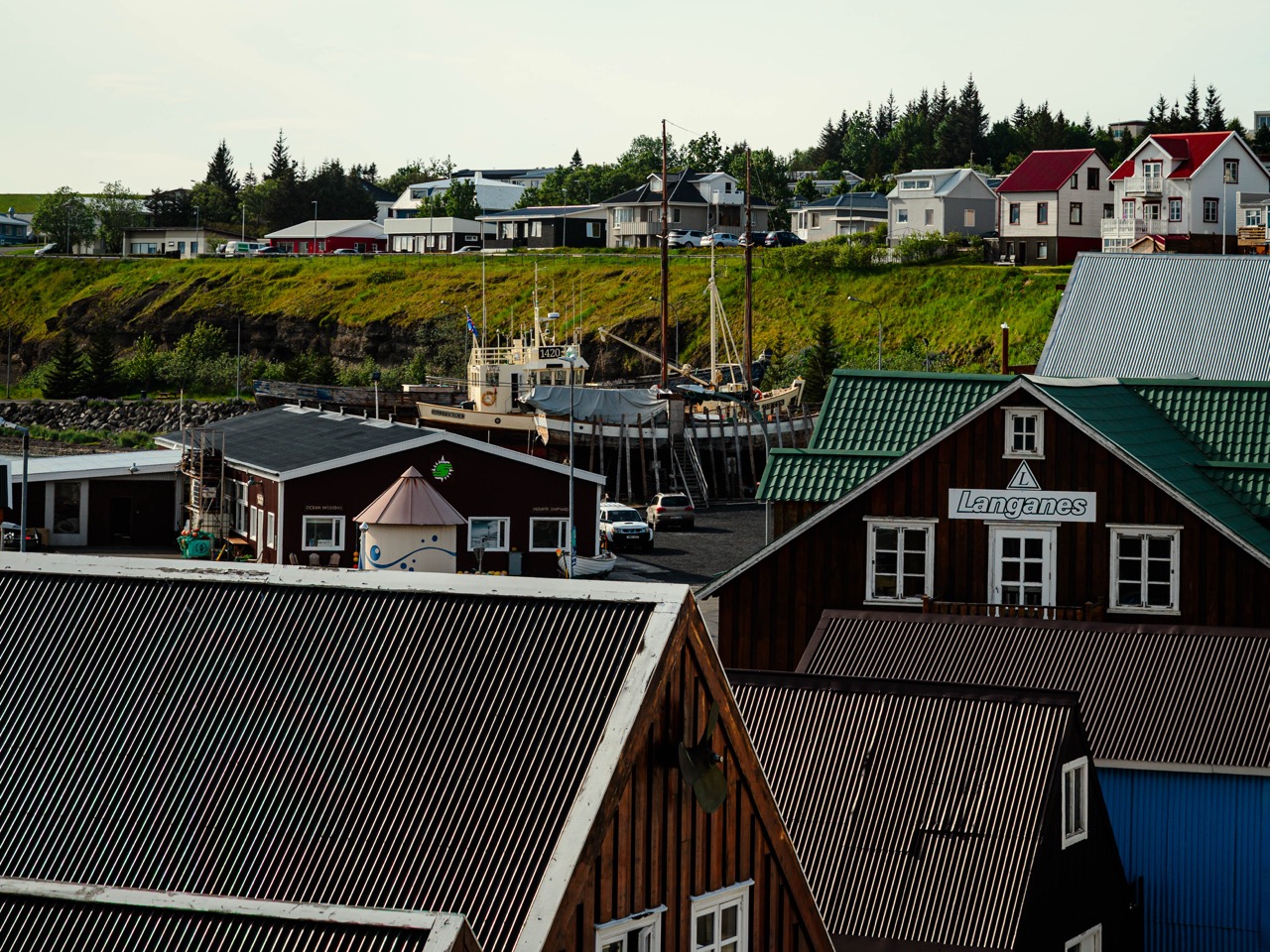
Continuing to Our Campsite
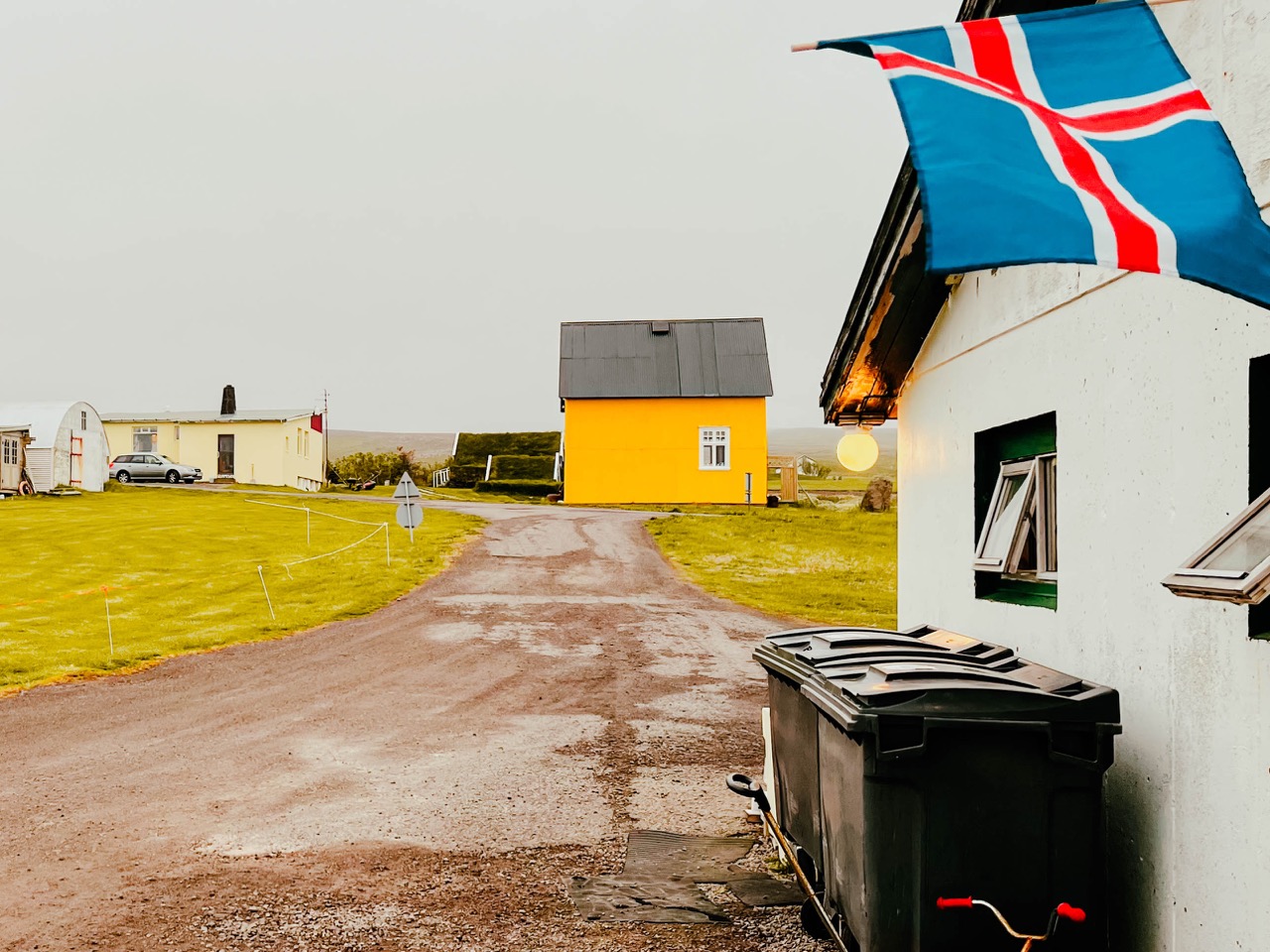
We needed a bit of time to readjust after getting back from the whale-watching tour, but luckily, our campsite wasn’t too far away. This was another amazing campsite, and the host was very friendly. He also had a very nice dog, and I was so happy to finally do some laundry. Again, you appreciate the simple things when you’re out in the middle of nowhere. 😄
Our campsite had a beautiful view of the North Atlantic Ocean, and the kitchen—while small—was well-stocked. This was a place that I would love to return to and spend longer, and we were sure to take our time in the morning to properly enjoy it. While it can get quite windy here, we were fortunate that it was pretty calm when we were there (though quite cold).
Day 7: Exploring More of Northern Iceland
Total Driving Time: c. 6.5 Hours
We didn’t do a huge amount of exploring on our sixth day, compared to other days before that on our Iceland trip. This, however, would change on our seventh day—which ended up being one of our busiest days.
The itinerary for today had quite a lot of other places planned, too, but we decided to focus mainly on the ones we really wanted to visit.
More Puffins Close to Húsavík
Tjörnes was close to where we stayed at Camping 66.12 North, and this is another decent place to see puffins. You can’t get as close to them as you can at Borgarfjörður Eystri, but it’s still worth the short drive. We spent around 30 minutes here.
Besides seeing puffins, we were also lucky enough to see some whales. Besides one other family, we were completely alone here, too. I’m happy we waited until the day after, rather than rushing it after our whale-watching tour.
Goðafoss
We skipped quite a few sights on the way to Goðafoss, such as Myvatn, as we weren’t really interested in seeing them. To be honest, I was also initially skeptical about going to the Goðafoss waterfall. However, since it had been on my list of places to visit in Iceland for the past 5+ years, skipping it would have been foolish.
And as I found out when we arrived, skipping it in general would have been the wrong decision.
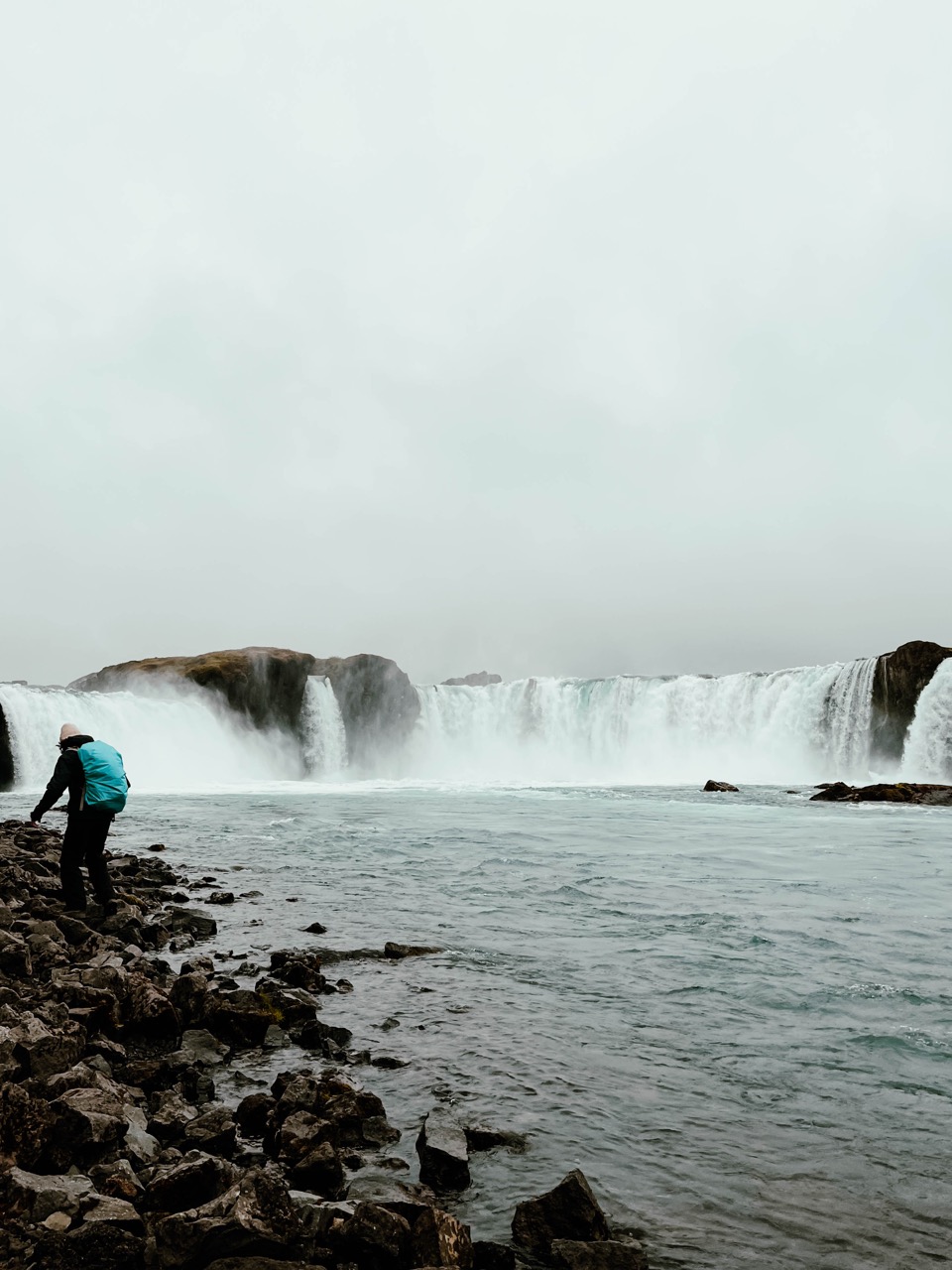
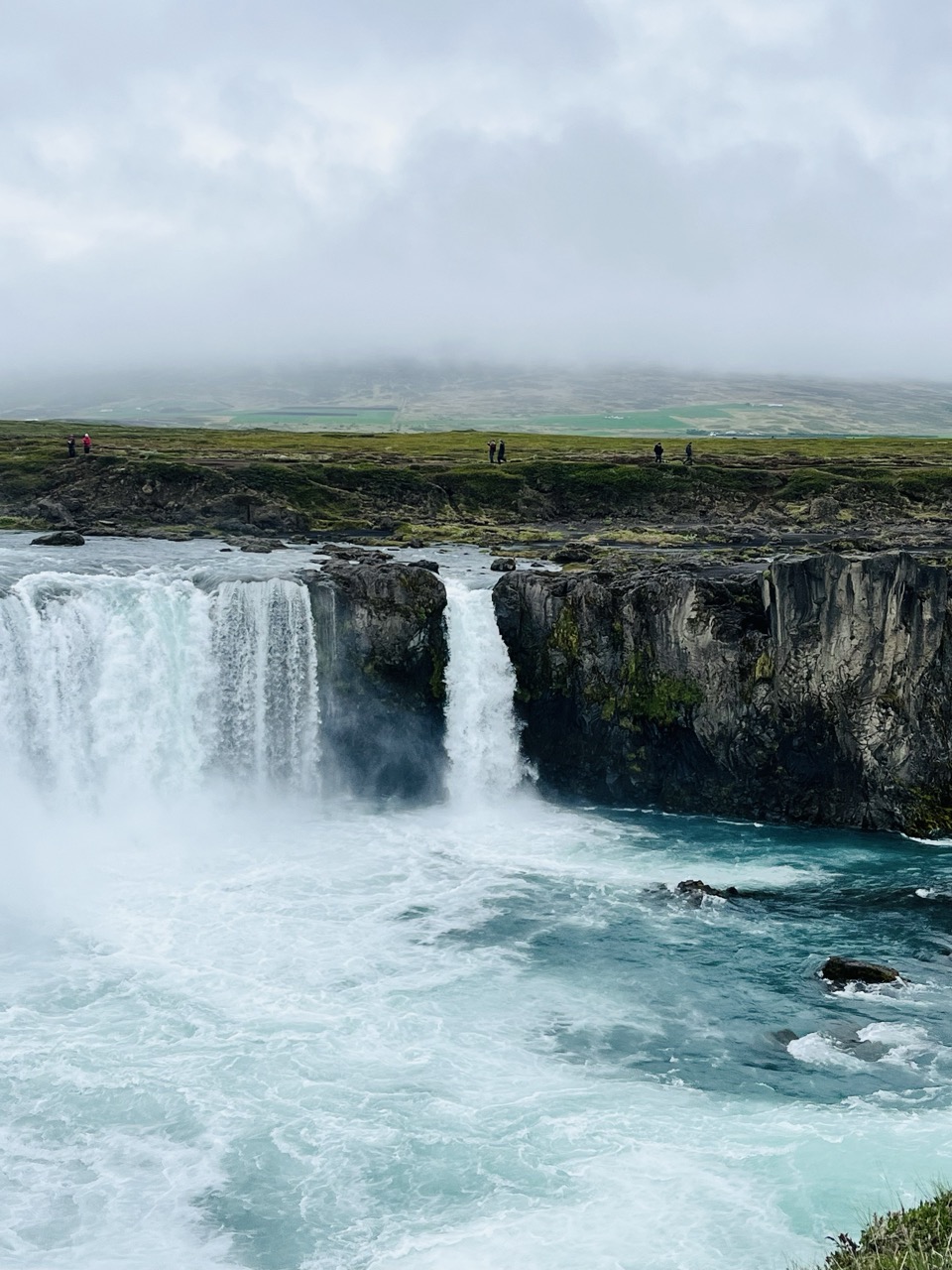
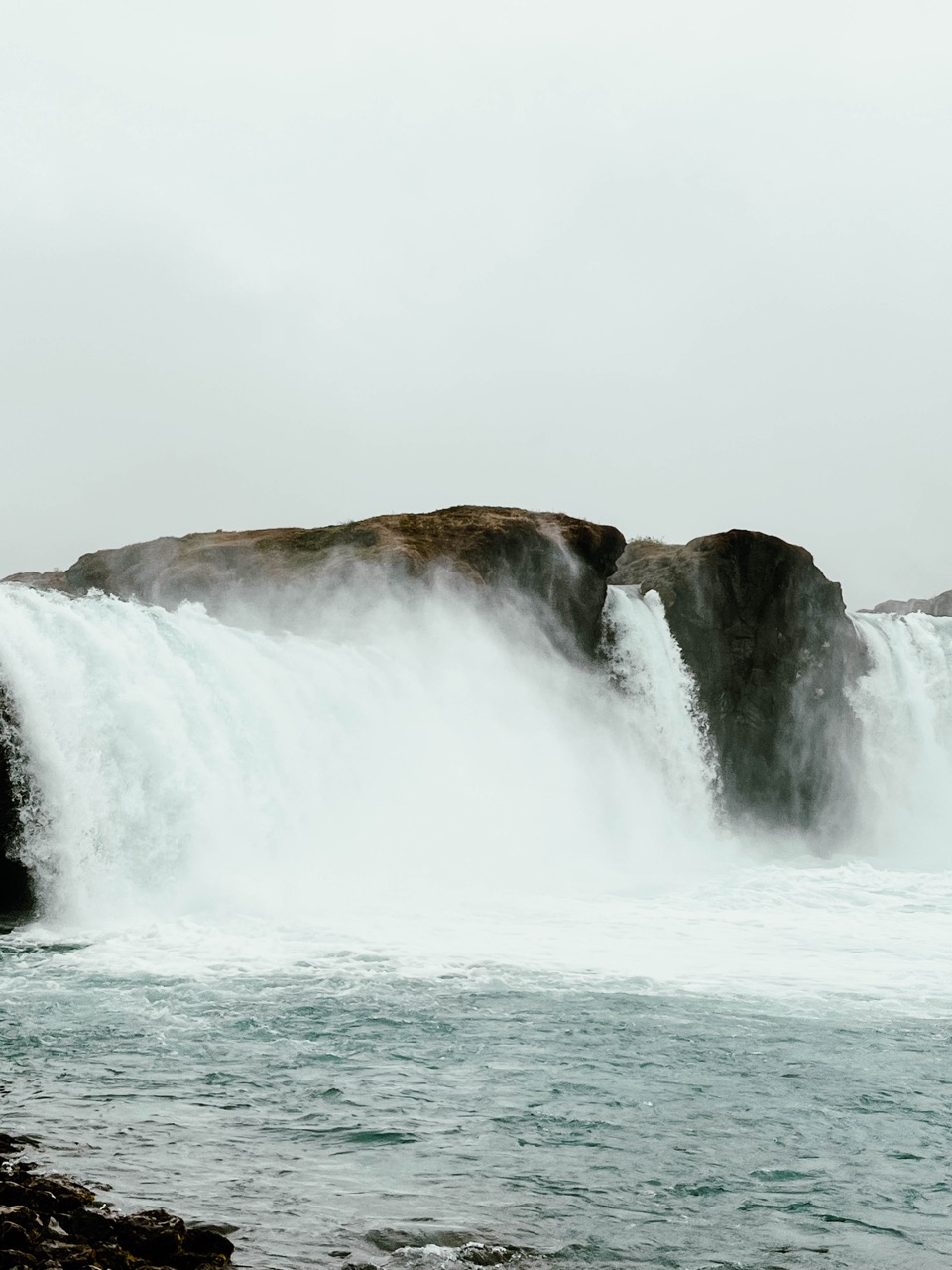
I was pleasantly surprised by Goðafoss. Though quite busy, it’s one of the most beautiful waterfalls I’ve seen in Iceland. We spent much longer here than expected, which neither of us were too sad about. Besides walking down the path (which was allowed when we went), we also went to see the waterfall from above.
Useful Tip: I strongly recommend making the most of the toilets in the Icewear shop and café. You do need to pay for them, and they weren’t particularly clean, but you won’t have anywhere else to go in the immediate vicinity if you don’t.
An Afternoon in Akureyri
I’d also had my eyes glancing curiously at Akureyri ever since my first trip to Iceland, and I was pretty excited to finally visit. Once we were done at Goðafoss, we made the short drive to Iceland’s second-biggest urban area.
To be honest, I would usually say that “city” is an overstatement. Around 20,000 people live in Akureyri, so it’s hardly a metropolis. But after spending so long camping in nature, it felt like a big city to me. It’s quite funny how quickly you adapt to new surroundings, I think. 😄
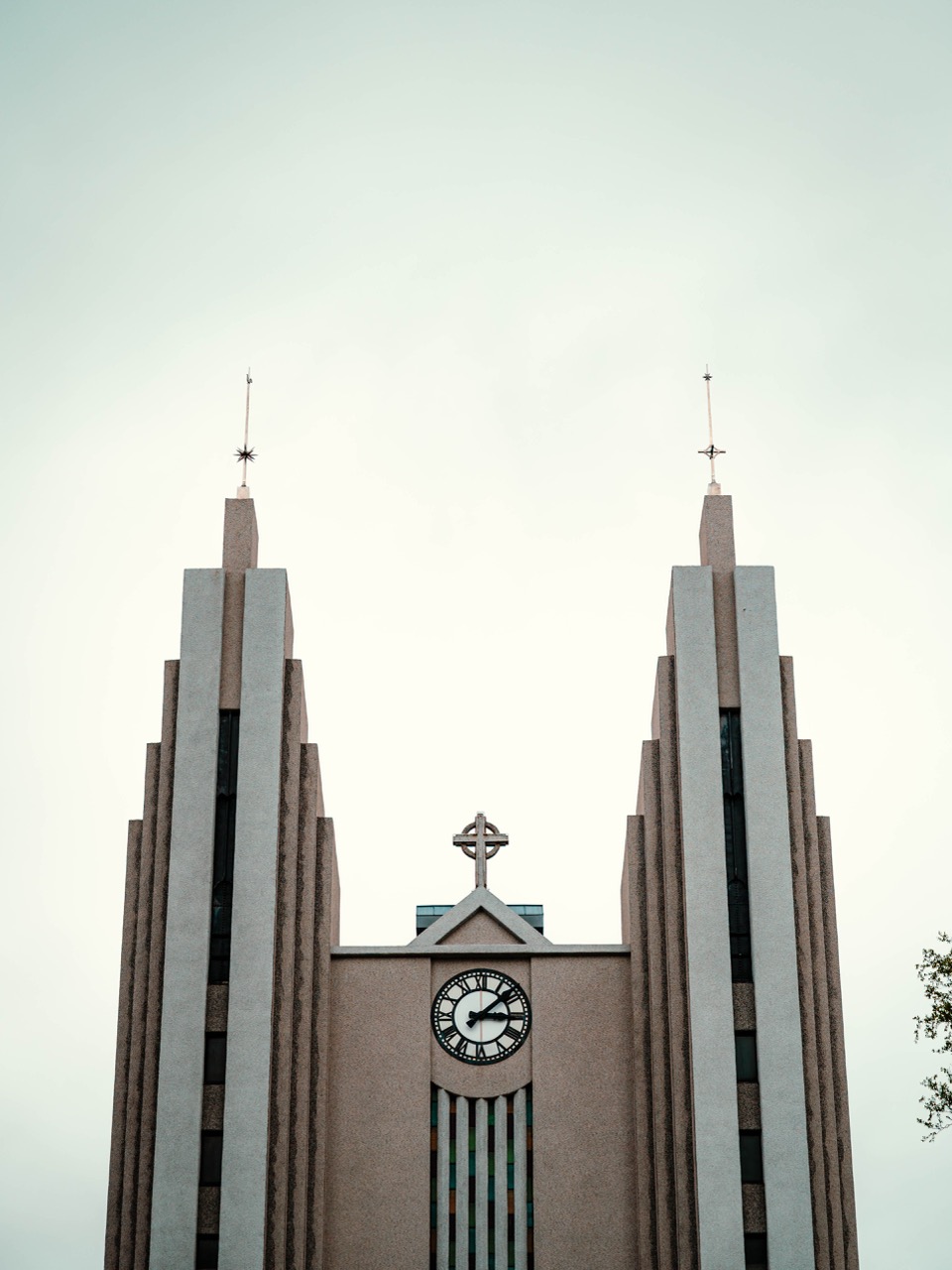
We spent an afternoon in Akureyri and mainly just strolled around. The church was quite cool; it reminded me of Hallgrímskirkja in Reykjavík, which is unsurprising since they were designed by the same architect.
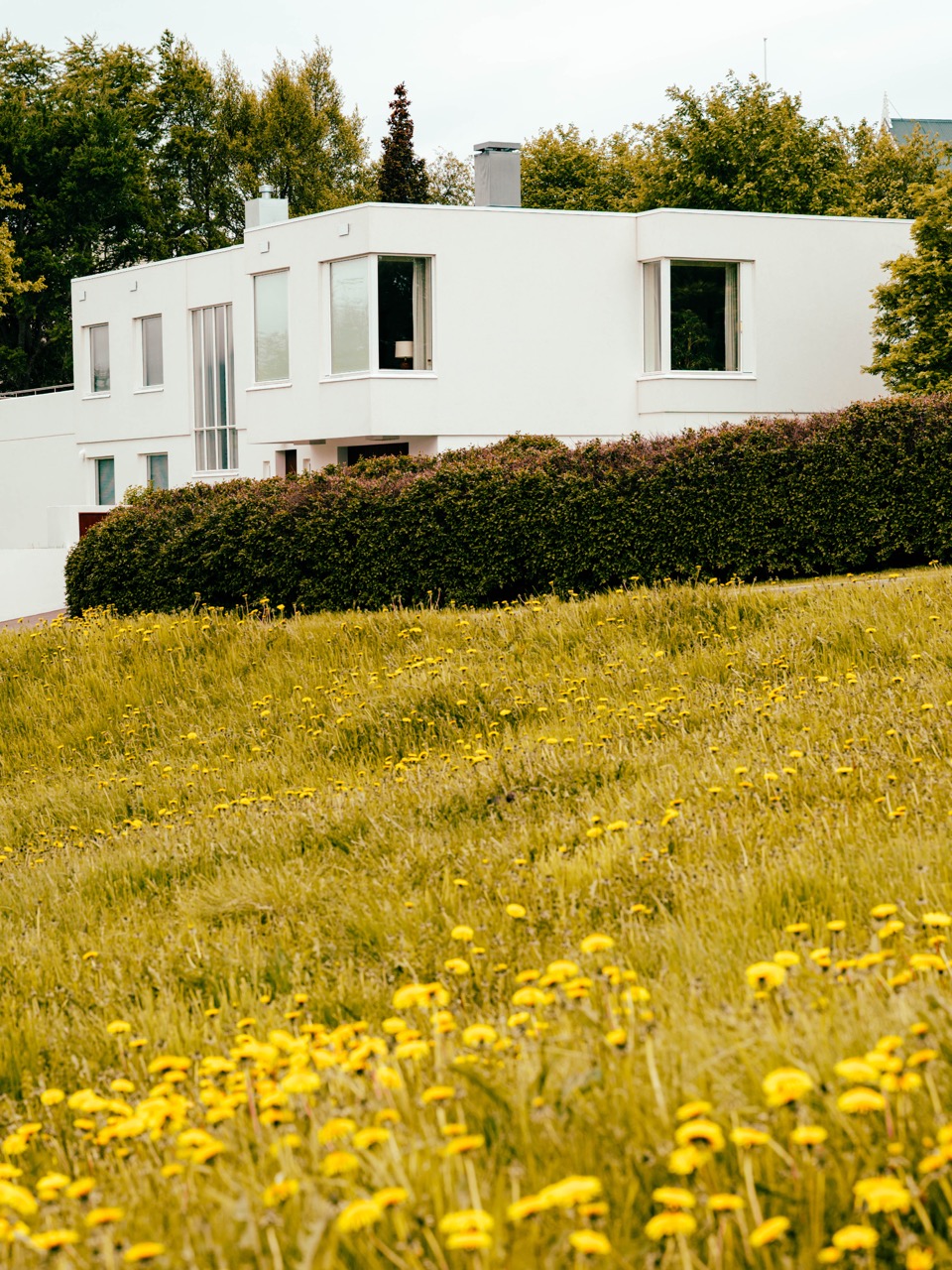
I thought Akureyri was a very pleasant place; my girlfriend and I both agreed that we’d like to stay for longer on a future trip. After visiting the main church, we went to the Botanical Gardens. This, in my opinion, was the absolute highlight of this part of the trip. You’ll find a nice restaurant/café here, too.
Before leaving Akureyri, we were getting quite hungry. So, we went to a bakery just outside the city center called Bakaríið við Brúna. It was another pleasant stop; after getting some food, we just went to top up on groceries at a nearby supermarket. Then, we drove on to our next stop.
Continuing to Siglufjörður
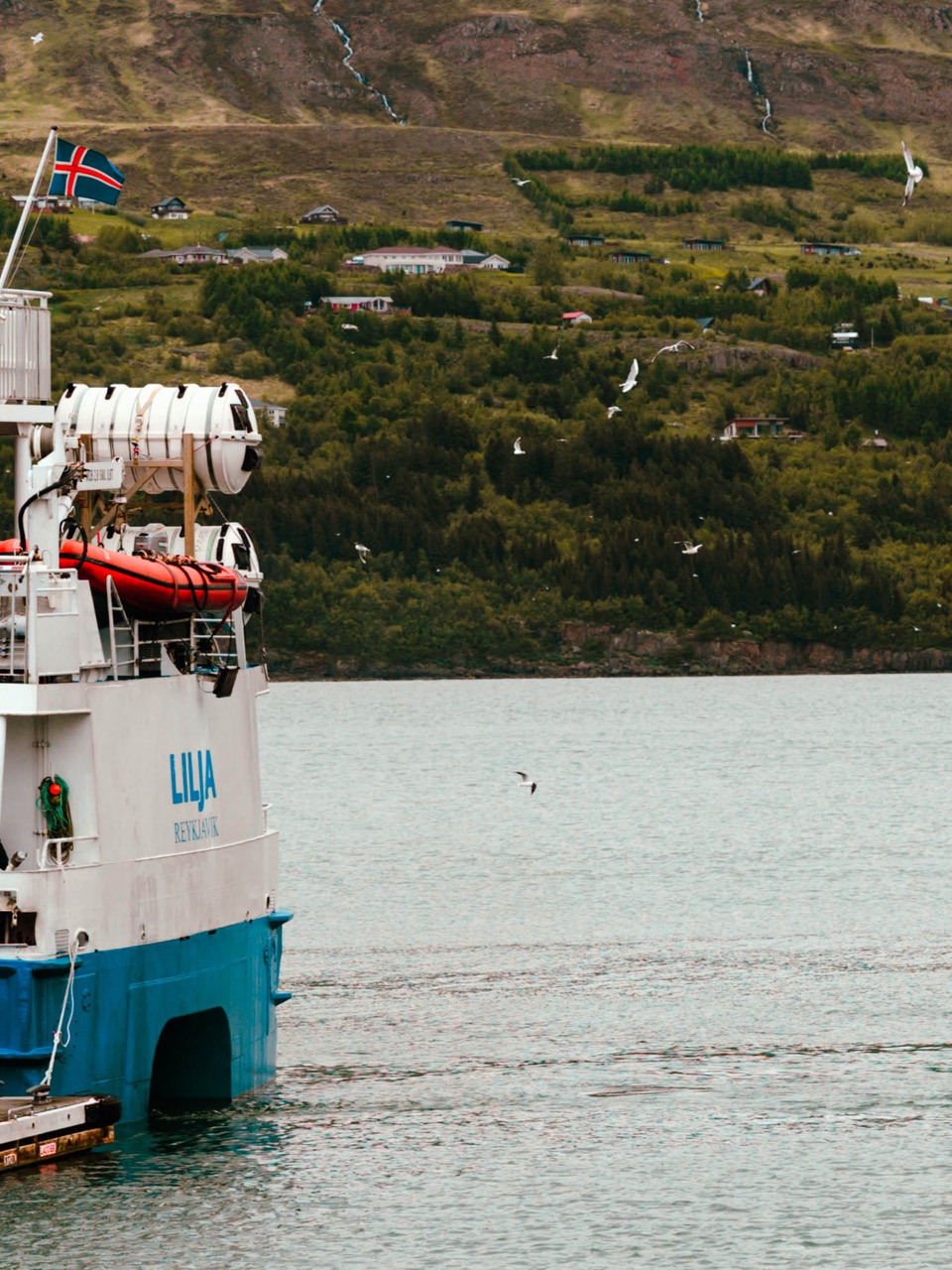
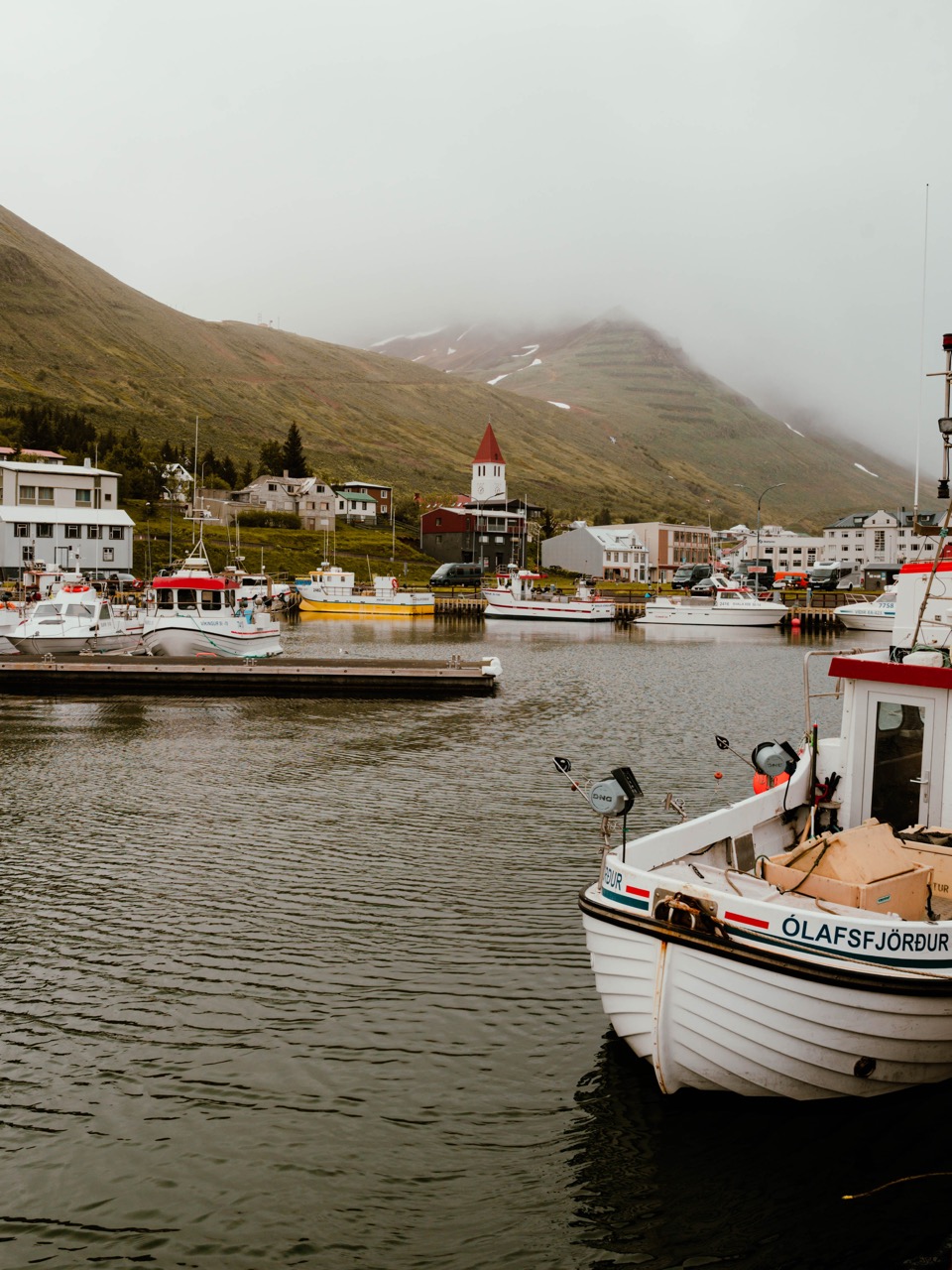
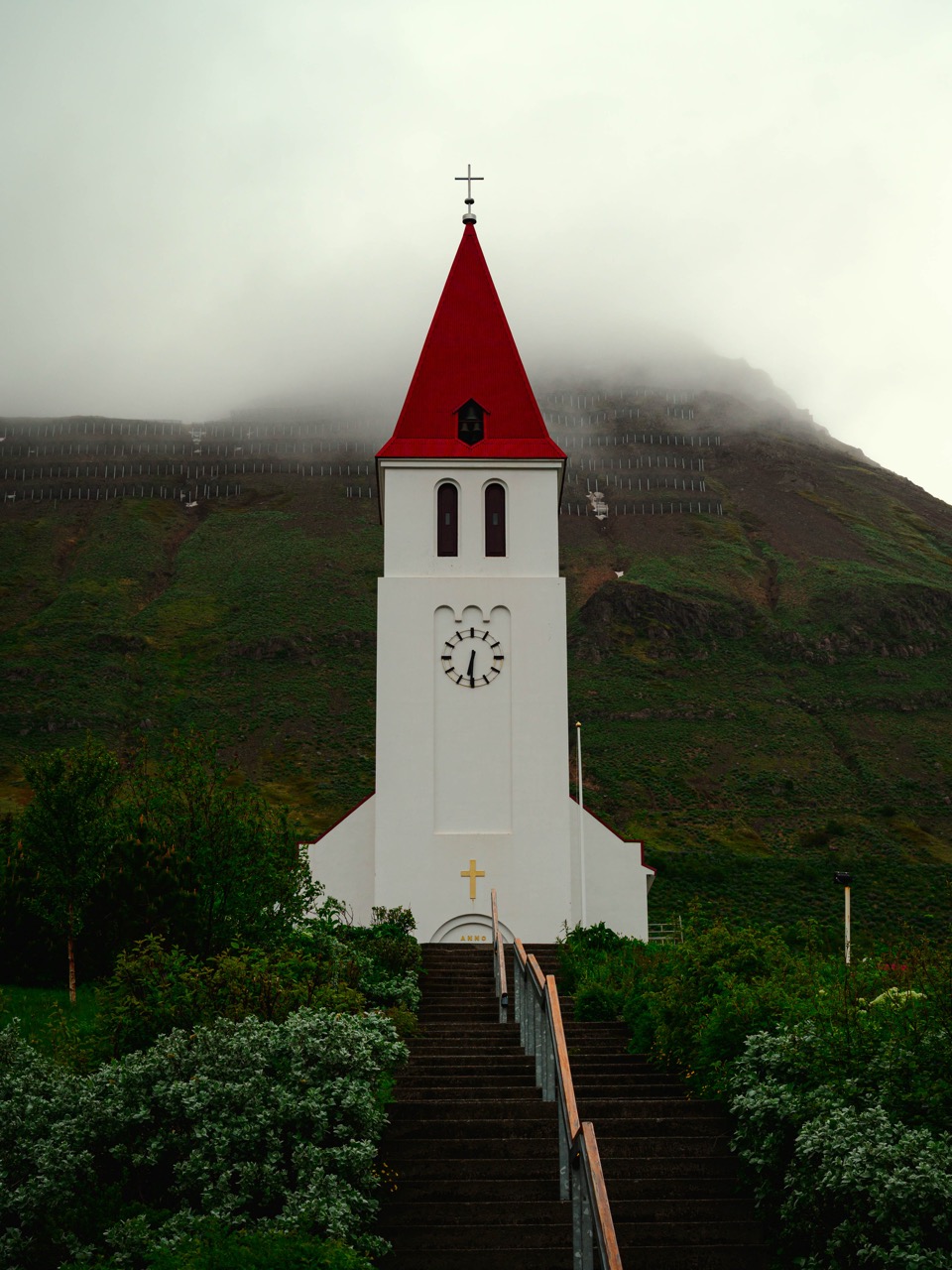
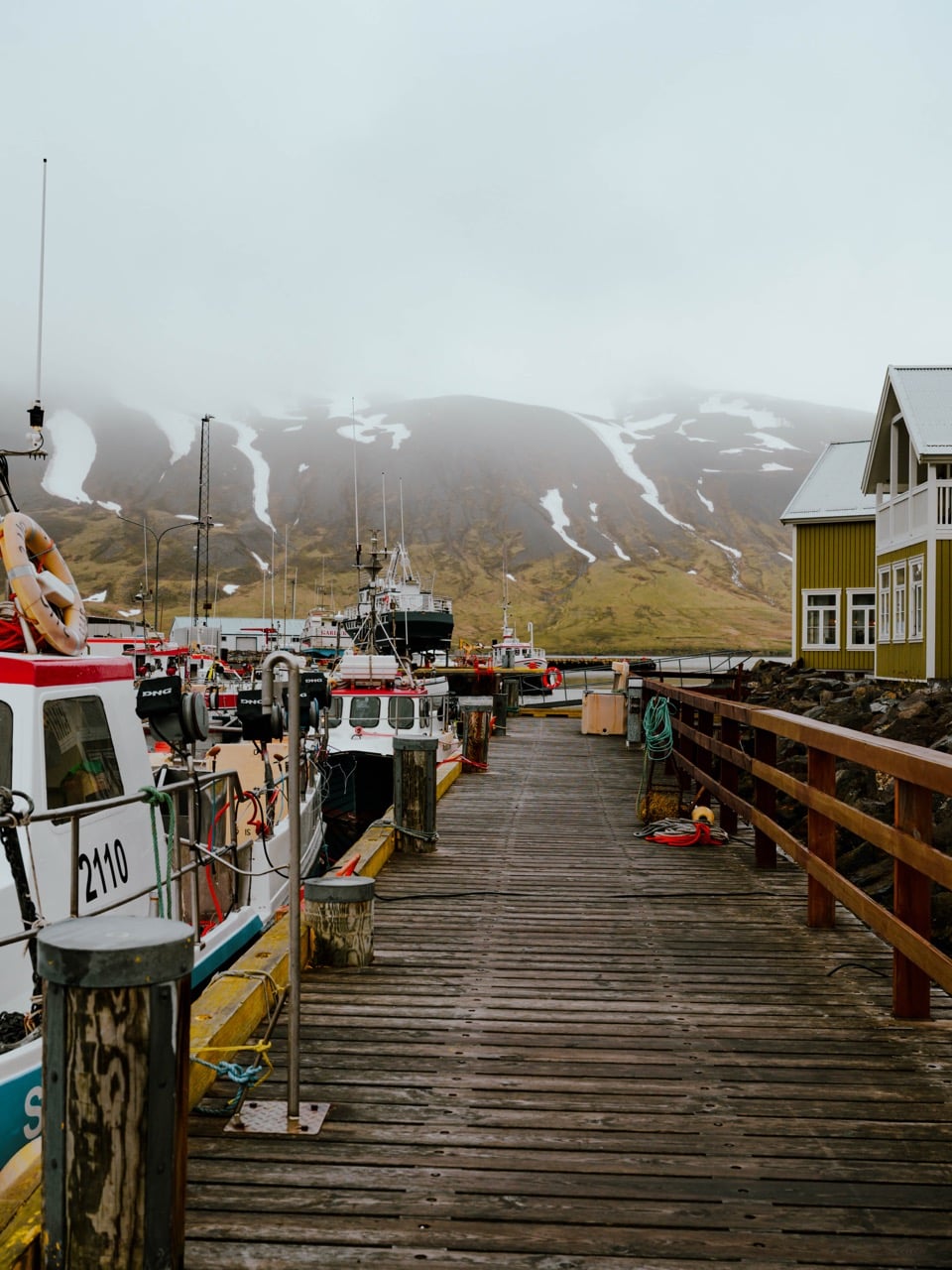
Siglufjörður was another place I had wanted to visit for a while. It was a filming location for the Icelandic crime drama Ófærð (Trapped), and it was pretty evident why when we arrived. The clouds were low over the mountains, and I *loved* the moody atmosphere. Some of my best photos from this trip were from Siglufjörður.
I’ll be truthful, though: The final part of the drive here was not particularly fun. We had to go through a single-lane tunnel, which I dislike even more than unpaved mountain roads. The visibility was also not great, but Siglufjörður was nonetheless worth the drive. That said, I’m not sure if I’d feel comfortable using the road down the mountain in the winter.
Since we had endured that tunnel, we figured we might as well stay for longer in Siglufjörður. We were here for around an hour and a half and mainly just wandered around.
The town is quite pretty, but the atmosphere definitely felt moodier than some of the other towns we visited in Iceland. I guess that part of this was due to the weather, and part of it was the lingering effects of Siglufjörður’s declining herring industry (even though the town is on its way back up again).
I’d love to stay overnight next time, though; the main hotel in Siglufjörður looks really nice, and the town—along with its surroundings—are really picturesque in general. For what it’s worth, I also think that Siglufjörður has *a lot* of potential.
Heading Off to Our Campsite
We were still almost two hours from our campsite, and since it was getting late, we decided to drive straight to our next campsite. We were staying at Grettislaug, which—besides the campsite—is well-known for its geothermal baths.
You know what I said about that tunnel into Siglufjörður being bad? Well… the tunnel leading out of the town was worse for us. Again, the visibility was really poor as we drove up the mountain. The tunnel was in a worse condition than the other one, and we also had to be careful as lots of sheep were along the side of the road. Some were also in the tunnel; drive extra carefully if you’re going to go here.
Besides that, though, the drive to Grettislaug was by and large very beautiful. We were greeted with some beautiful lighting, too; the weather somewhat cleared up as we got further away from Siglufjörður.
As we approached the campsite at Grettislaug, the road got very bumpy again; the final stretch was unpaved. It was also somewhat narrow, but nowhere near as bad as some of the other roads we had done on this trip so far.
After having some dinner from our food pack, we then went to the geothermal pool to relax. This was probably my favorite campsite over the entire trip. We paid 2,000 ISK each for access to the geothermal pool; once we had done so, we could choose to visit as often as we wanted.
Beware of the Birds: Arctic terns nest at the campsite during the summer. When you walk from the campgrounds to the pool, you will walk very close to—if not right through—their nesting site. We didn’t get dive-bombed by them in the evening, but we did in the morning. They attack the highest point, so I recommend holding your hand or something else above your head as you walk through.
We saw one person running and waving their hands; this made it worse, and they *really* had an agenda for him. Just walk calmly and don’t look up. 😅
Day 8: Heading Further South in Iceland
Driving Time: 7.5 Hours
Realizing that our trip was soon to end, we had a bit of a sad feeling on our eighth morning. Before leaving the campsite, we went to the pool one more time. On the way there, we finally had the quintessential “summer in Iceland” experience of getting attacked by Arctic terns; I was surprised that it took so long, to be fair. 🤣
We then had some breakfast before heading out. We had two options for today: To go either via the Ring Road or via F35 through the Highlands. While perhaps not so adventurous from us, we chose to take the Ring Road.
This day also had a lot of driving, and we took a bit of a detour from the original itinerary. One place we had added to our own list of things to do was the Erpsstaðir Creamery, which is a farm that we had heard lots of good things about.
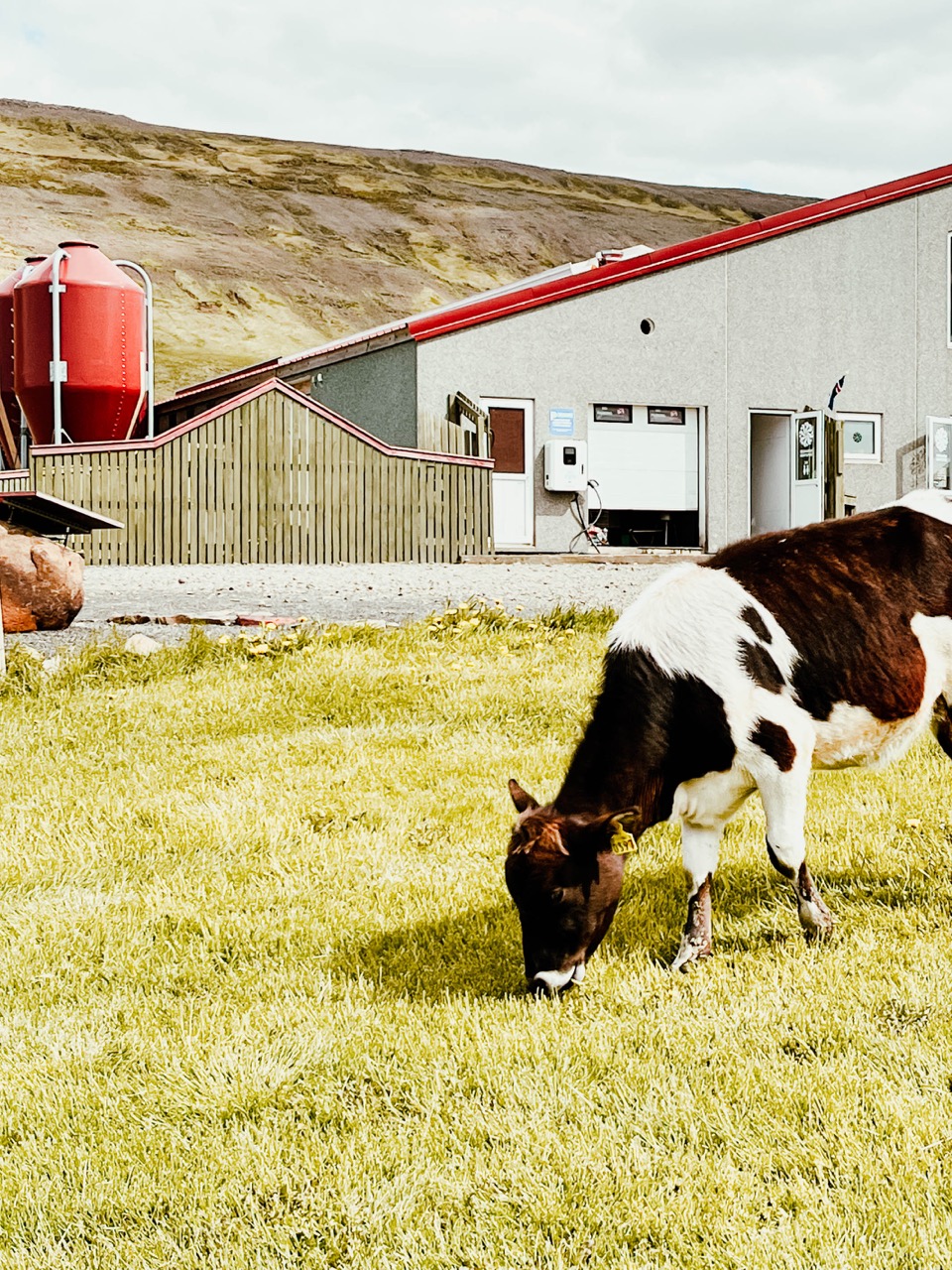
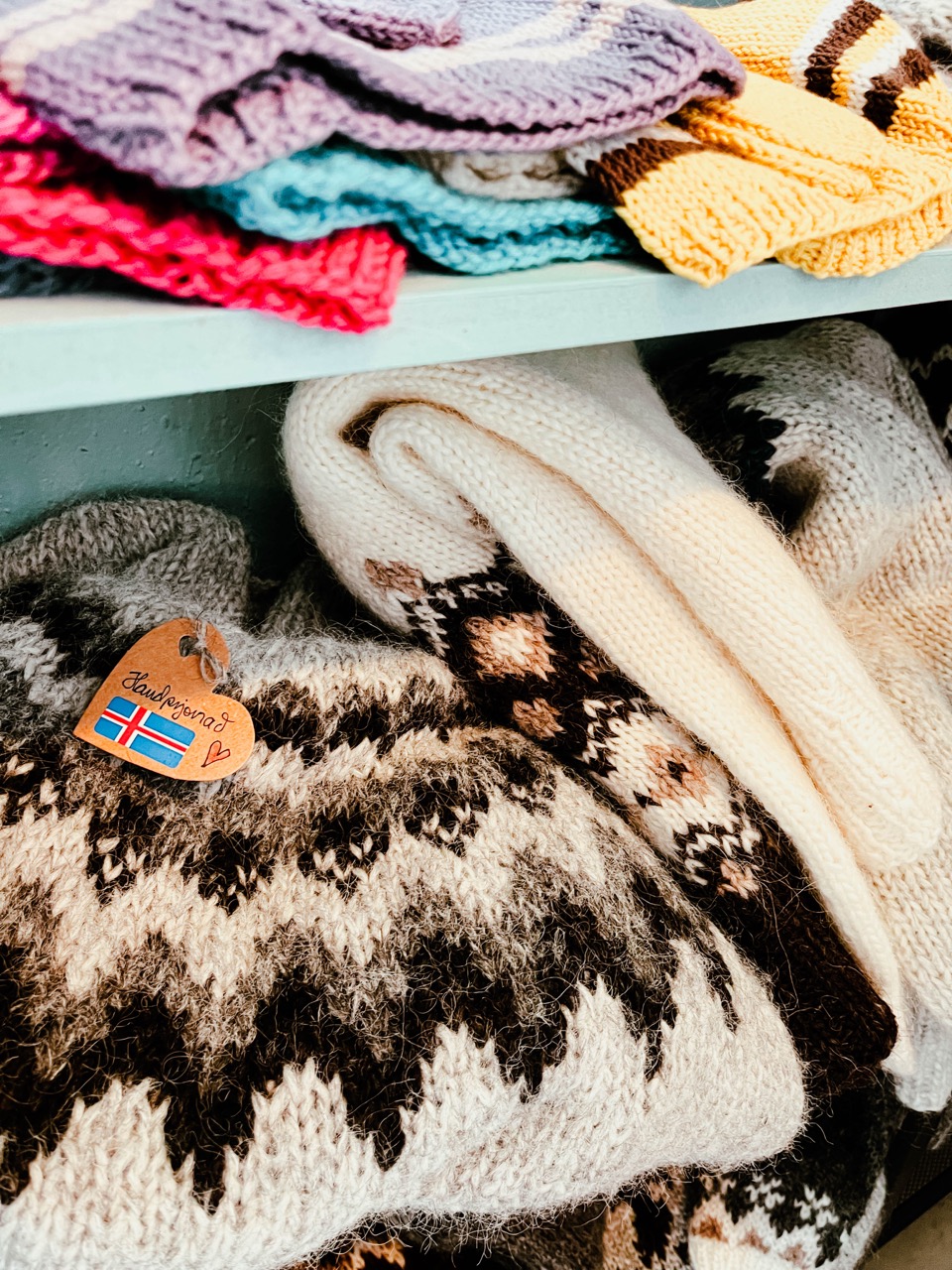
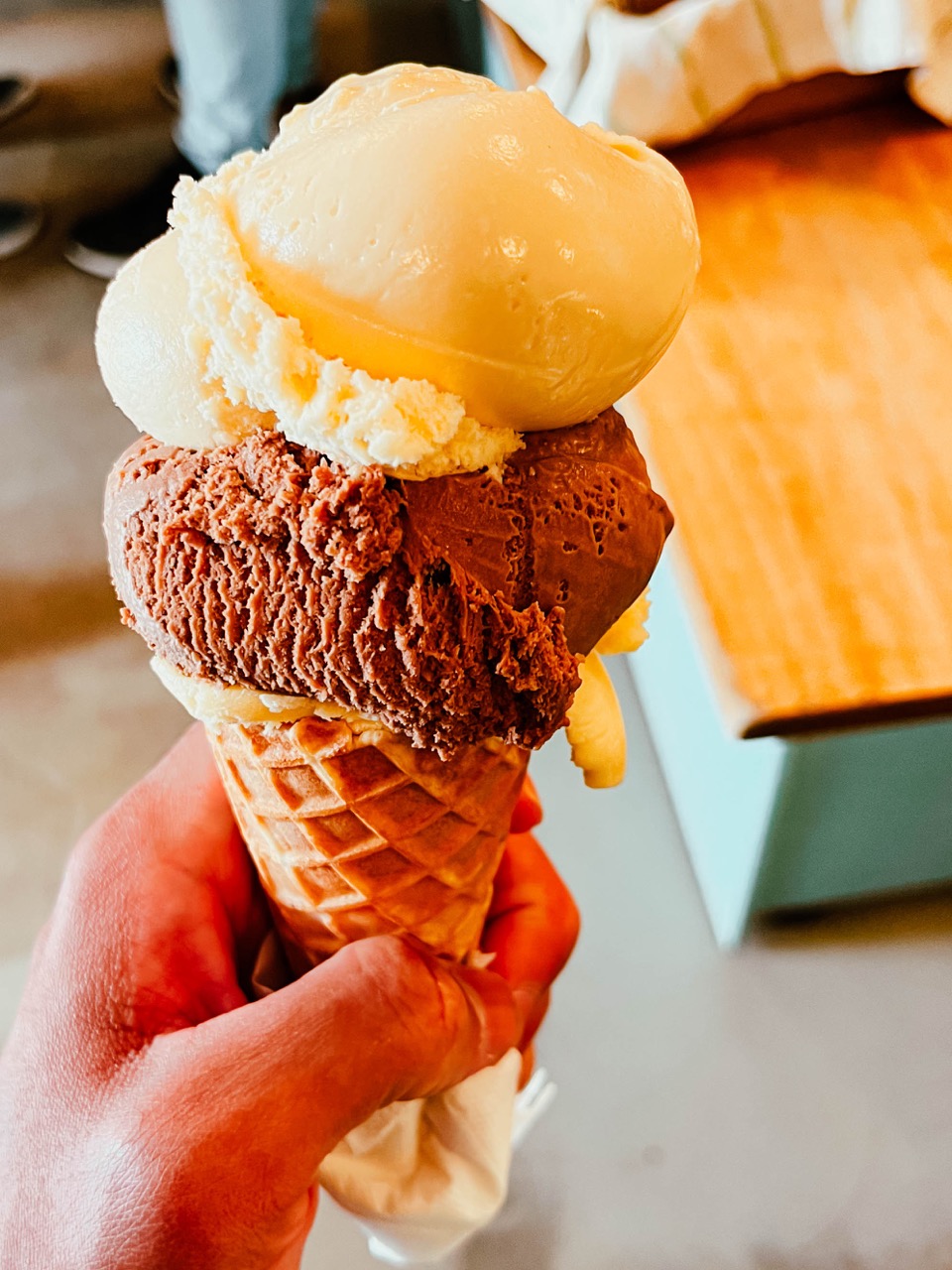
The farm is about as close as you can get to the Westfjords without actually going there. Besides seeing the cows, we also got some ice cream from the small shop here. I can recommend doing so as they were delicious, and you can also buy some nice souvenirs and sweaters here.
The Golden Circle was on the original itinerary, but we decided to skip as we had both already been there. If you’re in Iceland for the first time, I’d actually suggest spending the bulk of your day at the sights here. Brúarfoss is also worth a visit.
Most of this day was about driving, and we didn’t stop at too many places. We made a brief stop at the Grábrók volcanic crater, which was a nice and easy walk to the top. Then, we filled up our gas tank and drove to Þingvellir National Park.
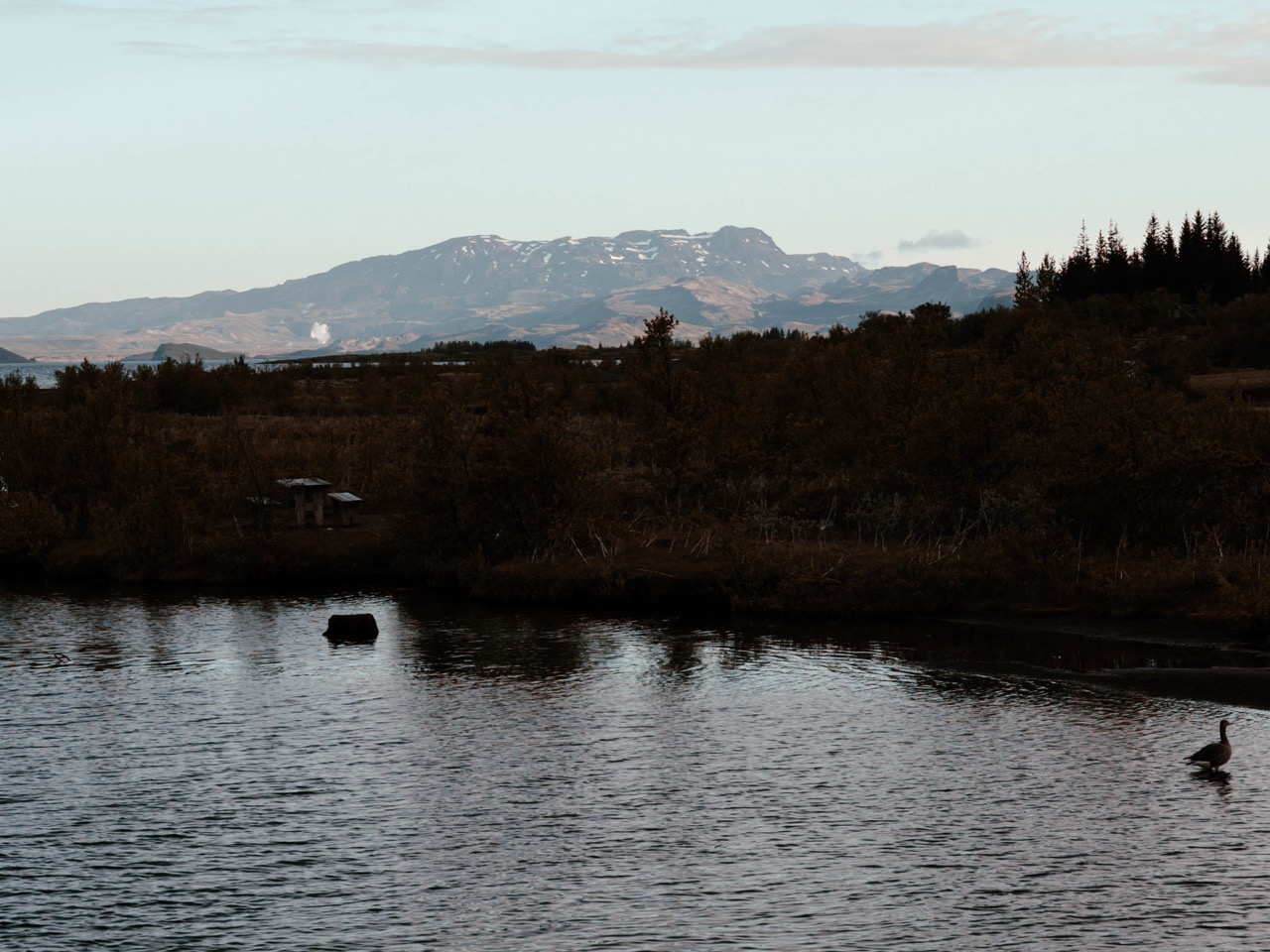
I had already been to Þingvellir twice, and although it is touristy, it’s one of my all-time favorite places in Iceland. We arrived quite early, and since we had mainly been driving for most of the day, we chose to do some hiking. After checking in, we did a nice three-hour hike to see the park’s main sights. These include the Öxrárfoss waterfall, the spot where the North American and Eurasian tectonic plates meet, and the national park’s church.
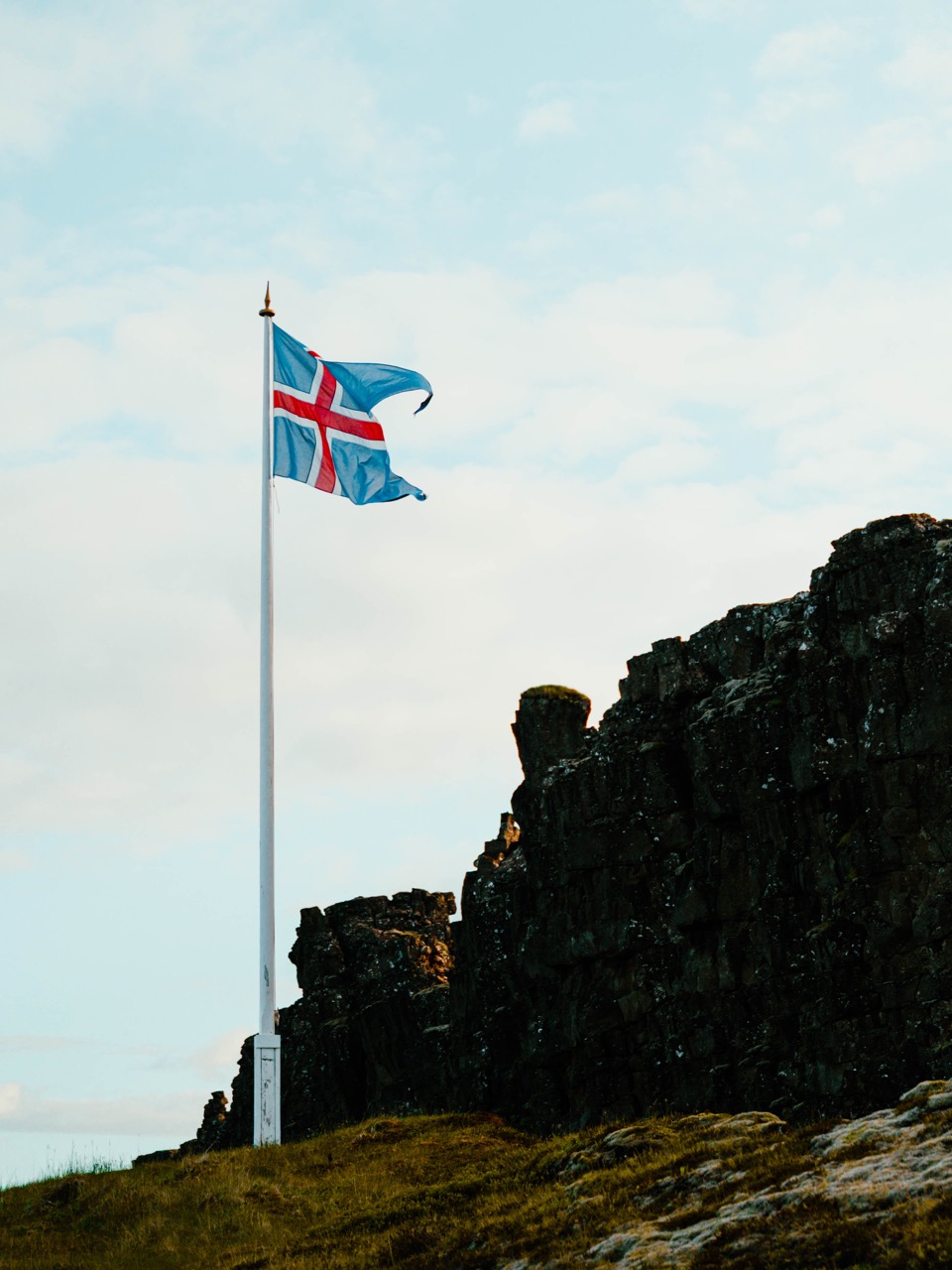
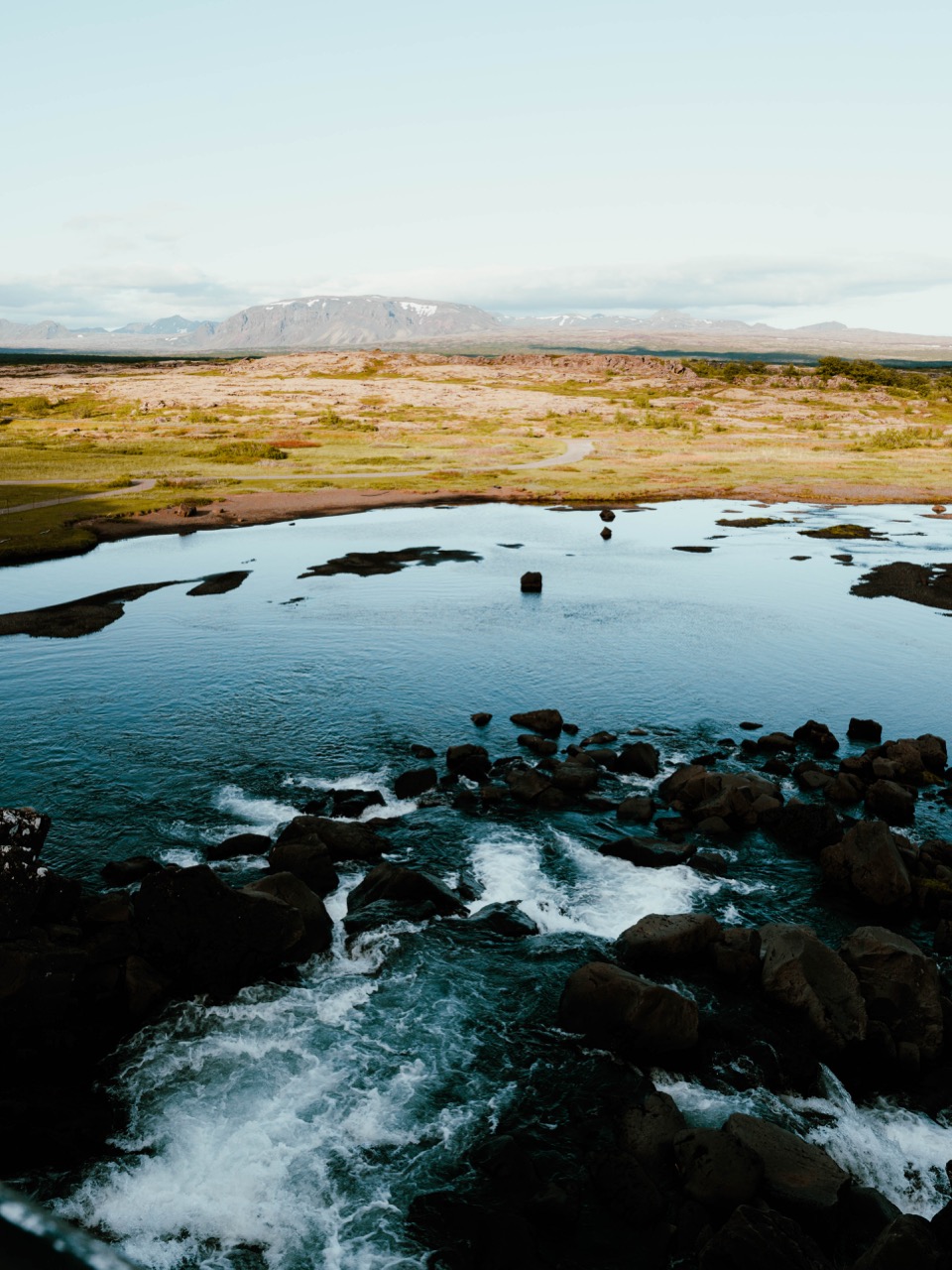
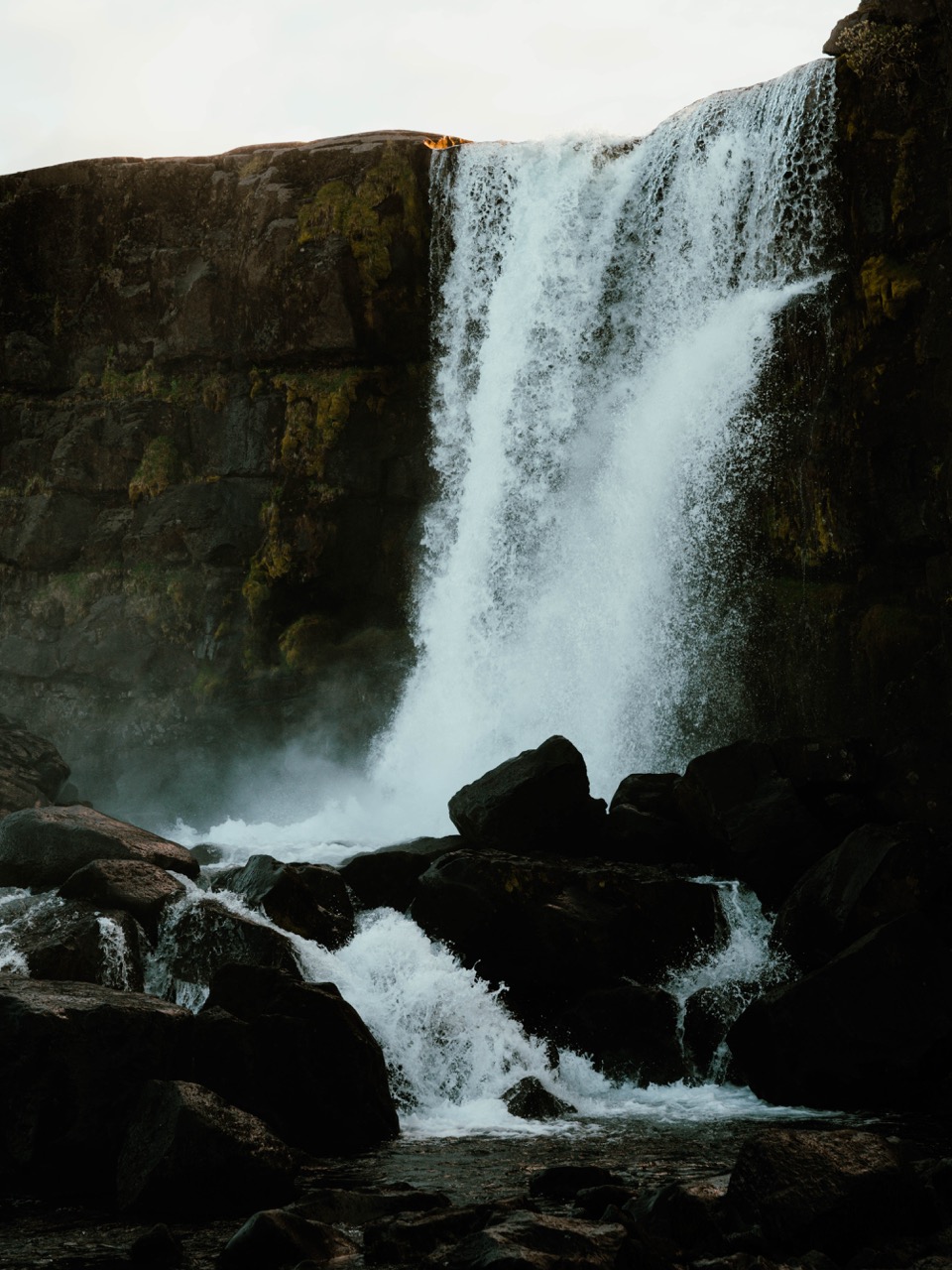
The campsite here was quite basic and definitely busier than where we had stayed on previous nights. Still, it was nice to stay overnight. After our hike, we got back to the campsite at around 22:00 and had some dinner before going to sleep.
Day 9: Staying Overnight on the Snæfellsnes Peninsula
Driving Time: 5 Hours
I’ve used the word “favorite” a lot in this article, but my all-time favorite part of Iceland before this trip was the Snæfellsnes Peninsula. I always find it absurd how overlooked it is by many, with the exception of Kirkjufell—the Game of Thrones Mountain. The second-to-last full day of our Iceland camping trip took us to Snæfellsnes, and I can confirm that it’s still my favorite part of the country.
Worthwhile Detours on the Way to Snæfellsnes
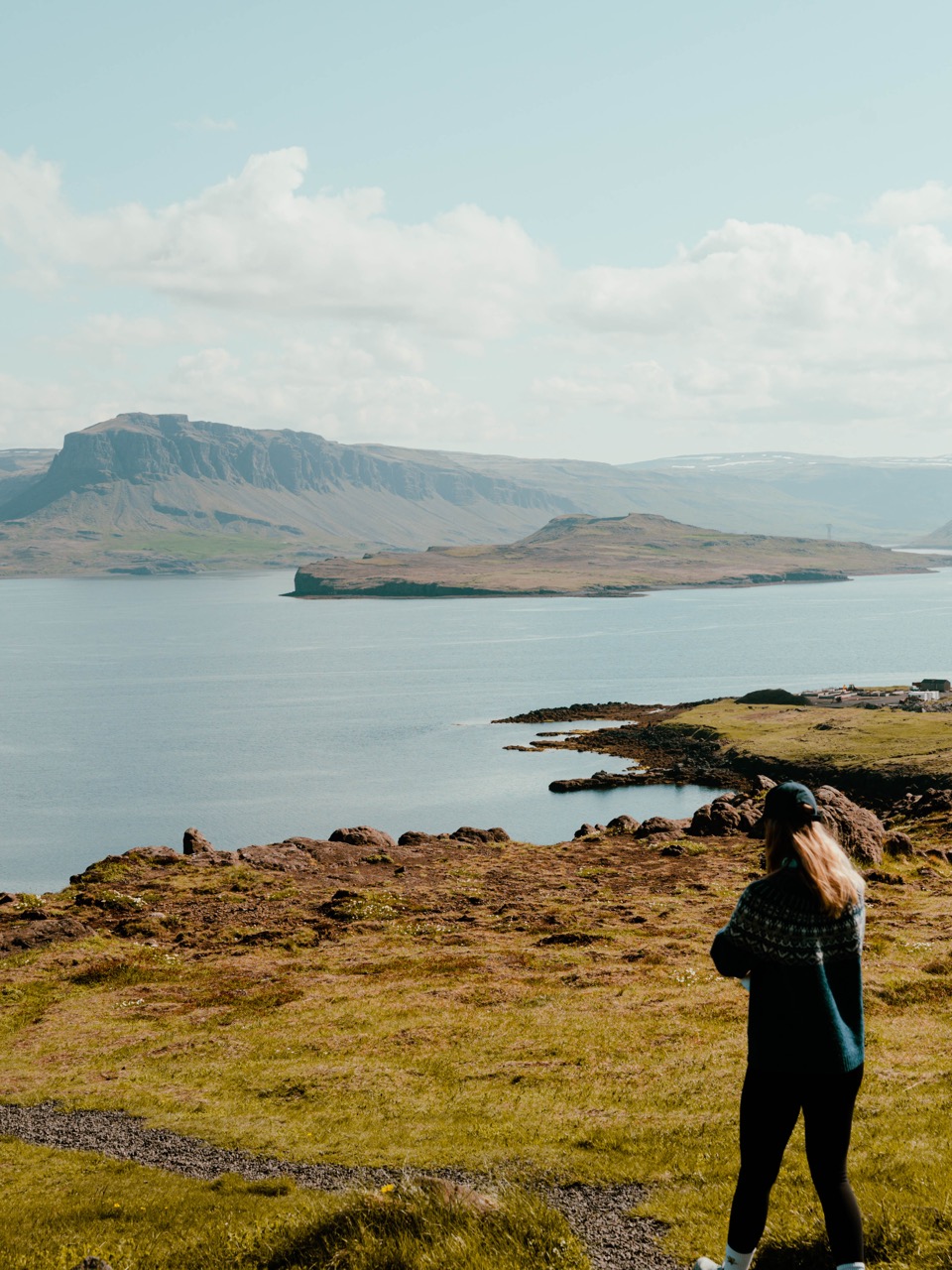
The most direct route to get to Snæfellsnes from Þingvellir National Park or Reykjavík is via a tunnel, but I had already heard about a scenic alternative route along a fjord. Driving via Hvalfjörður takes more time, but the detour is worth it.
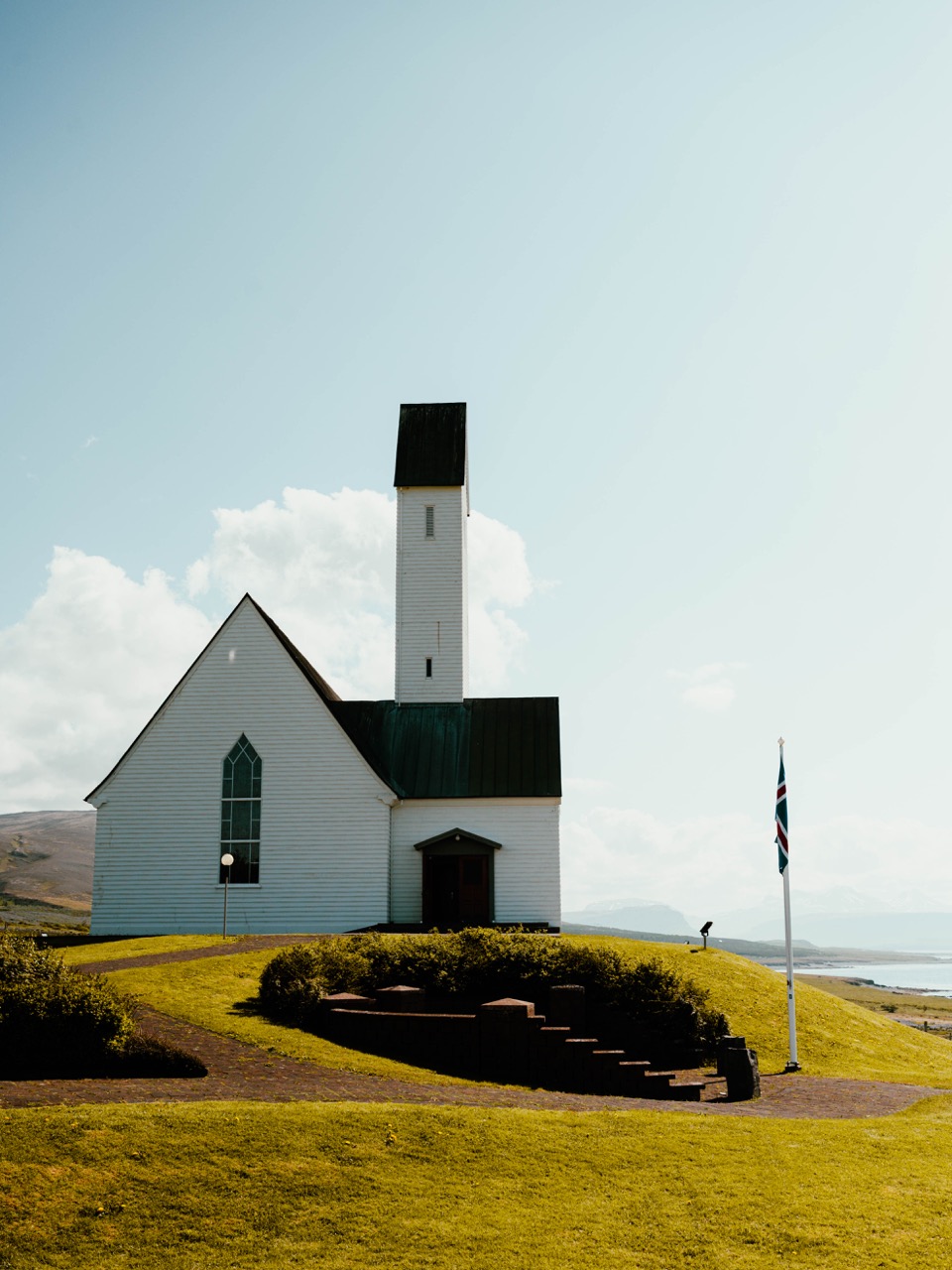
We decided to head to Snæfellsnes in this direction and stopped a few times to take some photos before continuing. On the way, we also stopped at a church called Hallgrímskirkja—the same name as the famous one in Reykjavík.
Before going on to the peninsula, we had to pass through Borgarnes. This town is mainly a pit stop on the way, with a gas station and various places to eat. I had already been here once, and on this occasion, I wanted to make a stop at the Settlement Center for its lunch buffet.
This, as it goes, was the right choice. The vegetarian buffet was both delicious and fresh, and the café staff were also very friendly. After eating, we got back in the car and continued to Snæfellsnes.

Arriving on Snæfellsnes
Considering that most of the days so far had been cold and rainy, it was surprisingly warm when we got to Snæfellsnes. And here’s a useful tip: Wearing 3 layers when it’s 18ºC isn’t the best idea. 🫠
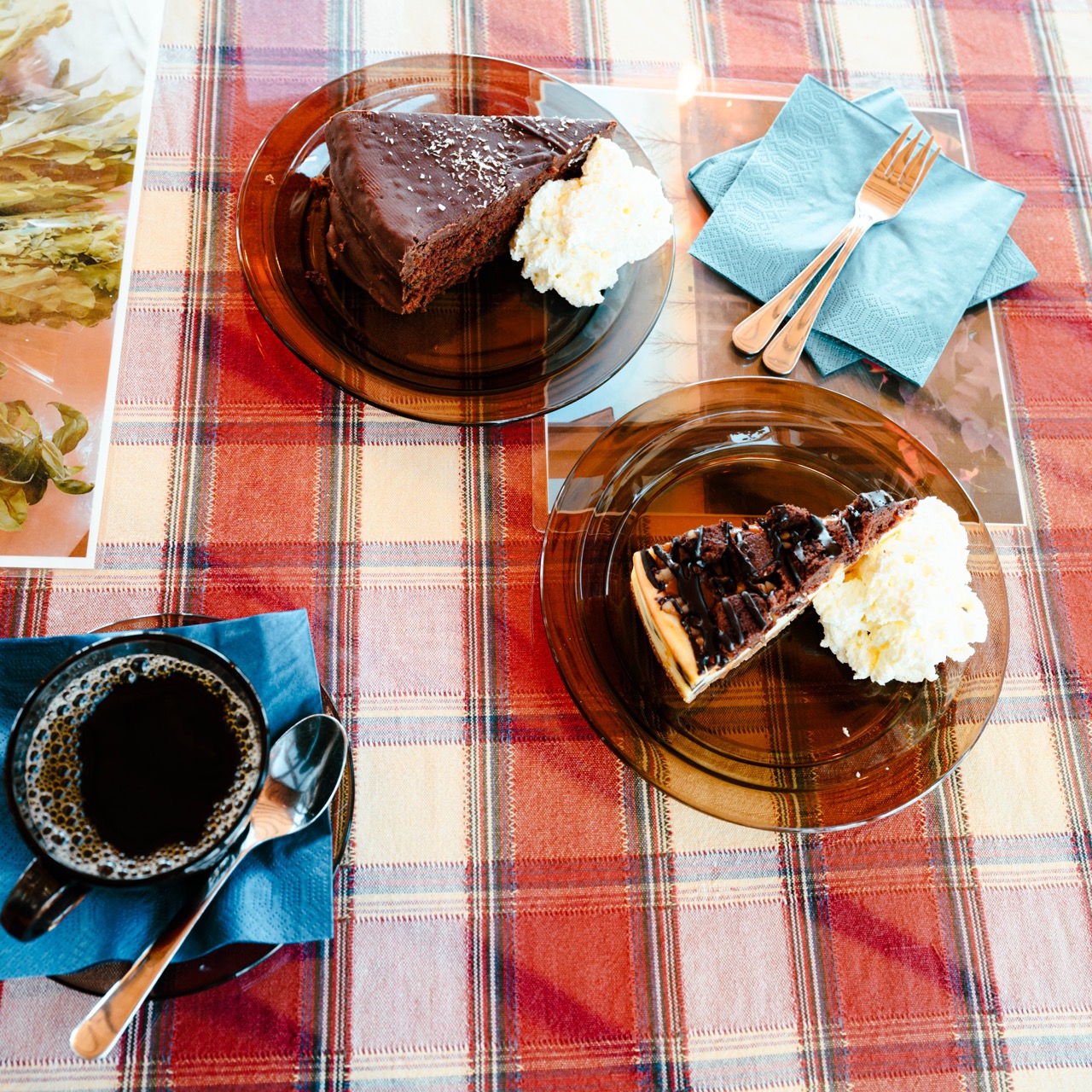
I immediately felt at home when we arrived on the Snæfellsnes Peninsula. We made a brief stop at Hjá Góðu Fólki, which is a lovely café right next to Route 54. The cakes were great, and it was nice to stop for a coffee as well.
Our first proper stop was Ytri Tunga. This is a great place to see seals, and we were not disappointed. It was quite busy, but nothing too crazy. We spent around an hour here; besides seeing the seals, the surroundings are just very nice in general.
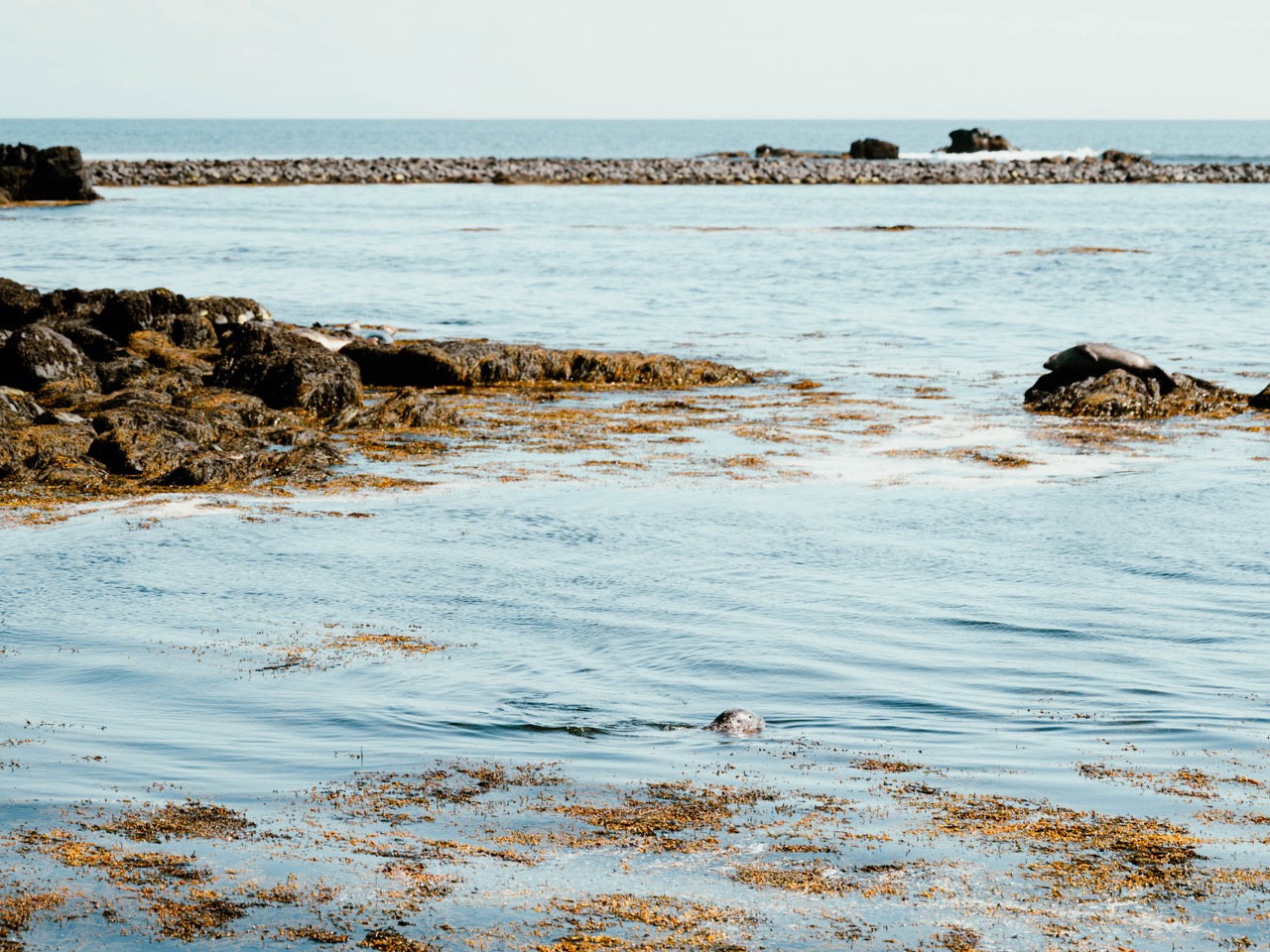
We took the route to the beach on our left-hand side; we had seen some people getting attacked by Arctic terns on the other path, and we decided that “drama” was not on the agenda for today.
Hiking and Birdwatching for the Rest of the Afternoon
Many of the places we visited on our first Snæfellsnes day were quite close together. After a short drive, we parked our car at the pretty little Búðakirkja. This church is one of the most photographed in the country, and we had timed our arrival just as a tour bus also got here.
You can actually do a small hike just behind the church, and we chose to do this because a) we wanted to do some hiking and b) we were waiting for the crowds to ease up. The scenery was beautiful, so this was a great idea. The trail is uneven in parts, but it’s quite easy to follow. The hike itself is easy if you’ve got reasonable general fitness and mobility.
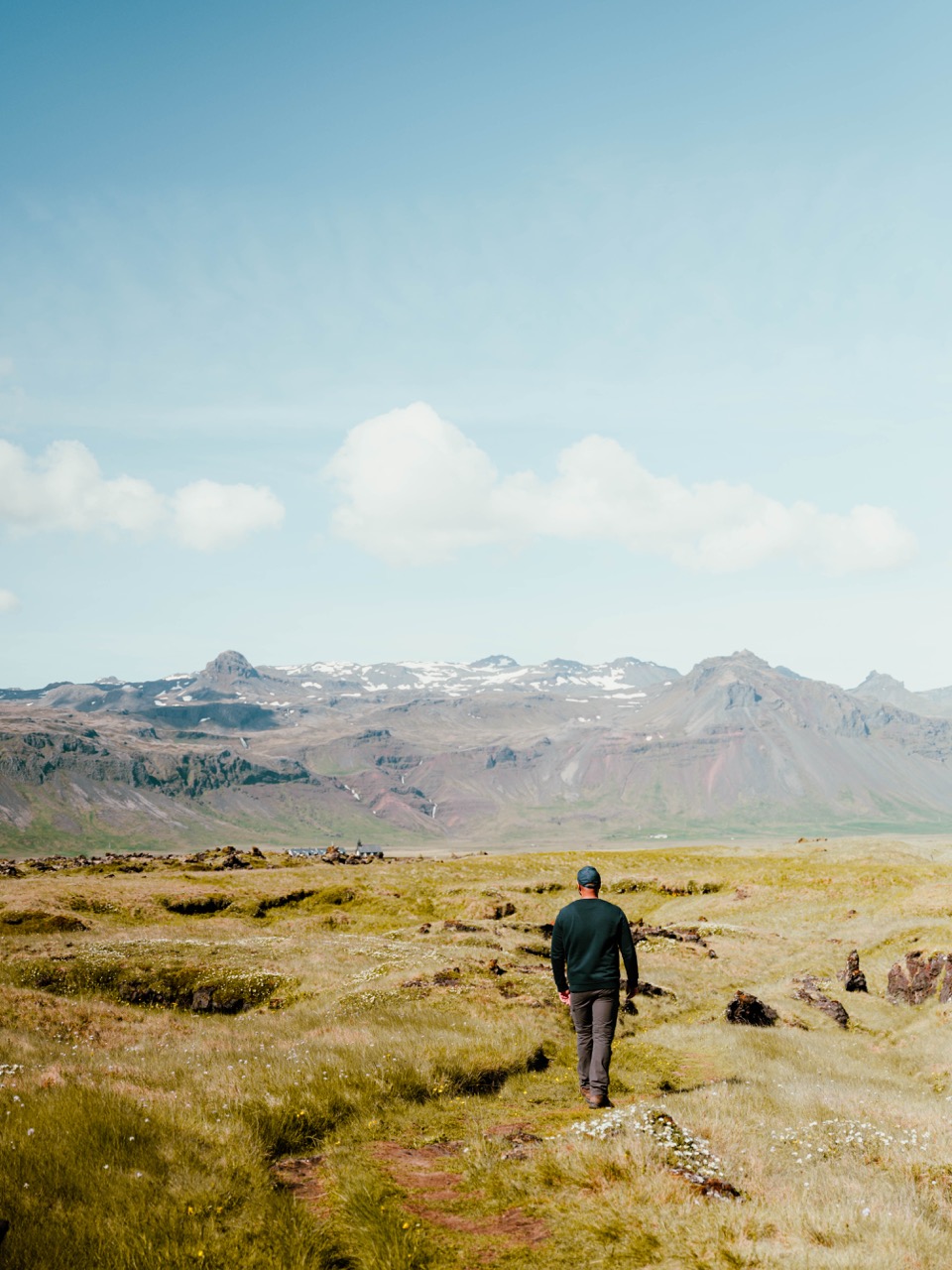
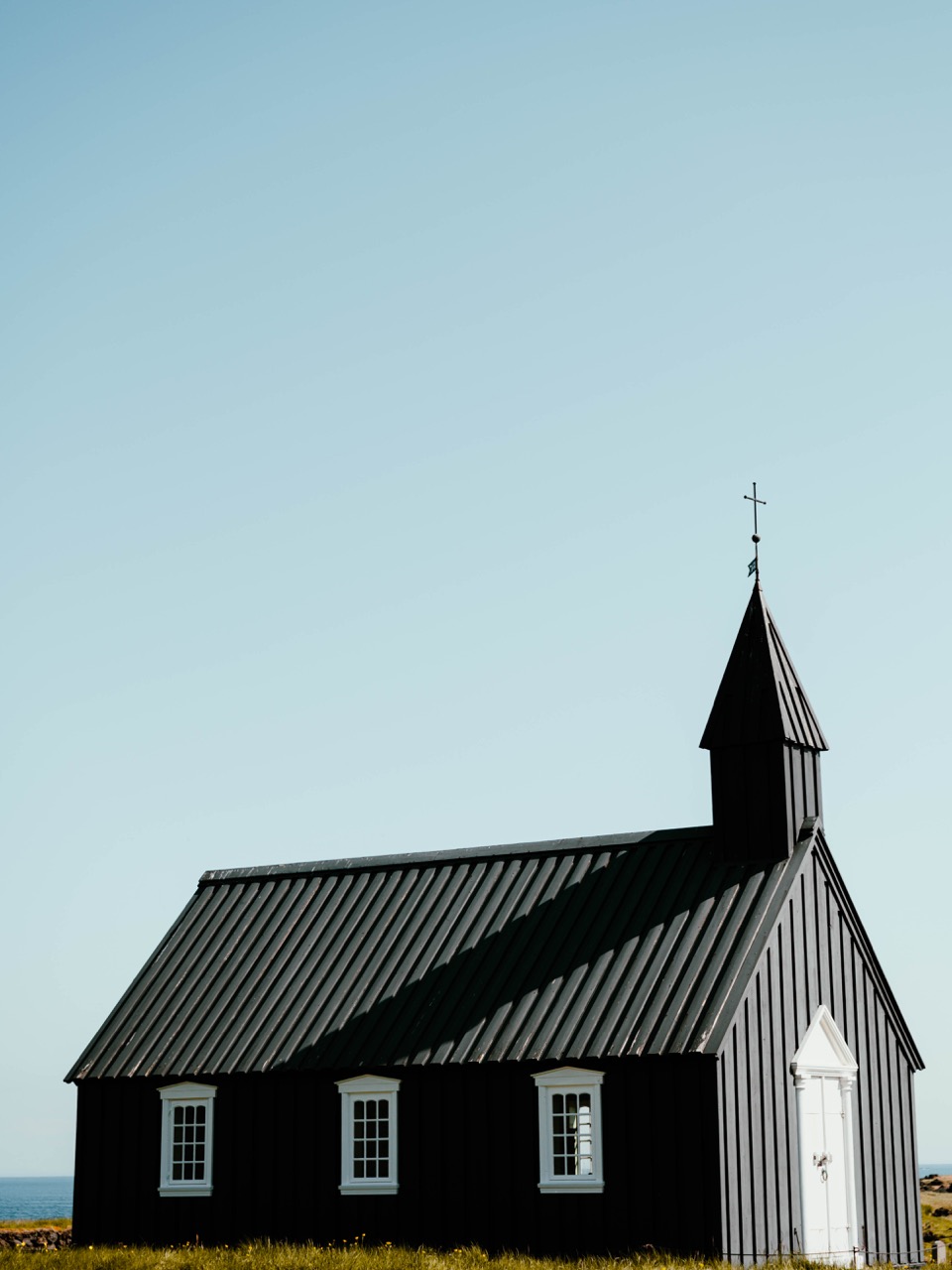
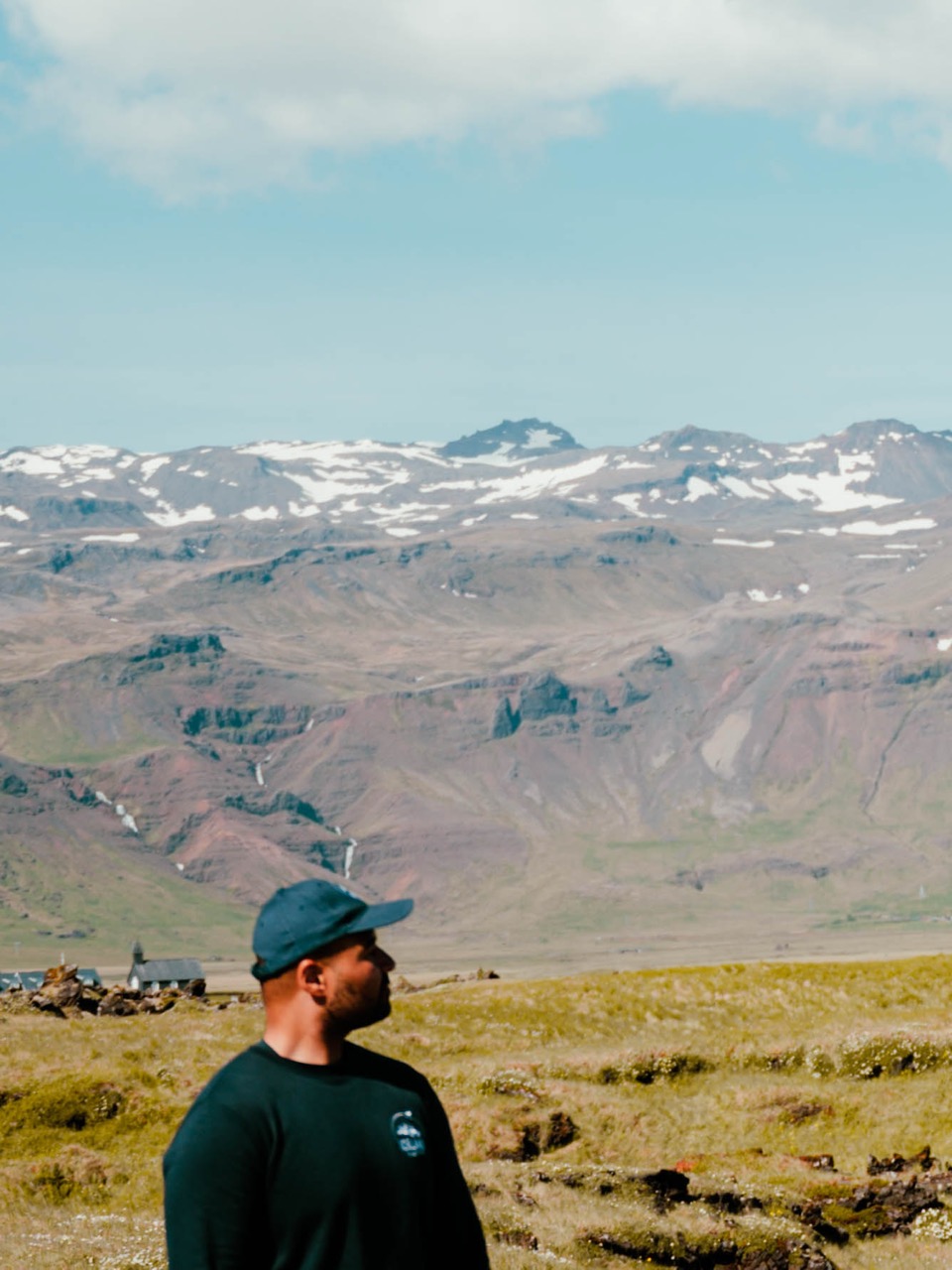
We then continued to Arnarstapi. I had been here before, though I actually had forgotten much of that trip. We went to many of the lookout points along the coastline; it’s one of the best places in Iceland for birdwatching.
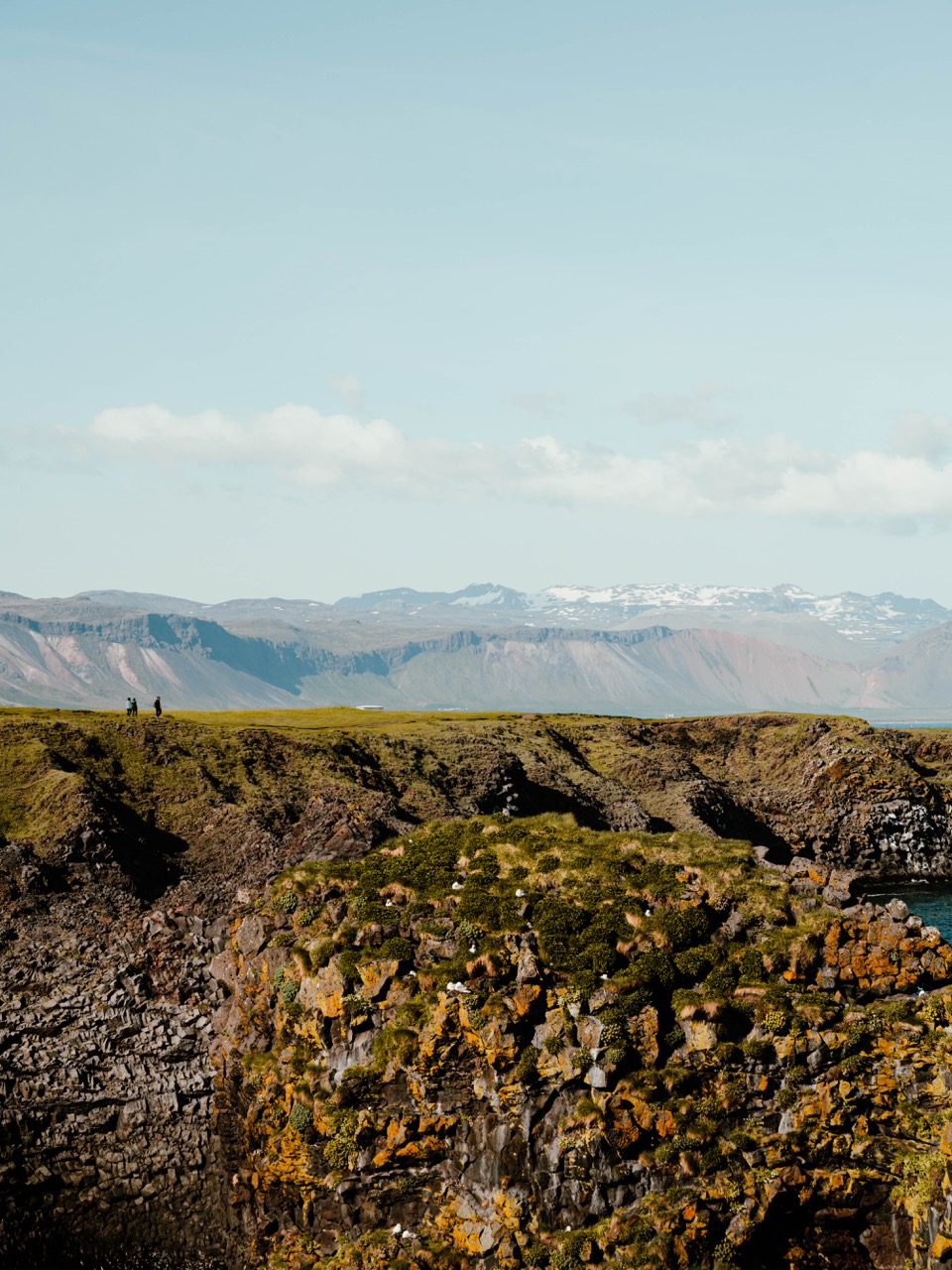
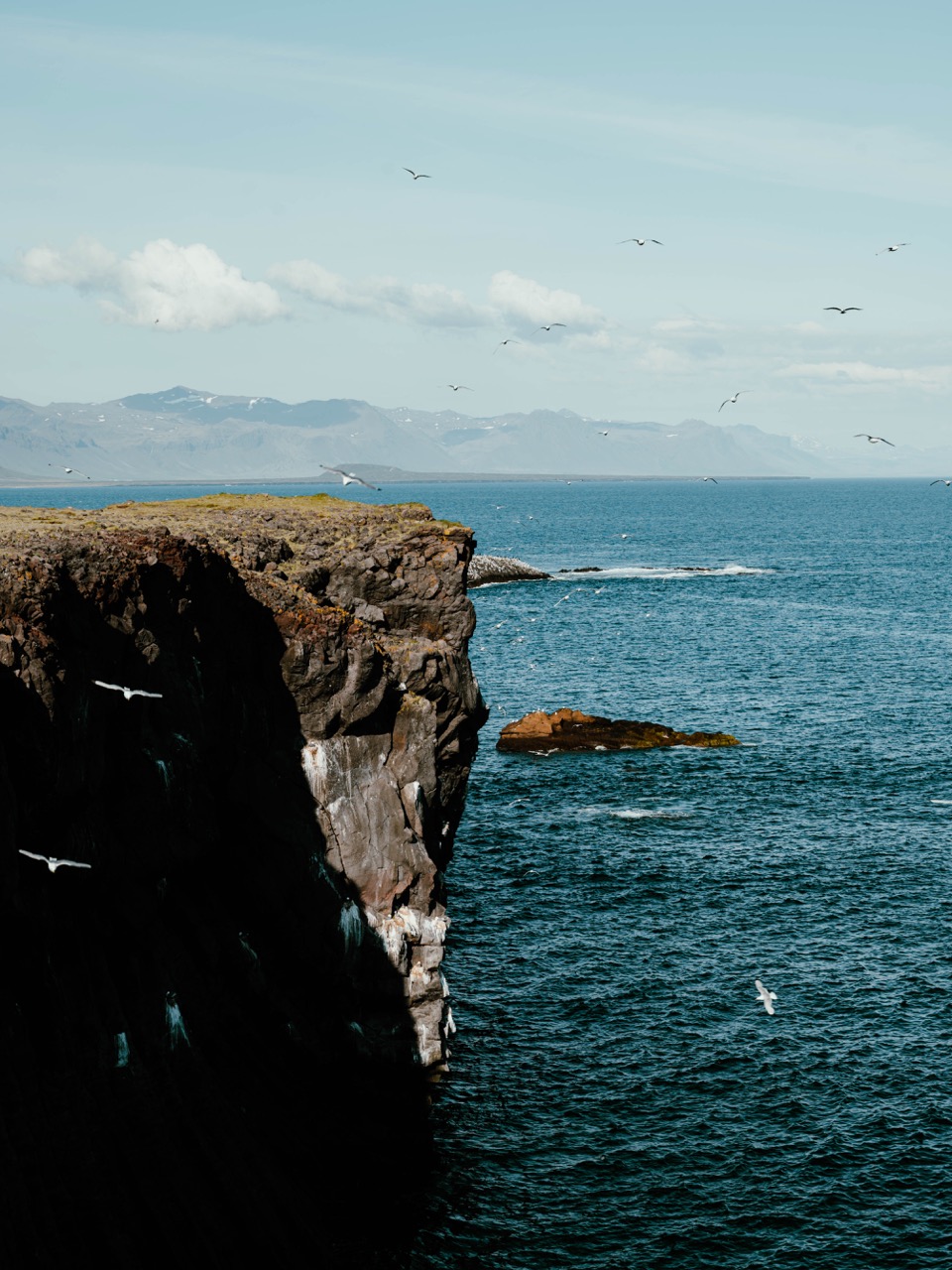
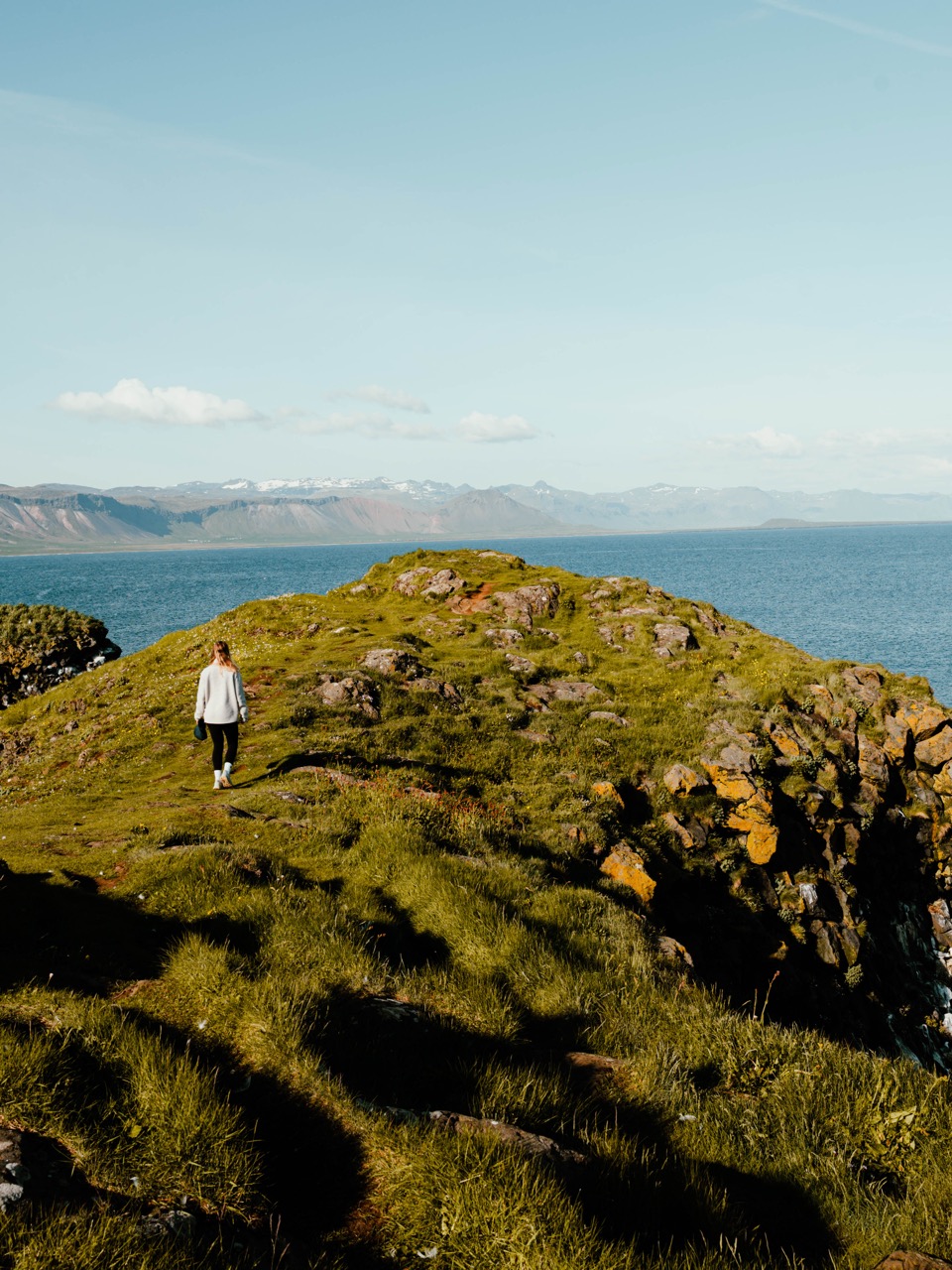
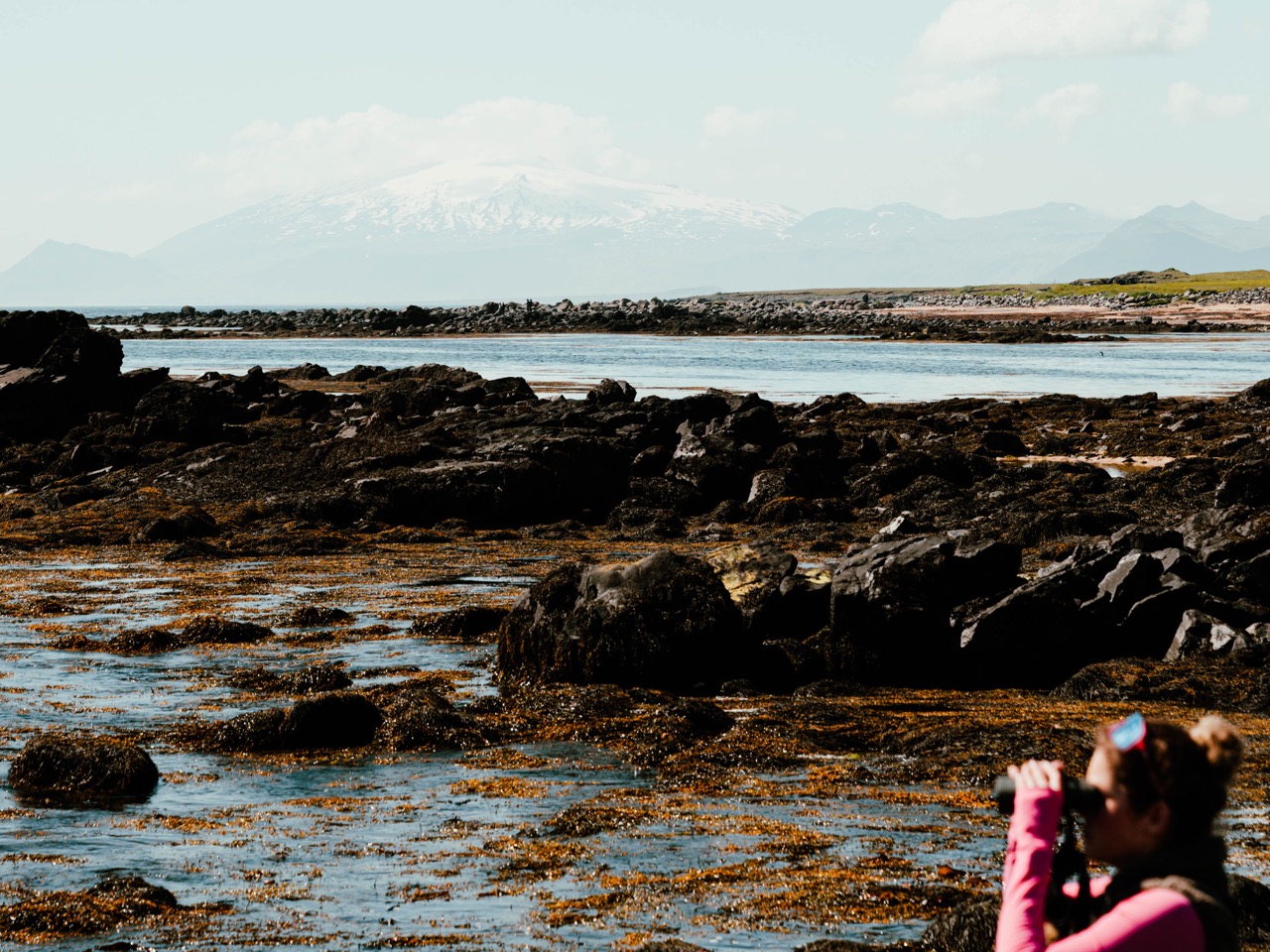
After that, we drove to another spot where we got some pleasant views of the Lóndrangar rock formation and Snæfellsjökull.
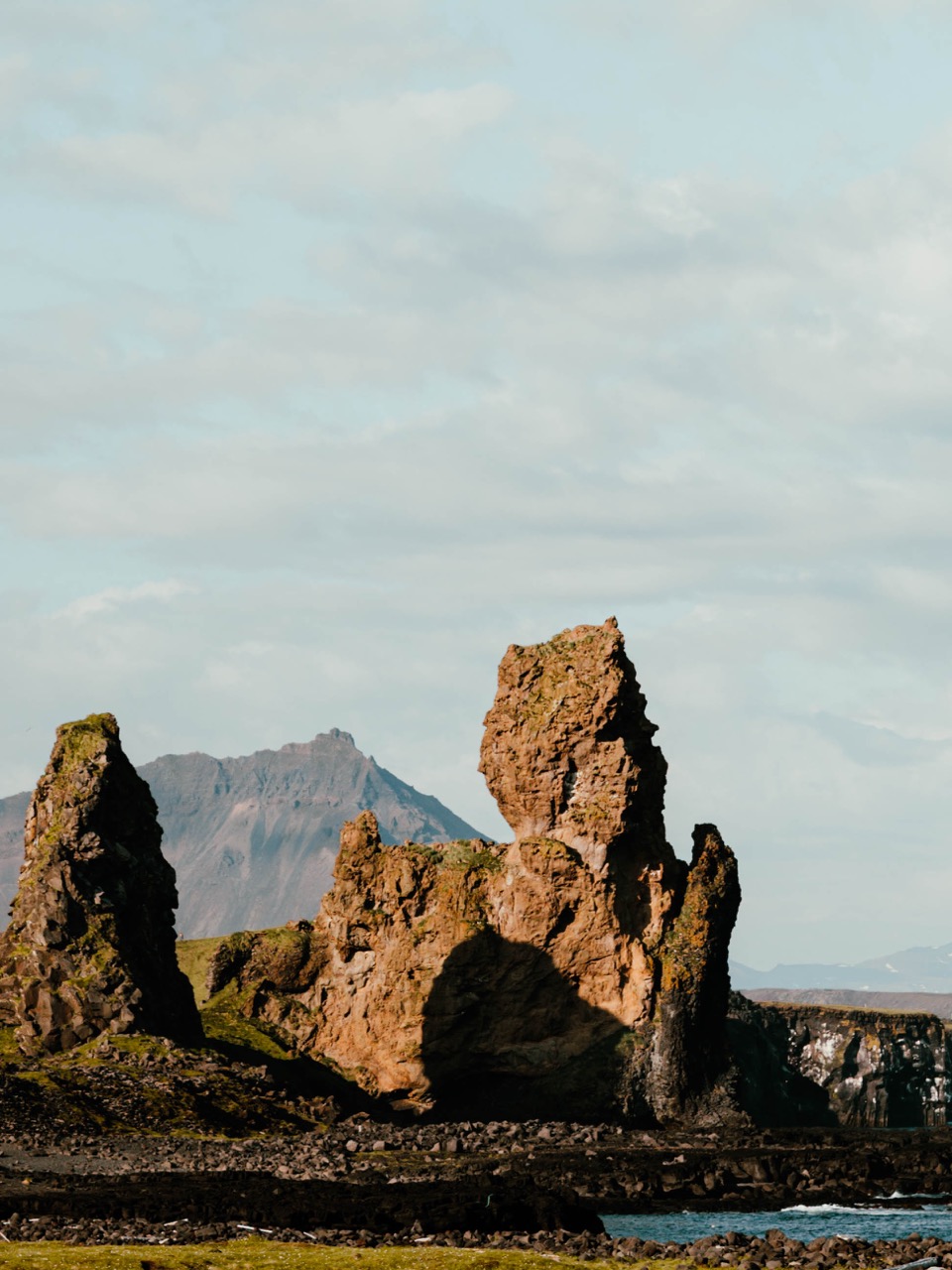
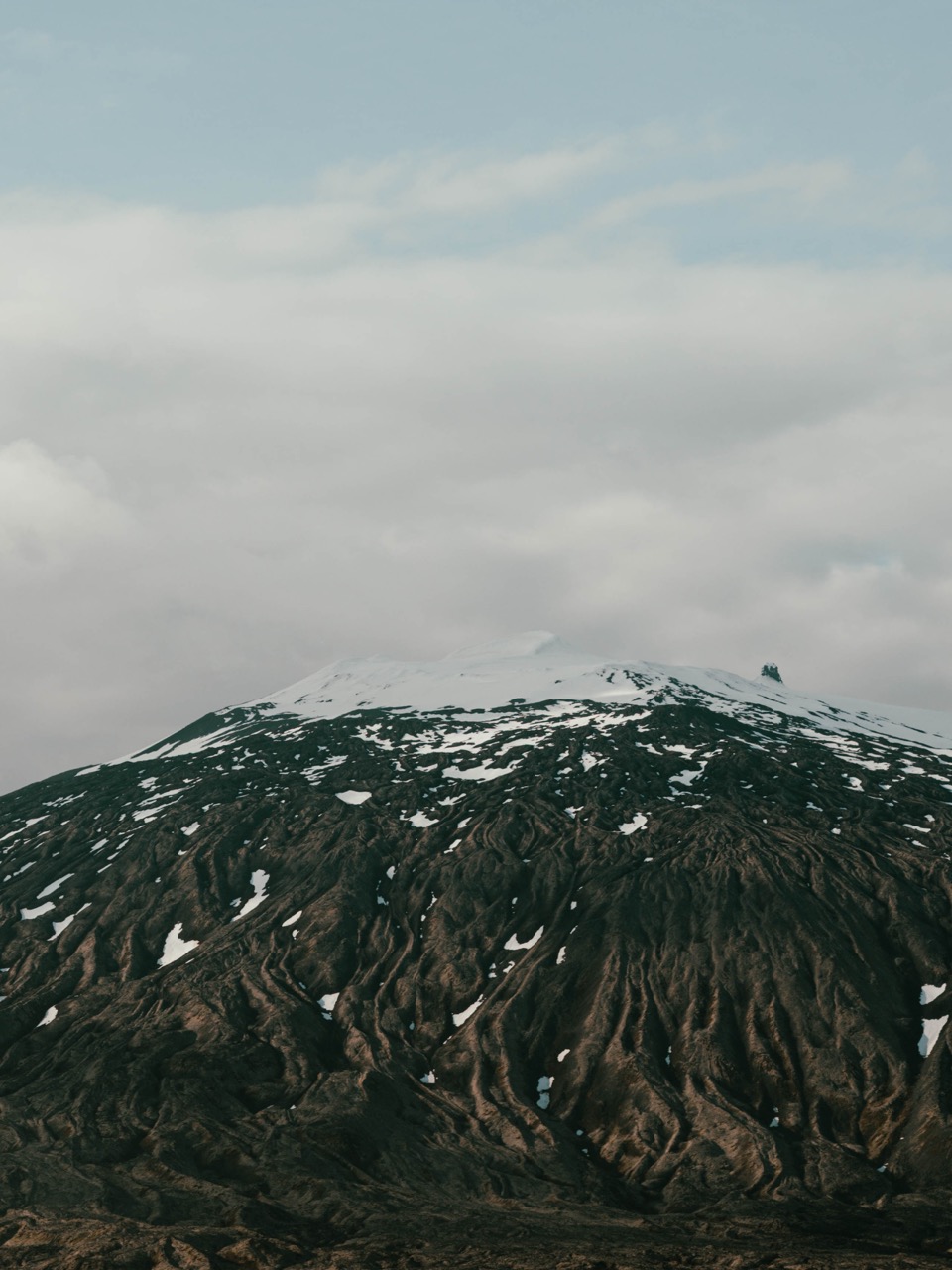
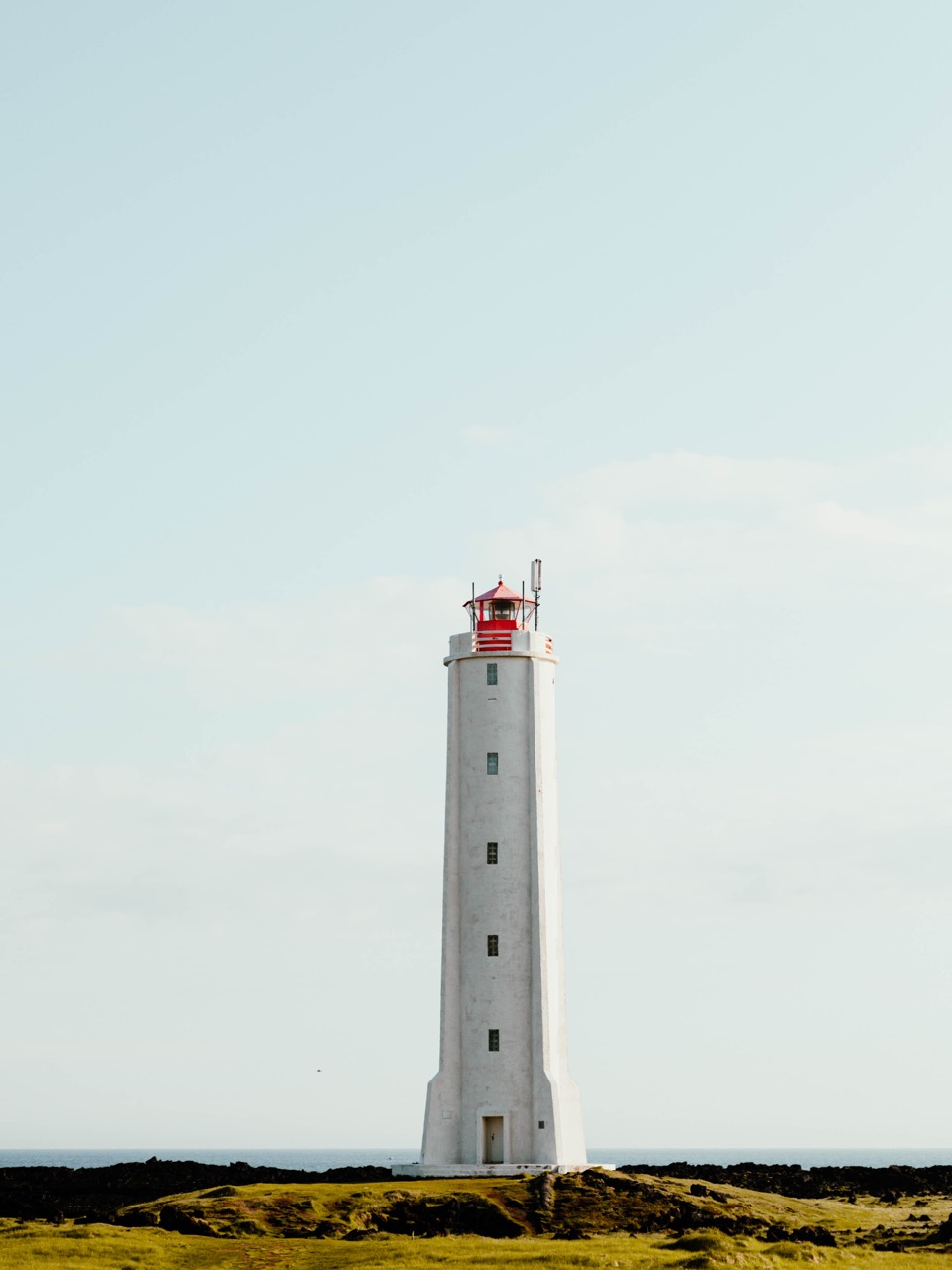
Our campsite for tonight was in Hellissandur, and I realized when we arrived that I had actually been to this town before as well. You should definitely check out the street art while you’re here, in my opinion.
Day 10: More of Snæfellsnes Before Heading to Reykjavík
Total Driving Time: c. 4.5 Hours
We kept our options open for our last full day in Iceland, as the weather did a complete 180 overnight. The fog was back again, to the point that we couldn’t see the mountain right next to our campsite anymore.
Originally, we wanted to hike to the Glymur waterfall. However, we chose not to as it was raining quite a lot and the hike requires crossing rivers—along with being slippery in areas as well.
In the end, we spent most of our day on the Snæfellsnes Peninsula. I had already been to Kirkjufell before, and we chose to skip the view of the mountain and its waterfall from the parking lot. Instead, we found another viewpoint of the mountain itself. I would say that it looked more impressive from this angle, if most of it wasn’t covered in fog. Still, I guess that validated our decision not to go to the paid parking lot because we wouldn’t have seen anything there either. 🤷🏾♂️
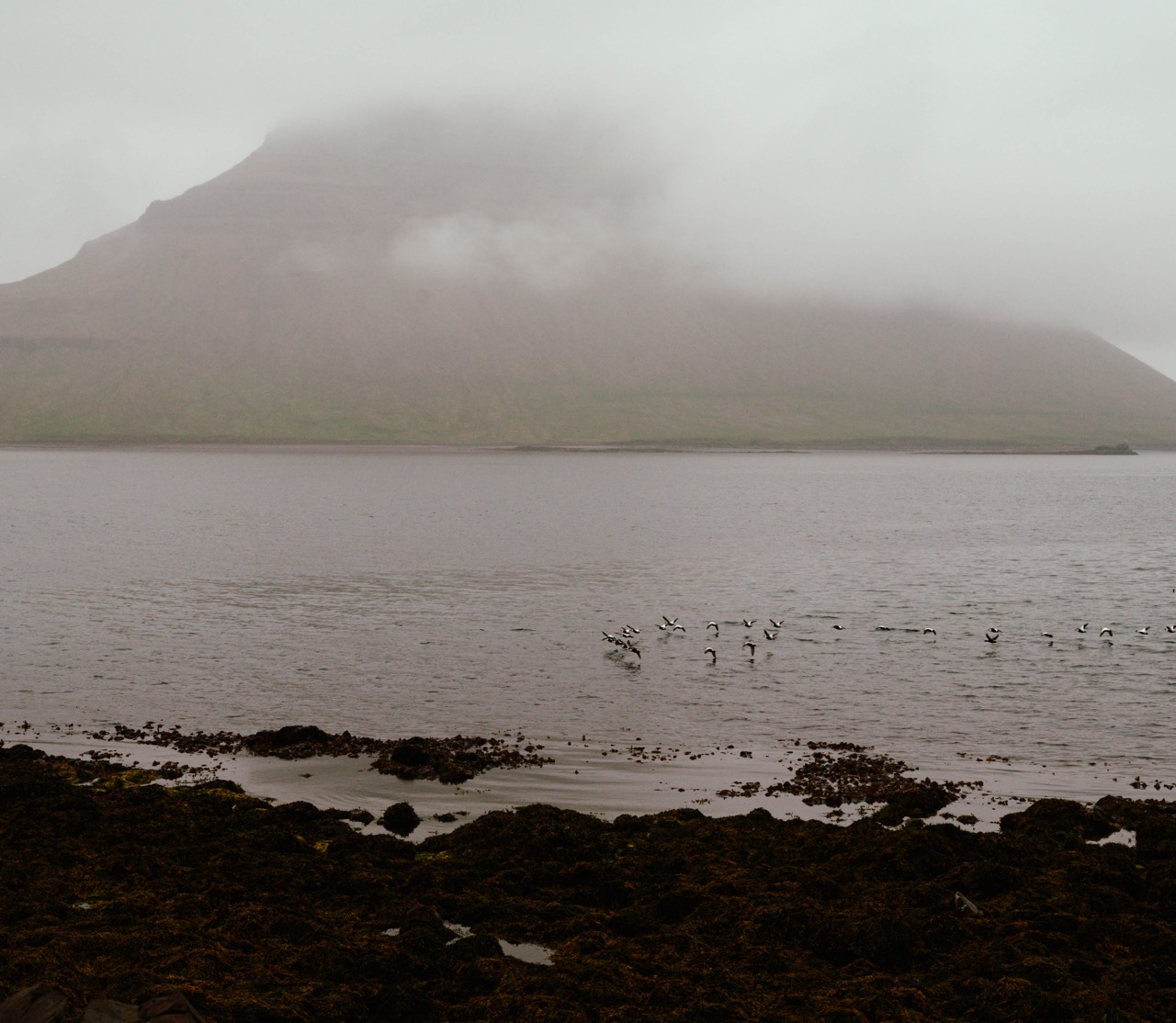
The absolute top highlight of our day, however, was visiting Stykkishólmur. You know those places you go to and think “yeah ngl I could live here”? That’s precisely how I felt when we arrived here.
For me, Stykkishólmur was well worth the extra effort to get there. It’s the most beautiful town in Iceland, in my opinion. Beyond the cute colorful houses, it has a lovely setting and still feels like a proper lived-in town.
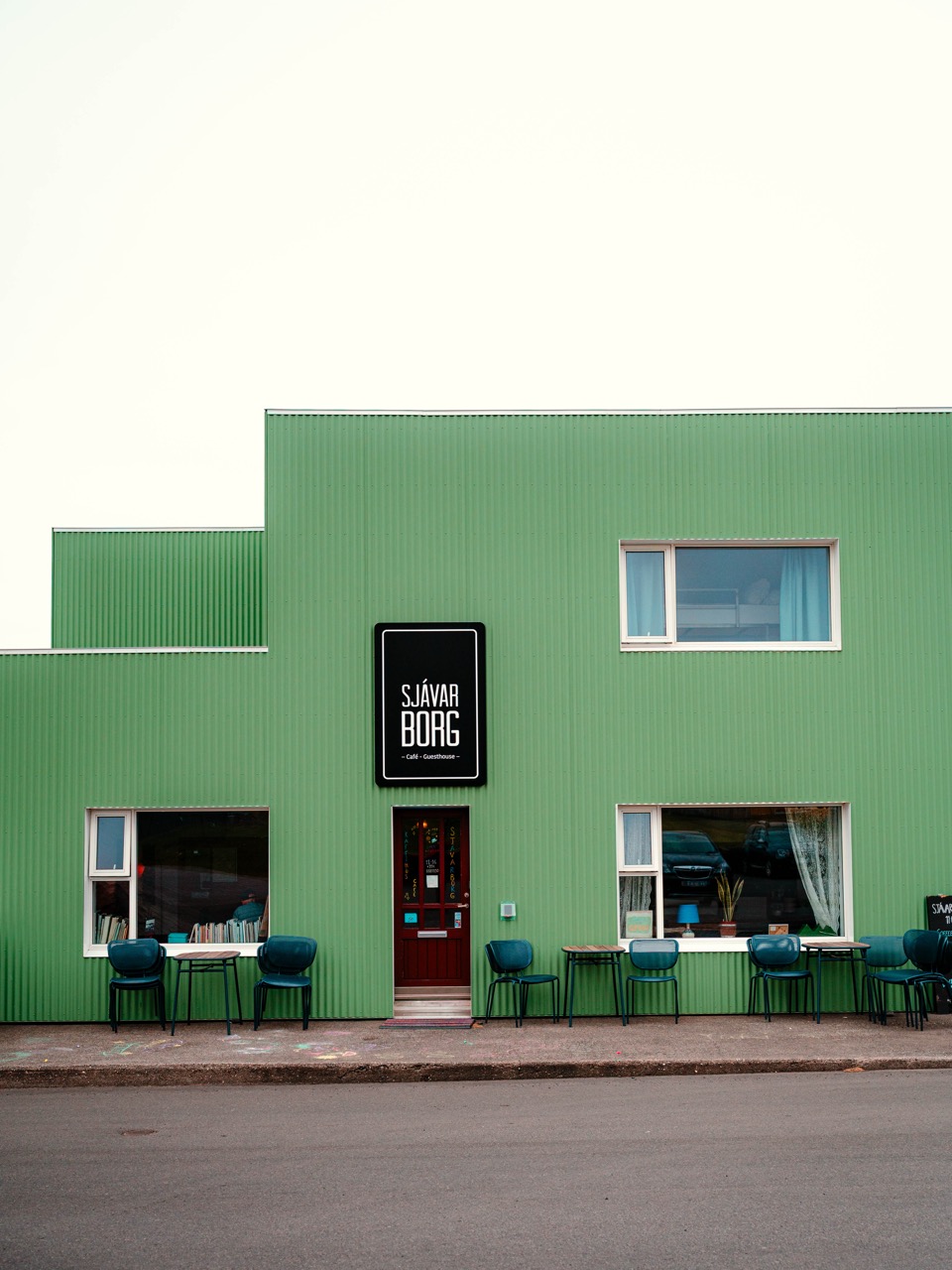
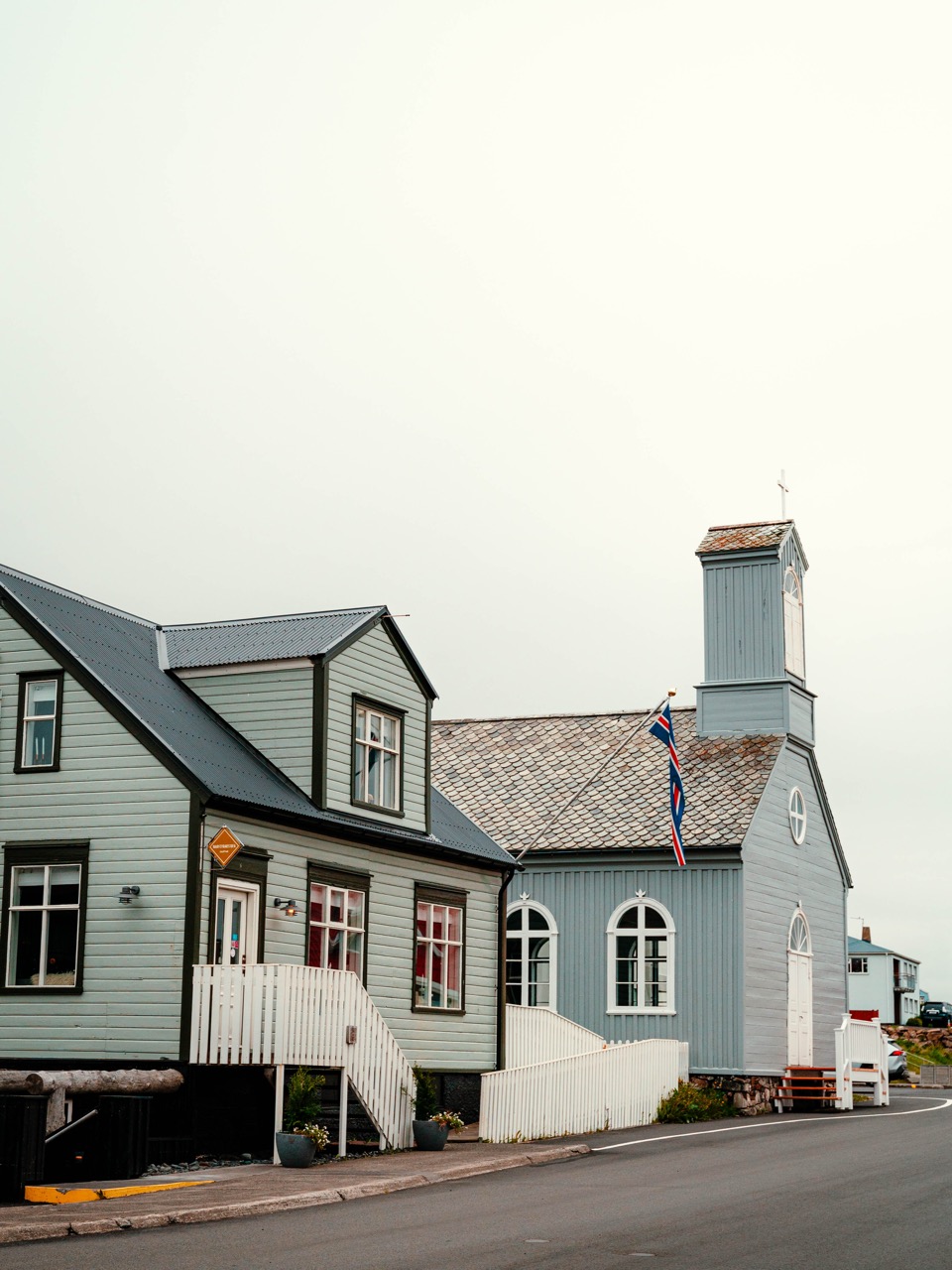
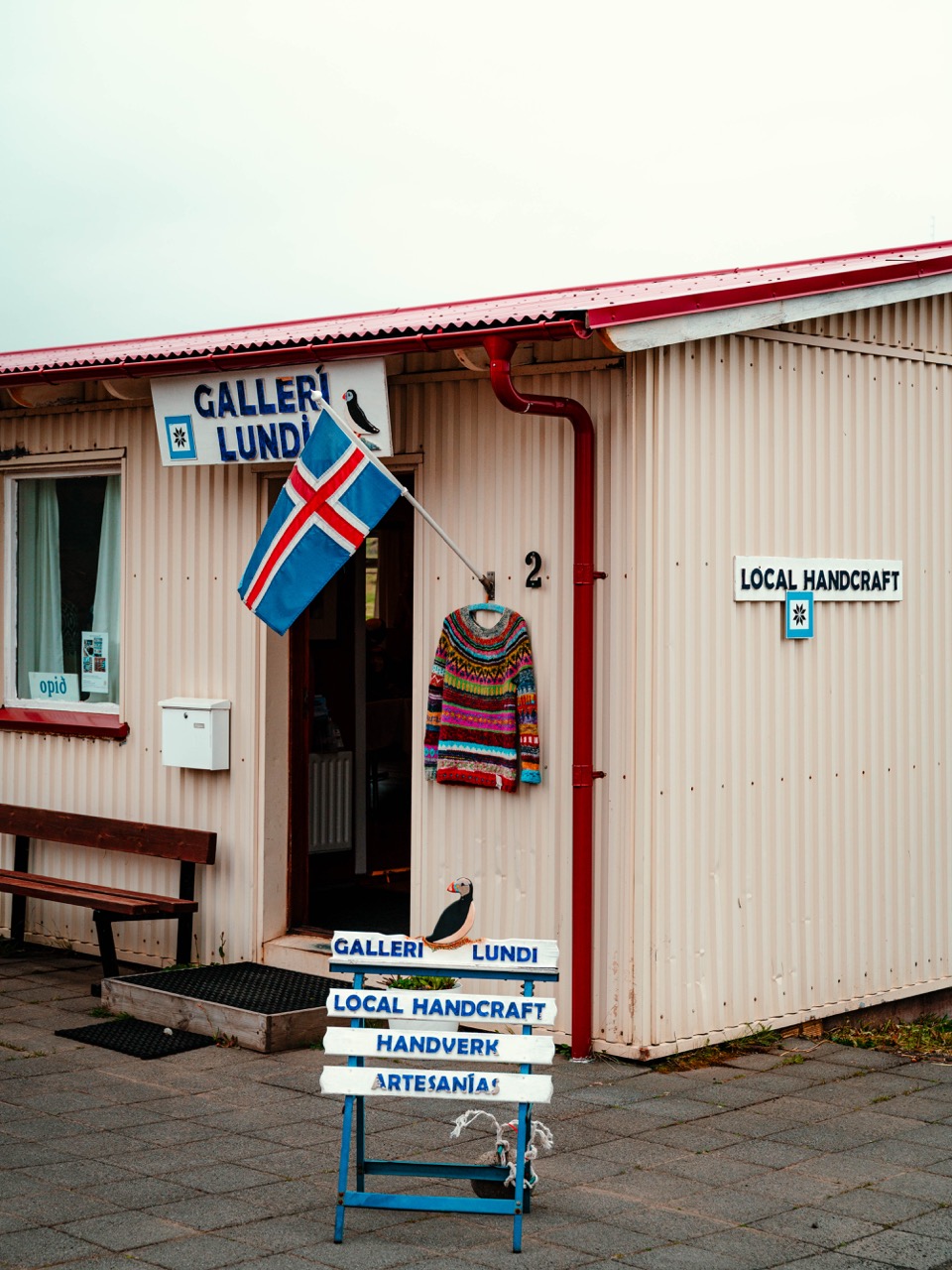
It’s basically become a general rule now that when I visit Iceland, I will come back with a new Icelandic sweater. Even though I was not planning to do so this time, it still happened. We went to a knitwear store here and picked up a locally-made sweater each. Absolutely worth the money, in my opinion, and the shopkeeper was both super helpful and patient.
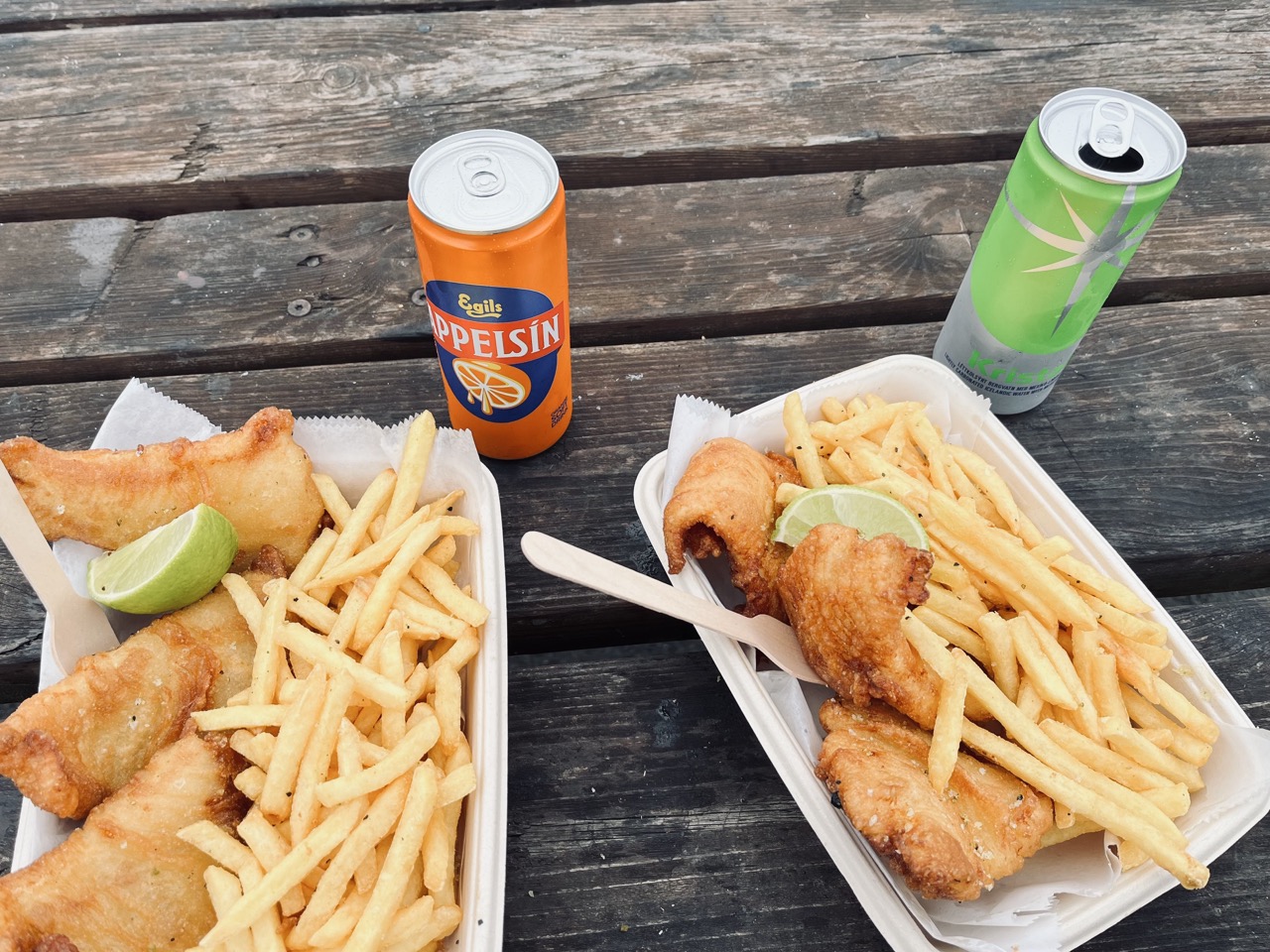
While in Stykkishólmur, we also had some fish and chips by the waterfront. These were the most expensive fish and chips we’ve ever had, but I won’t lie… they were unreal.
Spending the Rest of the Day in Reykjavík
By this point, the rain was well and truly back. The fog pretty much covered all the nearby mountains, too. So, we decided to make the two-and-a-half-hour drive to Reykjavík and spend the rest of the day there.
I had already been to Iceland’s capital six times, and we weren’t really planning to visit again on this trip. Still, Reykjavík has plenty of fun things to do. So, I wasn’t complaining.
When in Iceland’s capital, I feel like a trip to Brauð & Co. is mandatory. It’s one of the best bakeries in the Nordics, let alone in Iceland. We were running tight on time before it closed, though, and our gas tank was also nearly empty when we arrived. Thankfully, despite heavy traffic on the highway into Reykjavík, we managed to get to one before closing time. High-stress, but also big rewards.
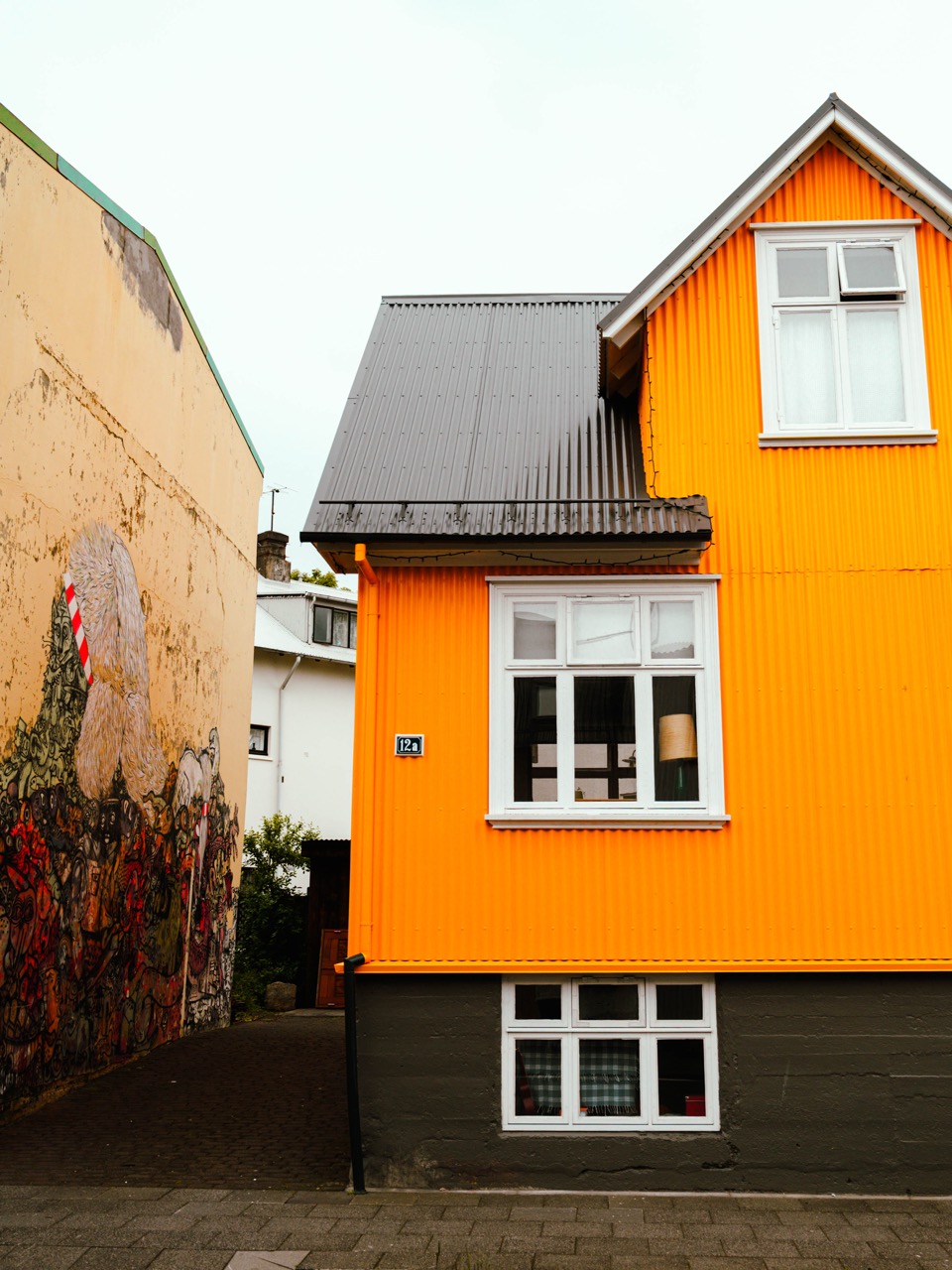
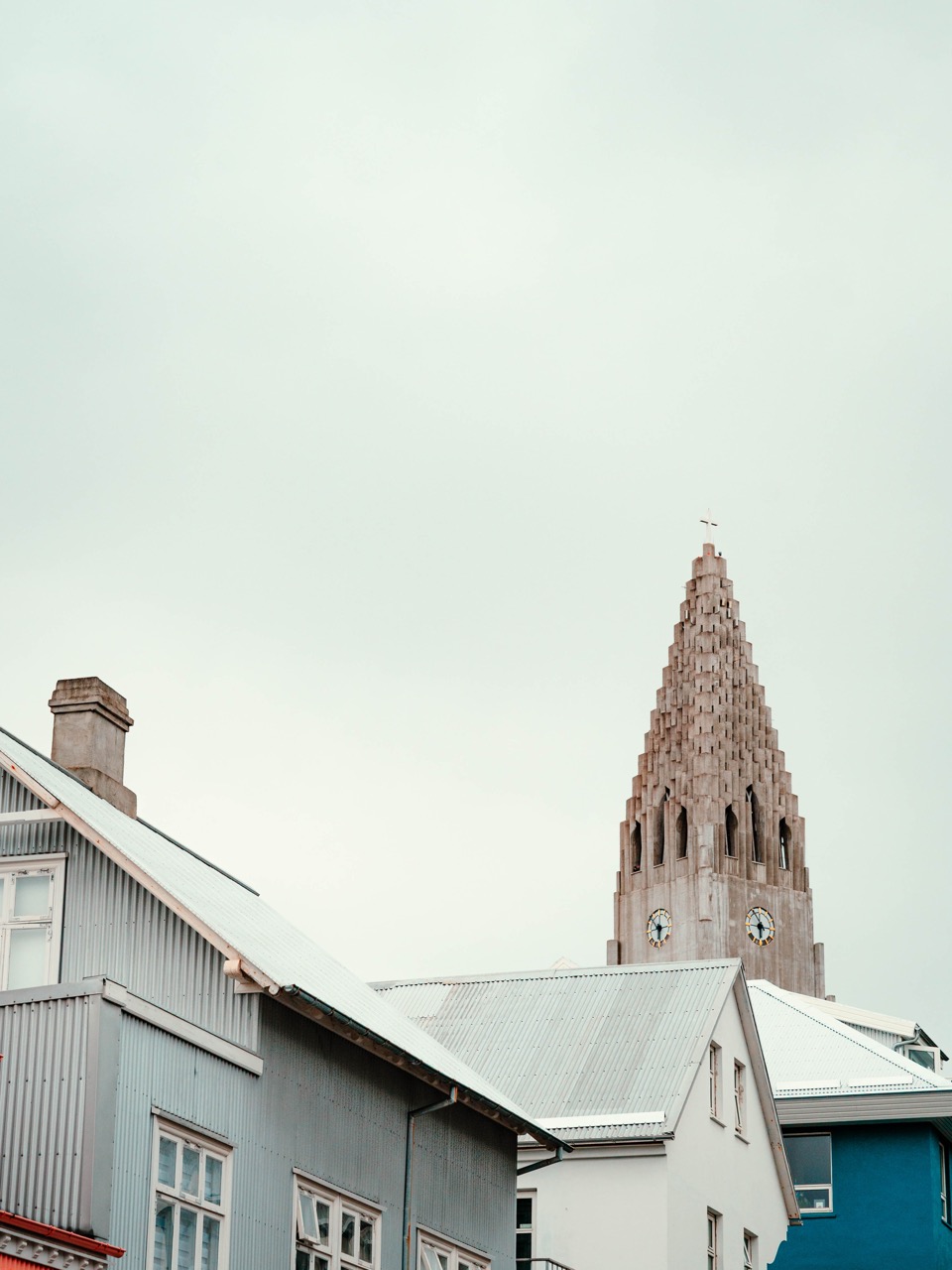
We then spent the rest of our evening in Reykjavík. For the most part, we just aimlessly walked around. Many of the things I still haven’t done in the city were closed, but we still had a great time. If you’re visiting for the first time, one absolute must is to go to the top of the Hallgrímskirkja observation deck. We also went for dinner at Reykjavík Pizzeria, which I had already been to twice before; it’s my top pizza recommendation in the Icelandic capital.
Useful Tip: We parked our car at the Harpa Concert Hall. There were plenty of spots here, and it’s an easy walk into the city center from here. You can pay for your parking in the Easypark app.
The campsite for the final night was at the Lava Hostel in Hafnarfjörður, where we had originally started. We were expected back there at 21:00, and before that, we quickly went to clean the car. Since we had already filled the gas tank, we didn’t need to do this again; if you haven’t, and you do travel with Iceland Nomads, you will need to before you return the vehicle.
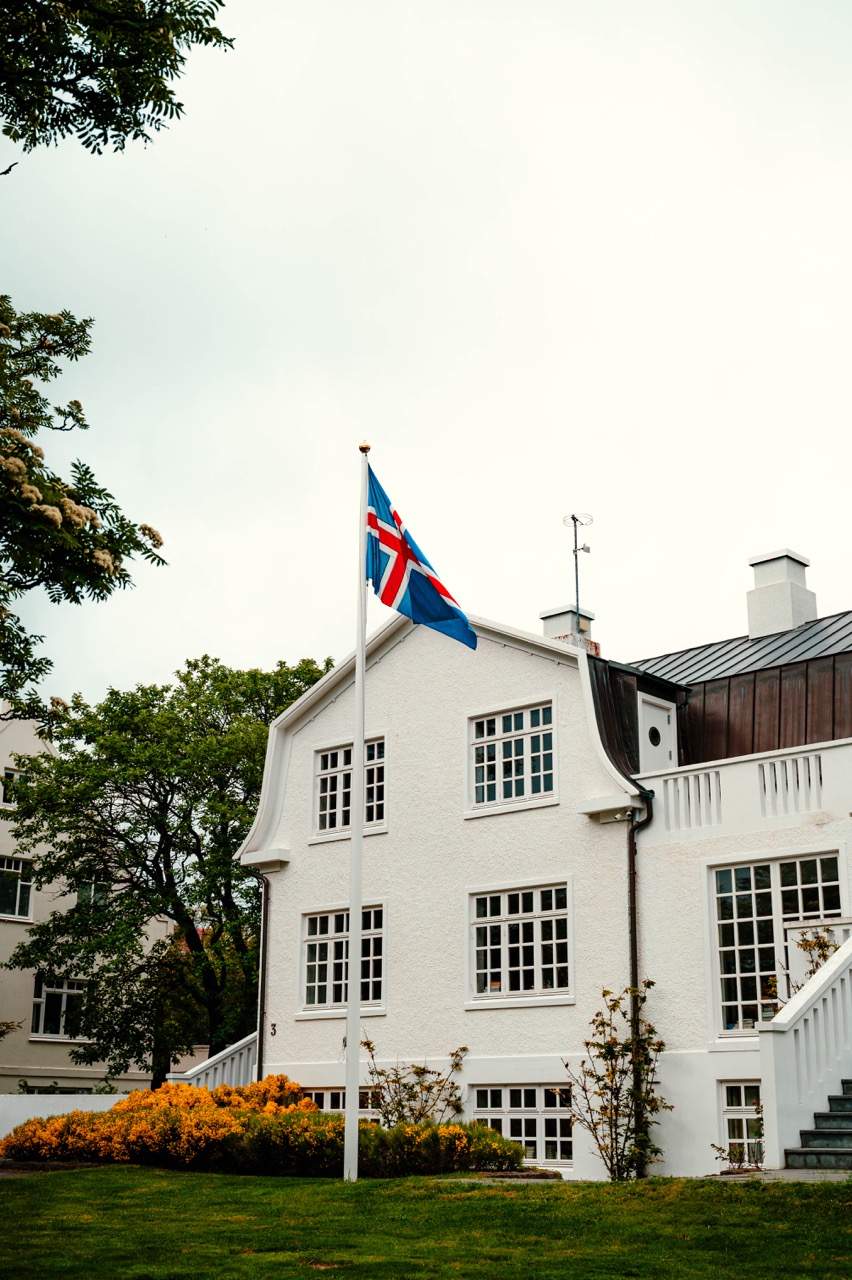
Heading Home
I have to say that I was amazed at how quickly the trip had gone, and I could easily have stayed for another 10 days. The morning after, we got the 04:30 shuttle bus to the airport to catch our flight back to Copenhagen.
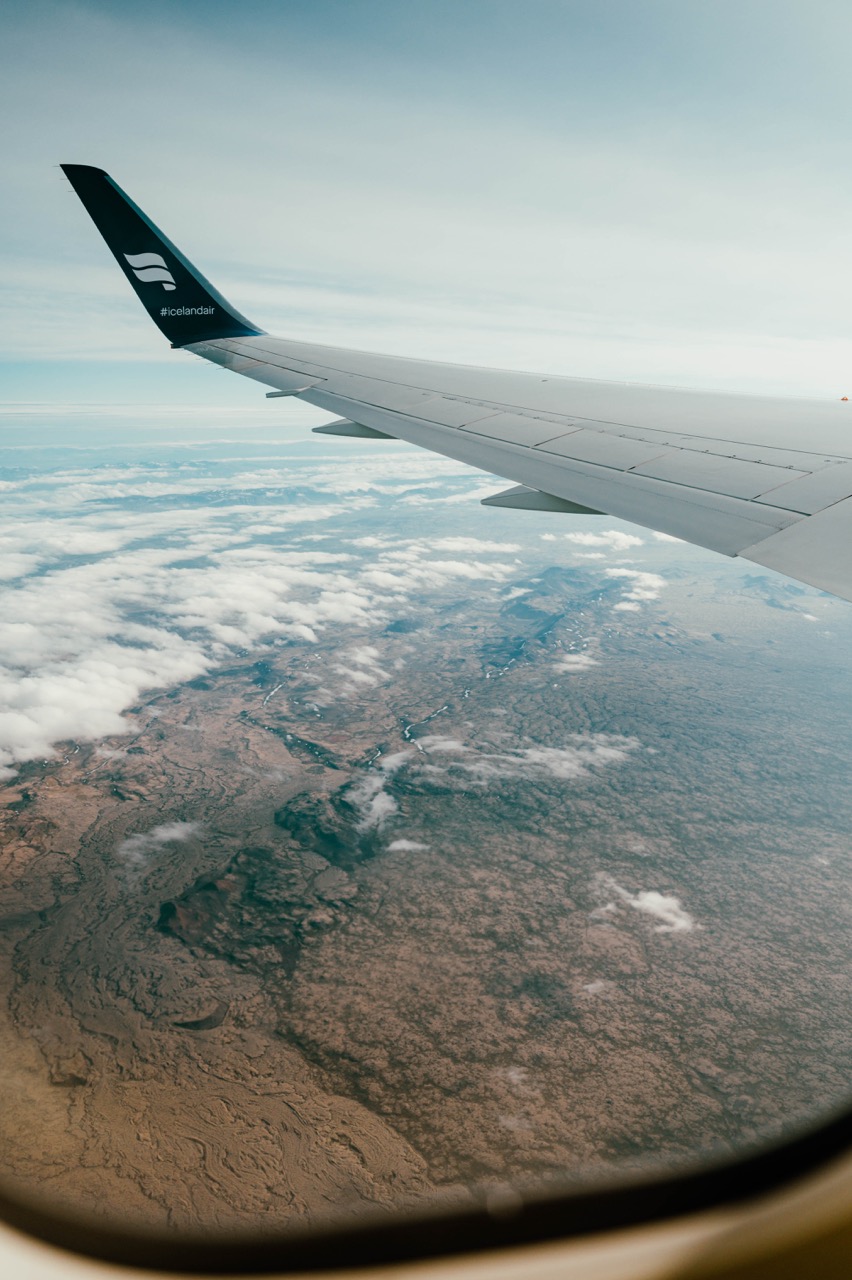
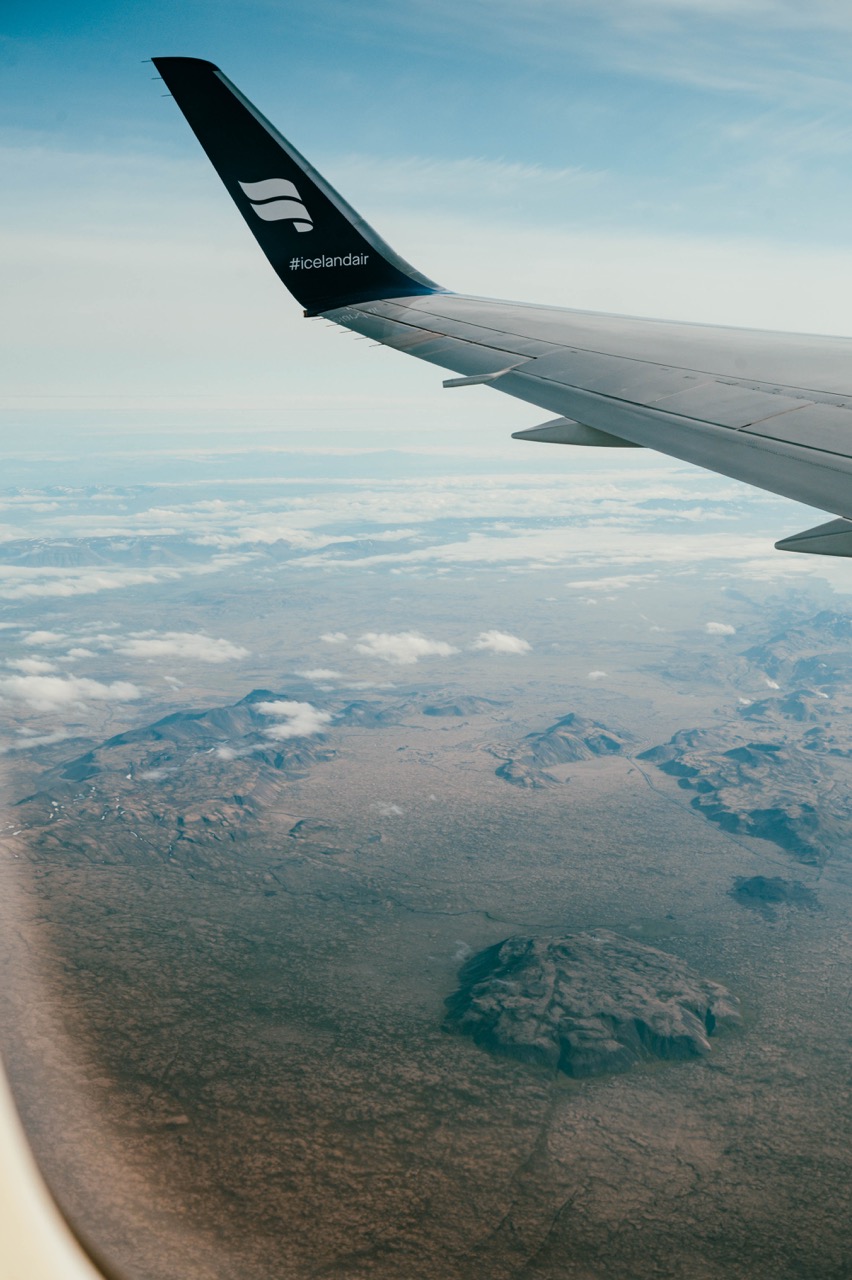
Truth be told, I was already planning my next trip back to the country before we had even arrived. Even though the wake-up time was brutal, the shuttle bus was still handy.
Important Considerations When You Camp in Iceland
In addition to writing up my full itinerary for you, I’m also going to give some of my top recommendations for camping in Iceland. That way, you’ll have a better idea of what to expect—even if you’ve never camped before.
1. It Can Get *Really* Cold at Night
I cannot stress this point enough. Even though we were there in June, the evenings were still super cold.
Most nights, I slept wearing my beanie and either an Icelandic sweater or a fleece. Our sleeping bags were well-insulated, thankfully, but the tent naturally could not keep out all the cold.
Our car also got very humid each morning when we started the engine. If you’re bringing a camera, I strongly recommend bringing a cover for it and ideally keeping it in your bag—with a sweater around it—overnight. Otherwise, your lens will almost certainly fog up when you first use it.
2. Not All Campsites Have Kitchens
I was expecting all of our campsites to have kitchens, which was my own fault for not properly researching beforehand. Most of them did, but some did not. Moreover, many of the kitchens were small and got quite crowded at peak times.
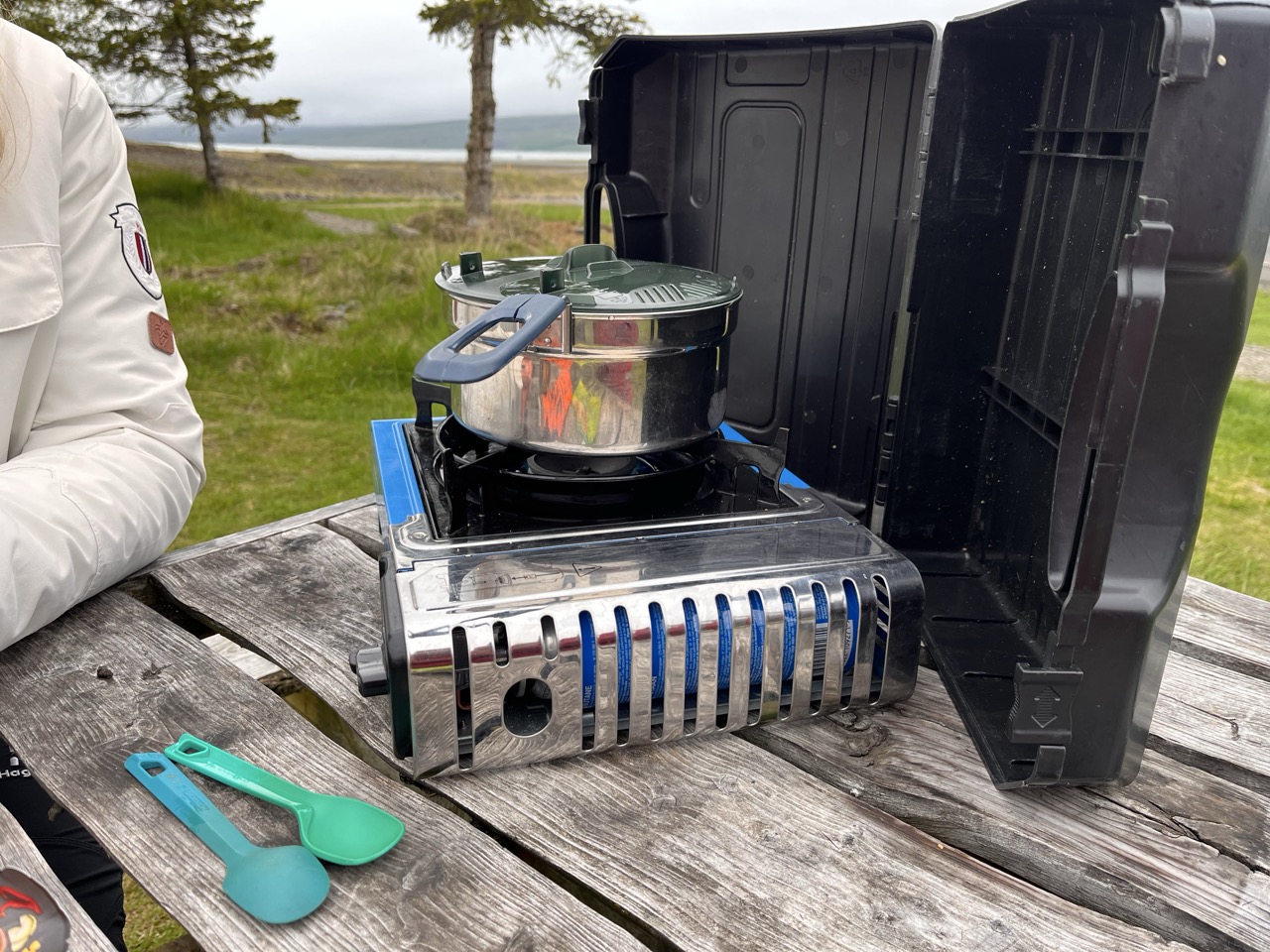
If your campsite doesn’t have a kitchen, you should still find somewhere to eat your food. If you bring your own cooking utensils and gas, you can easily just get some water from the tap and boil it for your food packs. Otherwise, you can make simple and portable food like sandwiches.
While we were out, we also set up a place to cook in areas where it was allowed.
3. If You Book Through Iceland Nomads, I Suggest Getting the Food Pack Add-On
Our food packs cost roughly the same as a week of groceries would have, and they were great value for money. Besides not needing to think about what we wanted to buy, our meals were very easy to prepare. Most of the time, we just had to add some water.
We did need to get some extras, such as vegetables, but all the basics were provided for us.
4. You Will Not See Everything in 10 Days. That’s Just How It Is.
As I mentioned earlier, Iceland is much bigger than you think. You can drive around the Ring Road and Snæfellsnes Peninsula in 10 days, but you will not see everything you want. So, you’ll have to prioritize.
Our general rule was to choose one absolute must-do experience each day. The rest fit around this, and we largely played it by ear with the weather. Doing this meant that we found it much easier to enjoy our visit rather than rushing from one place to another. Let’s face it: It’s not fun to burn out halfway through your trip.
5. If You’re Traveling Solo, I Recommend Choosing a Specific Part of Iceland or Extending Your Trip
As you’ve probably gathered already, each day included a lot of driving. If you’re traveling on your own, it might be too much for you. We were told by Iceland Nomads, too, that the trip was designed more for two or more people traveling together.
If you’re going to be on your own, I recommend either allocating longer to your visit; 2 weeks is more manageable if just one person is driving. Otherwise, you can choose just one part of Iceland. You can take some inspiration from my slow travel itinerary in this instance, which covers Reykjavík, the South Coast, and the Westman Islands.
A Memorable Camping Trip in Iceland
Camping in Iceland is the best way to properly enjoy the country, in my opinion. Even though I had been multiple times before this trip, I felt like being properly out in nature was incredibly rewarding—and I’d have happily stayed for longer.
Besides being perfect because of its stunning scenery alone, campsites in Iceland are generally high-quality. Considering how expensive the country is, they’re also a great way to visit on a budget.
Now that you’ve read this guide, you should have a much better idea of how to spend 10 days camping in Iceland. Since I had a great time with Iceland Nomads, I also recommend booking through them. You can check availability for their packages and book your spot here.
Pin for Later 📌