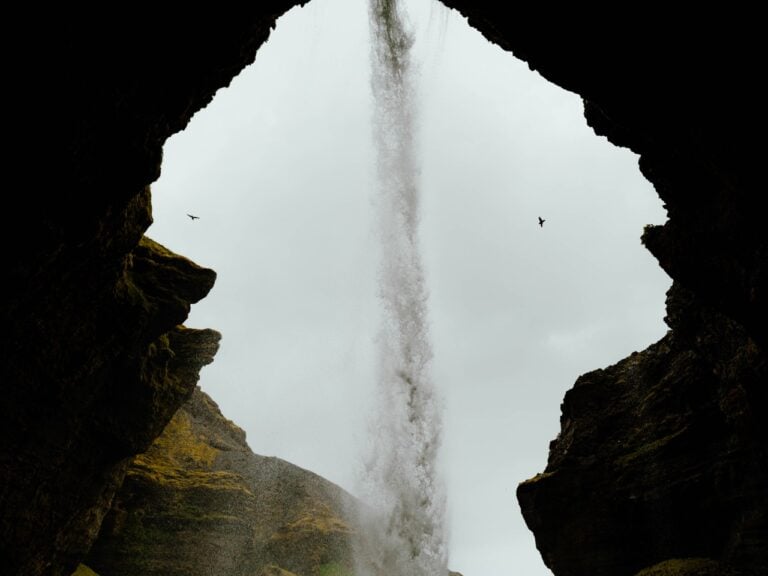
A 10-Day Iceland Slow Travel Itinerary
*Disclaimer: This blog is reader-supported, and this page might therefore contain affiliate links. When you book or buy through them, I may earn a small commission at no extra cost to you. It helps me write these in-depth and original guides, so thank you for the support! Full Affiliate Disclosure
From hot springs to waterfalls and volcanoes to glaciers, Iceland is just as magical as you always imagined it would be. Having visited 8 times, I’ve been privileged to see several corners of this amazing country. No place on earth inspires me as much as Iceland does, and you will feel truly alive as you experience everything it has to offer.
-ARTICLE CONTINUES BELOW-
All My Iceland Travel Guides. Delivered to Your Inbox.
Save time on researching and get all my Iceland travel guides delivered straight to your inbox, along with monthly newsletter updates. Unsubscribe anytime.


But with so much to see and do, deciding what to do is challenging. Over my many adventures, I’ve made plenty of mistakes but also learned a lot more about planning a trip that optimizes joy and still takes you to many of the bucket list sights. Based on those experiences, and backed with the knowledge of visiting Iceland in all seasons, I’ve put together this comprehensive 10-day slow travel itinerary.
My aim is that you can either follow this itinerary to the letter or extract the bits you like the most—whichever you prefer. I’ll also provide some extra tips to help you enjoy your Iceland adventure even more.
Before We Start: Where in Iceland Does This Itinerary Cover?
This slow travel itinerary covers:
- Reykjavík
- The Westman Islands
- Iceland’s South Coast
- The Golden Circle
The Ring Road is doable in 10 days if you have more than one driver and enjoy driving long distances. While it’s not a bad idea if you’ve got limited PTO and want to see Iceland’s big sights efficiently, I think it’s wise to explore a select few regions deeply if you already know you’ll visit again.
Also worth noting: This itinerary is designed to be followed with a car. If you’re visiting Iceland and not driving, I suggest basing yourself in Reykjavík and taking day tours instead, such as the ones listed below.
When’s the Best Time to Visit Iceland for This Itinerary?
I suggest visiting Iceland in the shoulder season; April is my favorite time to visit, in particular. The daylight hours are reasonable, and we had relatively stable weather (though your mileage may vary; Icelandic weather is impossible to predict).
I’ve also visited Iceland in the summer, which offers near-constant daylight and is therefore ample for exploring. However, this is also the busiest time of the year—especially along the South Coast and around the Golden Circle—and the most expensive. So, you need to decide if these trade-offs are worthwhile.


While you can still visit Iceland in the winter, hiking is off-limits in most places, and you will have very little daylight. Moreover, you’re more susceptible to volatile weather and unsuitable driving conditions. So, you should either visit at a different time or modify the itinerary accordingly.
Days 1-2: Reykjavík
Most visitors start their Iceland adventure in Reykjavík, and I suggest spending a few days in the capital to ease your way into the country. Since Reykjavík is effectively Iceland’s only city, you will find plenty of fun things to do—much more than its small size suggests.
Day 1: reykjavík Highlights
After landing at Keflavík Airport, allow a few hours to pick up your luggage, get the keys to your rental car, and go through border control if needed. If you’re picking up your car rental somewhere else, you can book a shuttle bus ticket to Reykjavík.
The journey into Reykjavík is around 45 minutes. When you’re here, I suggest taking it easy and (ideally) checking into your accommodation as soon as possible.
Spend the first day in Reykjavík wandering around the Old Town and getting your bearings. You should also check out Tjörnin lake, home to several bird species. The view of Reykjavík and the mountains is mesmerizing and a taste of what’s to come. Both are great opportunities for photography in the Icelandic capital.


I start every Icelandic adventure with a journey to the observation deck at Hallgrímskirkja, which offers the best view over Reykjavík. The tower closes early (the actual time varies), so you can visit early on Day 2 if needed.


After snapping your pictures at Hallgrímskirkja, explore its surrounding streets—all lined with cute, colorful houses. If you ever get lost in Reykjavík, you can just look for Hallgrímskirkja and walk towards it; you’ll end up back in the center soon enough.
Food 😋
I would suggest going to Reykjavík Pizzeria for dinner. You’ll find plenty of seating areas here, and the portions are generous. If you arrive on time for lunch, I recommend going to the Old Harbor. Here, you’ll find a handful of restaurants with fish and chips, lobster soup, and similar dishes. If you want to try out many different Icelandic dishes, I joined a Reykjavík food tour on my second trip and can recommend doing that.
Where to Stay in Reykjavík
I’ve stayed in multiple hotels, hostels, etc., in Reykjavík, and these would be my top suggestions:
- Hotel Alda: Located on one of Reykjavík’s main streets, but remarkably quiet. Comfortable beds, friendly staff, and decent-sized rooms.
- Kex Hostel: Shared and private rooms are available; a character-filled hostel close to the waterfront.
You can browse other options that might take your fancy below.
Day 2: More of Reykjavík (+ Whale Watching)
Morning
Start the morning at Brauð & Co. after getting an early night. This is the best bakery I’ve tried in Reykjavík, and its cinnamon buns are phenomenal—especially when you get them freshly baked. The bakery opens at 06:30, and I suggest getting there as close to the opening time as possible. Its bread rolls with ham cheese are also pretty good if you want something savory.


After indulging and inevitably deciding that you’ll return to Brauð & Co. before the end of your trip, Reykjavík still has plenty to discover. I recommend checking out the inside of Harpa Concert Hall for some great photography opportunities; the building’s interior looks very similar to fish scales, and it’s one of the Nordic region’s most iconic modern buildings.


Whale-Watching in Reykjavík
If you didn’t check out the Old Harbor on your first day, I recommend doing so on the second. You’ll get a great view of the mountains and towards Harpa Concert Hall, along with lunch opportunities. Reykjavík is always near nature, and several whale-watching tours depart from the harbor year-round. I suggest joining one of these as your first non-urban experience. I did one in 2018, and we were lucky enough to see a whale (even though I was so hungover from the night before; I’d like to do it again now I’m more mature 🙂).
Afternoon & Evening
After your whale-watching tour, you’re free to do whatever you want. If you have a car, it’s worth the short drive to Kópavogur to visit the Sky Lagoon. This geothermal spa opened in 2021, and my girlfriend and I had an enjoyable afternoon relaxing and enjoying the views. You can also walk along the waterfront lining Sæbraut, where you’ll find the Sun Voyager statue. However, I suggest doing this later in the evening after dinner.


For dinner, my top suggestion is Sæta Svínið. I’ve been here 4 times across 8 trips, and I can recommend the lamb (it’s big enough to share, too). The burgers are also good, and vegan options are available in addition to the meat-based dishes.
Day 3: The Golden Circle
The Golden Circle was the first thing I did outside Reykjavík on my second trip. While it’s a well-trodden tourist route, it’s also a gentle introduction to Icelandic nature before you head further out of town. It’s easy enough to do on a day trip; you will be driving again on Day 4, so you can visit the Golden Circle on Day 2 if you want to split your driving times.
Þingvellir National Park
I suggest spending most of your time in the wonderful Þingvellir National Park, and to be honest, you’d have a great time if this was the only thing you did on your Golden Circle adventure. Here, you can see (and walk between) the Eurasian and North American tectonic plates. This experience is unique since most of the Mid-Atlantic Rift is below sea level.
Þingvellir is also a place of historical significance. It’s where Iceland’s parliament was formed in the year 930. In 1944, when Iceland gained independence from Denmark, the park was also where the first celebrations occurred. I suggest spending most of your day in Þingvellir; if you have more time, you can stay here for a few days within the designated camping zones.


Þingvellir National Park is around 45 minutes from Reykjavík by car. Allocate at least three hours, but ideally more. You need to pay for parking; more info is available on the national park’s website.
Strokkur and Geysir
Strokkur and Geysir are two more intriguing spots on the Golden Circle, and every 10 minutes or so, hot water is pushed from the ground into the air from Strokkur. You’ll know you’re nearby when you smell the sulfur, which I can only describe as smelling like boiled eggs.


You can spend roughly 30-45 minutes here. It’s interesting to see the geysers erupt, and some are more spectacular than others. Geysir used to erupt frequently, but these are very rare nowadays.
Parking at Geysir is free. The car park is on the opposite side of the road.
Gullfoss
After the obligatory “wow *snaps camera*” moment at the geysers, head to Gullfoss and prepare to be amazed by this waterfall’s power and scale. Gullfoss is one of the most amazing natural sights I’ve ever seen, and the sheer power of this waterfall will mesmerize you.


Gullfoss has two viewing platforms, and I recommend visiting both of them. Clear trails mark where you can and can’t walk; following these is important for safety and to protect the area. The viewing platforms are free, but you must pay for parking. If you get hungry, you’ll find a café inside the visitor center. Gullfoss is a 10-minute drive from Geysir.
Kerið Crater
Kerið is also worth a quick stop on the Golden Circle. The crater lake is inside a volcano that last erupted 6,500 years ago.


You can walk around the top of the crater and also go closer to the bottom. When we went in April, we had the privilege of seeing the crater lake being frozen.
Kerið has an entrance fee of 600 ISK (c. €4/$4.35), which is used to maintain the area. Parking, however, is free.
Golden Circle Tours & Excursions 🥾
Day 4: From Reykjavík to the Westman Islands
The Golden Circle will have undoubtedly whetted your appetite for Icleand’s nature, and your fourth day will be a mixture of exploration and traveling. My girlfriend and I agreed that the Westman Islands were the highlight of our April 2024 trip. I wholeheartedly recommend taking a detour and staying the night here. This, in my opinion, is Iceland’s best-kept secret.


To get here, you’ll need to take the ferry from Landeyjahöfn; you can book tickets in advance online. The port is just under two hours from Reykjavík, so check out of your hotel early and hit the road. We went to Brauð & Co. before leaving to get some treats for the journey, so you might want to consider doing that too… 🌚
The ferry ride to Heimaey, the largest of the Westman Islands, is roughly 45 minutes. On a clear day, you’ll be greeted with fantastic views of the archipelago and ocean.


When you’re on the Westman Islands, I recommend getting some food at Kráin, a lovely little café on the main street in Vestmannaeyjabær. After that, hop in your car and head to the area around Stórhöfði—which has great views (starting to see a recurring theme here) and underrated hiking trails. It’s quite windy here, and the final bit of the drive is *very* steep… but it’s so worth it.
On our first day in the Westman Islands, we also hiked Eldfell. This volcano emerged suddenly in 1973 and prompted an evacuation of the island. On the way to the top, stark reminders of nature’s power are visible—with signs marking where houses and streets are now buried under lava.


Eldfell is an easy enough hike if you have good fitness levels. However, I would only hike if the weather is good; it snowed in the evening after we hiked, and the following day was rainy and foggy. I wouldn’t suggest hiking if you get similar conditions. The volcano is considered active, but there are no signs of an imminent eruption, and it’s being hiked by locals and tourists alike.
Day 5: More of The Westman Islands
You can technically do the Westman Islands in a day, but I don’t recommend it because your journey will be rushed. After getting a good night of rest (we stayed at Guesthouse Hamar, by the way), start your day with breakfast at Vigtin Bakhús, close to the harbor. Sweet and savory treats are available, in addition to coffee (and as a side note, Icelandic coffee is very good).


After getting some food, I then recommend driving to the area around Vestmannaeyjavöllur. The main enjoyment here is listening to the waves crash against the shore.


Before leaving the Westman Islands, you must visit the Eldheimar Museum. This museum wonderfully documents the 1973 eruption. Roughly 400 buildings were destroyed in the eruption, and inside the museum, you’ll see someone’s home that was recovered. Outside the window is another home that was buried.
The museum shows accounts from those on the island at the time and highlights the entire eruption, evacuation, and recovery process. Upstairs, you’ll see another exhibition about the eruption that created Surtsey in 1963.
While the 1973 Eldfell eruption was destructive, it also added to Heimaey’s land mass. You can see this close to Skansinn, which is also where you’ll find a cute stave church. This area, also close to the harbor, is nice for watching the boats come in and out of the Westman Islands as well.


While on Heimaey, be sure to check out the various remains of houses destroyed during the eruption. You’ll find them throughout Vestmanneyjabær, the main town.


Day 5: Journey From the Westman Islands to Vík
After heading off the beaten path, it’s time to head back to the mainland. Vík Í Mýrdal is one of the only towns along Iceland’s south coast, and I suggest basing yourself here. stayed at Black Sand Suites; it’s around 10 minutes from Vík and located in some of the most beautiful surroundings you could imagine. You will need a car to get here, but it’s an amazing place if you have one. Vík has plenty of other accommodations, though, ranging from hotels to campsites.
Vík is around an hour’s drive from Landejyahöfn. On the way, you can stop at some of the Ring Road’s most iconic sites. For example, Seljalandsfoss is roughly 15 minutes from the port; you can actually see it from the Ring Road. You’ll see several waterfalls along the walking route, and I suggest walking down to Gljufrábúi—which is hidden behind a cleft (and is almost certainly where my camera began sustaining water damage 🙃).


If you have more time to spare, there’s also a campsite near Seljalandsfoss. You can stay overnight and get up early in the morning to take photos of the waterfall with fewer crowds. You can walk behind Seljalandsfoss, but only when the route is open; it was when I was there in June 2019, but not in April 2024.
You can then continue onward to Vík; the wonderful scenery makes the drive a rewarding activity in and of itself. Depending on the time you arrive, you can explore Vík (I’ll expand more on Day 6) or relax at your accommodation for the evening. If you say at Black Sand Suites, you can cook your own dinner; there’s a big grocery store in Vík with everything you need.

Day 6: Dyrhólaey, Vík, Reynisdrangar, and Reynisfjara
Dyrhólaey
Many of the things you’ll see on your sixth day in Iceland are in or near Vík, so you don’t need to worry about driving too much today. Dyrhólaey was one place in Iceland that really surprised me, and it’s just over 15 minutes from Vík by car. This rugged area is superb for birdwatching, and its dramatic rock formations are also very picturesque. I loved standing here and watching the waves crash against the rocks, too.


Dyrhólaey also has a view of the endless black beach and surrounding mountains. You’ll immediately feel like you’ve been transported into an award-winning Max TV series backdrop.
Reynisfjara
Okay, so this is a funny one to include because I think Reynisfjara is quite overrated. Or at least, it looks more impressive from Dyrhólaey than when you’re actually on the beach (in my opinion, anyway). Nonetheless, I do think it’s worth seeing at least once if you’re visiting Iceland for the first time; you’ll also probably like it more than I did.
Reynisfjara is the famous beach from Game of Thrones (he says, pretending he knows anything about TV series). Its basalt columns draw many tourists, and you can also look back towards the cliffs at Dyrhólaey.

❗ Safety on Reynisfjara Beach ❗
Reynisfjara is not a normal beach. You’ll see warning signs when you visit, but I’ll still go over the main rules here. Yes, these have been said a million times online—but they are still worth repeating once more.
Stay Away From the Water
You should stay well away from the water; the beach is known for its sneaker waves, and several tourists have died because they got too close to the ocean. If you get dragged into the sea, your chances of surviving are minimal.
Your tour guide will likely warn you of the dangers, and you should take their advice seriously. Besides putting yourself in danger, not listening can put others’ lives at risk.
The most essential rules to know are:
- Don’t walk where the sand is wet. And even then, stay further back than you think you should.
- Never turn your back on the sea.
Rockfall
Rockfall can also occur in Reynisfjara, and you should beware when standing close to the cliffs. The beach will also sometimes be closed in such events.
High Winds
Almost everywhere in Iceland is windy, but Reynisfjara can have particularly strong winds. I was lucky when I visited because we had pretty calm weather on that trip, but someone in this Reddit thread mentioned that they were basically thrown about by it.
You don’t need to overthink your visit, but you should know the dangers. Basically, use common sense and you’ll minimize the chances of something going wrong.
The Vík Culture Walk, Vikurfjara and Reynisdrangar
Vík is a lovely little town that surprised me on my second visit; most tourists don’t see anything besides the church and its grocery store/Icewear shop complex, but there’s more to it than those. While Vík is isolated, it certainly isn’t insular—and it has a lovely culture walk that I thoroughly recommend.
You’ll see signs around the town guiding you; we started it at Víkurfjara, which is the town’s own black sand beach (which I actually liked more than Reynisfjara). The same rules about sneaker waves apply here, as a heads-up, but it was less crowded than Reynisfjara.


From the beach, you can see the stunning Reynisdrangar rock formation. The culture walk also takes you through the Old Town, and you have beautiful views of the surrounding mountains. Don’t forget to go to the famous hilltop church for the best photo spot in town.


Food in Vík 😋
We cooked at home for most of our stay in Vík, but the one place we did eat at—Black Crust Pizzeria—was superb. You’ll find both gluten-free and non-gluten-free pizzas; I took one with various cheeses and was sad when I finished it. I can’t remember how they said they made the crust black, but it’s amazing (and it’s not burnt!).


You’ll find a handful of other restaurants close to the grocery store complex, so have a walk around and see what takes your fancy. But if you left the decision-making to me, I’d say Black Crust Pizzeria.
Day 7: Skaftafell National Park
The next few days will involve a lot of driving, as a heads-up, so you may want to consider booking accommodation closer to these sites. For example, there are campsites at Skaftafell National Park—which is a useful way to save money when visiting Iceland on a budget.
Your next venture into Iceland’s beautiful nature is a trip to the area around Skaftafell, which itself is part of the huge Vatnajökull National Park. Vatnajökull National Park covers over 10% of Iceland’s land mass and is the second-biggest national park in Europe, behind Sarek National Park in Sweden.


Several hiking trails start from the visitor centre and campsite at Skaftafell National Park. We did two of these, and I can recommend both. One went to the iconic Svartifoss waterfall: My favourite in Iceland. Its rock formations are like nothing I’ve seen around a waterfall before, and it also looks really cool from afar.


Another route we did goes close to the bottom of the glacier that flows from Skaftafell (Skaftafellsjökull). This was a really interesting area that looked like another planet, and for someone like me who grew up in a big city, it was so cool seeing a glacier up close. (By the way, I used a 16-80mm lens to take more close-up pictures of the glacier—I recommend bringing yours for this trip as well).
I suggest starting with these two trails if you’re only visiting for a day. There are others hiking routes, too, and I think it’s better to stay overnight to explore the area in more detail. I will definitely do that in the future; honestly, you could easily spend a week in the Vatnajökull National Park region.
As a side note, you should never walk on the glaciers without an experienced tour guide as it’s very dangerous. As mentioned, bring a lens with a long enough focal length to take some great pictures from a safe distance. If you want to do a glacier hike, join a tour instead.
Interesting Quick Stop: The Skeiðará Bridge Monument
At this point on your trip, you’ll be more than aware of how powerful Iceland’s nature is. Another example is very clear at the Skeiðará Bridge Monument on the Ring Road and close to Skaftafell.


This monument consists of pieces of an old bridge that crossed the Skeiðará glacier. It was destroyed in 1996 by a glacier run caused by an eruption from the volcano Gjálp. The eruption was closely monitored, and fortunately, nobody was hurt. The monument is a fascinating quick stop with information about that eruption, and the surrounding scenery is also stunning.
Day 8: Jökulsárlón and Return to Vík
Jökulsárlón is the iconic glacier lagoon with floating blocks of ice, and when I went in 2019, it was one of the most stunning natural sights I’ve ever witnessed. The lagoon is ever-changing, and visiting is an absolute must on your Iceland South Coast adventure. We thought about driving from Skaftafell to Jökulsárlón on the same day, but it was an extra 45 minutes and we would have had to get back to Vík.
Jökulsárlón is just over two hours and 15 minutes by car from Vík. It’s quite remote, and if you don’t want to stay in Vík, there are guesthouses close to the lagoon. I haven’t stayed in any, though, so I can’t give any recommendations. Nonetheless, you can find some accommodation options here and see what interests you. There’s also a boat tour on the lagoon.


The lagoon is free to enter. You have to pay a 1,000 ISK parking fee, which is roughly $7.25 (USD), £5.70 (GBP), and €6.70 (EUR) for a standard car.
Another Safety Tip (Yes, I Know…)
This goes without saying, but climbing and walking on the icebergs is dangerous (and yes, some tourists have done that in the past). I assume you’re smart enough not to be *that* person, but nonetheless, it’s worth mentioning. The lagoon’s current is also very strong.
After exploring Jökulsárlon, I recommend driving back to Vík and staying there for the night if you were previously close to the lagoon—unless you have more than one person driving and can do the full drive back to Reykjavík in one day.
Days 9-10: Return to Reykjavík & Head to the Airport
After exploring the vast rural landscapes of Iceland’s South Coast, Reykjavík will feel like a metropolis. We split the journey back from Vík into several stops on one previous trip, starting with a visit to Skógafoss. This is another of Iceland’s most impressive waterfalls, and it’s where I’m certain that my camera’s water damage was concerned. I’ve seen it in the rain and sun, and I love how gloomy it looks on an overcast day.


Once the tour buses left, Skógafoss was relatively quiet (I’d imagine that isn’t the case in the summer, though). The waterfall itself is impressive, but there’s also a nice hiking trail if you go up the stairs. Here, you’ll see more waterfalls and more pretty scenery.


Another waterfall worth seeing on the way back to Reykjavík is Urriðafoss. While not as domineering as Skógafoss, it’s incredibly powerful. Our initial plan was to stop here, walk around a bit, and have some food. The reality? Freezing cold and 11 m/s winds. So yeah, we didn’t spend too long. Parking here is also free.
Exploring Reyjkavík and Heading to the Airport
Go to Tres Locos, a fantastic Mexican restaurant in the city center, for dinner on your last night in Reykjavík. We have been twice on separate trips and enjoyed both times. Booking a table in advance is a good idea; you can do that on the website.


Depending on when you get back to Reykjavík or if you have an evening flight, you can spend some more time learning more about Iceland’s incredible nature at Perlan. You’ll get another great view of Reykjavík here, and there’s also ice cream 🙂.


Another option for your last morning before heading to the airport is breakfast at Café Loki (below), opposite Hallgrímskirkja. If you get nothing else, try the rye bread ice cream. Sandholt is another fantastic brunch spot.

Alternative: Stay Closer to the Airport
We had initially planned to stay closer to Keflavík Airport, and this is another option if you want to take it easy. There are several hotels in Keflavík and close to the airport, and the Blue Lagoon is also a 20-minute drive from the airport. I went on my second trip to Iceland in 2018, and while I think it’s a bit overrated, I would say that it’s worth visiting at least once.
The Blue Lagoon has had to close several times in recent years due to eruptions on the Reykjanes Peninsula, so check to ensure it’s open when you vist.
Conclusion
10 days in Iceland is the perfect opportunity to explore this country and some of its main sights, and you’ll enjoy a more fulfilling trip—and feel less rushed—if you stick to a couple of regions. Regardless of when you visit, you’ve got plenty of exciting experiences waiting for you.
Having read this guide, you should now have a better understanding of how to fill your days while in the Land of Fire and Ice. To further plan your trip, consider reading my full packing list, too.
Pin for Future Reference 📌