Fujifilm XF 16-80mm f/4 WR Lens Review: The Best Lens for Travel Photography? (With Sample Images)
*Disclaimer: This blog is reader-supported, and this page might therefore contain affiliate links. When you book or buy through them, I may earn a small commission at no extra cost to you. It helps me write these in-depth and original guides, so thank you for the support! Full Affiliate Disclosure
Picking the right lens for travel photography is hard—and if you enjoy taking multiple kinds of pictures, you might be thinking about a zoom lens like the Fujifilm XF 16-80mm.
Ever since buying the 16-80mm lens, it has been a mainstay for both my trips abroad and while scouting photo opportunities in Copenhagen. In that time, I have taken thousands of pictures at multiple apertures and focal lengths. Moreover, it has been used in both low-light situations and scenarios where there’s more to work with.
Based on my experiences, I’m putting together this no-BS review of the Fujifilm 16-80mm lens. We’ll cover the benefits, drawbacks, and who should consider getting it—along with some alternative lenses if you’re on the lookout for something else.
Quick Specs
| Maximum Aperture | Weather-Resistant | Weather-Sealed | Image Stabilization |
|---|---|---|---|
| f/4 | Yes | No | Yes |
Fujifilm 16-80mm Lens: Image Samples
Let’s be honest—you probably didn’t come here because you care a huge amount about specs. You wanted to see the images that this lens is capable of.
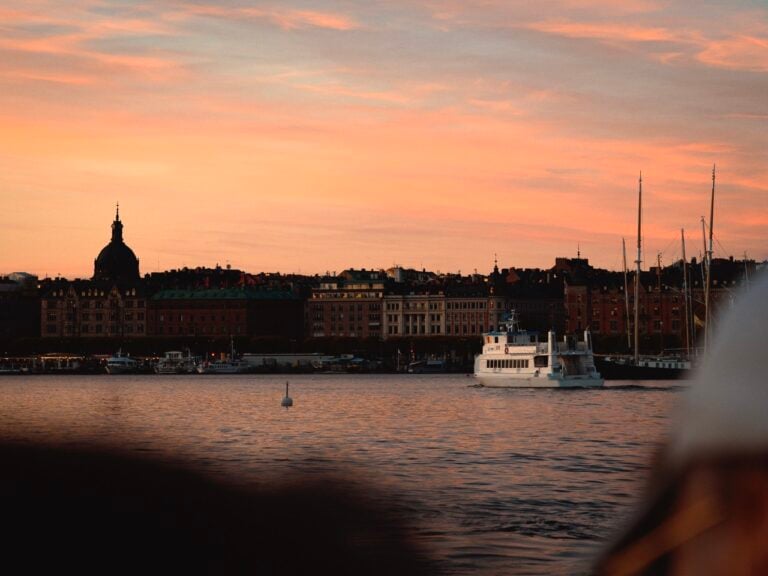
To judge it more fairly, I’ve included pictures taken with various apertures (these are unedited and taken straight from the camera). Let’s start with some wider apertures (the first image was taken at f/4.5, with the second at f/4):


Now, let’s look at how the XF 16-80mm lens performs in terms of slightly narrower apertures (1st photo: f/5, second photo: f/5.6)…


It’s also a good idea to consider how the lens can serve you with even narrower apertures than the two mentioned above. Both of the below pictures were taken at f/9.


What I Like About the 16-80mm Fujifilm Lens
In my opinion, the positives of the Fujifilm XF 16-80mm (f/4) far outweigh the negatives. Here are some of the main things I like about this lens.
1. Sturdy Feel and Design

You feel much more confident about a camera lens when it doesn’t feel like it’ll shatter the first time that you use it. The Fujifilm XF 16-80mm lens feels durable, and mine survived a pretty heavy fall.
This lens also feels like it can withstand the elements (obviously, you still shouldn’t be stupid and throw it into the middle of the sea, though). Considering that I live in a city where it rains most of the year, having a lens that feels like it can resist frequent precipitation is essential. While the 16-80mm isn’t weather-sealed, it is weather-resistant.
I also feel like the zoom and aperture rings are pretty sturdy, though I have noticed that my aperture will change quite easily in some (albeit rare) situations.
2. Good Performance on Slow Shutter Speeds
While I do own a tripod, I have to admit that I don’t use it that frequently. Taking handheld photos is much more enjoyable if you ask me, and it’s also a big hassle to set up the tripod without a good reason. With this in mind, having a camera that performs well on slow shutter speeds is essential for my photography style.
Perhaps my favourite thing about this lens is the in-image stabilisation—to put things simply, I’ve found that it’s *very* good when utilised. I’ve been able to capture decent shots on 1/40th of a second and below. However, keep in mind that this could also be due to the fact that the pictures I’ve taken at this shutter speed are often when it hasn’t been windy and the like.
3. The Lens Rings
It’s not uncommon for Fujifilm cameras to have aperture rings, and one of the reasons that I sold the 27mm that I used to own was because it didn’t (though I loved most other aspects of it). The XF 16-80mm lens has an aperture ring ranging from f/4 to f/22, along with another for zooming in and out.
As mentioned before, both feel pretty solid. They make it very easy to control your photos more effectively, even if you’re a beginner to either Fujifilm or photography.
4. Pretty Good Sharpness Levels
Although I read some reviews that mentioned that the lens can get soft around the edges, I personally haven’t noticed too many issues in this respect. Generally speaking, though, this lens has a very good image quality—though I do think that the XF 35mm is still the best Fujifilm lens I’ve used in this respect.
5. Versatility
Travel photography often requires a versatile kit, and that’s another of the strongest selling points of the 16-80mm XF lens. I’ve used this lens to capture skylines, portraits, and plenty of other photo types. It’s also very good for food photography and the like.
What I Dislike About the Fujifilm 16-80mm Lens
To be honest, most of what I don’t like so much about the 16-80mm lens are things I already knew before I got it. Nonetheless, here they are:
1. The Maximum Aperture
While I’ve rarely dropped my aperture below f/4 for prime lenses, having the option is quite nice in some situations. Depending on your photography style, you may find the maximum aperture quite limiting.
2. It’s Quite Big
Again, this is something to be expected when purchasing a zoom lens. But having become so accustomed to wide-angle lenses before buying the 16-80mm, it can sometimes feel quite big. If you’d prefer not to draw attention to yourself while taking pictures, you may wish to go for something smaller instead.
Who Should Use the Fujifilm 16-80mm Lens?
The XF 16-80mm f/4 lens is best suited for photographers who enjoy capturing a diverse range of images. I personally love street, landscape, and architectural shots—and this camera fits my needs perfectly. It’s also a great choice if you want something general to take on your travels.
While this lens is still quite expensive, it’s also ideal if you want both a zoom and wide-angle lens—but you don’t want to constantly change your lens. Having needed to do that in the past, I sympathize with you on how irritating it can get.
I also think that this lens is perfect for people who regularly photograph skylines and cityscapes. Out of every reason I have used this lens, this is by far my favorite style of photography.
Who the Fujifilm 16-80mm Lens Is NOT for
As much as I love the 16-80mm lens, it’s also worth acknowledging that not everyone will have the same opinion as me. If you regularly photograph in low-light situations, you may want to look at an alternative instead. The same is true if you need something with a wider aperture in general.
Alternatives to the Fujifilm 16-80mm Lens
While the 16-80mm lens is a solid addition to your camera bag, it’s not the only Fujifilm lens worth checking out. Here are some alternatives you may also want to try:
- XF 16-55mm f/2.8 LM WR: With a maximum aperture of f/2.8, this lens offers versatility—even if you have a slight trade-off in focal length.
- XF 35mm f/2 (WR): This is one of the best lenses I have ever owned. It can survive some pretty trash weather, and it’s compact enough that you’ll want to take it with you when traveling. There’s also an f/1.4 version if you want more wiggle room with your aperture (though this is not weather-resistant).
- XC 15-45mm f/3.5-5.6 (WR): This was my first Fujifilm lens; it offers a maximum aperture of between f/3.5 and f/5.6, and it’s also pretty affordable. Note, however, that it lacks an aperture ring.
Verdict: The XF 16-80mm Lens Is a Solid All-Rounder for Fujifilm Travel Photographers
I’ve owned six lenses across three cameras and two manufacturing brands, and the Fujifilm XF 16-80mm lens is by far my favorite. This lens has genuinely helped me fall in love with photography again; I love its versatility, and the images are also quite sharp, in my opinion.
While the maximum aperture can be annoying, it’s a small trade-off in the grand scheme of things. If you’re more of a generalist photographer and you need a zoom lens, this is a solid investment.
Edited Sample Images
Besides looking at the JPEG files straight from my camera, I also thought it’d be good to show you how your pictures can look once you’ve edited in RAW.