Finland
Timeless and futuristic in equal measure; the birthplace of Nokia is also the home of Santa Claus. Unspoiled forests and lakes are never too far away, even in Finland’s biggest cities. You’ll find plenty of beautiful wooden towns, too, including Rauma and Porvoo.
Places to Visit in Finland

Articles About Finland
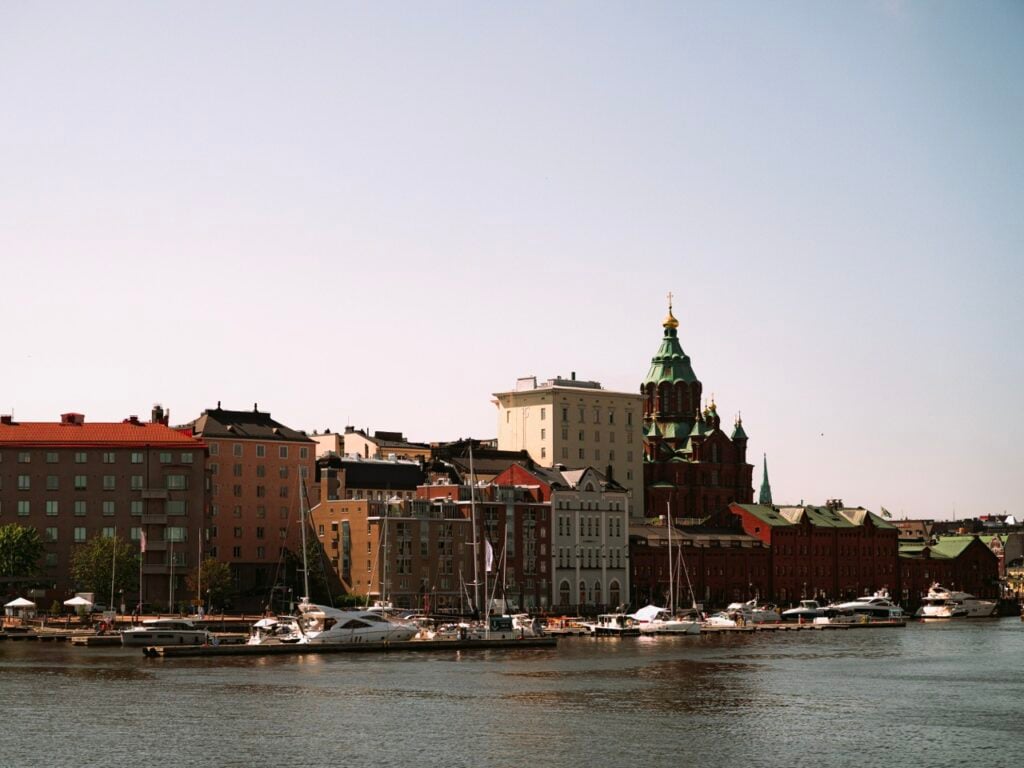
Your Complete Practical Guide to Visiting Helsinki in the Summer

Porvoo, Finland: The Perfect Day Trip From Helsinki

Helsinki, Finland: A Summer Photography Guide
My Favorite Experiences in Finland

Porvoo
A beautiful town and an easy day trip, just 50 minutes from Helsinki.

Tampere
Enjoying the city’s laid-back vibe and pleasant surroundings.

Suomenlinna
Taking the ferry to a UNESCO World Heritage Site in Helsinki.
Must-Read Finland Travel Guides


*Disclaimer: Some of the links on this page are affiliate links. When you book or buy through them, I may earn a small commission at no extra cost to you. It helps with these in-depth and original guides, so thank you for the support! Full Disclosure
Planning Your Trip to Finland
Reindeer, snow, sauna, and Santa Claus are all things that immediately spring to mind when thinking of Finland. While those are admittedly all core parts of this country, there’s plenty more to see and do in this true gem.
Few places on earth have as close of a connection to nature as the Finns, and a trip here sometimes feels like stepping back in time—especially if you leave Helsinki. With an excellent infrastructure, plenty of space, and unique local experiences, Finland is a country well worth exploring.
How to Get to Finland
You’ll probably arrive in Finland by air or sea, though it’s possible to reach the country by road from Sweden and Norway in the north.
Flying to Finland
Vantaa Airport (HEL) serves Helsinki and is Finland’s main international airport. It’s well-connected to Europe, Africa, the Middle East, Asia, and North America. From here, you can easily reach Helsinki by train (along with getting around the rest of Finland).
Turku Airport operates direct international flights to and from Copenhagen, Stockholm, Gdansk, and Riga. Tampere Airport used to operate a direct route to Copenhagen, but this is no longer the case—though you can fly from Riga and Málaga.


In the north, Rovaniemi—home of Santa Claus—serves several European destinations and multiple domestic flights. You can reach Rovaniemi from various UK cities, including London, Bristol, Edinburgh, and Manchester. Within Europe, Rovaniemi Airport operates flights to and from Munich, Vienna, Madrid, and various other destinations.
Arriving by Sea
Tallinn is just two hours from Helsinki by ferry, with several daily departures. You can also get a direct ferry from Stockholm to the Finnish capital.
Ferries from Stockholm to Turku (via Åland) also operate. I took the ferry from Stockholm to Åland in 2019, and it was affordable and comfortable. We also sailed through the Stockholm Archipelago, which was a nice bonus.
Though ferries used to run between Helsinki and St. Petersburg, this is currently not the case.
Reaching Finland by Road
You can reach Finland by road from Norway and Sweden. Doing so is a good idea if you’re traveling around the north of these countries; check with your car rental company to see if this is possible.
When to Visit Finland
Finland’s distinct seasons give it a unique charm whenever you visit. You can’t see everything on one trip, mainly because the same places will look very different depending on when you come here.
To see the Northern Lights, your chances are best if you head north; they’re visible from September to April. Skiing is best done between February and April when there’s snow on the ground and reliable daylight hours; the ski season is longer in the north.
Hiking is best done in the summer; Lapland can be a bit muddy in the shoulder season. However, you should also be aware that mosquitoes are prevalent in Finland at this time—especially in Lapland. You’ll be fine in urban areas, but bringing repellent when you head further afield is a good idea.


To see the Midnight Sun, you’ll need to go north of the Arctic Circle (Rovaniemi is one exception, though it lies right on the Arctic Circle) between May/June and July/August. The further north you go, the longer the Midnight Sun season.
Even in the south, though, days are long. In Helsinki, for example, it doesn’t get fully dark around midsummer.
Practical Information
Money
Finland uses the Euro (EUR/€). Card payments are widely accepted, but bringing cash might be a good idea for smaller stores in rural areas. I haven’t used cash in Finland since 2018, however.
Safety
Finland is a very safe country, with low crime rates. Helsinki is one of the safest capital cities you’ll visit, though it can get rowdy around bars and clubs on a Friday and Saturday night.
Drug use is more noticeable in certain parts of Helsinki, such as Sörnäinen and Kallio. Most people will leave you alone, but you may feel uncomfortable seeing it at first. However, problems like this are much lower than in many US cities—you won’t see anything abnormal if you’re visiting from New York City.
When venturing out into nature, you should remember that winter temperatures can be brutally cold. Close to the water, it often feels colder because of the wind. Dressing appropriately is essential.
Elk (moose) are very common in Finland, and there are numerous places where they may cross busy roads. You will see signs warning when they’re present, and you should take extra care; colliding with one of these animals can be dangerous for you and not just the elk.
Language and Culture
Finnish and Swedish are the two main languages in Finland. However, there are several recognized minority languages—including Sámi and Karelian.
Finnish is the most common language, though many announcements are in both Finnish and Swedish. The language is very different from all of the other Swedish, Danish, Norwegian, and Icelandic; while they’re all Germanic, Finnish is Uralic.
Some common words and sayings in Finnish:
- Moi: Hello
- Kiitos: Thank you
- Missä … on?: Where is…?
- Lentoasema: Airport
- Sauna: Sauna 🙂
Some cities in Finland are bilingual; there’s a significant Swedish-speaking population in Turku and Vaasa, for example. You will also find predominantly Swedish-speaking regions on the West Coast, especially around Vaasa. Swedish is also the main language on the Åland Islands.
English is widely spoken in the urban areas; you’ll have no problems communicating in Helsinki, for example. However, understanding some basic Finnish is helpful if you’re visiting more rural areas—especially those that don’t have lots of tourists.
Getting Around Finland
Getting around Finland is incredibly easy. The country has an excellent network of trains, which are usually on time and affordable. Helsinki and Tampere have comprehensive public transport systems, though both cities are very walkable.
Cycling can be a great way to get around Finland’s cities during the summer, thanks to their largely flat topography and compact centers. Besides getting around by train, you can also fly, drive, and use the ferry.
Train and Bus
Finland’s train network covers most parts of the country, and you should have no problems getting where you need to. Direct trains run from Helsinki throughout the country, including to Turku, Tampere, and even Rovaniemi and beyond. VR is the country’s main train operator.


Long-distance bus travel is also viable. It’s not as comfortable, admittedly, but prices are very cheap. For example, I got return tickets from Helsinki to Tampere in 2022 for around €10. Onnibus is your best option if you’re looking for affordable bus travel.
Buses often take around the same time as the train.
Ferry
Ferries are a good way to reach islands from cities like Helsinki and Turku. You can get the ferry to Suomenlinna year-round from Helsinki, for example, though departures are less frequent outside the summer.
You can also take the ferry to the Turku Archipelago. From Vaasa, you can take a long-distance ferry to Umeå—which I can recommend from personal experience.
Flying Around Finland
I don’t think it’s necessary to fly around Finland, to be honest, but it is quicker than taking the train. FinnAir has several routes throughout the country, and journey times aren’t too long. You can fly pretty much anywhere in Finland from Helsinki, and these routes are commonly used when visiting the north.
Driving in Finland
You don’t need a car if you only plan to visit cities in Finland, and you may not even need one for your trip. However, it might be a good idea to rent one if you’re planning to travel extensively around Lapland or other rural areas.
Various car rental companies operate in Finland. During the winter, you will need winter tyres. Road conditions are typically very good, and drivers are very sensible.
Speed limits can differ between summer and winter. However, this is determined based on the region rather than for the country as a whole. When in Finland, you’ll drive on the right.
Food
Finnish cuisine is one of the best in the Nordics. That might not say much to an outsider, but it’s really good. The Karelian pie is a must-try even if you aren’t visiting Karelia, which is its region of origin.
You will find various regional variations. Reindeer is more common in the north, for example, though you will find places in Helsinki serving it. Leipäjuusto (bread cheese) is also really good. To my Finnish girlfriend’s disgust, I have it with rye bread and hummus; usually, you’ll eat it warm with cloudberry jam.
Fried fish is common in Finland, and you’ll also find plenty of salmon. The Finns love salmiakki (salted liquorice), too… let’s say I don’t quite agree with them on this one.


Entry Requirements
Finland is in the EU, and any EU citizen can enter for up to 90 days without any additional requirements. The same rules apply to Swiss, EEA, and Nordic citizens. You can work in Finland during this time, but if you stay for longer than 90 days, you’ll need to register as a resident.
You can stay in Finland for up to 90 out of 180 days as a citizen of the US, the UK, Canada, and a selection of other countries. However, your 90/180 rule will depend on how many days you have spent in other Schengen countries. You aren’t allowed to work in Finland without a special permit.
Depending on your nationality, you may need a tourist visa to visit Finland. You can find out everything about a visa for Finland, including if you need one, on this page.