A Complete Guide to Visiting Iceland During the Off-Season
*Disclaimer: This blog is reader-supported, and this page might therefore contain affiliate links. When you book or buy through them, I may earn a small commission at no extra cost to you. It helps me write these in-depth and original guides, so thank you for the support! Full Affiliate Disclosure
Having been to Iceland six times already, I can safely say there’s never a truly bad time to visit. The country’s hype is well-deserved, and despite traveling across the Nordic region, there’s no place that I look forward to revisiting more.
-ARTICLE CONTINUES BELOW-
All My Iceland Travel Guides. Delivered to Your Inbox.
Save time on researching and get all my Iceland travel guides delivered straight to your inbox, along with monthly newsletter updates. Unsubscribe anytime.
While summer is the peak tourist season, I actually think that fall, winter, or spring is the best time to visit Iceland. Sure, the weather’s colder and generally more unpredictable. However, I believe the country is most beautiful outside the summer. Plus, you can see the fabled Northern Lights (which I can confirm are just as cool in real life as you thought they would be).


The off-season in Iceland has many other advantages, too. For example, you can enjoy great hotel and flight deals. Having said that, you definitely need to spend some more time preparing before you visit at this time.
In addition to summer, I have been to Iceland in the shoulder and low season. Based on those experiences, I’m putting everything into this comprehensive guide to help you plan your adventure.
When *Actually* Is the Off-Season in Iceland?
The off-season in Iceland is basically any time outside of late May through August. September, October, and April are the shoulder seasons; November through March can be considered “low season”.
While the country attracts tourists in the winter, it isn’t near the same level as in the summer. Outside of Downtown Reykjavík’s main streets, the country feels quieter.
Below is a simple graph you can refer to:
| Season | Time of Year | Benefits |
|---|---|---|
| Shoulder Season 🍂 | September, October, and April | Lower crowds, a more authentic experience, cheaper prices |
| Peak Season 🥾 | Late May through August | Midnight sun, puffins, hiking, and luscious green landscapes |
| Low Season ❄️ | November through March | Lower crowds, beautiful winter landscapes, Northern Lights |
Why I Recommend Visiting Iceland During the Low Season
Besides my own preferences for cooler weather (not that Iceland gets truly hot, but I digress), there are plenty of reasons to visit Iceland during the off-season. Below, I have listed the top advantages.
1. The Country Looks Even More Beautiful
Iceland looks beautiful regardless of when you visit, but it’s even more stunning in the off-season. The landscape looks amazing when covered in snow, and in my opinion, Icelandic winter sunsets are the most beautiful on the planet.
If you visit from November to January, and you’re met with clear skies, you’ll see the most beautiful shades of pink. It looks like one massive ball of candy floss, and because you’re so far north, the entire day is basically an extended Golden Hour.

I also think Iceland looks stunning in autumn and spring, when you’ll be met with shades of barren gray or luscious orange. The South Coast was particularly beautiful with a moody backdrop when we visited in April 2024.


2. Iceland Is Significantly Less Expensive to Visit in the Low Season
Iceland is notoriously expensive, but visiting outside of summer is one of the easiest ways to save money. Accommodation prices drop significantly when you don’t visit during peak season, and you can land a nice deal at many of the country’s luxury hotels.
You can also find some superb flight deals when visiting Iceland in the off-season. For example, I got return flights from London for around £65 (c.$84) when I visited in December 2018 (as a side note, you can search for flights below).
If you visit Iceland in the off-season, you can get a better deal on your car rental as well.
3. The Crowds Are Much Smaller
Iceland attracts over 2 million annual visitors, which is significant for a country with just under 400,000 residents. The main attractions—such as the Golden Circle and Skógafoss—can become very crowded during the summer. And yes, this also means longer queues at the airport.
While not completely empty, you’ll have more space to breathe in the off-season. For example, we didn’t have to deal with huge crowds when we visited Reykjavík in January 2025. That could also have been because it was -13ºC (8.6ºF), but anyway.
Similarly, we had a pretty nice time when we went to Skógafoss in April 2024. The only busy times were when the tour buses arrived, but it was quite peaceful after that. Similarly, the town of Vík wasn’t too busy.


4. Many Tours Will Still Operate
Some parts of Iceland will be off-limits during the low season, and driving is more challenging. The good news, though, is that many tours will still operate. So, you can still see many of the country’s most amazing sights.
When I visited in 2021, for example, we took a day tour to Snæfellsnes Peninsula. I think that this is the most beautiful part of Iceland; it’s home to a stunning National Park and Kirkjufell (the famous Game of Thrones mountain).


You’ll need to consider the trade-off when taking day tours; while reaching each attraction is easier, you won’t get to spend as much time in each place. Personally, I used day tours as a taster to plan future trips.

… There Are Some Negatives, Though
Traveling in Iceland at any time of the year means that you need to make trade-offs. For this reason, there isn’t a universal best time to visit; it’ll depend entirely on what you want from your trip.
To ensure that you’re prepared (and so you can decide if it’s the right time for you), are some of the drawbacks to visiting Iceland outside the summer.
1. The Weather Is Even More Unpredictable
Wait? You mean that an island in the middle of the North Atlantic Ocean has unpredictable weather for most of the year?
Shocking, I know—but I still wanted to mention it so you’re prepared.
When I say unpredictable, I mean unpredictable. I’ll give you one clear example from my September/October 2021 trip. We were supposed to travel to Akureyri, but a blizzard (in September 🙃) canceled our flight. That weather made its way south to Reykjavík, and we could barely see 200 meters in front of us. Unsurprisingly, we had a day tour canceled the next day as well.
A few days later, it was 9ºC (48.2ºF) and sunny.
To visit Iceland in the low season, you need to be prepared for your itinerary to change. If the weather scuppers your plans, you can always find something to do.


I also suggest allocating a few more days than you think you might need. If everything goes to plan, you’ll have an extra couple of days in Iceland… which is never a bad thing 🤠.

2. You Can’t See the Midnight Sun
If you specifically want to see the Midnight Sun (and you definitely should at some point in your life), you’ll need to visit Iceland in the summer.
You can see the Midnight Sun in Reykjavík from the 16-28 June, though the nights are very bright throughout the summer, and it won’t get fully dark until mid-August. If you go further north, you have a bigger window.
Again, it’s all about trade-offs. If the Midnight Sun appeals to you more than anything you can do in the off-season, definitely visit Iceland in June or July.
3. It Might Not be Ideal for Birdwatchers
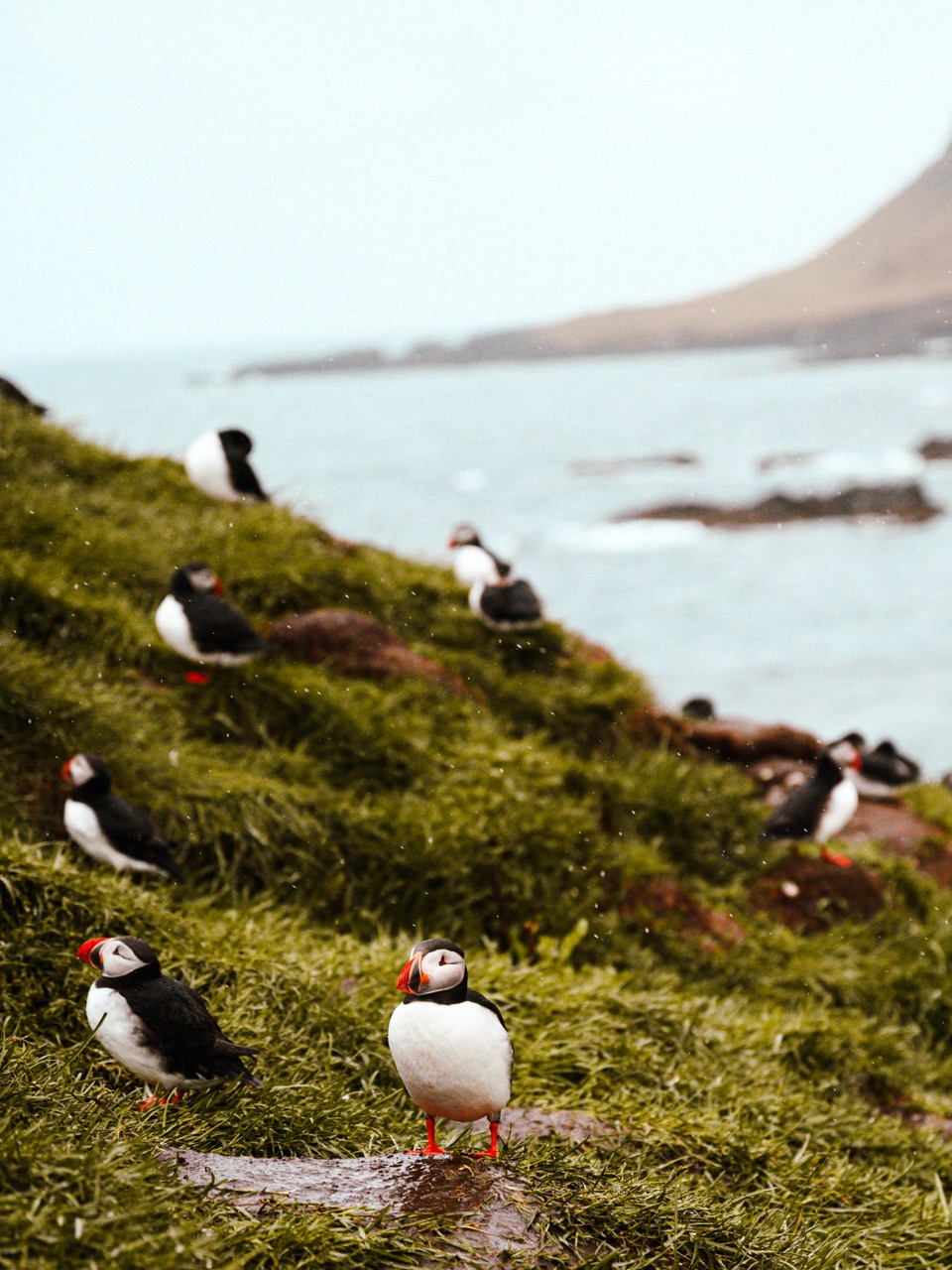
I say “might not be” because it depends on when you visit. The puffins, for example, typically arrive in Iceland around May. You’ll also see the notorious dive-bombing Arctic Tern from the end of April, but not during the winter.
Golden Plovers, meanwhile, normally arrive in Iceland around the end of March. It’s possible to go birdwatching during the low season, but more difficult than if you visited in the summer.

4. You Can’t Visit the Highlands or the Westfjords
I haven’t yet been to the Westfjords, sadly, but it’s very much at the top of my Iceland bucket list. The main reason why I haven’t yet been is because I typically travel during the off-season. Roads to this remote part of the country are closed until June at the earliest.
The Highlands are also off-limits outside of the summer (and even if you visit in the summer, you should still strongly consider going with an experienced tour guide). Many other roads in Iceland can close depending on the weather, too.
You can view a real-time map of all the open and closed roads in Iceland here.
5. Many Hikes Will be Inaccessible
Hiking in Iceland becomes significantly more challenging outside of the summer. Some campsites are open year-round, but this is not the case for many of them. Many hikes will also be off-limits, and many that are open should not be tried by anyone without significant experience. Besides the cold and ice, it’ll also be very windy.
Your hiking chances will be much better if you visit in the spring or early autumn. For example, we hiked Eldfell on the Westman Islands in April. Even then, though, it snowed heavily a few hours later; the route wouldn’t have been accessible had we gone at that point.

6. Limited Daylight Hours in the Winter
As beautiful as Iceland’s winter sunsets are, the limited daylight hours make exploring more challenging. Reykjavík gets just four hours of daylight in December, for example.
While the sunsets are longer than you may be used to, day trips are still more challenging—especially if the weather doesn’t cooperate. You can drive the Ring Road in the winter, but I recommend visiting in April or September if you plan to do this.

What’s the Weather Like in Iceland During the Low and Off-Season?
“All over the place” is exactly how I’d describe the weather. We were very lucky when visiting in April 2024 that we only had one day of really high winds, but it was still foggy and rainy for much of the trip (with some sun sprinkled in).
I’ve experienced every type of weather in Iceland during the off-season, from bitter cold to howling winds and heavy snow. On multiple occasions, I’ve experienced all four seasons in one day—and for this reason, I suggest that you prepare for the same to happen to you.
Which Main Attractions Are Still Open in Iceland During the Off-Season?
While the off-season means that you won’t have access to everything, you can still visit many of Iceland’s main attractions without needing to visit during the summer. To help you determine if this is the right time to visit, I’ve added a list of the main ones below.
1. The Golden Circle
The Golden Circle is an easy day trip regardless of when you visit Iceland. You can reach Þingvellir National Park in less than an hour from Reykjavík, and the roads are generally well-maintained throughout the year.


The obvious caveat is that you can’t do many hikes in Þingvellir during the winter. Nonetheless, I still recommend visiting the National Park itself (and the other attractions in the Golden Circle, such as Gullfoss). I’ve visited in both the winter and spring, and they’re equally as stunning.
In addition to driving to (and around) the Golden Circle, you can take day tours from Reykjavík.
2. Svartifoss, Skógafoss, and Seljalandsfoss
Hiking to Svartifoss is possible year-round, though you should take extra care in the winter as the path can be slippery. It takes four hours to drive from Reykjavík to this waterfall, so I recommend basing yourself in the area for a few days; we stayed close to Vík, which was a two-hour drive.

I also recommend staying in Vík if you visit Skógafoss or Seljalandsfoss, which are both accessible from the Ring Road. Both waterfalls are open year-round, but you normally can’t walk behind Seljalandsfoss during the off-season (this was possible when I visited in the summer).


Skógafoss can be an excellent place to watch the Northern Lights; you can stay overnight at the nearby hotel.
3. The Blue Lagoon
The Blue Lagoon is easy to reach from Reykjavík and Keflavík Airport. While I think it’s quite overrated (I much preferred the Sky Lagoon), it’s still quite nice to visit if you’ve never been to Iceland before. Moreover, it’s a great place to relax before continuing your journey.

Besides driving here, you can get a transfer if you haven’t rented a car (or simply want to leave it in Reykjavík. You don’t need to pay for parking here.
4. Hallgrímskirkja
Hallgrímskirkja is Reykjavík’s most recognizable landmark; its observation deck offers a fantastic view over the Icelandic capital and its surrounding regions.

The church tower is open year-round; you’ll get an elevator to the top and can buy tickets in the gift shop. However, I must warn that it can get windy and cold up here if you visit in the off-season.


Besides visiting the tower, be sure to check out the church’s interior—it’s totally free to see.
5. Jökulsárlón
While I went to Jökulsárlón during the summer, you can also visit in the winter. Since you’ll have to drive for almost five hours to get there, it’s not a good idea to visit on a day trip. Instead, I recommend staying in Höfn.
I took a boat tour during the summer when I visited, but these do not run in the off-season. To be honest, though, I found the lagoon itself more interesting.
What Can I Do in Iceland During the Off-Season?
Visiting Iceland in the off-season is, in my opinion, even more rewarding than coming here in the peak season. You have to be a bit more proactive to plan your trip, but you’ll still have plenty of fun things to do.
Below are my top recommendations for things to do in Iceland during low and shoulder seasons.
1. Enjoy the Photography Trip of a Lifetime
Whether you’re visiting Iceland for the first time or the 50th, the country is a true photographer’s dream. Capturing its landscapes and the rough weather are two of the biggest advantages of visiting outside of the peak season.


Whether it’s cotton candy skies, the Northern Lights, or moody gray clouds, Iceland in the off-season has everything. Many of the country’s waterfalls look particularly cool outside of the summer, too. Even if you don’t leave the capital, Reykjavík is fantastic for photography.

The only thing I’d warn you about is protecting your camera against the elements. I ignored my own advice and water-damaged my device on one trip. You can read this guide on how to not destroy your camera in Iceland my top tips and tricks.
2. Explore Reykjavík
I’ve sometimes visited Reykjavík on its own without going to other parts of Iceland, and it’s one of my favorite cities in the world. Despite being home to just 139,000 people, the Icelandic capital has so many fun things to do.
Reykjavík is compact enough that you can explore it in a couple of days, regardless of the weather. And if the outdoor conditions become too much, the city has plenty of fantastic restaurants and cafés. Sandholt is ideal for brunch, and I really liked Tres Locos for Mexican food.


I also went on a Reykjavík food tour when I visited in December 2018, which was great for trying different Icelandic foods.
3. Hunt for the Northern Lights
One of the biggest draws to Iceland in the off-season is the Northern Lights. I first got to see them when visiting with my mom in December 2018, and it was a truly magical experience (even if my hands were freezing). Sometimes, you can even be lucky enough to see them from Reykjavík.

The Northern Lights are present in Iceland from mid-September to early April. You need a clear sky, and your chances will improve if you’re away from an urban area.
While you can drive to find the Northern Lights yourself, keep in mind that the Ring Road will be pitch black—minus your headlights.

You can always book a Northern Lights tour if you want to focus on enjoying the phenomenon instead. Note that seeing them is not guaranteed, but many tours will offer an opportunity to see them on another day; check if this is possible with your chosen tour before you book.
4. Try and Spot Whales
Even if you visit in the off-season, you’ve still got the chance to spot whales in Iceland. Several tours run from Reykjavík, and even if you don’t see any whales, you’ll get an amazing view of the nearby mountains.

You can see various whale species, such as humpback and mike whales. Orcas also live here, though they’re harder to see than the other two.
5. Warm Up in a Hot Spring or Geothermal Bath
Icelanders love to warm up in a geothermal spring; the off-season is the perfect time to join them. Even if you don’t visit the Sky Lagoon or Blue Lagoon, you’ll find a couple in Reykjavík and other towns throughout the country.
While you’ll get a towel at many of the spas, you’ll often need to bring your own for ones used by locals. Before getting in, you need to shower thoroughly.
6. Have the Westman Islands to Yourself
The Westman Islands are one of the coolest places I’ve visited in Iceland so far, and I think they are well worth the detour. You can get a direct ferry from Landejyahöfn, which takes around 45 minutes.
When we visited in April 2024, there were almost no other tourists. We stayed overnight, and while we didn’t see puffins, I loved our time here.


While you’re here, be sure to check out the Eldheimar Museum—which documents the 1973 eruption. You can see traces of the eruption throughout the town, including many destroyed homes.
Packing for Iceland During the Off-Season
I’ve written a comprehensive Iceland packing list that covers all times of the year, but I suggest preparing for all scenarios when visiting in the off-season. Bringing warm clothing is a must, and you should dress in layers.
A good waterproof jacket is wise, and so are warm hats and gloves. You can wear what you normally would in a city in Reykjavík, but I suggest wearing proper hiking gear when out in nature.

Who Should Visit Iceland in the Off-Season?
Iceland in the off-season is perfect if you want to explore this country’s beauty without the crowds (and you’re willing to be flexible). You’ll get many of the main sights to yourself, and everything feels even more peaceful outside of the main tourist season.
You should also consider visiting Iceland during the off-season if you don’t want to pay the peak season’s prices. It’s ideal if your main aim is to see the Northern Lights, and I also recommend coming in the low season if you’re mainly traveling for photography.

When Is It Better to Visit Iceland During the Peak Season?
While Iceland is much more rewarding during the off-season, the main tourist season still has its advantages. If you have less flexibility, it’s better to visit when the weather is more reliable (though it can still be rough in the summer).
Iceland in the summer is also better if you’re specifically visiting for birdwatching. Similarly, you should come here at this time of the year if you wish to see the Highlands and/or Westfjords.
You’ll also need to visit Iceland in the peak season to see the Midnight Sun.


Tips for Visiting Iceland During the Low Season
Here are some of my top tips for visiting Iceland during the low season to help you better plan your trip:
- Slow Down: Don’t be afraid to drive slower than the speed limit if needed. It’s better that you feel comfortable than for something bad to happen.
- Bring Vitamin D: I recommend bringing vitamin D year-round, but even more so during the off-season. Buy these in your home country, as they’re expensive in Iceland.
- Respect the Signs: If something is closed, it’s closed for a reason. I’ve seen people completely ignore these in the past, which is disrespectful and dangerous in equal measure. Don’t be that person 🙂.

Pin for Later 📌