My 20 Favorite Things to Do in Oslo, Norway (Based on 8 Visits)
*Disclaimer: This blog is reader-supported, and this page might therefore contain affiliate links. When you book or buy through them, I may earn a small commission at no extra cost to you. It helps me write these in-depth and original guides, so thank you for the support! Full Affiliate Disclosure
Oslo is quite a polarizing city. Some people think that Norway’s capital is dull, ugly, and soulless. On the other hand, others believe that it’s beautiful, spacious, and intriguing.

-ARTICLE CONTINUES BELOW-
Get My Norway Travel Guides Delivered to Your Inbox
Save time on researching and get all my Norway travel guides delivered straight to your email inbox, ready to read whenever you want—along with monthly newsletter updates. Unsubscribe anytime.
I sit somewhere in the middle.
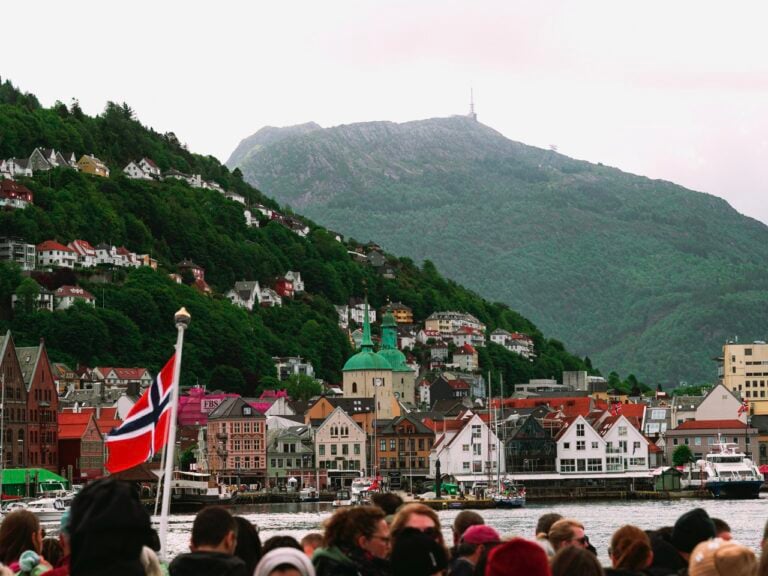
To be honest, I don’t think that Oslo is anywhere near as beautiful as other Norwegian cities. Bergen, Trondheim, Tromsø, and Stavanger are all more pleasing to the eye. But before you click away, I do still believe that Oslo is worth visiting.
Norway’s biggest city has some of Europe’s best museums and interesting modern architecture. It also has some good food, an emphasis on well-being, and a closeness to nature that not many European capitals can compete with.

Visiting Oslo requires an open mind and an understanding that it’s not the collection of wooden houses that you’ll find elsewhere in Norway. And while it has a fjord, it’s nowhere near as dramatic as what you’ll find in other parts of the country. Once you look past these, you’ll find a rewarding start to your Norwegian adventure (or a weekend trip in its own right).
I’ve been to Oslo eight times since my first trip in 2018. From the never-ending summer days to December when the sun barely rises above the horizon and the city has a pretty layer of snow, I have seen the Norwegian capital in all seasons. Based on those experiences, and having explored (and stayed in!) most of its neighborhoods, I’ve compiled this comprehensive list of the best things to do for you. Once you’ve read these, you should be set for a memorable trip.
Short On Time? Here Are My Quick Oslo Travel Tips 🇳🇴
I’ve added *a lot* of detail in this guide, so if you don’t have much time to read the full piece, you can get the most essential information from this section. I also recommend bookmarking my article so you can refer to it whenever you need to, including when you arrive in Oslo. 🤠
My Top Oslo Activity Recommendations:
- Go island-hopping (you can take the ferry or join a guided tour)
- Spend a day exploring trendy Grünerløkka
- Go on some hikes near Oslo (Grefsenkollen is very easy and rewarding, for example)
Another useful tip: You’ll find plenty of cruises along the Oslofjord if you want to see more of the beautiful nature near Norway’s capital, such as this electric sightseeing cruise.
Getting Around Oslo:
Oslo is a very walkable city, and you can get almost everywhere on foot. You’ll also find an excellent public transport system, with a comprehensive bus and tram network, along with ferries and an efficient Metro. You can buy single-journey or day tickets in the Ruter app (iOS and Android).
To get from Gardermoen Airport to the city center, you can take public transport trains; these are less frequent, but significantly cheaper than the Flytoget trains (and they take almost the same amount of time to get into Oslo). If you’re really in a rush, you can use Flytoget instead—but personally, I think that they’re pretty expensive for what they offer.
Accommodation in Oslo:
My personal favorite hotel in Oslo is Revier, which has very spacious rooms, friendly staff, and a great central location. Clarion Hotel Oslo is another great choice; their breakfast buffet is amazing, and the hotel is right next to the Oslo Opera House. It’s also close to Oslo Central Station, so it’s perfect if you’re going to take the scenic train journey to Bergen.
Accommodation in Norway’s capital is pricey (much like the city itself), but the quality is generally high (also much like the city itself).
1. Island-Hopping in the Oslofjord
If you only do one activity on your trip to Oslo, make it island-hopping in the Oslofjord. My friend and I did this in May 2023, and it was such a fun way to spend the day. We visited Nakkholmen, Lindøya, Langøyene, and Bleikøya. I’ve also visited Hovedøya in the past.
Hovedøya is the closest island to Oslo’s city center; it’s just 10 minutes away by ferry. I recommend starting here before then visiting Nakkholmen and Lindøya. Then, you can go to Langøyene and Bleikøya—before returning to Oslo.


You can visit all five of these islands with a standard public transport ticket, which you can buy in the Ruter app (iOS and Android). Get a 24-hour ticket for one zone, which costs 137 Norwegian Kroner (c. $14.31/£10.63/€12.30).
It’s better to go island-hopping in the spring or summer when you have good daylight hours. Doing so is difficult in December, but you should still visit Hovedøya at least. Ferry schedules differ depending on the time of year and on which day you visit; you can find departure information in the Ruter app. Besides doing it yourself, you can join tours that take you island-hopping.
You can also do several sightseeing cruises along the Oslofjord in general. Some are seasonal, whereas others run year-round. Even if you don’t get off at some of the islands, I recommend taking one of these. The views are lovely, and even though you can see the capital from the water, you’ll feel miles away. I’ve added a handful of options you can choose from below.
2. Visit Ekebergparken
Oslo has some fantastic parks, and Ekebergparken is another must when you’re in the city. The park has many interesting sculptures, and it’s very easy to reach from the downtown area. When you’re here, you can also enjoy a fantastic (and free) view of Oslo.
To get to Ekebergparken, take the number 13 tram going in the direction of Ljabru. You can then get off at Ekebergparken and walk from there. Note that the paths can be quite slippery in the winter.

While at Ekebergparken, you’ll find some cool sculptures, too. Besides seeing the Barcode district and other parts of the downtown area, you’ll get a nice view toward the fjord.
3. Go to the Munch Museum
I visited the Munch Museum on a June 2022 trip to Oslo; it had moved to its current waterfront location not too long before. This museum is a fantastic tribute to arguably Norway’s most famous artist.
At the Munch Museum, you’ll discover many of Edvard Munch’s works. Beyond that, you will also learn about his life—including his time in Paris and other cities. The museum has a nice (albeit expensive) café, and at the top, you’ll get an excellent view of the city.
The Munch Museum has cloakrooms for jackets and small bags. You can buy tickets online or at the museum.
Address: Edvard Munchs Plass 1, 0194 Oslo

4. Get Some Pastries & Coffee at Pascal Konditori
My girlfriend and I discovered Pascal Konditori one morning in Oslo before we headed off to Bergen. We had a bit of extra time before traveling, and to call the rain outside torrential was an understatement. And don’t get me wrong… while I love a bit of rain, I also was much more interested in eating some nice pastries. 🙂
We shared a couple of pastries between us, and both of them were delicious. My personal favorite was a somewhat middle ground between a cinnamon bun and spandauer (a pastry with custard in the middle that is popular throughout Scandinavia). I could make myself sound clever by using lots of big words to describe it, but I’ll use “really good” instead.
Our coffee was also very good, and it was nice to spend a bit of time here before leaving Oslo. We also had some sandwiches, too, which were great. You can get macarons and other sweet treats here, and I can confirm that the coffee is good.

Pascal Konditori has a couple of spots in Oslo; we went to the one on Tollbugata (Google Maps location here). It doesn’t really matter which one you go to, though.
Pascal Konditori is Parisian in style, and I definitely recommend stopping here for a morning. It’s quite expensive (even for Oslo), but you do get good value for money.
5. Hiking Around Sognsvann
Before moving to Copenhagen, I thought very strongly about making Oslo my home. One reason was the city’s fantastic nearby nature walks. Sognsvann, a large lake in the northwest of Oslo, is one such example.
I visited this lake in 2019, and its surrounding forests looked beautiful in the autumn colors. You can go swimming here, and it’s a great place for a picnic. Even better, you can reach this lake by public transport.
Take the 5 line on the Metro to Sognsvann; it takes just under 20 minutes from Jernbanetorget. From here, you can walk for around 20 extra minutes to the lake. The route around the lake is roughly 3.5 kilometers (2.17 miles).
6. Visit Vigelandsparken
Vigelandsparken, also known as Frognerparken, is somewhere I’ve been back to multiple times. This park looks different in all seasons, and it’s also pretty big—making it an ideal place to spend an afternoon.
The park is lined with numerous sculptures created by Gustav Vigeland, each showing different human emotions. Winter is my favorite season to visit; the sculptures look quite eerie at this time, and the park is also quieter.

Vigelandsparken is easily reachable by tram. Take the tram to Frogner Plass and walk from here. I also recommend exploring the Frogner neighborhood once you’ve checked out the park; in my opinion, it’s Oslo’s most beautiful district.
Address: Nobels Gate 32, 0268 Oslo
7. Go to a Sauna
Oslo is a very easy city in which to have a healthy lifestyle, and its harborfront is dotted with numerous saunas. In 2023, I went with a friend to SALT. You’ll find 12 saunas here; I don’t think they’re as warm as Finnish ones, but they were still pretty enjoyable anyway.
We also had buckets that we could do a cold plunge in. Jumping from hot to cold is certainly addictive, and I’d be very interested to retry this sauna on a winter’s day.
Once you’ve finished at the sauna, you can also grab some food here. I had the reindeer pizza, which was pretty good. Another time, I had some Asian food—which was similarly great.
8. Check Out the Oslo Opera House
When I mentioned Oslo’s interesting modern architecture earlier, I was referring to the Oslo Opera House more than anything else. Since opening in 2008, this building has become one of Scandinavia’s most recognizable landmarks.


I have visited the Oslo Opera House every single time I’ve been in the city. From the top, you get a great free view of the Bjørvika neighborhood, the city skyline, and the waterfront. I also recommend exploring inside; while you need a ticket to see a performance, the lobby area is free to wander around.
The Opera House is just outside the main train station. If you want to view a performance, you can check the program and book tickets here.
Address: Kirsten Flagstads Plass 1, 0150 Oslo

9. Photography at Damstredet and Telthusbakken
I mentioned earlier that Oslo doesn’t have as many colorful houses as Bergen or Trondheim. This is true, but you’ll still find some pretty corners in this city. Damstredet and Telthusbakken are prime examples.
Residents still use this quarter of the city today, but you’re free to wander around the streets here. These homes date back to around the 19th century, and they’ll give you an idea of what to expect when you visit other parts of Norway.
While you’re here, make sure that you’re respectful of the residents’ privacy. Don’t peek through the windows or take pictures through them. To get here, you can walk around 20 minutes from the city center.

10. Visit the Botanical Garden
I visited the Botanical Garden when I was in Oslo in 2023 before taking the train to Bergen. It’s a lovely area with around 1,800 plants, and I recommend coming here if you want to take a quick moment in nature.
The garden is located in the Eastern part of Oslo; to get here, take the Metro to Tøyen and walk from there. You can walk around for free, and it’s worth checking out if you’re visiting Oslo on a budget.
Address: Sars’ Gate 1, 0562 Oslo
11. The Norwegian Royal Palace
The Norwegian Royal Palace is right in Oslo’s city center and home to the country’s Royal Family. The building itself is pleasant, but I recommend coming here and walking around its exterior. Besides being a nice place to relax, you’ll get some great photos here.
If you want, you can also visit the Royal Palace during the summer. Tickets are available online and cost 230 NOK for adults; children and students can enter for 110 NOK.
Address: Slottsplassen 1, 0010 Oslo

12. Enjoy Food at Mathallen
I firmly believe that Oslo is one of Europe’s most underrated foodie destinations, and Mathallen—a large food court—is one of my top recommendations. I had some Greek food here in 2019, and it was excellent.
You’ll find foods from around the world here, along with plenty of seating options. It has a nice communal feel, too.
In addition to full meals, you can also try numerous baked goods at Mathallen. And if you’re self-catering, you can get some fresh ingredients to cook with at your accommodation.
If you want to sample Oslo’s food scene in general, you’ll find various guided tours where you can do precisely that.
Address: Vulkan 5, 0178 Oslo
Website: https://mathallenoslo.no/en/
13. Holmenkollen Ski Jump
The Norwegian love for skiing is pretty obvious when you consider how mountainous most of the country is. However, you don’t need to visit the far north to see this for yourself. Within Oslo’s city perimeters, you’ll find ample skiing terrain and clear examples of the country’s heritage in this sport.
The Holmenkollen Ski Jump is one of Oslo’s most famous landmarks and hosted events at the 1952 Winter Olympics. The most recent iteration was built in 2010, but before that, there had been numerous ski jumps here. You’ll find a ski museum here, which has the world’s biggest collection of skis and ski equipment.

At the museum, you can try a ski simulator. Exploring this area in general is also quite pleasant. To get here, take the Metro to Holmenkollen.
Address: Kongeveien 5, 0787 Oslo
14. Visit Bygdøy
I mentioned earlier about my adventures to Bygdøy, and in my opinion, this peninsula is one of Oslo’s most scenic corners. It has a solid collection of museums, but beyond that, it’s also home to some lovely nature.
Bygdøy is home to the Norwegian Museum of Cultural History and the Viking Ship Museum (the latter of which is being renovated and will reopen in 2027). You’ll also find a handful of beaches here.
To get to Bygdøy, take the number 30 bus. Alternatively, rent a bike and cycle here.

15. Akershus Festning
Akershus Festning is another place I’ve revisited multiple times on my numerous trips to Oslo. This fortress is one of the city’s most beautiful buildings, and you can walk around its exterior for free.
At this fortress, you’ll get a great view of Oslo’s City Hall and Aker Brygge—along with the surrounding regions. You’ll find a couple of museums here, too.
Dating back to the 13th century, the fortress is one of Oslo’s oldest buildings. To get to Akershus Festning, you can easily walk from the city center.

You can get some nice views of Akershus Festning from afar, too, by going to Aker Brygge. Which brings us onto the next fun thing to do in Oslo…
16. Stroll Along Aker Brygge and Tjuvholmen
Aker Brygge is a waterfront area that has been revitalized. It’s now home to some great bars and restaurants; Lofoten Fiskerestaurant is my personal favorite, and you need to visit it when you’re in town. The quay is also ideal for grabbing some ice cream on a warm day (or, if you’re me, in the deepest depths of winter).
Tjuvholmen is right next to Aker Brygge and largely residential, but this is a nice place to walk around (with great fjord views, too). The architecture here is modern but pleasant, and the area is also home to the Astrup Fearnley Museum of Modern Art. Aker Brygge is a handy departure point for many ferries, including tours and public transport.

17. Hike to Grefsenkollen
One of my favorite things about Oslo is that you don’t even need to leave the city limits for hiking. All around the capital, you’ll find plenty of hiking trails—each with varying difficulty. Grefsenkollen is one of the most beginner-friendly ones.
When you hike to Grefsenkollen, you’ll be rewarded with excellent views of Oslo. You’ll see many of its main landmarks, including the Holmenkollen Ski Jump and Oslo City Hall. Moreover, you will have a fantastic view of the Oslofjord and its many islands.
The hike takes around 45 minutes each way. My girlfriend and I completed the trail on a June 2025 visit to the Norwegian capital, and I’ve written a full guide for you. Hiking shoes and outdoor clothing are a good idea, but this hike is nowhere near as strenuous as many in Norway.

After reaching the top, you’ll find a restaurant. You can reach the hike’s starting point by bus or tram, with regular departures from the city center. A single-zone public transport ticket will be just fine for the ride, but the hike itself is free.
18. Get a Norwegian Waffle at Haralds Vaffel
Oddly enough, it took me multiple visits to Oslo before I finally tried a Norwegian waffle. Thankfully, I finally got around to doing that at the famed Haralds Vaffel in Grünerløkka. This is one of the most famous places to get one in the Norwegian capital, and it’s my top suggestion if you’ve never had one before.
You can get all kinds of toppings here. Sometimes, however, simple is best. Get the brunost (Norwegian brown cheese) with jam; the former is very polarizing. Personally, I love it—but I also know a lot of people who… aren’t so fond.


Haralds Vaffel is pretty small, with a limited amount of seating. We took our waffles to a nearby park to eat them, though, and I recommend doing the same.
Address: Olaf Ryes Plass 3, 0552 Oslo
19. Spend a Day Exploring Grünerløkka
Oslo has plenty of cool neighborhoods, and Grünerløkka is my favorite. If I ever lived in the Norwegian capital, this is where I would want to live. This hip district will challenge any opinions you may have had about Oslo being bland (which, by the way, it definitely isn’t).
Grünerløkka has some of the city’s best bars, and if you’re into craft beer, you will find plenty of places to satiate your thirst. It has a number of cool stores, along with some great places to eat. Besides sampling the various restaurants and bakeries yourself, you can join a food and culture walking tour.
While in Grünerløkka, be sure to allocate some time to walking along the banks of the Askerselva River, too. You’ll find the popular Café Blå while doing so, but the waterfront is just nice, in general. It’s the best way to get back into the city center.


Grünerløkka is also home to the world-famous Tim Wendelboe coffee shop. We came here on a previous trip and got a great cup of coffee, but more than that, it was cool to watch the baristas make everything. In my opinion, it felt like watching someone create art.

To get to Grünerløkka, you can easily walk from Downtown Oslo. Otherwise, the district is reachable by tram. Besides being fun to explore the district is also one of the best places to stay in Oslo.
20. Italian Food at Trattoria al Mare, Signalen Sjøbad
We spent 2 days in Oslo in the summer of 2025 before continuing on to Bergen, and the highlight of that trip was an Italian restaurant we went to on our last evening in the city. Signalen Sjøbad – Trattoria is in Nesoddtangen, which is just outside the main part of Oslo. Here, you’ll find a nice Italian restaurant.
We had some really good pizza, along with tiramisù. The half-Italian part of me very much approved, and I’m sure that you will too.
This restaurant has a really nice atmosphere. The views of the fjord while you’re eating are fantastic, too. Since this place can get really busy, I recommend booking a table on the website.
To get to the restaurant, you’ll need to take the ferry from Aker Brygge. It’s just outside of Zone 1 (and in Zone 2S), so you’ll need a multi-zone ticket. This is slightly more expensive than the one-zone transport pass, but still reasonably priced.
Address: Tangenveien 3, 1450 Nesoddtangen


All the Best Things to Do in Oslo in One Place
Whether you’re visiting for a weekend or you’re here as part of a bigger trip in Norway, Oslo is well worth visiting. The city is different from the rest of the country, but it has enough to keep you entertained for a few days. Even after visiting so many times, I always discover new experiences whenever I’m in the Norwegian capital.
Regardless of your interests, Oslo has you covered. The city has lovely nature nearby, along with some of Norway’s best museums and a number of excellent restaurants. And if you fancy warming up in a sauna before going for a swim, you can do that too (yes, even—and especially—in the winter).
Now that you’ve read this guide, you should have a better idea of what to do when you visit Oslo. If you have any other questions, feel free to leave a comment and I’ll do what I can to help.
More Useful Resources to Plan Your Trip to Oslo 🇳🇴
Check Accommodation Availability in Oslo: Booking.com / Hotels.com / Expedia / Agoda
Browse Tours, Tickets, and Excursions: Viator / GetYourGuide

Pin for Later 📌